
Sports
Selectors need to take a look at team culture

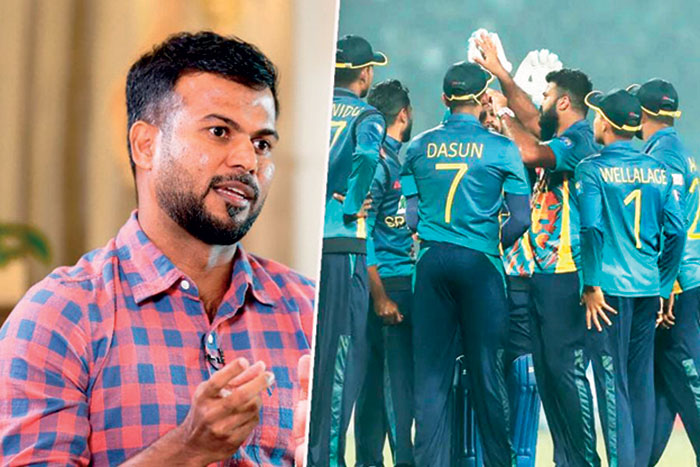
There is a difference between taking unpopular decisions and making dumb decisions. Taking the wicketkeeping gloves from Kumar Sangakkara in 2006 in Test match cricket was an unpopular decision.
Backing Sanath Jayasuriya despite having scored one half-century in his first 50 ODIs was another unpopular decision. Handing the vice-captaincy of the national team to Mahela Jayawardene in 1999 sidelining several seniors was yet another unpopular move. The selectors had very good reasoning to make those moves and eventually got the support of the players and the public.
Take the case of current Chairman of Selectors Upul Tharanga. He debuted for Sri Lanka soon after the Under-19 World Cup but didn’t have numbers behind him in domestic cricket to justify his selection. But he was quite a sensation scoring six hundreds in his first year in international cricket. Five of those six hundreds came overseas as well in different conditions like Mohali, Ahmedabad, Christchurch, Lord’s and Headingly. Our cricket has progressed thanks to those men who were prepared to bite the bullet and make those unpopular moves.
Talking of not so clever selection moves, take for instance the call to give the cold shoulder to half a dozen seniors in white ball cricket in 2020 and then when things backfired to blame lack of skill levels among young players.
In the last three years Sri Lanka played three qualifying round tournaments to get though to ICC events and when they finished the recent World Cup ninth and were knocked out of the Champions Trophy the selectors blame poor fitness standards.
They had conveniently forgotten that they had been in charge for three years and had in fact introduced a highly publicized strict fitness regime before ditching it halfway through.
When you introduce policies you need to persevere with them. Sometimes you have to tinker it a bit or even perhaps completely overhaul it depending on circumstances and that’s understandable. But what is not on is using your policies selectively. That is why the national cricket team went from bad to worse in the last three years.
Club loyalties taking precedence over national interests is recipe for disaster and with the previous selection committee it looked an unwritten rule that all national captains had to come from SSC.
Given the amount of cricket that is played it was insane to limit the selection panel for just three members. Authorities need to explain why it was done so. Sanity has prevailed and now the selection panel has been extended to five members.
There is some criticism that most of the current selectors were active First-Class cricketers until recently. That criticism of course has no validity. Being involved in the sport until recently is in fact a good thing for you are aware as to who are the players who deserve a call up. Of course they are aware of the growing demands of the modern game and that’s an additional qualification. A recently retired cricketer is far better than someone who quit the game two decades ago and this certainly is a step in the right direction.
One reason why Sri Lanka has fared poorly in recent years is because there is a serious discipline issue within the team. Your Test captain is charged for drunk driving, and you soft peddle. Your white ball captain had been on bail for a similar offence, and you turn a blind eye. There is a problem with the standards you have set for your cricket team. Or maybe that if you are from SSC everything is forgiven.
The culture within the Sri Lankan team is not good. You should have fun of course but taking things for granted and easy-going is recipe for disaster. If Virat Kohli and David Warner can turn up when training is optional to sharpen their fitness and fielding why not you when you had to qualify for the World Cup. It is baffling indeed.
You find several players coming into the Sri Lankan side with all the right attitudes. But once they have joined ranks with the side they buy into that easy-going culture.
There is so much talk about the skill levels of Sri Lankan players being not all there at present. That maybe true but what is not true is that you don’t need skill levels to become a good fielding unit. You can get there by sheer hard work. This World Cup Sri Lanka dropped 16 catches, that’s almost two catches dropped for a game. In the last two T-20 World Cups, if not for dropped catches the team would have fared much better. The fielding woes need to be addressed at the earliest possible.
The selectors are set to introduce new captains and it seems they will have three captains for three formats. While doing that will keep several senior players happy, not sure whether our cricket is so rich with Mike Brearleys and Tiger Pataudis to warrant captains for each format.
There’s lot of cricket ahead in the new year. The key events will be the T-20 World Cup in the US and West Indies and the tour of England that includes three Test matches.
Given our history of poor injury management in recent times, the selectors have a lot in their plate. Upul Tharanga is known as a fair and unassuming character who sacrificed his own comforts for the sake of team. If he is able to drag the team from the current mess, he will be remembered for a long time to come.











Under 19 Cricket
Left-arm spinners Vishwa Peiris and Demion de Silva took five wickets each as St. Joseph’s cruised to an innings and 51 runs victory over St. Benedict’s in the Traditional Mack – Croner trophy cricket encounter at Darley Road on Tuesday.
St. Benedict’s came to the match having done well in the Tier B tournament matches but the spin might of the Joes was too hot for them to handle as they collapsed for 62 runs in the second innings.
The result somewhat exposed the gap between the Tier A and Tier B teams of the Under 19 Division I category as the team from Kotahena were bowled out within 25 overs. They were following on after being dismissed for 197 runs in the first innings, where Nushan Perera grabbed five wickets bowling the bulk of the overs for the Joes. He was adjudged the Best Bowler.
While Vishwa was the Man of the Match, Rishma Amarasinghe (Best Fielder) and Senuja Wakunugoda (Best Batsman) won the other individual awards.
The Joes made 313 in their innings with Senuja top scoring with 106 runs.
In the Division I Tier ‘A’ matches Gurukula (against St. Sebastian’s) and St. Anthony’s Katugastota (against Royal) registered first innings victories.
Maliyadeva took first innings points against De Mazenod in a tier B match.
(RF)
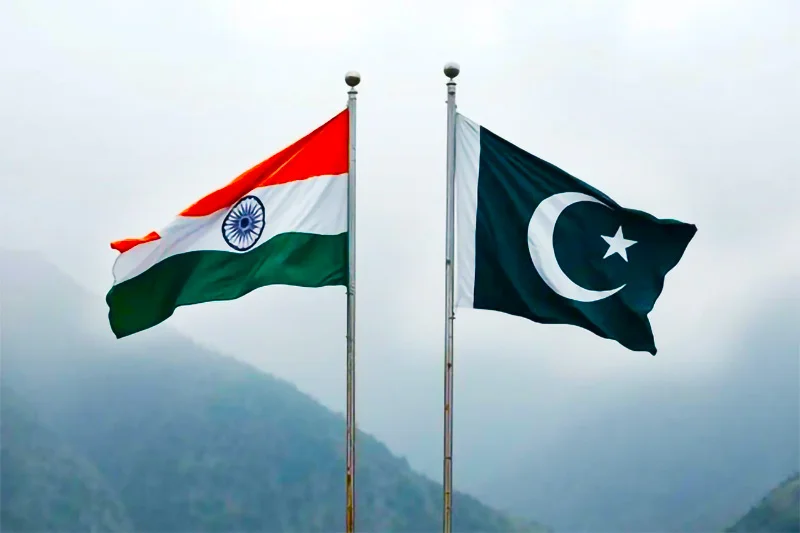
Organisers of the ICC T20 World Cup are sweating over after Pakistan refused to play nuclear-armed neighbours India in Colombo, a decision that has left administrators scratching their heads and staring at a potential financial googly.
The India–Pakistan contest, the jewel in the tournament’s crown, is the game that oils cricket’s economic engine. If the marquee clash is bowled out, the loss of revenue will have every stakeholder feeling the pinch from boardroom to boundary rope. Islamabad’s call to withdraw, taken at government level, has sparked fears the verdict will not be overturned.
Anticipation for the grudge match had reached fever pitch. Tickets vanished on day one of sales, while Colombo’s hotels were snapped up quickly. Five-star rooms that normally fetch 150 US dollars were hiked to 600 USD, some even soaring to 800 USD as the city braced for a carnival.
With the capital full to the rafters, tour operators shuttled visitors to nearby Negombo, an hour’s drive from the stadium, while others opted for apartments as accommodation ran dry. Flights, too, were booked well in advance, but uncertainty over the epic duel has now cast a long shadow.
“We haven’t had many cancellations yet, but we fear the worst. Everyone will take a hit if the game doesn’t take place,” aviation industry official Thusitha Perera told Telecom Asia Sport.
Gihan Wickramasinghe, representing Colombo’s hoteliers, echoed the concern. “Our hope is the match goes ahead. If not, we’ll have to refund bookings and the tour operators will be hit even harder.”
Tour operator Lisa Fernando said the anxiety was mounting. “Two groups from Dubai alone, 75 people, were coming. Corporate clients had planned trips down south as well. There’s a lot of money at stake and so much unnecessary stress.”
Indian fan Varun Kumar from Bangalore has already paid for flights and hotels but intends to travel regardless. “Sri Lanka has been on my bucket list. Whether the match happens or not, we’ll come to experience the country,” he said.
Sri Lanka Cricket remains optimistic the contest will be rescued before the final over is called. But if the showpiece is scratched, it would be a hammer blow to an economy only just finding its feet after years of setbacks, leaving the tournament badly caught behind.

BCB receives investigation report on sexual misconduct allegation

Trump confirms talks with Iran as US military shoots down Iranian drone

Shower will occur in the Northern, North-central, Eastern and Uva provinces and in Nuwara-Eliya and Matale districts

House erupts over suspension of Deputy Secretary General

78th Independence Day celebrations at Bogambara Stadium

Colombo-Kandy railway line to be fully restored this year – Minister Bimal

‘Dates have the highest sugar content to fight Coronavirus’

Sunday Island 27 December – Headlines

#SundayIsland 17th December – Headlines

Sunday Island – 28th March

Sunday Island Headlines – 21 March

Sunday Island – 21st February – Headlines
-
 Opinion5 days ago
Sri Lanka, the Stars,and statesmen
-
 Business6 days ago
Climate risks, poverty, and recovery financing in focus at CEPA policy panel
-

 Business4 days ago
Hayleys Mobility ushering in a new era of premium sustainable mobility
-

 Business1 day ago
SLIM-Kantar People’s Awards 2026 to recognise Sri Lanka’s most trusted brands and personalities
-
 Business4 days ago
Advice Lab unveils new 13,000+ sqft office, marking major expansion in financial services BPO to Australia
-

 Business4 days ago
Arpico NextGen Mattress gains recognition for innovation
-

 Business3 days ago
Altair issues over 100+ title deeds post ownership change
-

 Business3 days ago
Sri Lanka opens first country pavilion at London exhibition