
Business
‘Securing GSP+ extension beyond 2023 absolutely critical for apparel industry growth’

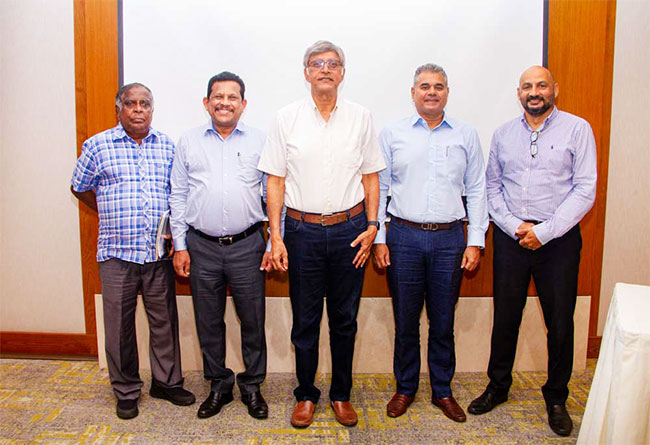
Deputy Chairman of MAS Sharad Amalean appointed JAAF chairman
The Joint Apparel Association Forum of Sri Lanka (JAAF) called for intensive dialogue and greater stakeholder collaboration in order to arrive to resolve the current forex crisis, as well as legislative reform towards a more sustainable medium-long-term trajectory for Sri Lankan apparel.
These views were expressed at the recent Annual General Meeting (AGM) of the Association, the apex body representing five associations encompassing supply chain partners, the export-oriented apparel manufacturers, buying offices and representatives of international brands in Sri Lanka.
 Addressing the gathering, newly appointed Chairman of JAAF and Deputy Chairman of MAS, Sharad Amalean commended the resilience demonstrated by the sector in the face of an unprecedented pandemic and outlined measures necessary for the sector to achieve its target of US$ 8 Bn in exports by 2025, while maintaining GSP+ and enhancing bilateral trade.
“Once again, Sri Lankan apparel has delivered an outstanding performance, achieving over US$ 5 Bn in exports last year amidst various challenges. While highly commendable, there are still many obstacles ahead of us. In order to successfully navigate these uncertain times, it is essential that all stakeholders act with unity, and continue to engage in dialogue with authorities on issues pertaining to foreign exchange and the adoption of regulations that can ensure sustainable growth for our vital industry,” Amalean stressed.
“We must also continue to enhance our bilateral trade by engaging with regional partners and associations to enhance trade relations. The securing of a GSP+ extension beyond 2023 will be absolutely critical for the growth of our industry,” he added.
Meanwhile, outgoing JAAF Chairman, A. Sukumaran noted that the industry would likely face continuing disruptions to their supply chain over the coming year, making the need for continuous engagement across industry stakeholders an essential pre-requisite to developing long-term solutions to the industry’s current and future challenges.
 “The pandemic exposed underlying vulnerabilities in our extended global supply chains. However, we do not believe that right answer is to simply turn our backs to internationalization and build overlapping national supply chains – as had been advocated by certain quarters. Even with the current issues we face, the theory of comparative advantage within globalization is still a more financially viable approach. However, we also need to identify select areas in which development of domestic capacity can support Sri Lankan firms to effectively compete on a global stage, and ensure that such capacity development is expedited as much as possible.”
“Investing in less transactional and more collaborative supply chain relations will provide major solutions. This forges more resilient supply chains that are also more capable of dealing with our industry’s numerous challenges. We have thrived with our buyers on long-lasting relationships. We must do the same thing with supply chains as well. Balance strategies are a must for us to sustain ourselves on the sourcing map,” Sukumaran added.
The AGM saw the appointment of JAAF’s new executive committee for 2022/2023, which includes Chairman Sharad Amalean, Deputy Chairmen Saiffudeen Jafferjee and Felix Fernando, Past Chairmen Noel Priyathilake, Azeem Ismail and Ashroff Omar. Duly Authorized Representatives of the constituent bodies: Fabric & Apparel Accessory Manufacturers Association Pubudu de Silva, Free Trade Zone Manufacturers Association – Jatinder Biala, Sri Lanka Apparel Exporters Association – Aroon Hirdaramani, Sri Lanka Chamber of Garment Exporters – Hemantha Perera and Sri Lanka Apparel Sourcing Association – Wilhelm Elias.
Other key appointments include individual members of the executive committee; Mahesh Hirdaramani, Manik Santiapillai, Ajith Wijesekera, Jafar Sattar, Anis Sattar, Rehan Lakhany and Mahika Weerakoon.
Meanwhile, Founding Secretary-General of JAAF Tuli Cooray stepped down from his position and will serve as a consultant moving forward. He will be replaced by Industry veteran Yohan Lawrence, Past Chairman of the Sri Lanka Apparel Exporters Association.



Sri Lanka’s economic growth is expected to moderate to 4.0% in 2026 and climb to 4.2% in 2027, following two consecutive years of strong 5.0% growth.
This forecast is based on an early stabilization scenario for the Middle East conflict, according to the Asian Development Outlook (ADO) April 2026, Asian Development Bank’s (ADB) flagship economic publication. Sri Lanka’s recovery held firm in 2025 despite the late-year disruption of Cyclone Ditwah. Private consumption surged amid low inflation and easing interest rates, while remittances hit a record high, as did the primary budget surplus. The current account posted a third consecutive surplus, and official reserves climbed to their strongest level in years.
The outlook for 2026 is increasingly shaped by the conflict in the Middle East, even as post-Ditwah reconstruction spending provides some support for growth. Private consumption will remain the main growth driver, though higher inflation will temper household spending power, and private investment is expected to recover only gradually amid heightened uncertainty.
Higher energy costs, potentially weaker remittance inflows, and disruptions to trade and tourism will weigh on household incomes and external buffers and drag on economic growth. Inflation is projected to accelerate sharply to 5.2% in 2026, driven largely by the Middle East conflict.
“Sri Lanka has come a long way since the recent economic crisis, and its economic performance over the last two years is a major achievement,” said ADB Country Director for Sri Lanka Shannon Cowlin. “However, the risks ahead are real and significant. This is not the moment to ease up on reforms. Fiscal discipline must be maintained and resilience must be strengthened against the external shocks that will keep testing this economy. At the same time, scaling up and executing public investment will be essential to sustaining the recovery.”
ADB is a leading multilateral development bank supporting sustainable, inclusive, and resilient growth across Asia and the Pacific. Working with its members and partners to solve complex challenges together, ADB harnesses innovative financial tools and strategic partnerships to transform lives, build quality infrastructure, and safeguard our planet. Founded in 1966, ADB is owned by 69 members—50 from the region.(ADB)

This Avurudu season, Hameedia introduces its latest campaign, “Threads of Culture,” celebrating the traditions that connect generations while embracing a more conscious and forward-thinking approach to fashion.
Rooted in the spirit of Sinhala and Hindu New Year, the campaign highlights the importance of preserving culture while evolving with modern values. This year, Hameedia places a strong emphasis on ethical and sustainable fashion, encouraging customers to move away from fast and imitation fashion towards quality, authenticity, and responsible choices.
As part of this shift, Hameedia presents a refreshed festive collection crafted using lightweight cotton and linen fabrics, designed specifically for Sri Lanka’s climate. The collection focuses on breathability, comfort, and timeless style, offering customers clothing that is both practical and refined for the season.
Commenting on the campaign, Fouzul Hameed, Managing Director of Hameedia, stated, “Avurudu is a time of renewal, reflection, and meaningful connection. With ‘Threads of Culture,’ we wanted to go beyond celebration and inspire a shift in mindset, encouraging Sri Lankans to choose authenticity over imitation, quality over quantity, and responsibility over convenience. As a homegrown brand, we take pride in upholding craftsmanship and ethical practices, and we believe fashion should not only look good but also do good.”
Marking a key milestone in its expansion, Hameedia is also set to open its newest outlet in Galle, further strengthening its presence across the island and making its signature craftsmanship more accessible to customers in the southern region.

The much-anticipated 41st Edition of the Colombo Shopping Festival (CSF) – Avurudu Fair was ceremonially declared open at the BMICH Exhibition Centre, marking the beginning of five exciting days of festive shopping in celebration of the Sinhala and Tamil New Year.
The ceremonial opening commenced with the traditional lighting of the oil lamp on 8th April 2026, in the presence of guests, industry leaders, and invitees. Organized by Aitken Spence Conventions and Exhibitions, the event continues to reinforce its position as one of Sri Lanka’s premier consumer exhibitions.
Running from 8th to 12th April 2026, from 10:00 a.m. to 10:00 p.m. daily, the Colombo Shopping Festival brings together over 200+ Micro, Small, and Medium Enterprises (MSMEs) from across the island, offering a vibrant marketplace that supports local businesses while delivering exceptional value to shoppers.
This year’s Avurudu Fair promises an unmatched retail experience, featuring a wide range of products including fashion, lifestyle, homeware, beauty, and more. Visitors can shop top brands such as Boss, EL Holdings, Vantage, Miniso, Governor Shirts, Edge Casual, Avirate, Cetaphil, Phoenix, Rite Shu and many more top brands, alongside a diverse selection of Indian stalls offering exclusive collections at massive discounts.
The festival creates the perfect opportunity for families and shoppers to prepare for the New Year with unbeatable deals, festive offers, and a lively atmosphere filled with seasonal excitement.
With its strong legacy and continued commitment to empowering local entrepreneurs, the Colombo Shopping Festival stands as a key highlight in Sri Lanka’s event calendar—bringing together commerce, culture, and celebration under one roof.

Sooryavanshi blitz, Jurel 81* help Rajasthan Royals take down Royal Challengers Bengaluru with ease

Sun directly overhead Pomparippu, Anuradhapura, Mihinthale, Galenbindunuwewa, Agbopura and Serunuwara about 12:11 noon today (11)

Showers expected in the Western, Sabaragamuwa, North-western , Southern and Uva provinces and in Anuradhapura, Mannar, Kandy and Nuwara-Eliya districts after 2.00 p.m.

Opposition NCM against Energy Minister defeated

Chinese Ambassador assures Lanka China will not allow a fuel crisis to develop here

Minister Jayatissa blames administrations since 2010 for not following proper procedures when procuring coal

‘Dates have the highest sugar content to fight Coronavirus’

Sunday Island 27 December – Headlines

#SundayIsland 17th December – Headlines

Sunday Island – 28th March

Sunday Island Headlines – 21 March

Sunday Island – 21st February – Headlines
-

 Features7 days ago
Ranjith Siyambalapitiya turns custodian of a rare living collection
-

 News7 days ago
Global ‘Walk for Peace’ to be held in Lanka
-

 News5 days ago
Lankan-origin actress Subashini found dead in India
-

 News3 days ago
AG: Coal procurement full of irregularities
-

 Business2 days ago
Israeli attack on Lebanon triggers local stock market volatility
-

 Features7 days ago
Beyond the Blue Skies: A Tribute to Captain Elmo Jayawardena
-

 Features7 days ago
Aspects of Ceylon/Sri Lanka Foreign Relations – 1948 to 1976
-

 Business3 days ago
Hayleys Mobility introduces Premium OMODA C9 PHEV