
Business
SEC chairman welcomes budget proposals

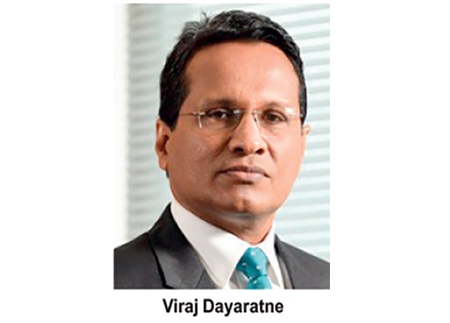
The chairman of the Securities and Exchange Commission of Sri Lanka (SEC), Viraj Dayaratne P.C. commended the budget proposals presented to parliament on November 17, by Prime Minister Mahinda Rajapaksa in his capacity as the Minister of Finance.
The proposals include several measures to develop the capital market of Sri Lanka. As an incentive to promote and popularize Real Estate Investment Trusts (REITS) that was enabled by the SEC by way of its Rules published in the Gazette on July 31, 2020, the proposals state that the investments in REITS are exempted from the Capital Gains Tax and the dividends are to be free from Income Tax. Further, the Stamp duty is to be reduced upto 0.75%. The stakeholders in the industry had perceived stamp duty as an impediment to the setting up of REITS in Sri Lanka and the SEC sees this proposal as a huge boost to setting up of REITS in the country.
In addition, to promote new listings of local companies on the Colombo Stock Exchange (CSE), the government has put forward certain key proposals such as a 50% tax concession for the years 2021/2022 for companies that are listed before December 31, 2021. The number of companies listed on the CSE has not increased during the last several years and that was seen as a reason for the lack of liquidity and relatively small size of the market. The new proposal will be an impetus for new listings.
The SEC wishes to thank the President, the Prime Minister, the State Minister for Money and Capital Markets, the Secretary to the President and the Secretary to the Treasury for having taken into consideration the representations made by the SEC and for taking these initiatives which will help to develop and build a strong capital market which could benefit both users and providers of capital. These efforts will undoubtedly help deepen market activity and increase access to capital for Sri Lankan corporates.
The CSE has functioned uninterrupted and has performed exceptionally well with an 80% increase in total market turnover as against 2019 and the average daily turnover has doubled. The SEC chairman remarked that “The steps taken by the joint committee comprising of representatives of the SEC and the CSE to digitalize the stock market in September 2020 has enabled the market to operate without interruption despite the present situation in the country. I wish to express my sincere gratitude to all the stakeholders in the capital market industry, particularly the CSE and the stockbroking community for the unstinted support given to facilitate the end-to-end digitalization of the market”.


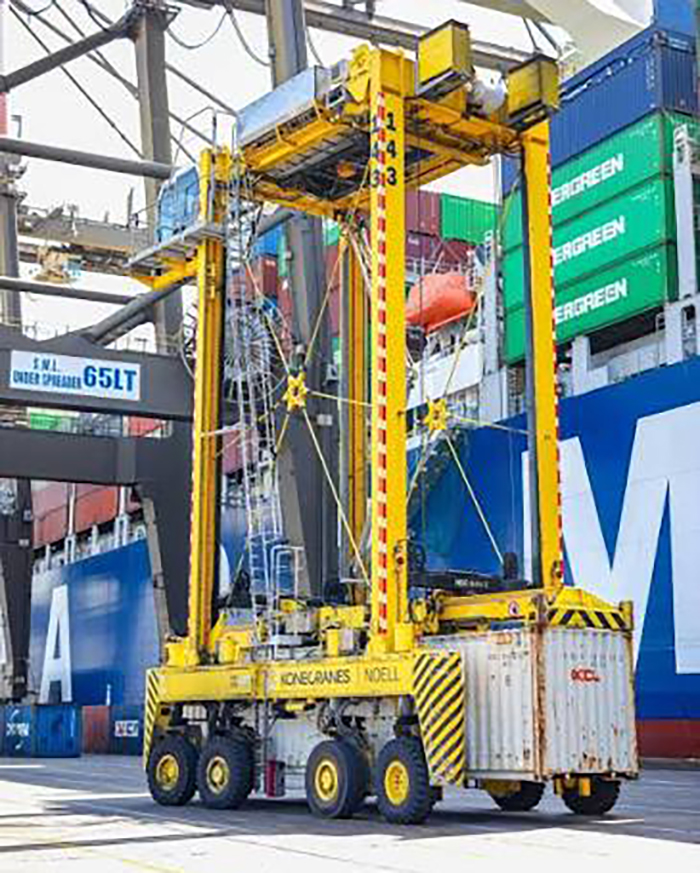
The Colombo East Container Terminal (CECT), Sri Lanka’s flagship port project under the Sri Lanka Ports Authority (SLPA), remains unable to reach full operational capacity, more than four years after construction began, industry insiders say. Despite near-complete infrastructure and a strategic vision to bolster Sri Lanka’s position as a regional maritime hub, the terminal is paralyzed by a single missing component: straddle carriers, essential machines for moving containers between ships and yard storage.
“The terminal is essentially ready. Quay cranes, yard cranes, automation systems, and supporting infrastructure are all in place. Only straddle carriers are missing, and without them, full-scale operations are impossible,” Tharanga Jayasinghe, President of the Port Finance Divisional Independent Employee Association, told journalists.
Addressing a press conference held in Colombo Jayasinghe said that the delay is not due to employee performance. “SLPA staff have delivered outstanding results at the Jaya Container Terminal and partial operations at CECT. The responsibility to bring CECT fully on track now lies squarely with SLPA management and the authorized decision-makers overseeing this strategic national investment.”
Since 2021, the procurement of straddle carriers has gone through five tender attempts, each canceled or revised, resulting in significant lost time. Early tenders focused on leasing the machines, then on diesel-powered carriers, before SLPA made a strategic shift to hybrid straddle carriers, in line with CECT’s green terminal vision and international shipping standards.
Despite this shift, delays have persisted due to what employees describe as “questionable technical decisions and favoritism toward predetermined bidders.” The third tender round, which allowed both diesel and hybrid options, drew particular criticism. A compliant hybrid bid offering superior lifecycle efficiency was overlooked in favor of a diesel-only supplier, prompting legal action. While the case was pending, SLPA revoked the award and canceled the fourth tender, further prolonging the project.
CECT, a nearly USD 1 billion investment entirely financed by SLPA, represents one of the largest infrastructure projects ever undertaken by a Sri Lankan company. Funded during the economic recession that began in 2021, it is considered a source of national pride. Yet, Jayasinghe warned that this pride is overshadowed by concerns over repeated procedural missteps and apparent favoritism.
The current, fifth tender has raised new alarm. Qualification criteria appear to have been significantly diluted, allowing a previously favored company—reportedly with limited experience—to re-enter the process. For approximately USD 50 million worth of 30 hybrid straddle carriers, bidder experience requirements have been reduced to manufacturing just 15 units over five years, a stark contrast to the standard benchmark of 500 units for equipment of this scale.
According to Jayasinghe, these relaxed criteria risk awarding the contract to an under-experienced supplier, potentially undermining CECT’s operational credibility and discouraging shipping lines from engaging with the terminal. Observers note that one internationally recognized supplier withdrew from the process, citing lack of transparency and perceived bias.
Industry insiders warn that delays at CECT are not merely operational concerns—they also create openings for competing regional ports to capture Sri Lanka’s container traffic. “The demand is ready, but the terminal’s readiness is being held back by indecision and procedural mismanagement,” Jayasinghe said.
SLPA employees, he added, have long safeguarded national port assets from corrupt practices. Their vigilance secured the East Container Terminal (ECT) in 2021, and today they are raising alarms over the CECT tender process. Commercially, SLPA continues to perform well, including a recent Rs. 5 billion transfer to the Government Consolidated Fund. Shipping lines remain eager to engage with CECT, underscoring that the challenge is not demand but readiness.
The unanswered questions are stark: why has a strategic national procurement repeatedly failed, who is promoting inexperienced suppliers, and who will be held accountable? Until these issues are addressed, CECT remains not merely delayed, but denied—its potential, strategic importance, and the trust of the nation hanging in the balance, Jayasinghe added.
by Chaminda Silva ✍️

SOLA Festival returns to Sri Lanka’s south coast as an evolving cultural movement, continuing its mission to redefine festivals through community collaboration, sustainability, and conscious design. The festival will take place on the 30th and 31st of January at The Doctor’s House, Madiha.
Developed in close partnership with the local community in Madiha, near The Doctor’s House, where the festival has established its home, the SOLA Festival was conceived as a response to the increasingly extractive nature of tourism, which too often takes more from local communities than it gives back. The festival is guided by the core values of Respect, Inclusion, Sustainability, Creativity, and Collaboration, bringing people together through music, workshops, immersive experiences, and community-led initiatives.
Founded by a collective of designers and event makers from Copenhagen, SOLA aims to become one of the first fully waste-free and circular festivals in Asia and a global role model for sustainable events. Chief festival organisers, designers Susanna and Miranda, whose portfolio includes installations and designs for Copenhagen Fashion Week as well as projects with Collective Fashion Justice, explained that the idea for the festival was inspired by how incredibly warmly they were welcomed into the local community in Sri Lanka and their desire to give back and support that community “We started SOLA to show that festivals can bring joy, creativity, and music while also giving back to the communities and environments that host them,” says Susanna. “SOLA was conceptualized and created with a strong focus on working in harmony with nature and fostering meaningful community connections. Together with ouramazing partners, we want to prove that conscious, community-led events are not only possible, but inspiring, joyful, and sustainable.”
Following its inaugural edition in 2025, SOLA Festival has positioned itself as an annual event in Sri Lanka, growing thoughtfully each year with a long-term vision rather than as a one-off project. The 2025 edition welcomed 800 guests, featured international and local DJs, and hosted five activities and workshops, laying a strong foundation for the festival’s future direction.
This year, the festival is looking to nearly double the number of attendants, and will feature over a dozen DJs from more than five countries including internationally renowned Yung Singh, and local legend DJ Shiyam.
More than a music festival, SOLA is a multidimensional platform for art, learning, sustainability, and connection, and in keeping with this vision, the programme also includes traditional, community centric, creative activities including communal weaving sessions, natural dye workshops, drum circles, beaded fabric jewellery workshops, make-your-own merch sessions and more.
SOLA is being developed within the principles of a circular economy, and the organisers view SOLA as a project to be built and refined over many years, with each edition deepening its impact. As the festival grows, SOLA aims to involve more local and international collaborators, with the goal of becoming an international role model for sustainable events.
Sri Lanka’s long-standing values around craftsmanship, resourcefulness, and care for the earth are central to this vision. The team believes the country has the potential to become a global leader in sustainable tourism.
Community collaboration remains at the heart of the festival’s programming. For the upcoming dition, SOLA is working with a growing network of partners, including ApiHappi, Selyn Fairtrade, Sarana Sri Lanka and Sambol Foundation. The official banking partner for the event is Hatton Nation Bank.
The SOLA team, together with a local school and WeCare will conduct a beach clean-up ahead of the festival. Post the clean-up, the children will participate in a crafting session focusing on recycling and upcycling everyday waste, while learning about plastic and street dogs. Sambol Foundation will host a natural dye workshop before the festival and the fabrics will be used for festival installations. Selyn Fairtrade, House of Lonali and ApiHappi, will contribute fabric that local women will use to make reusable decorations for the event, ensuring the festival avoids purchasing all new materials in the future. Selyn has also taken on producing festival merchandise and running a fabric bead workshop. The festival will open with a traditional Sri Lankan fire ceremony, organised in collaboration with Sarana Sri Lanka. SOLA will also organize a fundraiser in collaboration with WeCare, an organisation dedicated to the wellbeing of local street dogs.
HNB Assurance PLC was recognized among Sri Lanka’s Best 20 Workplaces for Women 2025 by Great Place to Work Sri Lanka, for the Company’s long-standing commitment to fostering an empowering workplace for women.
Over the years, HNB Assurance has introduced several progressive initiatives to support women at different life and career stages, including flexible work arrangements, caregiver and maternity support, leadership development programs, and platforms such as in.she, which champions women’s growth both professionally and personally. These efforts have contributed to a workplace where women are not only represented but are actively enabled to succeed.
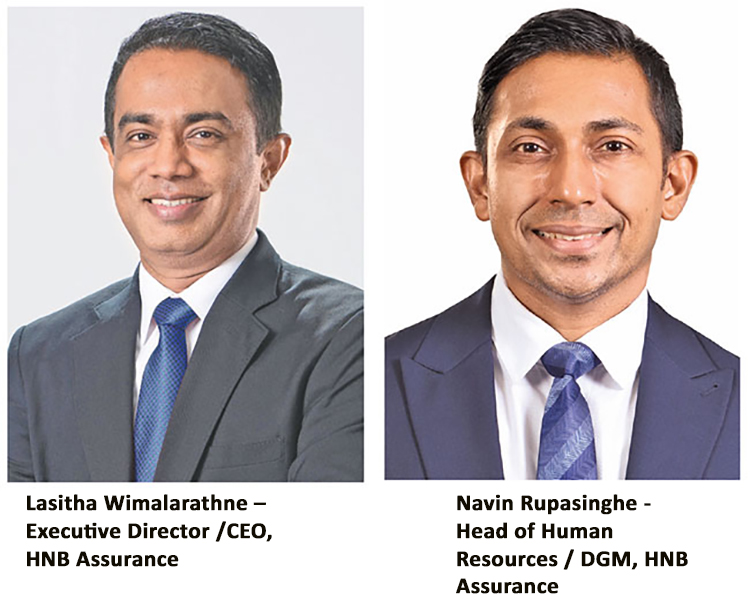
Commenting on the recognition, the Executive Director / Chief Executive Officer of HNB Assurance PLC, Lasitha Wimalaratne stated, “Being recognized among Sri Lanka’s Best 20 Workplaces for Women is a powerful affirmation of who we are as an organization. At HNB Assurance, inclusion is not an initiative, it is a mindset embedded into how we make decisions and how we care for our people. We firmly believe that when women are empowered, organizations become stronger. This recognition belongs to every woman contributes to our culture every day.”
Navin Rupasinghe, Head of Human Resources / DGM of HNB Assurance PLC stated “This recognition reflects years of intentional effort to build a workplace where women feel heard and inspired to reach their full potential. From flexible policies to leadership pathways and a deeply people-centric culture, we have focused on creating an environment where women can grow without compromise. We are proud of how far we have come and remain committed to continuously raising the bar. Lastly, I’d like to thank Great Place to Work for this recognition as it motivates us to keep evolving our people practices and building a workplace where women can grow.

Three arrested with narcotics valued at Rs123 million at BIA

Navy intercepts 02 narcotics-laden trawlers with 11 suspects in southern seas

U19 World Cup: Japan defeat Tanzania by nine wickets

U19 World Cup: Ambrish’s four-fer powers India to third straight win

Josh Hoey breaks world 800m short track record with 1:42.50 in Boston

Trump threatens Canada with 100% tariffs if it ‘makes a deal with China’

‘Dates have the highest sugar content to fight Coronavirus’

Sunday Island 27 December – Headlines

#SundayIsland 17th December – Headlines

Sunday Island – 28th March

Sunday Island Headlines – 21 March

Sunday Island – 21st February – Headlines
-

 Features6 days ago
Extended mind thesis:A Buddhist perspective
-

 Opinion5 days ago
American rulers’ hatred for Venezuela and its leaders
-
 Business3 days ago
CORALL Conservation Trust Fund – a historic first for SL
-

 Opinion3 days ago
Remembering Cedric, who helped neutralise LTTE terrorism
-

 Opinion2 days ago
A puppet show?
-
 Business11 hours ago
ComBank advances ForwardTogether agenda with event on sustainable business transformation
-

 Opinion5 days ago
History of St. Sebastian’s National Shrine Kandana
-
 Features4 days ago
The middle-class money trap: Why looking rich keeps Sri Lankans poor