
Sports
Scotland, Netherlands slam ICC response to Associate concerns over World Cup format change

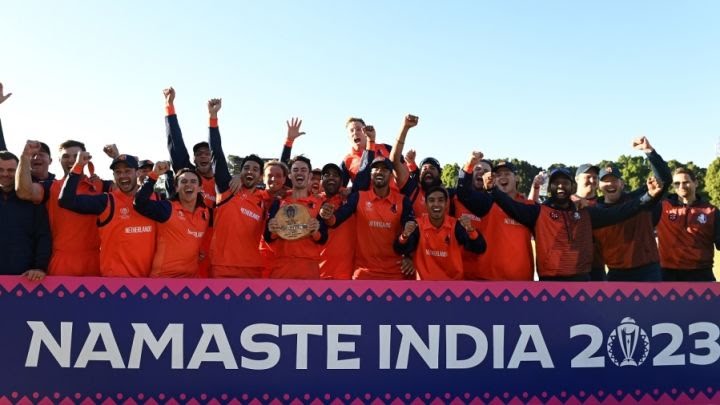
Cricket Scotland and the Royal Dutch Cricket Association (KNCB, the Netherlands Cricket Board) have expressed displeasure over the ICC’s decision to revamp the structure of the Men’s ODI World Cup 2027 with less than 18 months to go for the event. Last month, the ICC introduced a Super Series stage of the competition, which will pit the 12th, 13th and the 14th qualifying teams in a tri-series from which only one will make it to the second round of the World Cup where 12 teams will be divided into two groups.
After the announcement of the format tweak, Cricket Scotland, the KNCB and other Associate boards had two meetings with the ICC “seeking official written communication on the changes and greater clarity around the processes involved”. In a joint statement issued on Monday, Cricket Scotland and the KNCB have said there has been no response from the ICC since the second meeting, which took place “more than two weeks ago”, and termed the development “disappointing and disrespectful”.
“These changes represent a setback to Associate Member cricket and risk undermining the progress made in recent years to grow the global game,” the two boards said. “At a time when cricket is seeking to expand its reach, attract new audiences and strengthen its position on the international sporting landscape, reducing meaningful opportunities for emerging nations sends entirely the wrong message.
“Cricket Scotland and the KNCB remain fully committed to working constructively with the ICC and fellow Members to strengthen the global game. However, we have significant concerns about both the impact of these changes and the process through which they have been introduced.
“Following the announcement of the changes, Cricket Scotland, KNCB and other Associate Members met twice with the ICC, seeking official written communication on the changes and greater clarity around the processes involved. We also requested positive action to strengthen future operational decision-making and an invitation to bilateral planning meetings with Full Members. Since the second meeting more than two weeks ago, there has been no further response from the ICC, which is disappointing and disrespectful given the significance of the issues raised.”
The captains of Namibia, Netherlands and Scotland had also expressed their reservations over the format change last month, through a statement released by the World Cricketers’ Association, cricket’s global player union. Following that, Namibia Cricket chair Rudi van Vuuren suggested that the players put the altered World Cup schedule into context and prioritise T20s as a growth vehicle.
The joint statement from the boards of Scotland and Netherlands suggested that the Associate Members had not been given sufficient notice for the change in format.
“The changes risk weakening the integrity and credibility of international cricket, and only highlights the importance of strong governance, transparent decision-making and effective engagement with Members,” the statement said. “Decisions of this significance, particularly those directly affecting Associate Members, should be made clearly following meaningful consultation and with sufficient notice for affected Members to understand and respond to the implications.
“The timing of these changes, with less than eighteen months until the tournament, has given affected Members limited opportunity to contribute to the process or adapt. We believe greater engagement with Associate Members would have supported a more effective and collaborative approach and help maintain confidence in the qualification pathway.”
By the time the tweak in the World Cup format came through, World Cup League 2 had almost concluded, with USA, Scotland, Netherlands and Oman securing their spots in the ODI World Cup Qualifier, with the bottom four teams – Namibia, Canada, Nepal and UAE – proceeding to play the eight-team World Cup Qualifier Play-off. The top four from that tournament will make it to the global qualifier to be played in February 2027.
“Members and their players invest years in preparing for World Cups, and confidence in those pathways depends on them not changing part-way through a qualification cycle without consultation,” the statement said. “Changing those structures at short notice creates significant uncertainty, disrupts planning, and places additional operational and financial pressure on organisations that are already operating with limited resources. The opportunity to compete at a World Cup provides Associate Members with a unique competitive opportunity to drive investment, inspire players, attract commercial partners and government support, and create moments that capture the imagination of supporters.
“Some of the most memorable moments in ICC tournaments have come when Associate Members have challenged, and in some cases defeated, Full Members on the world stage. Those performances have always reinforced the principle that success is earned on the field. Our players work incredibly hard with limited resources to earn these opportunities and deserve respect and for their efforts to be rewarded.
“Leaders in cricket have consistently spoken about their ambition for the sport to become truly global. We call upon the ICC to re-engage with Associate Members and their requests and commit to engaging openly with all Members on how the long-term interests of the global game can best be served.”
[Cricinfo]


by Rex Clementine
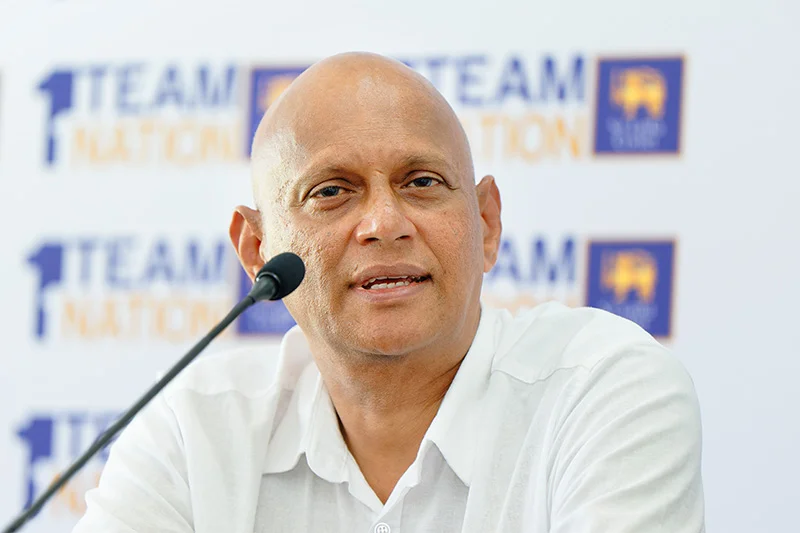
Sri Lanka’s Chairman of Selectors Kapila Wijegunawardene held his first media briefing yesterday since assuming office four months ago, a period in which several decisions have left the cricketing fraternity scratching their heads.
To his credit, the Chief Selector admitted that picking Lahiru Kumara for the tour of the Caribbean without first proving his fitness had been a mistake. It proved a costly one too, with the fast bowler breaking down after sending down just one over.
The former medium pacer was considerably more guarded when confronted with other contentious issues, including Dhananjaya de Silva’s defensive captaincy and the decision to recall Niroshan Dickwella after more than three years in the wilderness.
“We learned a tough lesson after what happened in the Caribbean with Lahiru Kumara and now we have made it mandatory for players to prove their fitness in domestic cricket when they come back from injuries,” Wijegunawardene told reporters.
That perhaps summed up the philosophy of this selection panel. Having burned their fingers once, caution appears to be the watchword. There seems little appetite for bold calls – the sort Duleep Mendis made when he gave Sanath Jayasuriya and Romesh Kaluwitharana licence to tear into attacks during the field restrictions, or Sidath Wettimuny when he entrusted the vice-captaincy to a 22-year-old Mahela Jayawardene.
Ironically, as Wijegunawardene addressed the media, NCC were taking on Moors in a domestic T20 quarter-final right in front of his eyes at the SSC. One of those making an impression was seam bowling all-rounder Milan Rathnayake, who dismissed Dickwella for a second ball duck.
Wijegunawardene was duly asked why Milan had not been considered for the forthcoming tour of England.
Until now, the impression had been that the selectors were investing in Milan, giving the all-rounder sufficient international exposure with an eye on next year’s World Cup in South Africa. Suddenly, however, it appears to be back to square one, with Wijegunawardene indicating that the selectors have turned again to Dasun Shanaka for the all-rounder’s slot.
Shanaka has not played an ODI for more than two and a half years and has earned his recall largely on the strength of his T20 form. Yet he has repeatedly struggled to convince in the 50 over format, particularly if the selectors view him primarily as a batting all rounder.
This is where the selectors appear to have failed to do their homework. A proper analysis of Shanaka’s record would tell them that his batting has seldom been reliable enough in ODI cricket. The numbers tell that story quite clearly.
What the numbers will not tell you is that Dasun has instigated more bloodless coups than General Zia-ul-Haq and General Pervez Musharraf put together.
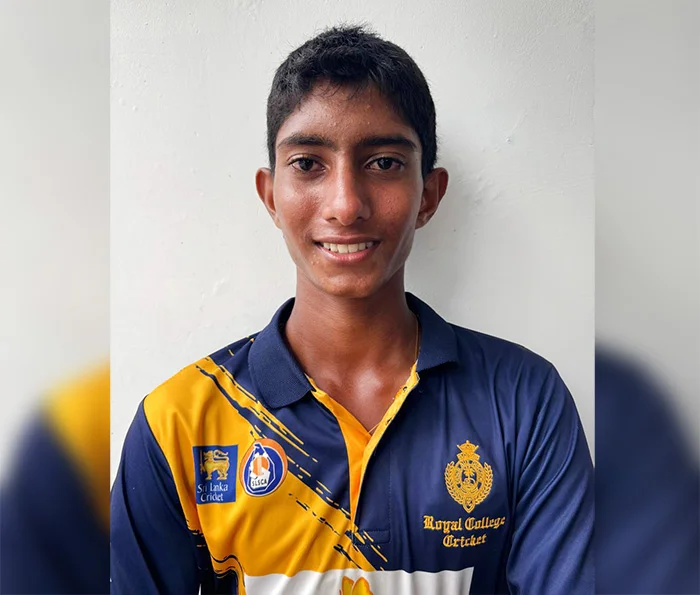
Royal College Colombo ‘B’ team reached the Under-17 Division II Inter-Schools Limited Overs Cricket Tournament final with a convincing 125-run win over Sir John Kothalawala College, Kurunegala as Manish Wijesundera excelled with a century at Ananda Mawatha.
Wijesundera produced a match-defining innings, hitting an unbeaten 114 off 129 balls, with 15 fours and four sixes for Royal to post 235 for seven in 50 overs.
Chasing 236 for victory, Sir John Kothalawala never threatened the target and were bowled out for 110 in 33 overs as Dinuja Wellahewage led the way with a superb four for 25 in nine overs.
While Dulna Nimnal took two wickets, Sithuka Alwis, Binara Kulasekara and Senuth Perera took a wicket each.
Vihaga Chamalsha offered the main resistance with an attacking 43 off 37 balls, including six fours and two sixes, while Pulina Methmal scored 25.
Earlier, Manish Wijesundera’s decisive knock provided the backbone of Royal’s total after the side had slipped to 31 for two.
Sithuka Alwis added 25, while Thumindu Somasiri made 21 as Royal steadily built their total before finishing strongly.
Sir John Kothalawala’s bowlers found it difficult to contain Wijesundera, although Indeepa Udesh impressed with two for 26 from 10 overs. Pulina Methmal also claimed two wickets.
Royal will now meet Wadduwa Central in the final.
Scores
Royal 235 for 7 in 50 overs (Manish Wijesundera 114n.o., Sithuka Alwis 25, Thumindu Somasiri 21; Indeepa Udesh 2/26, Pulina Methmal 2/64)
Sir John Kothalawala
110 all out in 33 overs (Vihaga Chamalsha 43, Pulina Methmal 25; Dinuja Wellahewage 4/25, Dulna Nimnal 2/36)
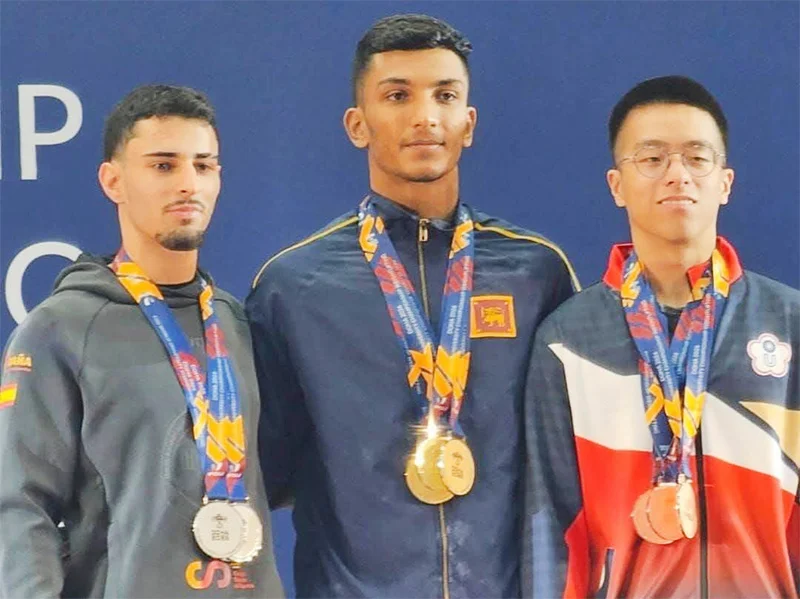
University of Sri Jayewardenepura weightlifter Avindu Liyanagedara made history on Tuesday (08) by becoming the first Sri Lankan university student to win a gold medal at a World University sports event, as Sri Lanka made a spectacular start to the 2026 World University Weightlifting Championship in Doha, Qatar.
Liyanagedara won the men’s 60kg title, while Sabaragamuwa University’s Nipun Dissanayake added a bronze medal in the 65kg category on the opening day of the championship.
Liyanagedara lifted 105kg in the snatch and 132kg in the clean and jerk for an impressive combined total of 237kg.
Spain’s Gomez Martinez took the silver with 228kg, while Chun-Yen Tang of Chinese Taipei won bronze with 227kg.
Dissanayake also secured a podium finish in the 65kg class with a total of 220kg, comprising a 100kg snatch and a 120kg clean and jerk.
Iran’s Mohhadov Tehran won the gold with 289kg, with Moldova’s Ion Badanev taking silver with 288kg.
Liyanagedara’s achievement represents a landmark breakthrough for Sri Lankan university sport. His gold is the first gold medal won by a Sri Lankan university student at a World University sports event, while Dissanayake’s bronze further strengthened the country’s historic opening-day showing.
The Sri Lanka University Sports Association has entered five male and two female athletes for the championship, with University of Colombo’s Sujan Walgampaya serving as team manager and coach.
The championship continues in Doha until September 12, with Sri Lanka already assured of a memorable place in the history of World University sport through Liyanagedara’s historic gold medal.

Showers will occur in the Western and Sabaragamuwa provinces and in Kandy, Nuwara-Eliya, Galle and Matara districts.


Sri Lanka reiterates its territory won’t be used against India

UK-led Core Group calls Jaffna mass graves a ‘stark reminder’ but stops short of calling for international accountability

India underscores security and defence in overall partnership with SL

If Sri Lanka wants ‘real’ stability, only one way to achieve it, in a short time

‘Dates have the highest sugar content to fight Coronavirus’

Sunday Island 27 December – Headlines

#SundayIsland 17th December – Headlines

Sunday Island – 28th March

Sunday Island Headlines – 21 March

Sunday Island – 21st February – Headlines
-

 News5 days ago
Namal remanded until Sept. 18 over Airbus deal investigation
-

 Latest News4 days ago
Tharanga creates history with Diamond League crown in Brussels
-

 News4 days ago
Dispute which triggered listed company director being detained at BIA resolved
-

 Features3 days ago
After the parade: What a traffic OIC’s walk-out tells us
-
 Opinion6 days ago
In Memory of Dr Upatissa Pethiyagoda
-

 Editorial5 days ago
Power vs Equality
-
 Latest News6 days ago
SLPP MP Namal Rajapaksa arrested by CIABOC
-
Editorial3 days ago
Arrests as theatre