
Latest News
Scotland bank on ICC assurances over Sharif visa after naming T20 World Cup squad

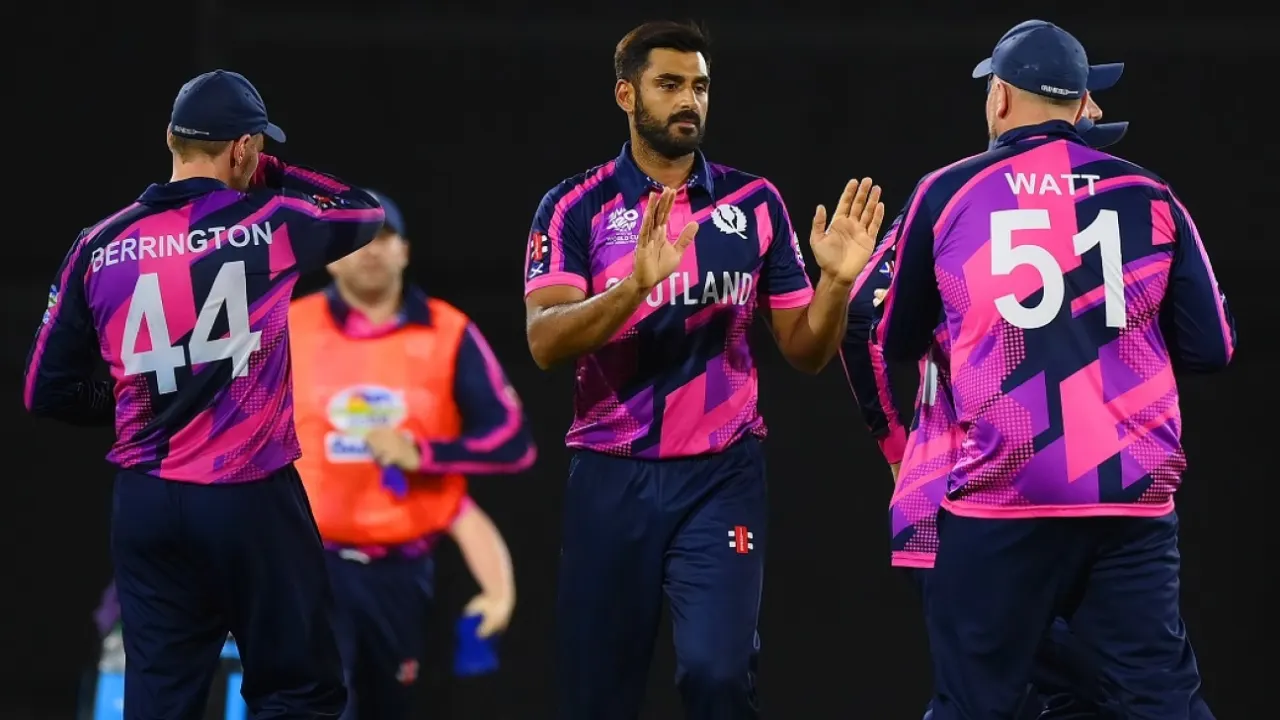
Cricket Scotland has received assurances that the ICC is working “very, very hard” to ensure Scotland’s players will be granted Indian visas in time for their opening T20 World Cup fixture on February 7 – including fast bowler Safyaan Shariff, who has Pakistani heritage.
Scotland were the beneficiaries of Bangladesh’s last-minute withdrawal from the World Cup as the highest-ranked team who had not already qualified, and named a 15-man squad on Monday afternoon which is due to fly to India later this week.
The state of political and diplomatic relations between India and Pakistan has resulted in regular delays for Pakistani nationals or those with Pakistani heritage when applying for Indian visas in recent years, including several cricketers.
But Cricket Scotland is confident that Sharif – who was born in Huddersfield to a Pakistani father and a British-Pakistani mother before moving to Scotland aged seven – will be granted a visa in time for the team’s opening match against West Indies in Kolkata.
“We are all committed [to] working with the ICC to make that happen,” Trudy Lindblade, Cricket Scotland’s chief executive, said on Monday. “The visa piece is always slightly an unknown, and it doesn’t matter whether you’ve got three days or whether you’ve got 45 days.
“Certainly that’s been our focus in the last 48 hours: just getting those visas done so our players are all ready to go. They’re all in the middle of submitting their visas and we will be there on the ground in India as quickly as we can, so it’s just a matter of time now.
“[The ICC] can only give us the assurances of the bits that they can control and, absolutely, of the bits that they control, we are working with them and obviously they’re working with the BCCI and local people on the ground there to make sure that we are getting all of that support that we need.
“So, absolutely, [they have given] the assurance that they can provide of things that were in their control. There is a team working very, very hard to not just help us, but to help 19 other teams as well that are also going to a World Cup. But we are their intense focus right now.”
Scotland will also apply for visas for two travelling reserves and three non-travelling reserves so that they will be able to field a team even in the event of delays and their head of performance, Steve Snell, said that the ICC had been “fantastic” in supporting their hurried preparations.
“We also anticipate some support whenever we can [get it] from the BCCI,” Snell said. “I don’t think we need to escalate that any further to get into the country, because you’d suggest that Scotland being invited to attend the World Cup and then not being able to get there wouldn’t be a great look for anybody.”
There are three changes to Scotland’s squad since the 2024 T20 World Cup, when they narrowly missed out on qualification for the Super 8s, with 19-year-old Afghanistan-born fast bowler Zainullah Ihsan in line for an international debut after winning his maiden call-up.
Tom Bruce, who played 17 T20Is for New Zealand as a middle-order batter from 2017 to 2020, is another significant inclusion, having switched allegiance to Scotland last year and made his ODI debut for them in August.
Chris Sole, the express fast bowler, is a notable absentee. Sole, who has regularly registered speeds in excess of 90mph/145kph, has played franchise cricket in the ILT20 and the CPL and featured for Scotland at their last World Cup appearance, but has not played a professional match since late 2024 as he focuses on a non-playing career in recruitment.
Ihsan, Bruce and batter Finlay McCreath are the three players involved who did not feature in the 2024 T20 World Cup squad, replacing Sole, Oli Haris and Jack Jarvis (who is one of the travelling reserves).
Hampshire seamer Scott Currie, who played three ODIs in early 2024, was not considered as he is no longer eligible for selection.
Currie, whose older brother Brad is part of the squad, was picked by England for their T20I series against Ireland in September and while he did not win a cap, the fact that he was named as an official substitute on their teamsheet renders him unavailable for Scotland until September 2028 under ICC regulations.
Scotland are due to play warm-up matches against Afghanistan and Namibia in Bengaluru on February 2 and 4 before their opening fixture against West Indies in Kolkata. Their other first-round matches are against Italy, England and Nepal, with the top two teams in Group B then qualifying for the Super 8s stage.
“The squad selection is subject to all player and staff visa applications being approved,” Cricket Scotland said in a statement. “Given the limited notice for Scotland’s participation at the tournament and timescale for selecting players, two travelling reserves have been selected while three others will be non-travelling reserves.”
Scotland squad for T20 World Cup:
Richie Berrington (capt), Tom Bruce, Matthew Cross, Brad Currie, Oli Davidson, Chris Greaves, Zainullah Ihsan, Michael Jones, Michael Leask, Finlay McCreath, Brandon McMullen, George Munsey, Safyaan Sharif, Mark Watt, Brad Wheal
Travelling reserves: Jasper Davidson, Jack Jarvis
Non-travelling reserves: Mackenzie Jones, Chris McBride, Charlie Tear
[Cricinfo]

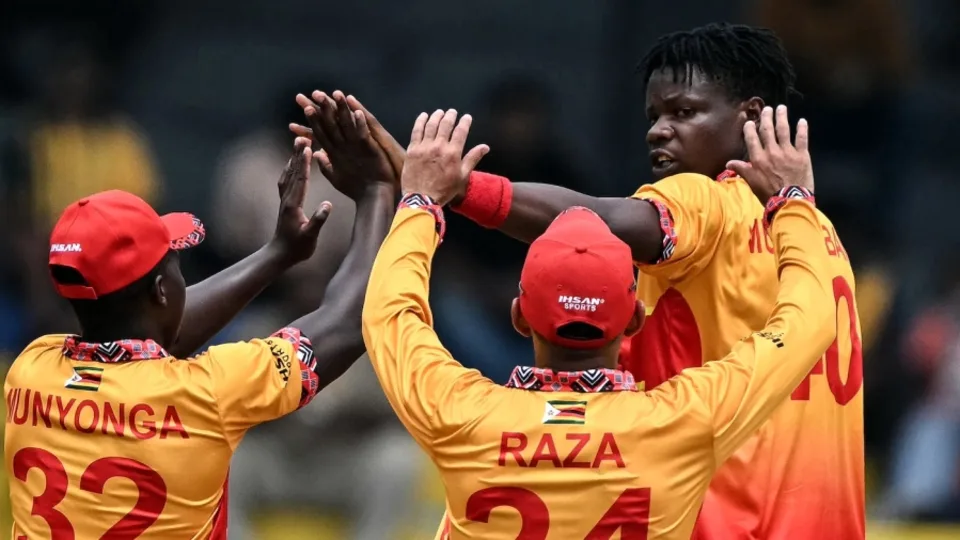
When Ireland arrived in Kandy on Sunday afternoon, with just two points after three games, their chances of qualifying for Super Eights may have seemed fanciful. But courtesy an outstanding Sri Lankan chase against Australia on Monday night, the possibilities for Group B have been thrown wide open.
Sri Lanka have qualified, but Ireland now know that a win against Zimbabwe on Tuesday will keep them in with a very real chance of qualification – provided Sri Lanka also beat Zimbabwe in their final match.
If those very specific set of circumstances – including Australia beating Oman – occur, then Australia, Zimbabwe and Ireland could all end on four points each, separated solely by net run-rate.
But that might be getting ahead of ourselves. Zimbabwe simply need to win against Ireland to end all speculation, and considering they’re coming off a stunning 23-run victory over Australia, it would take a brave person to back against them.
Captain Sikandar Raza is also not one to allow his team to let their guard down. He has emphasised the need to maintain focus, warning that earlier performances will “count for nothing if the team slips up now.
Ireland, meanwhile, have lost to Sri Lanka and Australia earlier in the tournament but their dominant 96-run win over Oman – including a tournament-high of 235 – will have provided a timely boost in confidence. They also come in with a chip on their shoulder, over constant comparisons to Associate nations, something they will be keen to put right with a win over Zimbabwe.
Lending more unpredictability to this game is that the historical rivalry is remarkably balanced, with both sides having won eight apiece of their 18 T20I meetings.
With the extra bounce on offer, the Pallekele International Cricket Stadium is one of the rare Sri Lanka grounds where more wickets have fallen to seam (201) than spin (154). It would be no surprise if seamers from both teams prove to be the difference on Tuesday.
In Richard Ngarava, Blessing Muzarabani and Brad Evans, Zimbabwe have a pace triumvirate that can be the envy of any side in this tournament. They’ve taken 16 wickets amongst them, and managed to brush past Australia even with Ngarava out of the XI. Moreover, Muzarabani has won two Player-of-the-Match awards.
In Mark Adair, Ireland have the quintessential work horse. Despite making his debut after Josh Little and Barry McCarthy, he’s played more T20Is – 100 – than the other two and managed to pick up 142 wickets. He also loves bowling against Zimbabwe; his 24 wickets are the most he has taken against an opposition. With Little finding his form last time out with a first three-for since March 2024, Ireland will know any chance of success depends on how quick their seam-bowling unit find their rhythm.
Ireland are unlikely to change a winning combination after their exploits against Oman.
Ireland (probable XI): Tim Tector, Ross Adair, Harry Tector, Lorcan Tucker (capt & wk), Curtis Campher, George Dockrell, Gareth Delany, Mark Adair, Josh Little Barry McCarthy, Matthew Humphreys
Zimbabwe would have had a close eye on the pitch Sri Lanka played Australia on, but the only expected change is the return of Richard Ngarava who missed out last time as a precaution.
Zimbabwe (probable XI): Brian Bennett, Tadiwanashe Marumani (wk), Dion Myers, Sikandar Raza (capt), Ryan Burl, Tashinga Musekiwa, Brad Evans, Wellington Masakadza, Graeme Cremer, Blessing Muzarabani Richard Ngarava
[Cricinfo]
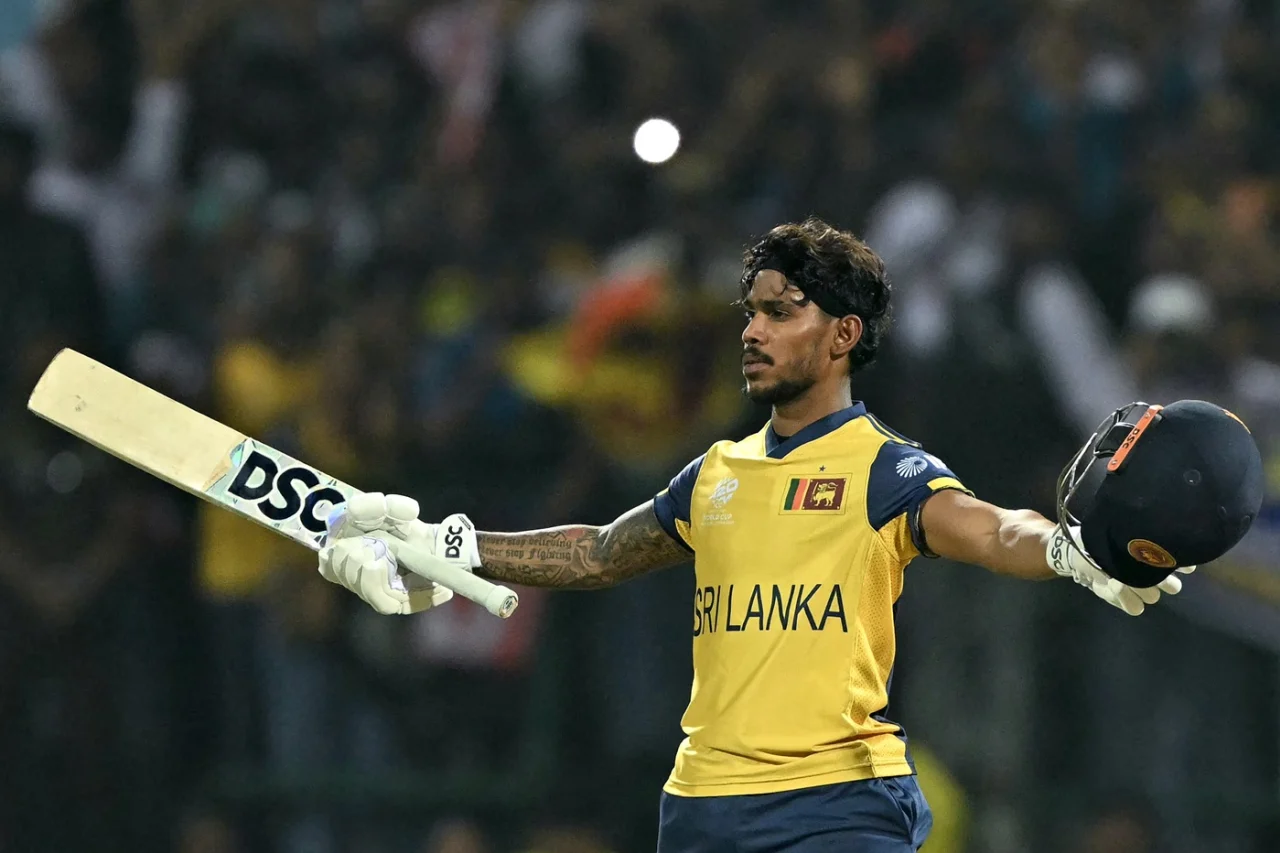
Sri Lanka survived an early onslaught to qualify for the 2026 T20 World Cup Super Eights, leaving Australia right at the exit door and hoping for a miracle.
The returning captain Mitchell Marsh and the returning-to-runs Travis Head were brutal in taking Australia to 104 in the first 50 legal deliveries, but some spectacular fielding and spin bowling helped Sri Lanka take 10 for 77 off the last 70 balls.
In front of a partying full house in Pallekele, Sri Lanka’s two most prolific batters, Pathum Nissanka and Kusal Mendis, brought out both the axe and paper cuts to slice through the chase. Nissanka, who had earlier dropped Glenn Maxwell and then dismissed him with a stunner, went on to score an unbeaten hundred and take Sri Lanka home with two overs to spare.
In the absence of Matheesha Pathirana, who walked off with a calf injury in his first over, their spinners contributed six wickets to go with excellent closing from Dushmantha Chameera. Australia’s lead spinner Adam Zampa, among the best T20 spinners of all time, took no wicket and was lucky to go for only 41 in his four overs.
Brief scores:
Sri Lanka 184/2 in 18 overs [Pathum Nissanka 100*, Kusal Mendis 51, Pavan Rathnayake 2*; Marcus Stoinis 2-41] beat Australia 181/10 in 20 overs [Mitchell Marsh 54, Travis Head 56, Josh Inglis 27, Glenn Maxwell 22; Dushmantha Chameera 2-56, Maheesh Theekshana 1-37, Dushan Hemantha 3-37, Dunith Wellalage 1-33, Kamindu Mendis 1-19] by eight wickets
[Cricinfo]
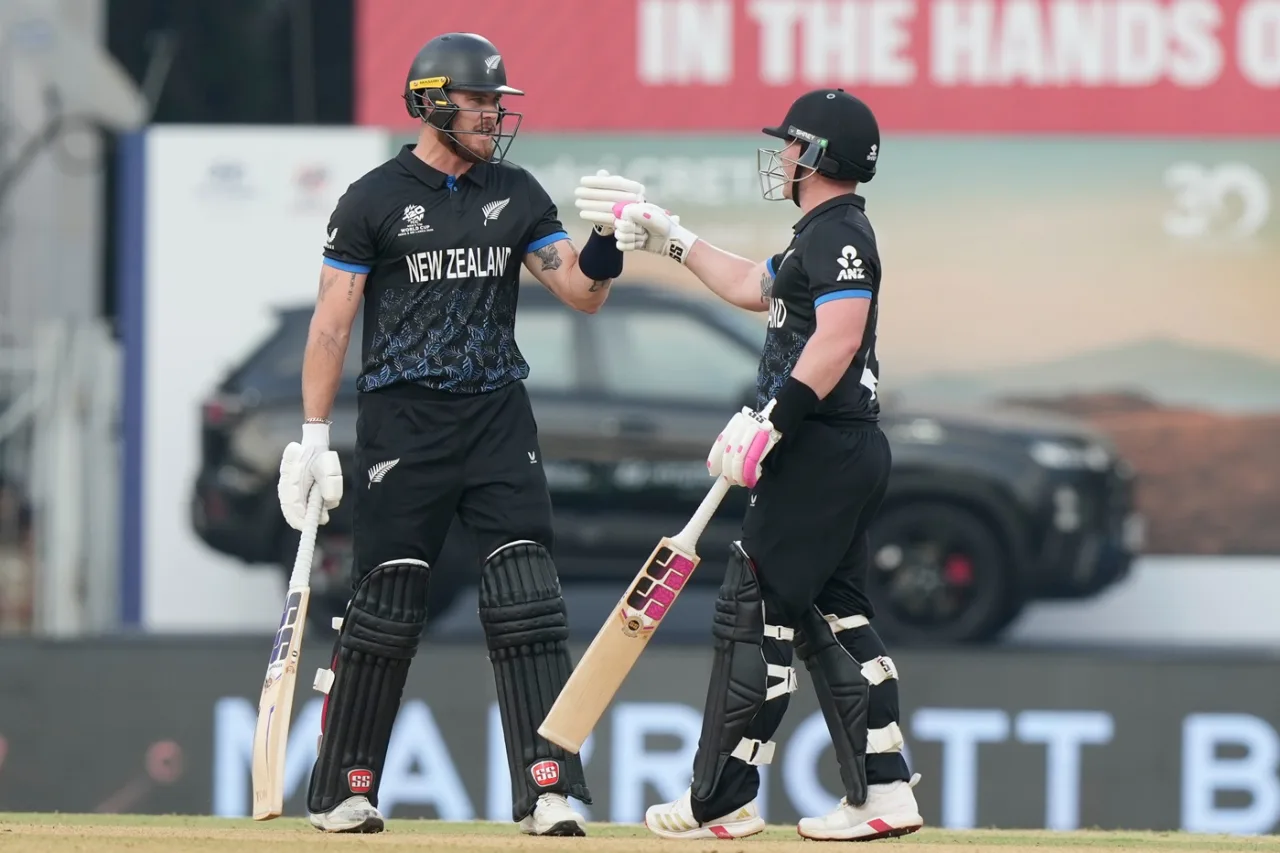
A win against Canada in their first T20I against them on Tuesday will firm up New Zealand’s spot in the Super Eight. This result will also knock out Canada; South Africa have already qualified for the next round from Group D with three wins in as many games.
New Zealand have faced Canada just three times in international cricket so far – each time in ODI World Cups. Their most recent meeting coming in the 2011 edition in Mumbai. They have won all three games and are poised to make it 4-0 against Canada in World Cups, despite the absence of Lockie Ferguson. The fast bowler has returned home for the birth of his first child and is expected to link up with the side ahead of the Super Eight. In Ferguson’s absence, Kyle Jamieson, who wasn’t even in the main squad in the first place, is set to make his T20 World Cup bow.
As for Canada, they had their moments against South Africa and UAE but they have failed to convert those into wins. On Friday in Delhi, they had UAE at 66 for 4 in the 13th over in a chase of 151, but they left the door ajar for Aryansh Sharma and Sohaib Khan to sneak home. Canada can’t afford such slip-ups against New Zealand – and then Afghanistan – if they are to notch up a win in this World Cup.
Kyle Jamieson doesn’t quite have Ferguson’s express pace, but can bang it away on a hard length and stifle the opposition batters. He also has some slower variations in his repertoire and his high-arm release could pose a big threat, especially to batters who are facing him for the first time.
Once known as “Vettori” in Canada’s club cricket circuit, Saad Bin Zafar will run into the team that was once captained by one of his heroes. The Canada left-arm spinner often attacks the stumps and keeps it tight, as his economy rate of 6.02 across 67 T20Is suggests. At 39, Saad knows he won’t be playing the game for long and will be eager to cause a few upsets on the big stage.
Jamieson is set to slot in for Ferguson unless New Zealand want to give veteran legspinner Ish Sodhi a game.
New Zealand (probable): Tim Seifert (wk), Finn Allen, Rachin Ravindra, Glenn Phillips, Daryl Mitchell, Mark Chapman, Mitchell Santner (capt), Jimmy Neesham, Kyle Jamieson, Matt Henry, Jacob Duffy
Canada are likely to play the same XI that lost to South Africa and UAE.
Canada (probable): Dilpreet Bajwa (capt), Yuvraj Samra, Navneet Dhaliwal, Nicholas Kirton, Shreyas Movva (wk), Harsh Thaker, Saad Bin Zafar, Jaskaran Singh, Dilon Heyliger, Kaleem Sana, Ansh Patel
[Cricinfo]

Showers above 75 mm are likely at some places in the Central, Uva and Eastern provinces and in Polonnaruwa district

Zimbabwe take on Ireland with clarity about Super Eights path

CEB seeking tariff hike while making huge profits, says opposition trade union leader

BASL protest march

IMF MD here

Navy earns USD 598,250 in 4 months from independent maritime security operations

‘Dates have the highest sugar content to fight Coronavirus’

Sunday Island 27 December – Headlines

#SundayIsland 17th December – Headlines

Sunday Island – 28th March

Sunday Island Headlines – 21 March

Sunday Island – 21st February – Headlines
-

 Life style2 days ago
Marriot new GM Suranga
-

 Business1 day ago
Ministry of Brands to launch Sri Lanka’s first off-price retail destination
-

 Features2 days ago
Monks’ march, in America and Sri Lanka
-
 Midweek Review6 days ago
A question of national pride
-

 Business6 days ago
Autodoc 360 relocates to reinforce commitment to premium auto care
-
 Opinion5 days ago
Will computers ever be intelligent?
-

 Features2 days ago
The Rise of Takaichi
-

 Features2 days ago
Wetlands of Sri Lanka: