
Latest News
Scorching European heatwave turns deadly in Spain, Italy and France


A wildfire in Spain and high temperatures elsewhere in Europe have claimed another six lives as the continent swelters in temperatures topping 40C.
Two farmers died when they became trapped by flames near the town of Coscó in Spain’s Catalonia region. Authorities said a farm worker had appealed to his boss for help, but they were unable to escape as fire spread over a large area.
In Italy, two men died after becoming unwell on beaches on the island of Sardinia, and a man in his 80s died of heart failure, after walking into a hospital in Genoa.
A 10-year-old American girl collapsed and died while visiting the Palace of Versailles south-west of Paris , reports said.
According to French broadcaster TF1, she collapsed at the courtyard of the royal estate, in front of her parents, at around 18:00 local time on Tuesday. Despite efforts by the castle’s security team and emergency services, she was pronounced dead an hour later.
France’s ecological transition minister Agnès Pannier-Runacher said earlier that two heat-related fatalities had been recorded in France and that more than 300 people had been given emergency care.
The European continent is experiencing extremely high temperatures, a phenomenon that the UN’s climate agency said is becoming more frequent due to “human-induced climate change”.
For Spain and England, the month of June marked their hottest June since records began. Spain’s weather service, Aemet, said last month’s average temperature of 23.6C (74.5F) “pulverised records”, surpassing the normal average for July and August.
The two men who died in the fire in Catalonia were identified later as the farmer owner and a worker aged 32 and 45.
Emergency services said the fire had spread to an area of up to 6,500 hectares.
Aemet forecast temperatures of 41C in the southern city of Córdoba on Wednesday, and said overnight temperatures were as high as 28C in the nearby town of Osuna the night before.
France has registered its second-hottest June since records began in 1900. June 2023 was hotter.
Four departments in France remained on the red alert level for heat on Wednesday, the highest level. These include Aube, Cher, Loiret and Yonne, according to Météo-France.

In Sardinia, where temperatures have exceeded 40C in recent days, a 75-year-old man died after falling ill on a beach in Budoni. Another man, 60, became sick while on the beach of Lu Impostu in San Teodoro.
Two construction workers in the Italian province of Vicenza were rushed to hospital at 15:30 local time on Tuesday because they fell ill as a result of the heat while working in a hole. One of the workers is in a coma, according to the Ansa news agency.
Meanwhile two wildfires have prompted emergency evacuations in Greece, as authorities warn of a very high fire risk across many regions, including Attica, Crete, and parts of the Peloponnese and Aegean islands.
In Halkidiki, a fast-moving blaze near the coastal village of Vourvourou burned through highly flammable pine forest, forcing residents and campers to flee. Power cuts have been reported in the area, while 65 firefighters, ground teams, and aerial units are battling the flames in steep terrain.
Meanwhile, in Crete, a separate wildfire near Ierapetra triggered emergency alerts in Achlia, Ferma, Agia Fotia and Galini, prompting evacuations of homes and hotels.
Strong winds pushed the fire dangerously close to tourist accommodation, with helicopters and fire crews working to prevent further spread.
Dimple Rana, heat and microclimate specialist at sustainable development consultancy Arup, told the BBC there was “a big link between heat-related impact and age”.
In the UK, for example, most heat-related deaths were among older adults, Ms Rana said. Younger children, particularly those under five, were also at risk.
Another factor to consider is that often people on lower incomes undertake more manual work, Ms Rana said, meaning they are more exposed to higher temperatures.
Heatwaves are becoming more common due to human-caused climate change, according to the UN’s Intergovernmental Panel on Climate Change.
Extreme hot weather will happen more often – and become even more intense – as the planet continues to warm, it has said.
The World Meteorological Organization (WMO), which is the UN’s weather and climate agency, said on Tuesday that human-induced climate change meant “extreme heat is becoming more frequent and intense”.
In a statement, the WMO added: “The effect of heat on human health is more pronounced in cities as a result of the urban heat island effect.
“This is where urban environments are significantly warmer than surrounding rural areas, especially during hot periods, due to an abundance of paved surfaces, buildings, vehicles, and heat sources.”
“This additional heat in cities exacerbates heat stress and can increase mortality during hot periods,” the agency said.
[BBC]


Vijayakanth Viyaskanth broke the stand with Parvez’s wicket and triggered another collapse. Bangladesh went from 50/5 to 72/8 in the space of 18 deliveries, the chase now well beyond their reach. Sri Lanka’s bowling quartet of Ratnayake (2-18), Nuwan Thushara (2-18), Vijayakanth Viyaskanth (2-26), Wanuja Sahan (2-17) did all of the damage as Bangladesh were bowled out for 102 – 63 short of their target.
Scores:
Sri Lanka 165/9 in 20 overs [Sahan Arachchige 33, Ashen Bandara 18, Thjarindu Rathnayake 65; Mahedi Hasan 2-19, Al Islam 1-18, Rishad Hossain 1-46, Saif Hasan 2-28, Mustafizur Rahman 2-43] beat Bangladesh 102/10 in 17.3 overs [Parvez Hossain Emon 20, Towhid Hridoy 11, Yasir Ali 21, Rishad Hossain 10, Nasum Ahmed 26; Nuwan Thushara 2-18, Tharindu Rathnayake 2-18, Vijayakanth Viyaskanth 2-26, SahanArachchige 1-09, Wanuja Sahan 2-17, Dushan Hemantha 1-11] by 63 runs.
[Cricbuzz]

The G7 has agreed to release 100 million barrels of oil and diesel in a bid to ease supply pressures that have caused prices to skyrocket.
The group of advanced economies, including the US, said the move would include a “substantial release” of diesel in the coming days.
President Donald Trump had threatned to ban diesel exports in a move which would have eased pressure on prices for US consumers ahead of November’s midterm elections, but pushed up prices elsewhere.
In a joint statement, the G7 said member countries had now agreed to “refrain from export restrictions on energy and energy products” on one another.
The G7 includes the US, UK, Canada, Japan, Germany, Italy and France, with the EU also represented at its meetings.
Trump had warned he would ban diesel exports from the US if European countries did not agree to put more of their own stocks onto the market.
On Friday, he said on social media: “Europe has just agreed to release a massive amount of their heavily stocked Diesel Oil. The process will begin immediately.”
His Treasury Secretary Scott Bessent had argued US farmers, truckers, and businesses “should not be left carrying the burden” as prices soar.
Diesel is used heavily by the haulage industry and in agriculture, meaning rises in the cost of the fuel feed through into essentials such as food.
But, following a meeting of G7 leaders, French President Emmanuel Macron said the bloc had agreed to release reserves of “up to 100 million barrels” within four months under the coordination of the International Energy Agency (IEA).
The UK was represented at the meeting by Foreign Secretary Ed Miliband, who said the measures would “stabilise energy supplies, build resilience in supply chains and shield households and businesses from price shocks”.
Macron said the coordinated action would “bring down the prices of petroleum products, particularly diesel”. Highlighting the agreement not to pursue export bans, Macron said “President Trump, in particular, was very clear on this point”.
Speaking at the White House, Trump later said an export ban on diesel was “never really on the table”.
In the joint statement, G7 leaders said: “We will implement our commitments with a coordinated release through the IEA of 100 million barrels to begin immediately over four months, including a frontloaded substantial diesel release within the first 20 days by G7 members and partners.”
It is not yet clear which partner countries will release stocks, nor how quickly.
The 100 million barrels will comprise a mix of diesel and crude oil. The price of global benchmark Brent crude oil briefly dropped below $100 a barrel, but rose back to around $102 by Friday evening. Before the US and Israel invaded Iran, it was trading at around $73.
Matt Smith, director of commodities research at Kpler, said oil had risen again due to renewed strikes between Saudi Arabia and the Houthis in Yemen.
“Oil prices were selling off strongly due to the announcement of strategic stock releases in Europe, but they reversed course on rumours of Saudi Arabia planning an offensive into Yemen as it looks to re-establish a safe path via Bab-Al Mandeb,” he said.
European countries had pushed back against US threats to turn off American diesel, against a backdrop of the US-led war in the Middle East and reduced supplies from Russia and China.
The G7 leaders said they will also coordinate maintenance schedules to avoid multiple refineries being shut down at the same time, while encouraging countries with the capacity to do so to ramp up refining of diesel in particular.
Avoiding a ban on US diesel exports will offer significant relief to countries which are reliant on imports of the fuel, including the UK, where prices at the pump topped £2 a litre for the first time on Friday.
Over half of the UK’s diesel is imported, with 31% of those imports coming from the US.
(BBC)
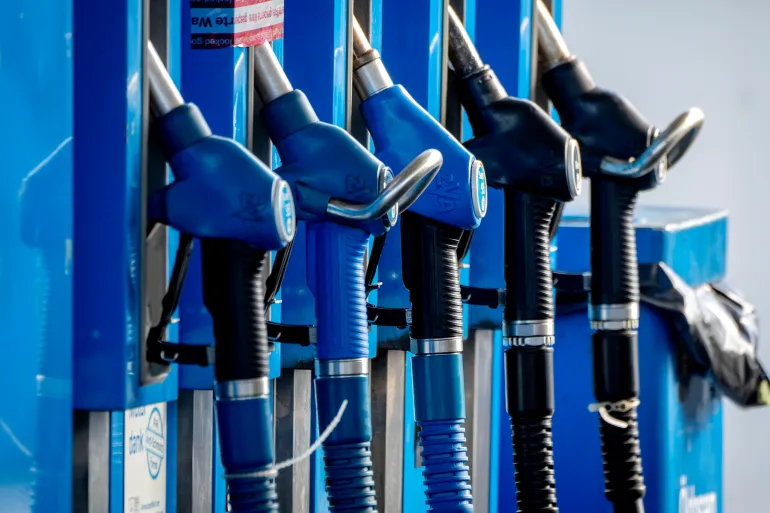
Th European Union “fully rejects” a US demand to release emergency diesel stocks as the fuel’s price soars in America and elsewhere amid the war with Iran.
The EU “fully rejects” the threat made by the US to ban diesel exports if Europe does not release more of its fuel stocks, according to European Commission spokesperson Anna-Kaisa Itkonen.
“A ban would not be beneficial to anyone. It would undermine our trust in the United States as a reliable partner,” she said, adding that the next EU’s Oil Coordination Group meeting is scheduled for October 15, but could be brought forward if needed.
On Thursday, President Trump said the US could ask European countries to release diesel reserves to rein in rising diesel prices due to the war on Iran.
His comments came after Treasury Secretary Scott Bessent urged Europe to “immediately” tap its reserves.
[Aljazeera]

Tharindu Rathnayake, bowlers secure Asian Games Bronze for Sri Lanka

G7 to release 100 million barrels of oil and diesel after Trump export ban threat

Showers above 75 mm are likely at some places in the Central, Sabaragamuwa, Western, Uva, North-western, Southern and North-central provinces and in Mannar district.

All set for Colombo rally against govt.’s tax policies

Yoshitha R money laundering trial postponed

Lankan troops test mettle in Russian war games

‘Dates have the highest sugar content to fight Coronavirus’

Sunday Island 27 December – Headlines

#SundayIsland 17th December – Headlines

Sunday Island – 28th March

Sunday Island Headlines – 21 March

Sunday Island – 21st February – Headlines
-

 News5 days ago
Police remove Thileepan statue in Jaffna
-

 Features5 days ago
The 22nd Amendment, constitutional recovery and illiberal slippage
-

 Features5 days ago
Of foreigners as CEOs of Lankan ventures
-

 Latest News3 days ago
Gold winner Tharanga gets brand-new Honda Vezel from SLAAJ
-

 News5 days ago
Sajith rejects Jt. Opp. protest sabotage claim; SJB TU chief demands remedial action
-

 Features4 days ago
Thailand’s biggest new global star …
-

 Features3 days ago
Why Sri Lanka needs an Inclusive Civic Nationalism – urgently
-

 News4 days ago
First cases taken up by SC after enactment of 22A dismissed