
Latest News
Scorching European heatwave turns deadly in Spain, Italy and France


A wildfire in Spain and high temperatures elsewhere in Europe have claimed another six lives as the continent swelters in temperatures topping 40C.
Two farmers died when they became trapped by flames near the town of Coscó in Spain’s Catalonia region. Authorities said a farm worker had appealed to his boss for help, but they were unable to escape as fire spread over a large area.
In Italy, two men died after becoming unwell on beaches on the island of Sardinia, and a man in his 80s died of heart failure, after walking into a hospital in Genoa.
A 10-year-old American girl collapsed and died while visiting the Palace of Versailles south-west of Paris , reports said.
According to French broadcaster TF1, she collapsed at the courtyard of the royal estate, in front of her parents, at around 18:00 local time on Tuesday. Despite efforts by the castle’s security team and emergency services, she was pronounced dead an hour later.
France’s ecological transition minister Agnès Pannier-Runacher said earlier that two heat-related fatalities had been recorded in France and that more than 300 people had been given emergency care.
The European continent is experiencing extremely high temperatures, a phenomenon that the UN’s climate agency said is becoming more frequent due to “human-induced climate change”.
For Spain and England, the month of June marked their hottest June since records began. Spain’s weather service, Aemet, said last month’s average temperature of 23.6C (74.5F) “pulverised records”, surpassing the normal average for July and August.
The two men who died in the fire in Catalonia were identified later as the farmer owner and a worker aged 32 and 45.
Emergency services said the fire had spread to an area of up to 6,500 hectares.
Aemet forecast temperatures of 41C in the southern city of Córdoba on Wednesday, and said overnight temperatures were as high as 28C in the nearby town of Osuna the night before.
France has registered its second-hottest June since records began in 1900. June 2023 was hotter.
Four departments in France remained on the red alert level for heat on Wednesday, the highest level. These include Aube, Cher, Loiret and Yonne, according to Météo-France.
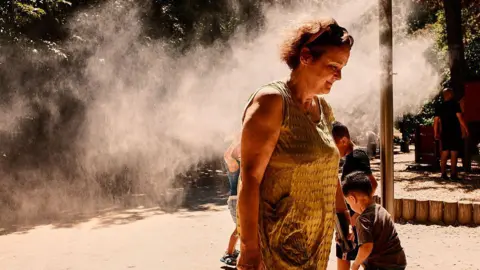
In Sardinia, where temperatures have exceeded 40C in recent days, a 75-year-old man died after falling ill on a beach in Budoni. Another man, 60, became sick while on the beach of Lu Impostu in San Teodoro.
Two construction workers in the Italian province of Vicenza were rushed to hospital at 15:30 local time on Tuesday because they fell ill as a result of the heat while working in a hole. One of the workers is in a coma, according to the Ansa news agency.
Meanwhile two wildfires have prompted emergency evacuations in Greece, as authorities warn of a very high fire risk across many regions, including Attica, Crete, and parts of the Peloponnese and Aegean islands.
In Halkidiki, a fast-moving blaze near the coastal village of Vourvourou burned through highly flammable pine forest, forcing residents and campers to flee. Power cuts have been reported in the area, while 65 firefighters, ground teams, and aerial units are battling the flames in steep terrain.
Meanwhile, in Crete, a separate wildfire near Ierapetra triggered emergency alerts in Achlia, Ferma, Agia Fotia and Galini, prompting evacuations of homes and hotels.
Strong winds pushed the fire dangerously close to tourist accommodation, with helicopters and fire crews working to prevent further spread.
Dimple Rana, heat and microclimate specialist at sustainable development consultancy Arup, told the BBC there was “a big link between heat-related impact and age”.
In the UK, for example, most heat-related deaths were among older adults, Ms Rana said. Younger children, particularly those under five, were also at risk.
Another factor to consider is that often people on lower incomes undertake more manual work, Ms Rana said, meaning they are more exposed to higher temperatures.
Heatwaves are becoming more common due to human-caused climate change, according to the UN’s Intergovernmental Panel on Climate Change.
Extreme hot weather will happen more often – and become even more intense – as the planet continues to warm, it has said.
The World Meteorological Organization (WMO), which is the UN’s weather and climate agency, said on Tuesday that human-induced climate change meant “extreme heat is becoming more frequent and intense”.
In a statement, the WMO added: “The effect of heat on human health is more pronounced in cities as a result of the urban heat island effect.
“This is where urban environments are significantly warmer than surrounding rural areas, especially during hot periods, due to an abundance of paved surfaces, buildings, vehicles, and heat sources.”
“This additional heat in cities exacerbates heat stress and can increase mortality during hot periods,” the agency said.
[BBC]

Latest News
A new curriculum will be introduced for preschools in 2027, while steps will also be taken to train teachers accordingly – PM

Prime Minister Dr. Harini Amarasuriya stated that a new curriculum will be introduced for preschools in 2027, while steps will also be taken to train teachers accordingly and to regulate preschools through a regulatory authority.
The Prime Minister made these remarks while addressing an awareness programme for preschool teachers in the Hambantota District on education reforms, held on Sunday (15) at the Ambalantota Pradeshiya Sabha Auditorium.
During the programme, preschool teachers briefed the Prime Minister about the challenges they currently face. Responding to their concerns, Dr. Harini Amarasuriya further stated:
“The issues within the preschool system cannot be discussed separately from the broader crisis in society and in the education sector. When we assumed office in 2024, our primary challenge was to free the country from its debt burden and to establish. a sound economic indicators.
Although 2025 was a challenging year, we were able to bring the country’s economy to a certain level of stability and manage the national budget accordingly.
While we were working towards economic recovery, the war in the Middle East began, which has had certain impacts on our country as well.
A significant amount of Sri Lanka’s foreign remittances come from our fellow citizens working in the Middle East. Today, both their livelihoods and employment are under threat. In addition, a large number of tourists travelled to Sri Lanka through Middle Eastern airspace, and the closure of those air routes and airports has reduced tourist arrivals. Another issue concerns fuel transportation. This problem has affected not only Sri Lanka but many countries around the world. If the war continues for a long period, it will have further impacts on us, and therefore we must be prepared. We also need to manage the economy carefully and reduce certain expenditures.
Although we have the ability to borrow, our intention is not to weaken the country’s economy by relying on loans.
You are aware that we have begun implementing education reforms. Within that policy framework, we are also taking steps to reform preschool education. So far, the establishment of preschools and early childhood development has not been carried out in a systematic manner. Therefore, we must regulate and standardize all preschools, which is not an easy task.
First, all preschools must be formally registered. We have already prepared a curriculum for teacher training. In addition, we plan to introduce a new curriculum for preschools in 2027, provide teacher training accordingly, and regulate preschools through a regulatory authority. A recognized curriculum has also been prepared for the preschool diploma. In the future, priority for preschool teachers will be given based on these qualifications. We will also take gradual steps to enhance the professionalism of preschool teachers and establish a proper salary structure”.
The Prime Minister further stated that preschools fall under the authority of Provincial Councils and Pradeshiya Sabhas, while the line ministry can only provide policy recommendations. She also emphasized that issues related to preschools should be addressed in a systematic manner through structural committees and District Development Committees.
Member of Parliament Nihal Galappaththi and other public representatives, along with preschool teachers from the Hambantota District attended the awareness program.
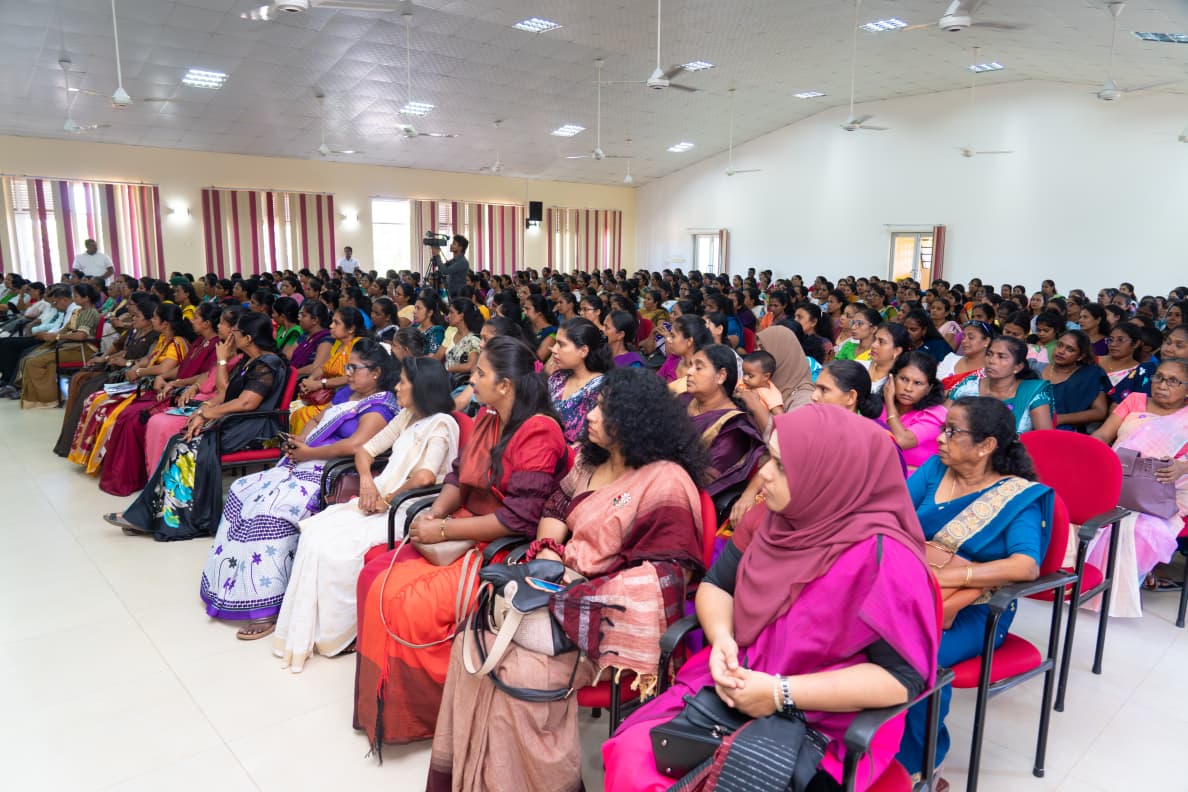
(Prime Minister’s Media Division)
Latest News
Heat Index at ‘Caution level’ at some places in the Western, Sabaragamuwa, Southern and North-western provinces and in Monaragala, Mannar, Anuradhapura and Vavuniya districts
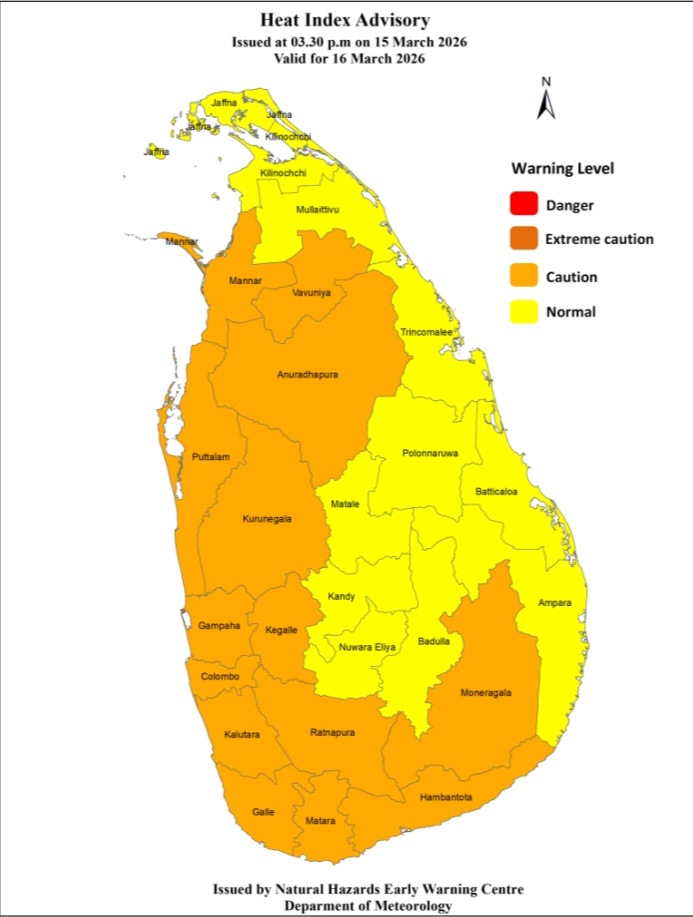
Warm Weather Advisory
Issued by the Natural Hazards Early Warning Centre of the Department of Meteorology at 3.30 p.m. on 15 March 2026, valid for 16 March 2026.
The public is warned that the Heat index, the temperature felt on human body is likely to increase up to ‘Caution level’ at
some places in the Western, Sabaragamuwa, Southern and North-western provinces and in Monaragala, Mannar, Anuradhapura and Vavuniya districts.
The Heat Index Forecast is calculated by using relative humidity and maximum temperature and this is the condition that is felt on your body. This is not the forecast of maximum temperature. It is generated by the Department of Meteorology for the next day period and prepared by using global numerical weather prediction model data.
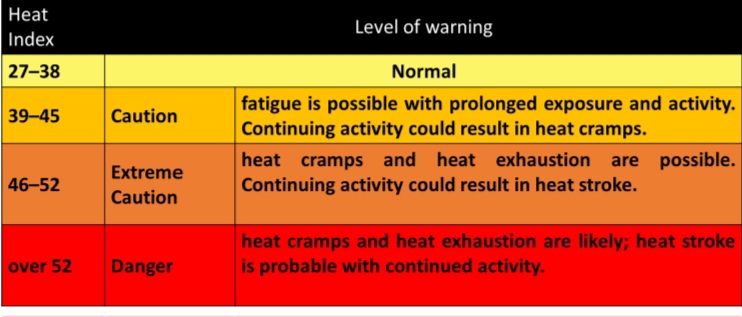
Effect of the heat index on human body is mentioned in the above table and it is prepared on the advice of the Ministry of Health and Indigenous Medical Services.
ACTION REQUIRED
Job sites: Stay hydrated and takes breaks in the shade as often as possible.
Indoors: Check up on the elderly and the sick.
Vehicles: Never leave children unattended.
Outdoors: Limit strenuous outdoor activities, find shade and stay hydrated.
Dress: Wear lightweight and white or light-colored clothing.
Note:
In addition, please refer to advisories issued by the Disaster Preparedness & Response Division, Ministry of Health in this regard as well. For further clarifications please contact 011-7446491
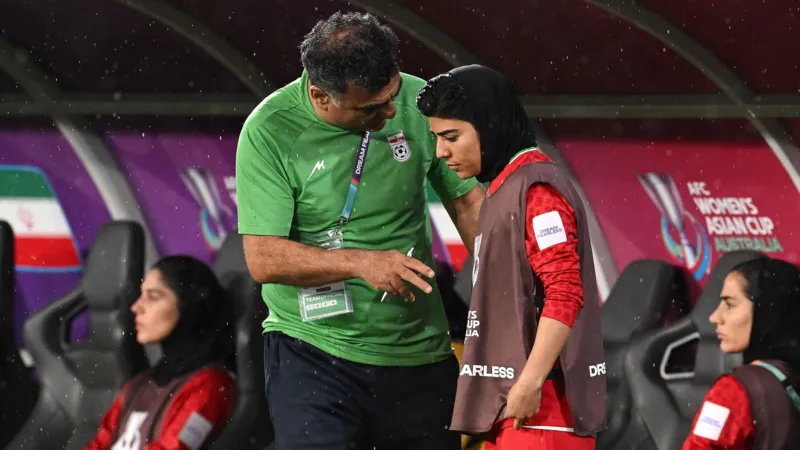
Three more members of the Iranian women’s football delegation – who were given humanitarian visas to stay in Australia – have changed their mind and will return home.
The trio have been named by human rights activists in the Iranian diaspora as Zahra Soltan Meshkehkar, Mona Hamoudi, and Zahra Sarbali.
Concerns grew for the Iranian team after they were silent for the country’s anthem in their opening Asian Cup match against South Korea on 2 March – which led to them being branded “war traitors” in Iran.
Confirming the decisions, Australia’s home affairs minister said his government had done everything it could to ensure the women were given the chance to have a safe future in the country.
“Australians should be proud that it was in our country that these women experienced a nation presenting them with genuine choices and interacted with authorities seeking to help them,” Tony Burke said in a statement.
“While the Australian government can ensure that opportunities are provided and communicated, we cannot remove the context in which the players are making these incredibly difficult decisions.”
Iran’s sports ministry also earlier confirmed the news, first reported by the Islamic Revolutionary Guard Corps-linked Tasnim News Agency, in a statement.
“The national spirit and patriotism of the Iranian women’s national football team defeated the enemy’s plans against this team,” the statement says, also accusing Australia’s government of “playing in Trump’s field”.
Tasnim said the three were on their way to Kuala Lumpur in Malaysia to join the rest of the squad and were “returning to the warm embrace of their families and homeland after withdrawing their asylum application in Australia”.
It said they had resisted “psychological warfare, extensive propaganda and seductive offers”.
It means that, of the seven who initially said they wanted to stay in Australia, only three now remain as defectors. One of the players made the same decision to return to Iran on Wednesday.
Hamoudi and Sarbali were among the original five who refused, after giving minders the slip at the team’s hotel on the Gold Coast, south of Brisbane, last Monday and being taken to a safe house by Australian Federal Police.
Zahra Soltan Meshkehkar, a member of the team’s technical staff, was one of two more women from the group to seek asylum the next day. The other – Mohaddeseh Zolfi – changed her mind hours after being given the right to stay. She is understood to have already rejoined the team.
There was concern in Australia that members of the team and their families might face repercussions in Iran after the players refused to sing the national anthem.
One conservative commentator on Iranian state media accused them of being “wartime traitors” and called for a harsh punishment.
The team did sing the anthem in their last two games before they were eliminated on Sunday, leading critics to believe they had been told to sing by government officials accompanying them during the tournament.
The remaining Iranian players left Australia on Tuesday night local time – two days after they were knocked out of the Asian Cup.
[BBC]

A new curriculum will be introduced for preschools in 2027, while steps will also be taken to train teachers accordingly – PM

Be mindful of the accuracy of information before sharing it on social media – PM

Heat Index at ‘Caution level’ at some places in the Western, Sabaragamuwa, Southern and North-western provinces and in Monaragala, Mannar, Anuradhapura and Vavuniya districts

Showers expected at several places in the Central, Sabaragamuwa, Southern, North-western, Eastern and Uva provinces after 2.00 pm.

Fuel rationing begins: Police deployed as queues return

GMOA warns fuel quota could disrupt health services

‘Dates have the highest sugar content to fight Coronavirus’

Sunday Island 27 December – Headlines

#SundayIsland 17th December – Headlines

Sunday Island – 28th March

Sunday Island Headlines – 21 March

Sunday Island – 21st February – Headlines
-

 News6 days ago
Prof. Dunusinghe warns Lanka at serious risk due to ME war
-

 News4 days ago
Historic address by BASL President at the Supreme Court of India
-

 Sports5 days ago
Royal start favourites in historic Battle of the Blues
-

 Sports4 days ago
The 147th Royal–Thomian and 175 Years of the School by the Sea
-

 Business5 days ago
BOI launches ‘Invest in Sri Lanka’ forum
-

 News5 days ago
CEBEU warns of operational disruptions amid uncertainty over CEB restructuring
-

 News4 days ago
Power sector reforms jolted by 40% pay hike demand
-
 Features5 days ago
Indian Ocean zone of peace torpedoed!