
Opinion
Science with a Soul: Commemorating Jane Goodall’s Legacy


Jane Goodall passed away on 1 October 2025, marking the close of an extraordinary life. Yet, the values she nurtured in younger generations—compassion, curiosity, and reverence for the natural world—will continue to shape conservation efforts and inspire ecological stewardship for years to come. A hallmark of Goodall’s lectures was her unwavering belief that even amidst adversity, hope endures. She consistently illuminated the silver linings behind the darkest clouds, inspiring countless conservationists to remain optimistic and steadfast in their efforts to protect the natural world.
Journey to become a scientist
Born on April 3, 1934, in London, England, Goodall’s fascination with animals took root in early childhood, nurtured by books, nature, and an insatiable curiosity. After completing her education, she worked as a secretary—a modest beginning that belied the groundbreaking path she would soon embark upon.
Driven by her passion for wildlife and outdoor exploration, a friend introduced her to Dr. Louis Leakey, the renowned Kenyan-British paleoanthropologist and archaeologist whose excavations at Olduvai Gorge helped establish Africa as the cradle of human evolution. Leakey’s work was instrumental in reshaping our understanding of human origins.
When Goodall reached out to Leakey, the timing was serendipitous. He was searching for three women to study our closest primate relatives—chimpanzees, gorillas, and orangutans—as part of his effort to investigate Charles Darwin’s theory that humans and apes share a common ancestor. Leakey believed women made better observers: patient, detail-orientated, and less imposing in the field.
He selected Goodall to study chimpanzees in Tanzania’s Gombe Stream National Park, Dian Fossey to observe gorillas in Rwanda’s Virunga Mountains, and Biruté Galdikas to research orangutans in Borneo. The trio would later be celebrated as “The Trimates” and, at times, “Leakey’s Angels.”
In 1960, at just 26 years old, Goodall began her fieldwork. Within months, she made a discovery that would upend conventional anthropology: she observed chimpanzees modifying sticks to fish for termites—clear evidence of tool use. The phrase “Man the tool-maker” encapsulated the prevailing belief at the time, defining tool-making as a uniquely human trait.
Goodall immediately sent a telegram to Leakey describing the behaviour. His response was legendary: “Now we must redefine ‘tool’, redefine ‘man’, or accept chimpanzees as humans.”
Her discovery challenged long-held assumptions and opened the door to a broader understanding of intelligence across species. Today, we know that many animals—including elephants, crows, dolphins, sea otters, octopuses, and even ants—use tools for foraging, defence, and problem-solving. The idea that tool use is exclusive to humans has long since been retired.
Despite lacking a university degree, Goodall’s groundbreaking observations—such as chimpanzees using tools—prompted Leakey to secure her admission to the University of Cambridge. She became one of the few individuals allowed to pursue a PhD without a bachelor’s degree, completing her thesis in 1966 under ethologist Robert Hinde. Her work, based on five years of study at Gombe, revolutionised our understanding of primate behaviour and blurred the boundaries between human and animal cognition. Afterwards, throughout her life, she was honoured with many honorary doctorates.
A scientist with compassion

Jane 2
As her scientific reputation grew, so did her sense of responsibility. In 1977, she founded the Jane Goodall Institute, a global organisation dedicated to wildlife conservation, community-centred development, and environmental education. Her Roots & Shoots programme, launched in 1991, was a programme that is dedicated to fostering positive transformation through education. Its goals include engaging meaningfully with the natural world, cultivating empathy and respect for animals and all forms of life, and promoting mutual understanding across cultures, ethnicities, religions, social classes, and nations. Additionally, it seeks to empower young people to grow into confident, compassionate, and optimistic individuals.
Following the 1986 Understanding Chimpanzees conference, Jane Goodall shifted her focus from field observation to global conservation and animal welfare. She led Advocates for Animals, opposing animal exploitation in research, farming, and entertainment, and later resigned due to conflicting views on captivity and her demanding schedule.
A committed vegetarian and later vegan, Goodall championed ethical eating, arguing for the sentience and dignity of farm animals. Her 2021 cookbook, Eat Meat Less, reflected her advocacy for compassionate diets.
Goodall’s environmental work included collaborations with NASA to combat deforestation in West Africa using satellite data. She co-founded Ethologists for the Ethical Treatment of Animals to promote humane research practices.
Her activism extended to public speaking, EU lobbying against animal testing, and support for population sustainability and biodiversity education. She played a key role in reclassifying all chimpanzees as endangered in the U.S. and supported campaigns against factory farming, animal transport for labs, and maternal deprivation experiments.
Politically, she endorsed Green Party MP Caroline Lucas and opposed fox hunting legislation. Her influence was recognised with a bronze statue in Manhattan and her support for ecocide to be recognised as an international crime. She pledged to plant five million trees and joined the Rewriting Extinction campaign, contributing to a climate-focused comic anthology. Goodall has written 32 books, including 15 specifically for children
Goodall and Sri Lanka
Before Goodall went to Africa to study chimpanzees, Leakey sent her for an apprenticeship under Osman Hill in London. Though Hill was in England at that time, Hill’s knowledge of primates came from his stay in Sri Lanka from 1930 to 1945. Many years later Goodall visited Sri Lanka’s ancient city of Polonnaruwa during the filming of Disney Nature’s Monkey Kingdom (2015), joining the crew documenting the life of toque macaques. At that time Goodall was Disney Nature’s Ambassador. The film highlights the monkeys’ lives and helps to promote Sri Lanka as a nature destination, with profits from the film used for conservation efforts.
In June 2021, Sri Lanka’s Wildlife and Nature Protection Society (WNPS) was privileged to host Goodall as a speaker at the Monthly Lecture series. In 2023 former president of WNPS, Sriyan De Silva Wijeyeratne, visited Goodall in person at her home in Bournemouth. Goodall was kind enough to autograph some of her books for WNPS and Sri Lankan youth. She also wanted to visit Sri Lanka once again, but unfortunately it never happened.
In the wake of Jane Goodall’s passing, tributes poured in from across the globe—each ceremony a testament to the profound impact she had on our understanding of the natural world. Goodall was not merely a scientist; she was a visionary who redefined the boundaries of natural science and deepened our empathy toward the living beings we share this planet with.
As Sri Lankans, we too have a responsibility to honour such a legacy. I propose that we plant a commemorative tree—a living symbol of gratitude and remembrance—in her name. Let this be a gesture not only of respect but of continuity, echoing her lifelong commitment to conservation. I humbly extend this appeal to the Wildlife and Nature Protection Society (WNPS) of Sri Lanka.
Thank you, Goodall, for showing us that science can have a soul. Rest well, and know that your light still leads the way.
by Tharindu Muthukumarana
tharinduele@gmail.com
(Author of the award-winning book “The Life of Last Proboscideans: Elephants”)

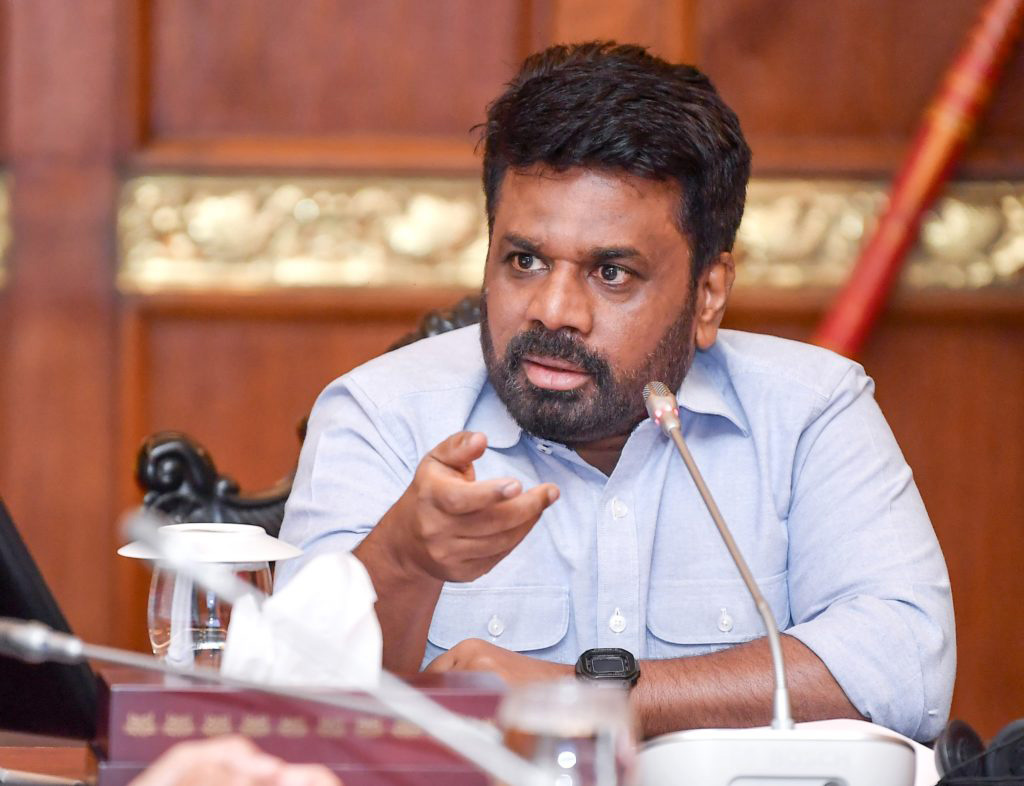
President Anura Kumara Dissanayake should listen at least to the views of the Mothers’ Front on proposed educational reforms.
I was listening to the apolitical views expressed by the mothers’ front criticising the proposed educational reforms of the government and I found that their views were addressing some of the core questionable issues relevant to the schoolchildren, and their parents, too.
They were critical of the way the educational reforms were formulated. The absence of any consultation with the stakeholders or any accredited professional organisation about the terms and the scope of education was one of the key criticisms of the Mothers’ Front and it is critically important to comprehend the validity of their opposition to the proposed reforms. Further, the proposals do include ideas and designs borrowed from some of the foreign countries which they are now re-evaluating in view of the various shortcomings which they themselves have encountered. On the subject, History, it is indeed unfortunate that it has been included as an optional, whereas in many developed countries it is a compulsory subject; further, in the module the subject is practically limited to pre-historic periods whereas Sri Lanka can proudly claim a longer recorded history which is important to be studied for the students to understand what happened in the past and comprehend the present.
Another important criticism of the Mothers’ Front was the attempted promotion of sexuality in place of sex education. Further there is a visible effort to promote trans-gender concepts as an example when considering the module on family unit which is drawn with two males and a child and two females and a child which are nor representative of Sri Lankan family unit.
Ranjith Soysa
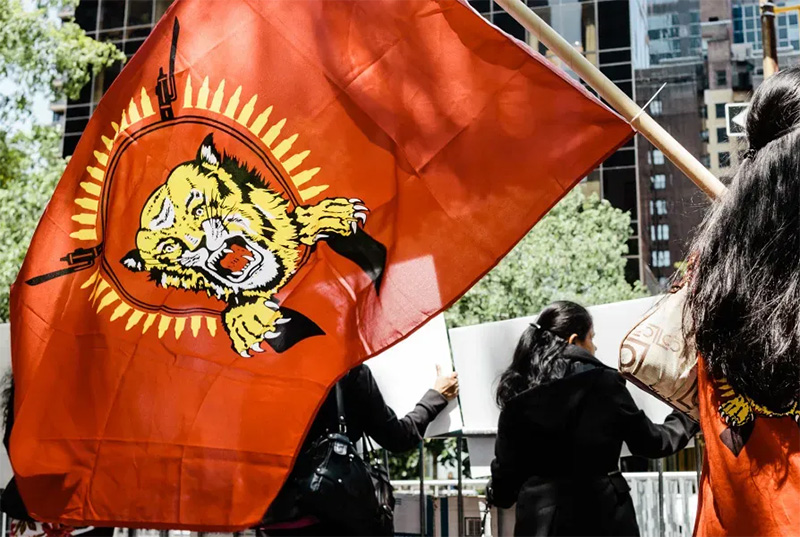
When the LTTE massacred people, mostly Sinhalese Buddhists, government leaders never claimed that the Tamil community, which the LTTE claimed to represent, was driven by hatred. That restraint mattered. That is why it was outrageous to hear President Anura Kumara Dissanayake tell Tamils that Buddhists visiting the North to worship were doing so out of spite. If reports are accurate, the President also declared that we needed a prosperous nation free of racism and united in spirit. Yet, in the same breath he sowed seeds of division recklessly.
Had he spoken in Tamil or English, some might have dismissed it as a slip of the tongue. But in Sinhala, the words carried unmistakable intent. Who could have expected such divisive rhetoric to come from the head of a nation now enjoying fragile coexistence, after enduring a 30‑year war and two insurrections that devastated the economy?
A Ratnayake
The Island editorial, dated 22 January, 2026, under the title ‘Conspiracy to subvert constitutional order,’ is an eye-opener to those who supported the so-called Äragalaya in July 2022 and those who voted to bring the current regime into power with various positive expectations, including ‘ a system change’. ( https://island.lk/conspiracy-to-subvert-constitutional-order/ )
The editorial highlighted, with irrefutable evidence, how a foreign diplomat and a group of Sri Lankans, consisting of some religious leaders (a Buddhist monk, some Catholic priests) and a trade unionist, made a blatantly illegal bid to pressure the then Speaker Mahinda Yapa Abeywardena to take over the executive presidency in violation of the Constitution. The intention of the intimidator tactics was said to be to create in Sri Lanka a situation similar to that in Libya.
The editorial also mentioned how Minister K.D. Lal Kantha and his JVP attempted to lead the Aragalaya protestors to capture Parliament, but without success. Addressing a public rally, under the title ‘Let’s read Lenin’, a few days ago, Minister Lal Kantha has revealed that their planning was to follow what Lenin had said and done during the Russian revolution. Minister Lal Kantha said: “We do not have the power of the State although we managed to obtain the power of the Government. Hence, we are now engaged in the struggle to win the power of the State’’.
In a democratic society, there is a need to ensure maintaining Law and Order without any state interference. It looks like the intention of the Minister is to bring the Police, Armed Forces and the Judiciary, including all the State Services, under direct control of the ruling party, by filling those positions with JVP loyalists to suppress the opponents of the government.
There is also an attempt by the JVP-led forces to remove the Attorney General by making unsubstantiated allegations against him. As per a latest news item in The Island, under the title “Opposition slams sitting HC judge’s appointment as Justice Ministry additional Secretary”, is alleging President Anura Kumara Dissanayake of trying to control the judiciary by appointing a sitting High Court judge as Additional Secretary to the Justice and National Integration Ministry. (https://island.lk/opposition-slams-sitting-hc-judges-appointment-as-justice-ministry-additional-secretary/)
On the other hand, the ruling party is trying to appoint one of their cronies as Auditor General, possibly, to cover up a number of questionable deals made during the year they ruled and to ensure achieving the so-called power of the State.
Unless the people, especially those who naively dreamt of ‘a system change’, have a clear understanding of the ultimate goal and motives of the ongoing changes and take appropriate actions to protect their own democratic rights, they will be left with no other alternative but to live under a repressive government.
Sangadasa Akurugoda

French MPs take first step to ban social media for under-15s

Trump raises US tariffs on South Korea imports to 25%

Sciver-Brunt’s maiden WPL ton lifts Mumbai Indians to second despite Ghosh heroics

Showers may occur in the North-central. Sabaragamuwa and Eastern provinces and Galle and Matara districts

U19 World Cup: Adnit ton powers USA to seven wicket win

U19 World Cup: Sri Lanka keep semifinal aspirations alive with four wicket win

‘Dates have the highest sugar content to fight Coronavirus’

Sunday Island 27 December – Headlines

#SundayIsland 17th December – Headlines

Sunday Island – 28th March

Sunday Island Headlines – 21 March

Sunday Island – 21st February – Headlines
-
 Business1 day ago
ComBank, UnionPay launch SplendorPlus Card for travelers to China
-
 Business2 days ago
ComBank advances ForwardTogether agenda with event on sustainable business transformation
-
 Opinion5 days ago
Remembering Cedric, who helped neutralise LTTE terrorism
-
 Business5 days ago
CORALL Conservation Trust Fund – a historic first for SL
-
 Opinion2 days ago
Conference “Microfinance and Credit Regulatory Authority Bill: Neither Here, Nor There”
-
 Opinion4 days ago
A puppet show?
-
 Opinion1 day ago
Luck knocks at your door every day
-

 Features6 days ago
The middle-class money trap: Why looking rich keeps Sri Lankans poor