
News
SC rules no tax exemption for judges


The Supreme Court has dismissed three appeals by associations representing judicial officers, ruling that they are liable to pay income tax and that Advance Personal Income Tax (APIT) may lawfully be deducted from their remuneration.
The judgement, delivered on Sept. 15, 2026, concerned appeals filed on behalf of the High Court Judges’ Association, the Judicial Service Association and the Association of Judicial Officers of the Labour Tribunal. The cases challenged a 2023 Court of Appeal decision dismissing applications against the imposition and deduction of APIT from judicial officers.
The five-member bench comprised Chief Justice P. Padman Surasena and Justices A.L. Shiran Gooneratne, Janak de Silva, Mahinda Samayawardhana and Arjuna Obeyesekere.
The judicial officers had argued that they were not employees of the state or any other person, and that treating them as employees for tax purposes was incompatible with the constitutional principle of judicial independence. They sought to halt future APIT deductions and recover amounts already deducted.
Justice Janak De Silva held that the Inland Revenue Act did not create an employer-employee relationship between judicial officers and the respondents in the conventional sense. Instead, it recognised who paid their salaries for the limited purpose of identifying the party responsible for deducting APIT, the court held.
The SC ruled that the application of the Inland Revenue Act to judicial officers did not violate the Constitution, noting that the tax was generally applicable and non-discriminatory and did not amount to a reduction of judicial remuneration that would affect judicial independence.
Answering the key questions of law, the court ruled that High Court Judges, District Judges and Magistrates were liable to pay income tax on their remuneration, and that the authorities were entitled to deduct APIT from that remuneration.
However, the judgment acknowledged the financial difficulties faced by judicial officers following the imposition of income tax. Justice de Silva said the solution was not to exempt judges from a generally applicable tax, but to ensure that judicial officers were adequately remunerated in recognition of their responsibilities and their distinct position within the national wages policy.
The three appeals were dismissed without costs. Chief Justice Surasena and Justices Samayawardhana and Obeyesekere agreed with Justice de Silva’s judgement.

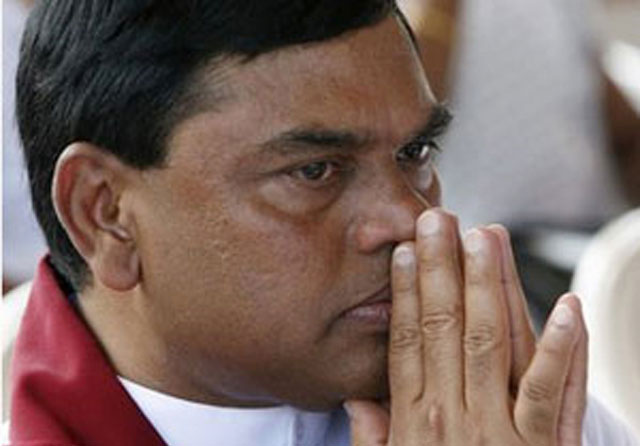
Govt. is finalising extradition proceedings against Basil to have him stand trial here in respect of several cases
By Norman Palihawadane
The process of having former Minister Basil Rajapaksa extradited from the US to Sri Lanka was being finalised, Police Headquarters sources disclosed yesterday.
The government has formally sought assistance from the United States government to extradite former Minister Basil Rajapaksa, as multiple courts have reissued arrest warrants over his failure to appear before them in connection with two separate criminal cases, a senior police officer told The Island.
The officer, speaking on condition of anonymity, said matters pertaining to obtaining US government authorities’ assistance to extradite Rajapaksa were now being finalised.
Police headquarters sources said law enforcement agencies were currently evaluating red notices, which request the location and provisional arrest of a person pending formal extradition.
The CID and Police Headquarters earlier initiated steps to seek INTERPOL assistance to secure Rajapaksa’s return to Sri Lanka to face court proceedings relating to the two cases in which arrest warrants have been issued against him.
Rajapaksa is believed to be residing in Los Angeles, United States.
The Matara Chief Magistrate’s Court on July 21, 2026, reissued an arrest warrant for Rajapaksa after he failed to appear before court for the second time in connection with a case involving the alleged purchase of a 1.5-acre coconut estate on Eliyakanda Road in the Brown’s Hill area of Matara.
The case relates to the purchase of the property for Rs. 60 million.
The case was filed by the Police Financial Crimes Investigation Division and names Basil Rajapaksa and several other accused, including Ayoma Galappaththi, identified in court reports as the sister of Rajapaksa’s wife, Tissa Galappaththi, and Muditha Jayakody.
However, officials acknowledged that seeking US assistance would only begin a formal international process and would not automatically result in Rajapaksa’s arrest or return to Sri Lanka. Sri Lankan authorities would need to submit court orders, details of the alleged offences, and other supporting documents through the appropriate diplomatic and judicial channels. Any request would then be considered by the relevant US authorities under American law and applicable legal arrangements.
Sources at the Foreign Ministry said sealed correspondence had been exchanged between Sri Lanka’s Ministry of Foreign Affairs and the Legal Department of the US State Department relating to corruption allegations against members of the Rajapaksa family residing in the United States.
The legal foundation for any extradition is the bilateral treaty between Sri Lanka and the United States signed in Washington on September 30, 1999. The treaty applies the principle of dual criminality, meaning authorities must show that the underlying conduct amounts to a crime in both countries. Rajapaksa’s status as a United States citizen would not, on its own, make him immune from a valid request under the treaty’s provisions.

Non-communicable diseases (NCDs) account for 80% of all deaths in Sri Lanka, with high blood pressure and diabetes among the leading causes, Secretary to the Ministry of Health and Mass Media, Dr. Anil Jasinghe, said early this week.
Dr. Jasinghe pointed out that the two conditions were interrelated and could lead to a range of serious health complications, with heart attacks being among the most severe consequences.
Dr. Jasinghe made these remarks while attending the commencement of construction of a modern Cardiac Care Complex at the Anuradhapura Teaching Hospital on Wednesday (16).
The Health and Mass Media Ministry Secretary said:
“The main issue is that these two diseases are interconnected and cause a range of complications in a person’s health. Looking at the current situation in Sri Lanka, only around 50% of those suffering from high blood pressure are under effective control. Similarly, only around 25% of diabetic patients are under proper control. As a result, this has now become a major problem in society.
“The most serious complication associated with both these diseases is Myocardial Infarction (MI), or a heart attack. This has also become the
leading complication. So, how do we control this modern epidemic? This is the biggest challenge before us.
“While establishing modern facilities across the country, our health system must also recognize the changes that have taken place in the demographic structure of our population and disease patterns. Accordingly, our health system must be adapted to suit these changing circumstances.
“Under the policies of the government led by the President and the guidance of the Minister of Health, the Ministry of Health and Mass Media is currently implementing a major programme in this regard. Its three main components are Arogya, Cluster Systems and High-End Care Institutions, which need to be developed to suit the requirements of our health system.”
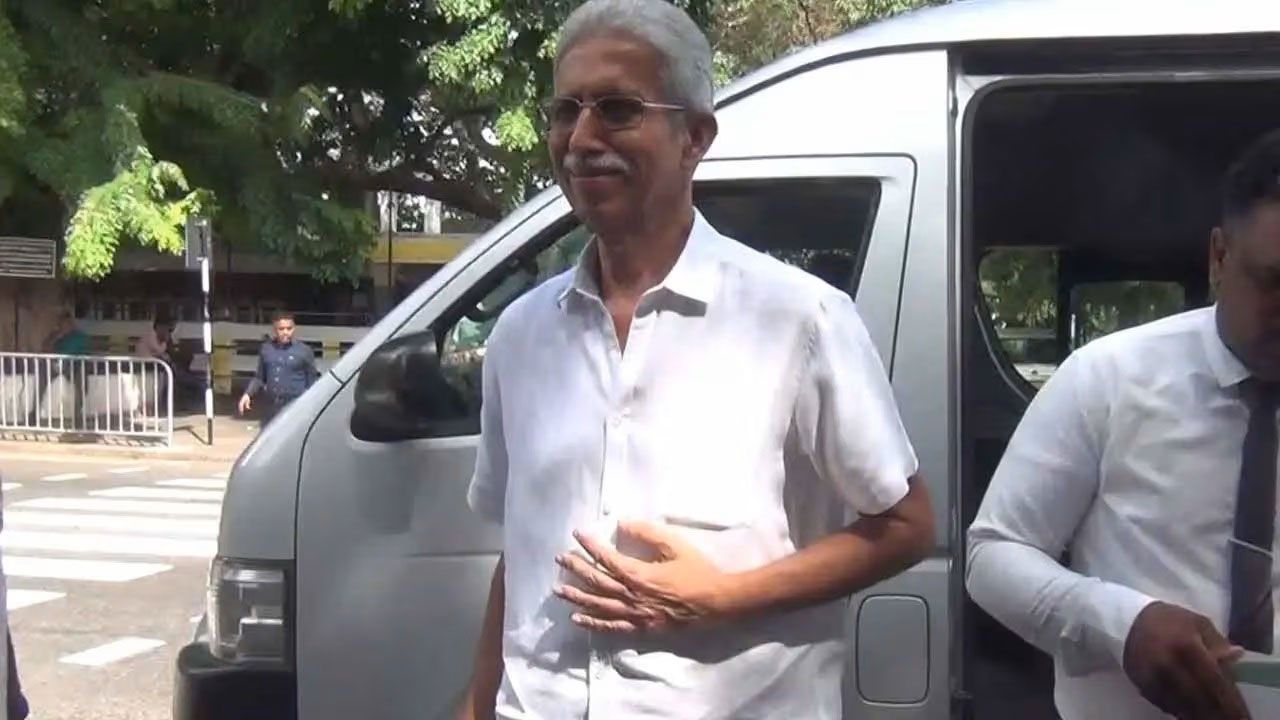
Former National Transport Commission (NTC) Chairman Renuka Perera was remanded until September 29 by the Colombo Magistrate’s Court after being arrested by the Commission to Investigate Allegations of Bribery or Corruption (CIABOC) over alleged corruption in the issuance of bus route permits.
Colombo Chief Magistrate Asanga S. Bodaragama issued the remand order after considering submissions by CIABOC officials and defence counsel.
According to CIABOC, Perera was arrested over allegations that he unlawfully issued route permits during his tenure as NTC Chairman, causing a financial loss to the government while conferring an unlawful benefit on an outside party.
Perera was arrested around 9.55 am yesterday (17) over allegations that he issued 56 passenger transport service permits for buses to operate on the Southern Expressway in violation of prescribed procedures and without collecting the applicable annual fees as a single payment.
CIABOC said the alleged offences were committed in contravention of the National Transport Commission Act No. 37 of 1991 and recommendations contained in a Cabinet decision dated September 19, 2014.
Perera, a senior member of the SLPP, currently serves as the party’s Administrative Secretary. He previously served as Chairman of state-owned dairy producer and marketer MILCO.

Showers expected in the Western, Norrh-western and Sabaragamuwa provinces and in Galle, Matara, Kandy and Nuwara-Eliya Districts.

Bid for Basil’s extradition nears final stage: Police

High blood pressure, diabetes lead to about 80% of deaths in Sri Lanka

Ex-NTC chief in remand over 56 bus permits

Order for calling investment proposals for exploration, development of petroleum resources approved

Fuel market faces fresh pressure as Asian prices rise

‘Dates have the highest sugar content to fight Coronavirus’

Sunday Island 27 December – Headlines

#SundayIsland 17th December – Headlines

Sunday Island – 28th March

Sunday Island Headlines – 21 March

Sunday Island – 21st February – Headlines
-

 Latest News7 days ago
Shafali, Deepti power India into sixth T20 Asia Cup final
-

 Latest News6 days ago
Sri Lanka thwart Fatima Sana challenge to secure Asia Cup final spot
-

 News5 days ago
Gnanasara Thero absconding after SC ruling
-

 News6 days ago
Ammunition cache found in old Kandy bungalow
-

 News6 days ago
Green Climate Fund (GCF) Regional Dialogue for East and South Asia will be held from 14 to 17 September 2026 at Cinnamon Life at City of Dreams Hotel, Colombo
-

 News6 days ago
Prof. Pieris says Buddha Dhamma recognised as source of law under Constitution
-

 News7 days ago
Bambalapitiya Railway Station renovated under the “Dream Destination” project opened to the public
-

 Latest News6 days ago
ITS Giuseppe Garibaldi’ departs Colombo