
News
SC judgment on former President Sirisena’s “dismal failure”

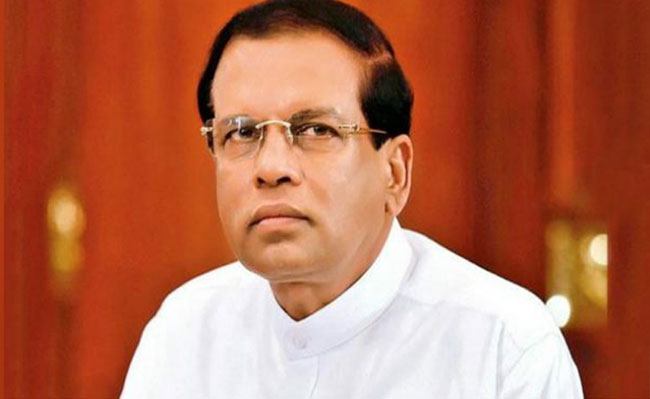
The SC judgment concluded in its lengthy judgment that former President Maithripala Sirisena has been lax in affording the protection and guarantees enjoined under the Constitution and other laws and he has breached his duty to protect. Thus we hold that he has infringed the fundamental rights enshrined under Article 12(1) and 14(1)(e) of the Constitution.
It stated that this dismal failure on the part of the former President Sirisena resulted in disastrous consequences for this country and not only lives were lost and properties destroyed but inter racial tension and inter-ethnic hatred began to raise their ugly heads causing the very fabric of this nation to be broken and become fragile. There were fear psychosis, apprehension and interethnic alienation that were palpable.
It also held that the National Security Council (NSC) had been in existence for several years and it would appear that it had functioned without any legal framework. It was given statutory recognition under the Public Security Ordinance in terms of Emergency (National Security Council) Regulation No 1 of 1999 published in Gazette Extraordinary No 1081/19 and dated 27th May 1999.
This subordinate legislation established an NSC with the President as its head, tasked with the maintenance of national security with authority to direct security operations and matters incidental to it. This Court heard submissions that prior to January 2015, the NSC used to meet every week on Wednesdays under the chairmanship of the President, before which an intelligence coordination meeting was held on Tuesdays presided over by the Secretary, Defence.
This arrangement paved the way for many an aspect of national security to be thrashed out at these meetings and intelligence and other useful information used to be freely exchanged at these meetings. It is how the executive was kept apprised of the national security situation in the country and that facilitated the discussion of all matters pertaining to national security.
It would appear that under the presidency of the former President Sirisena the NSC meetings were sporadic and not regular. If one were to formulate policies with regard to national security and exercise supervision over the security echelons of the Government, the NSC was a useful tool in the hands of the President but a notorious misappreciation of the duties and functions of the Minister of Defence has led to an appalling lack of appreciation of the importance of the National Security Council.
The dangers posed by Zahran and his terrorist outfit could have been effectively appreciated and dealt with had this mechanism been in place but its efficacy had been lost on the then President. The Court finds that there was no meeting summoned for of either ICM or NSC after 9 April 2019 and in our view, it is a serious lapse having regard to the nature of intelligence information received and following the 16 April 2019 dry run explosion.
It would appear that despite the 1999 Gazette which provided for the Constitution of the NSC, the attendance at the NSC had been determined solely by the President with no reasons given for the exclusion of key members who should have been an indispensable part of security and intelligence briefings such as the Prime Minister, State Minister for Defence and the IGP.
There was extensive submission that the Prime Minister was kept out of the NSC and was not provided with any information. 105 All this is a stark reality that strikes this Court as a serious omission on the part of the then President.
In 2019 there had been only two NSC meetings convened by him. One was on 14th January before the discovery of the Wanathawilluwa explosives and arms cache and the next on 19th February. This was one of the largest discoveries of explosives after the end of the war in 2009. It cannot be gainsaid that the former President Sirisena was made aware of these discoveries at Wanathawilluwa.
In these circumstances it was obligatory on the part of the former President Sirisena to have convened the NSC every week and put in place a mechanism to address the threat posed by Zahran and his cohorts. This was never done much to the discomfiture and dislocation of the security apparatus. It has to be pointed out that only after the bombs ripped through the nooks and crannies of this country, wisdom dawned upon the importance of NSC meetings.
This dismal failure on the part of the former President Sirisena resulted in disastrous consequences for this country and not only lives were lost and properties destroyed but inter racial tension and inter-ethnic hatred began to raise their ugly heads causing the very fabric of this nation to be broken and become fragile. There were fear psychosis, apprehension and interethnic alienation that were palpable through the length and breadth of the country.
The due care with which the Minister of Defence must have exercised his wide powers in the greater good of the country was totally non-existent having regard to the evidence that has been placed before this Court. The consistent declaration of this Court that “Public Trust” doctrine is not a mere matter of contract bears particular repetition at this stage.
“We are not concerned with contractual rights, but with the safeguards based on the Rule of Law which Article 12 provides against the arbitrary and unreasonable exercise of discretionary powers. Discretionary powers can never be treated and unfettered unless there is compelling language; when reposed in public functionaries, such powers are held in trust, to be used for the benefit of the public, and for the purpose for which they have been conferred-not at the whim and fancy of officials, for political advantage or personal gain.

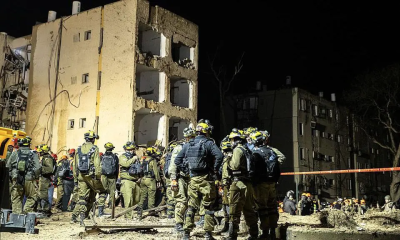




The newly appointed Cabinet Committee tasked with ensuring the uninterrupted functioning of Sri Lanka’s public service held its inaugural meeting on Thursday (19) at the Presidential Secretariat under the patronage of Prime Minister Dr Harini Amarasuriya.
The Committee convened to discuss strategies to maintain seamless government operations in the face of potential disruptions caused by the ongoing conflict situation in the Middle East, with particular focus on energy resource management.
According to officials, the discussions emphasised sustaining essential government services, ensuring continued service delivery to the public, and addressing the operational challenges faced by public sector employees during the current circumstances. The Committee also examined measures to mitigate any disruptions that could affect day-to-day administrative and service functions across ministries and departments.
Key attendees at the meeting included the Minister of Public Administration, Provincial Councils and Local Government A. H. M. M. H. Abayaratne; Secretary to the President Dr Nandika Sanath Kumanayake; Secretary to the
Prime Minister Pradeep Saputhanthri; Chief of Staff to the President Prabath Chandrakeerthi; and senior secretaries from key ministries including Health and Mass Media, Transport, Highways and Urban Development, Energy, and Digital Economy.
Representatives from state institutions such as the Ceylon Petroleum Corporation were also present, highlighting the government’s focus on energy security as a central priority. The Committee’s deliberations underscored a coordinated approach to balancing uninterrupted public service delivery with effective management of limited energy resources amid the ongoing geopolitical uncertainties.
Observers note that the formation of this Cabinet Committee reflects the government’s proactive stance in safeguarding national administrative functions and ensuring that critical public services remain resilient during times of external pressures.The Committee is expected to meet regularly to monitor developments, evaluate emerging risks, and implement practical measures to maintain operational continuity across the public sector.

Opposition Leader Sajith Premadasa on Friday lashed out at President Anura Kumara Dissanayake in Parliament, accusing him of failing to uphold international law during wartime.
Premadasa said the President’s claim of neutrality ignored breaches of the UN Charter—including Articles 2.4 and 2.7—and other global conventions. “A neutral stance requires openly acknowledging violations,” he argued, criticizing the absence of ethical mechanisms to safeguard international law.
He also questioned the President’s handling of maritime issues, particularly whether Sri Lanka had been informed of the alleged attack on the Iranian vessel IRIS Dena, stressing that the Exclusive Economic Zone (EEZ) permits only peaceful activity.
On the economic front, Premadasa condemned the government for missing a chance to buy Russian oil during a 30-day U.S. sanctions suspension.
He said attempts to advise the Foreign Ministry, including a meeting with the Russian Ambassador, yielded no progress.
Premadasa further ridiculed the government’s earlier dismissal of the QR code fuel system, noting that officials are now adapting to it.
Turning to broader economic concerns, he called for immediate negotiations with the IMF to secure a new agreement, warning that the current primary balance of 2.3 is unsustainable. He stressed the urgent need for a poverty-reduction program, highlighting that one-third of Sri Lankans live in poverty.
He also demanded that surplus Treasury funds be used to support relief packages, arguing billions in reserves could aid households struggling with income shortfalls.Concluding his address, Premadasa criticized the government for failing to prepare for foreseeable crises, leaving the country vulnerable.

Former Minister Johnston Fernando, his two sons, and three others were remanded by the Wattala Magistrate’s Court yesterday (20) until April 2, the court confirmed.
The suspects, including Fernando’s elder son Johan, younger son Jerome, and a former transport manager of Lanka Sathosa, are under investigation by the Police Financial Crimes Investigation Division (FCID).
Authorities allege the Lanka Sathosa lorry was misused for operations linked to an ethanol company reportedly owned by Fernando, causing an estimated Rs. 2.5 million loss to the state.

Trump says US will ‘obliterate’ Iran’s power plants if Strait of Hormuz not open before 48-hour deadline

Showers may occur at several places in the Western, Sabaragamuwa and Southern provinces and in Nuwara-Eliya district after 1.00 pm.

PM Harini leads panel to protect public services

Sajith slams President over war conduct and economic missteps

Johnston Fernando, sons held in Lanka Sathosa lorry misuse case

Gura: The unsung hero

‘Dates have the highest sugar content to fight Coronavirus’

Sunday Island 27 December – Headlines

#SundayIsland 17th December – Headlines

Sunday Island – 28th March

Sunday Island Headlines – 21 March

Sunday Island – 21st February – Headlines
-

 Business7 days ago
Browns EV launches fast-charging BAW E7 Pro at Rs. 5.8 million
-

 News5 days ago
CIABOC questions Ex-President GR on house for CJ’s maid
-

 News6 days ago
Sri Lankan marine scientist Asha de Vos honoured at UNGA opening
-

 Features7 days ago
Achievements of the Hunduwa!
-

 News6 days ago
Australian HC debunks misleading travel risk claims for Sri Lanka
-

 News4 days ago
Bailey Bridge inaugurated at Chilaw
-

 Latest News6 days ago
Wednesdays declared a government holiday with effect from 18th March
-

 News4 days ago
Pay hike demand: CEB workers climb down from 40 % to 15–20%