
News
Save the Children records unfathomable toll of economic crisis on young Sri Lankans


Nearly one in three parents in Sri Lanka have noticed negative changes in their children’s behaviour in the last 6 months as the country headed into economic collapse, according to a Save the Children survey conducted in June 2022.
The survey of more than 2,300 families across nine districts in Sri Lanka also found nearly three out of four households had to spend more time with their children to accommodate their emotional and mental health needs with children showing signs of distress and withdrawal.
Soaring inflation, daily power cuts, and shortages of fuel, food and medicines have stretched families beyond their ability to cope. The economic stress on families has triggered one in 10 children to lose their appetite and show more signs of aggression.
Save the Children’s survey also found that one in five children experienced changes in their sleep patterns, had difficulty regulating their emotions, showed violence towards others, or wet their beds.
Lakmi*, 10, from Ratnapura, Sri Lanka, explained that the economic collapse has meant she can’t go to school on days the buses aren’t running, and talked about witnessing long fuel queues in her town.
“The situation in the country makes me very sad. I am afraid that we won’t have a country at the end of all this. There are problems with fuel, and the prices of food have also increased,” said Lakmi. “If I had the chance to do something for my country, I would work for the betterment of the people.”
Nadeesha*, 37, a mother from Badulla, explained that the financial pressure this crisis is having on her as a parent is having an influence on her children’s mental wellbeing:
“I have observed many big changes in my children’s behaviour. They are sad about the situation, but they try not to show it. They tend to worry because I am unable to provide them with what they like, the way I used to do. They worry that their parents don’t have a steady income to support the family. They are not happy like before. They don’t go out much to play. They are worried about what’s going to happen tomorrow.”
Although Sri Lanka’s economic crisis is leading to a significant rise in mental health issues, the country cannot provide adequate mental health and psychosocial support for those who need it due to the lack of financial resources, according to the UN’s Sri Lanka Humanitarian Needs and Priorities Plan. Without appropriate support, the mental health impact of the crisis on children can worsen, leading to poorer chances of long-term wellbeing and resilience.
Save the Children’s National Director in Sri Lanka, Julian Chellappah, said: “In difficult and unsettling situations, children may externalise their feelings by showing signs of distress, with more crying and screaming among young children, more aggressive behaviour or violence, as well as difficulties in emotional regulation. Some will internalise their feelings, resulting in withdrawal. This is what we’re seeing unfold in Sri Lanka.
“Children often find it hard to make sense of the crisis and often need support from family and friends to help them understand and cope with the resulting adversities. If children do not get the support they need, their symptoms can worsen.
“The constant worry over accessing food, clean water, medicines and even education is taking an immense toll on Sri Lankan children. We are calling on the government to find a sustainable economic solution to this crisis, to get families back on their feet and ensure children’s long-term mental health needs are prioritised and adequately funded.”
Save the Children in Sri Lanka has released its first Rapid Needs Assessment report, aimed to understand how communities are impacted by the ongoing crisis. The organisation is responding to the needs of vulnerable families with plans to provide cash and livelihood support for nearly 1 million people. Save the Children is also prioritising mental health and psychosocial support by raising awareness and empowering communities, both adults and children, to support each other’s psychosocial wellbeing in these tremendously distressing times.

News
Cabinet nod to increase the number of new automated passenger clearance gates at the Bandaranayake International Airport to 12


Approval of the Cabinet of Ministers was granted at their meeting held on 19.05.2025 to purchase four (04) automated passenger clearance gates for Bandaranayake International Airport.
In addition, it is expected to extend the automated passenger clearance gates facility so far given only to the Sri Lankans
parallel to the e – passport issuance system to be introduced in the year 2027 also to the foreigners who travel to and from this country.
Furthermore, considering also the number of air passengers rapidly increasing with the fast – forwarding business and tourism field, the appropriateness to increase the total automated passenger clearance gates up to twelve (12) in number has been recognized.
Accordingly, the Cabinet of Ministers, approved the resolution furnished by the Minister of Public Security and Parliamentary Affairs to initiate the procurement and installation of 12
automated passenger clearance gates altogether with the already approved four (04) and another eight (08) automated passenger clearance gates adhering to the formal procurement procedure
Based on the observations submitted by the Task Force on Prevention of Money Laundering and Financing for Terrorism, approval of the Cabinet of Ministers was granted at their meeting held on 18.12.2024 to amend the Trust Ordinance No. 9 of 1917 including amendments proposed by the Financial
Intelligence Unit of the Central Bank of Sri Lanka.
Accordingly, clearance of the Attorney General has been granted for the Trust (Amendment) Draft Bill formulated by the Legal Draftsman.
Therefore, the Cabinet of Ministers approved the resolution furnished by the Minister of Justice and National Integration
to publish the said draft bill in the government gazette notification and thereby, submit the same to the Parliament for its concurrence.
Action was taken to provide a fuel relief for the fuel consumers during the months of April, May and June of 2026 to redress by minimizing the impact caused to the day today life of the citizens of this country as well as the entire economy due to the price hike of petroleum fuel in the global market resulting from the war situation in the Middle East.
Government mediation is essential for minimizing the impact on the day to today life of citizens in this country due to that war situation not being ended further. Therefore, it has been planned to redress on the sale price for Auto Diesel and Industrial Diesel for a period of 03 months by the Government to provide relief to the public as well as to maintain the prices at a bearable level to the consumers without escalating the fuel prices in this country compared to the escalation of fuel prices
in the international market.
Therefore, the Cabinet of Ministers granted approval for the resolution furnished by the President in his capacity as the Minister of Finance, Planning and Economic Development to
allocate provisions subject to the monthly limitations respectively as rupees 15 billion for the month of October, rupees 13.5 billion for the month of November and rupees 12.15 billion for the month of December to provide the said relief

Cabinet nod to increase the number of new automated passenger clearance gates at the Bandaranayake International Airport to 12
Draft Bill for amending the Trust Ordinance
Implementing further relief programme to Public sffected by the Middle East conflict situation
Establishment of a Spectrum Management and Monitoring System and a Quality of Service and Quality of Experience System for the Telecommunications Regulatory Commission of Sri Lanka
Appointment of a Committee for the Restitution of Sri Lankan Cultural Heritage Held Abroad
Ten-Year National Action Plan on the Social Protection Sector (2026–2035)

‘Dates have the highest sugar content to fight Coronavirus’

Sunday Island 27 December – Headlines

#SundayIsland 17th December – Headlines

Sunday Island – 28th March

Sunday Island Headlines – 21 March

Sunday Island – 21st February – Headlines
-

 News7 days ago
Mastermind Naufer Moulavi among 15 found guilty
-
 Midweek Review7 days ago
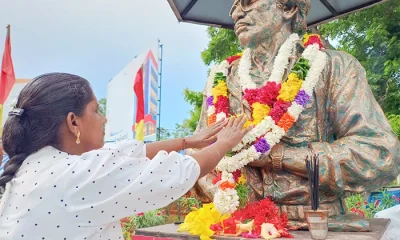
Thileepan’s fast unto death: An authentic narrative that many missed
-

 Latest News6 days ago
Showers above 100 mm are likely at some places in the Western, Sabaragamuwa, Central and North-western provinces and in Galle and Matara Districts
-

 Editorial7 days ago
Big Bad Bills
-
Editorial6 days ago
Crimes punished and unpunished
-

 Features5 days ago
Beyond traditional jobs: Why Sri Lanka needs to facilitate the gig economy
-

 News7 days ago
No referendum needed for passage of 22 A: SC
-

 News7 days ago
One clause in Anti-Corruption (Amendment) Bill requires referendu: SC