
Business
Sanjeev Jha appointed Non-Executive Director at Nations Trust Bank

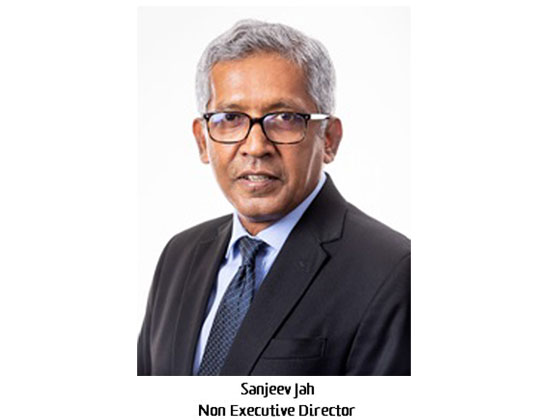
Nations Trust Bank PLC recently announced the appointment of veteran business leader Sanjeev Jha to its Board, as a Non-Executive Director with effect from May 1, 2022. Jha, an Oxford scholar on Fintech, brings over three decades of extensive experience in business leadership, strategy and overall business operations to the table, as Nations Trust Bank surges forward reinventing banking in Sri Lanka.
Sanjeev Jha served as the CEO and Managing Director of Fairfirst Insurance Limited, Sri Lanka until April 2021. In a career spanning four decades, he has worked across geographies including India, Middle East, South Asia, Southeast Asia, Europe and North America. A veteran of start-ups, turnarounds, acquisitions & integrations, he has hands-on expertise on business operations and change management and has a deep understanding of engaged relationships that lead to a thriving culture that enables high performance.
He currently serves as a Non-Executive Director on the Boards of Paramount Health Care Services & Insurance TPA, Maxop Engineering Company Pvt Ltd and Jaynix Engineering Pvt Ltd. As a versatile leader, he is on the Advisory Board of CamCom Technologies (Pvt.) Ltd and Symbo Platform, India. He also serves as a consultant to Fairfax Asia Limited which is a subsidiary of Fairfax Financial Holdings Limited. In addition, he serves as a member of the industry advisory panel for the Birla Institute of Management Technology.
A Fulbright Scholar in Leadership Management from Carnegie Mellon University, Tepper School of Business, USA, Sanjeev Jha most recently completed his Executive Education in Fintech from the Saïd Business School, University of Oxford. He earned his Ph.D. in Economics from the University of Mumbai where he also read for his MA in Economics. He also holds a BA, Economics from St. Xavier’s College.
Nations Trust Bank PLC is among the top 15 business establishments in Sri Lanka as ranked by Business Today. Stemming from its vision of “helping people and businesses by providing financial services and information to achieve their goals and aspirations in a sustainable way”, the Bank serves a diverse range of customers across consumer, commercial and corporate segments, with an enviable portfolio of banking and financial products and services. Strongly focused on digital empowerment through cutting-edge digital banking technologies, the Bank is a pioneer in many innovative customer centric banking solutions such as extended banking hours and FriMi – Sri Lanka’s first digital banking experience.

Human resources remain the biggest challenge despite advanced logistics
Industry-wide cost pressures are also beginning to surface
In Sri Lanka’s pharmaceutical trade, the journey of a medicine does not end when it arrives at the port. It must still travel safely across the island – through regulated warehouses, temperature-controlled transport and complex distribution routes – before reaching the pharmacy shelf where patients need it.
That journey is increasingly being powered by Healthguard Distribution, the pharmaceutical logistics arm of Sunshine Holdings, whose expanding distribution network now plays a critical role in ensuring the reliable movement of medicines across the country.
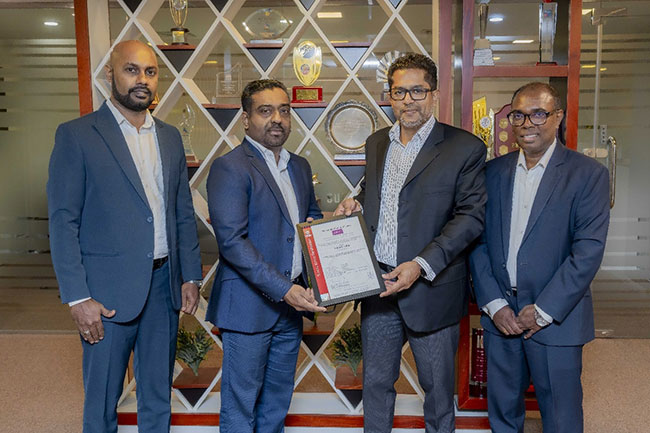
At the centre of that network is the company’s Western Regional Distribution Centre (WRDC), a temperature-controlled logistics hub designed to support the safe storage and efficient distribution of pharmaceutical products across the Western Province.
Spanning nearly 18,920 square feet, the facility functions as a key node in the company’s islandwide distribution system. Originally acquired in 2008 to serve as the main warehouse for Swiss Biogenic Ltd., the site evolved alongside the company’s growing operations. Following a major upgrade programme that began in July 2024, the facility recommenced operations in July 2025 as a fully compliant regional distribution centre aligned with international quality standards.
According to Sunshine Pharmaceuticals and Healthguard Distribution Chief Executive Officer Shantha Bandara, the company’s logistics model is built around a simple but comprehensive concept.
“Our approach is ‘Port to Pharmacy’,” Bandara said during a recent media visit. “We collect pharmaceutical consignments from the Port of Colombo, clear them through Customs, store them under regulated conditions and then distribute them to pharmacies across the country. Importers and manufacturers do not have to worry about logistics – we manage the entire process.”
The distribution network today serves over 4,500 authorised pharmaceutical outlets, including pharmacies, hospitals, channeling centres, supermarkets and SPC Osusala outlets. Operations span 150 main towns and 466 sub towns, supported by 111 active delivery routes and seven regional distribution centres located across the island.
Within that system, the WRDC is the largest and among the most technologically advanced hubs.
The facility maintains strict cold-chain conditions for temperature-sensitive medicines. Its cold room capacity has been expanded from 15 cubic metres to 30 cubic metres, enabling compliant storage of products such as insulin within the required 2–8°C range. Online temperature monitoring systems operate across all storage zones while data loggers are used for insulin deliveries to ensure product integrity throughout the supply chain.
Delivery vehicles are also equipped with GPS tracking and temperature monitoring systems, allowing real-time visibility of shipments.
Automation and digital systems are increasingly shaping the operation. Software automation supports invoicing and customer credit verification, while sales teams use digital tools for order canvassing. The company’s enterprise systems provide real-time inventory and accounting visibility, supported by data dashboards used for operational decision-making.
To safeguard continuity, the facility is equipped with a high-capacity backup generator and dedicated on-site fuel storage, ensuring cold rooms, monitoring systems and warehouse operations remain functional even during power outages.
Behind the infrastructure is a workforce of 102 employees, supported by a specialised 15-member value-added services team trained in Good Distribution Practice (GDP), cold-chain management, safety and emergency response.
Yet despite the sophisticated logistics and infrastructure, Bandara told The Island that the most persistent operational challenge lies in human resources.
“We have the infrastructure, the logistics systems and the operational capability,” he noted. “However, maintaining the required number of skilled employees is an ongoing challenge because the labour market is constantly fluctuating. Our HR team is continuously recruiting and training to keep the workforce at the required level.”
Industry-wide cost pressures are also beginning to surface. Company officials noted that rising fuel prices could eventually affect transportation and electricity costs within the distribution chain, which may in turn influence pharmaceutical logistics expenses in the short term.
Still, the broader goal of the company remains unchanged – ensuring that medicines reach patients safely and on time.
From the moment a shipment arrives at the Port of Colombo to the point it reaches a pharmacy shelf, the process depends on precision logistics, regulatory compliance and operational discipline. For Sri Lanka’s healthcare supply chain, Healthguard Distribution’s growing network is becoming a key driver of that journey from port to pharmacy.
By Sanath Nanayakkare
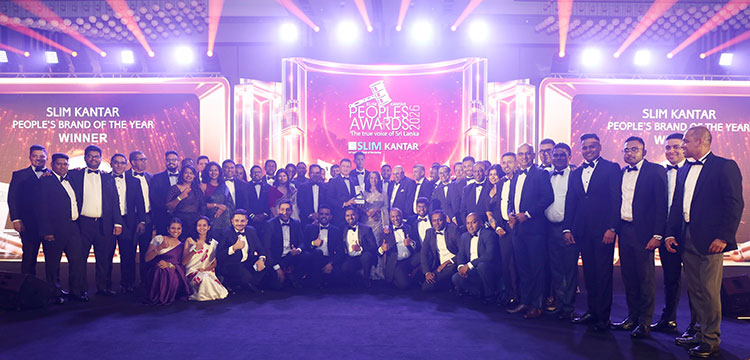
Singer Sri Lanka, the nation’s foremost retailer of consumer durables, celebrates a truly historic milestone at the SLIM-KANTAR People’s Awards 2026, securing a prestigious triple victory while marking 20 consecutive years as the People’s Brand of the Year, an achievement made possible by the enduring trust and loyalty of Sri Lankan consumers.
This year, SINGER was honoured with yet another triple win with People’s Brand of the Year, Youth Brand of the Year and People’s Durables Brand of the Year at the awards ceremony. This remarkable recognition reflects the deep and lasting relationship the brand has built with Sri Lankans across generations, standing as a symbol of trust in homes across the island.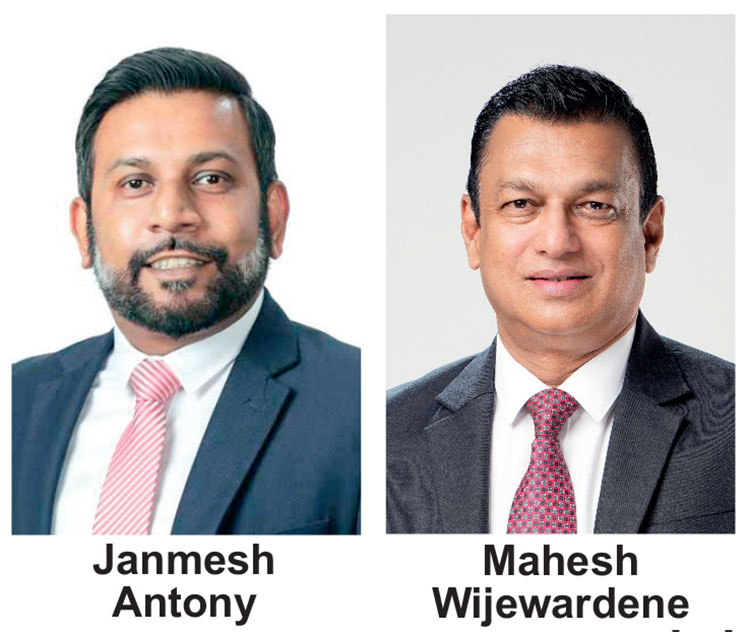
Janmesh Antony, Director – Marketing said: “This award belongs to our customers. Being recognised as People’s Brand for 20 years, alongside Youth and Durables Brand, reflects our commitment to staying relevant across generations.”
Mahesh Wijewardene, Group Managing Director said: “Twenty consecutive years as the People’s Brand is humbling and inspiring. This milestone strengthens our commitment to keeping customers at the heart of everything we do.”

When Arjuna Herath assumed duties as Chairman of the Board of Investment of Sri Lanka, he quite correctly sent a clear message: Sri Lanka intends to position itself as an investor-friendly destination. The message was reinforced during a visit by a high-level delegation from the USSri Lanka Business Council, where officials spoke of renewed confidence in the country’s economic trajectory.
The optimism is not without foundation. After years of crisis, Sri Lanka has begun to stabilize. Foreign direct investment crossed the psychological threshold of about US$1 billion in 2025, exports climbed to more than US$17 billion, and tourist arrivals reached record levels. These numbers suggest that international capital is once again willing to take a second look at the island. Yet statistics alone do not tell the whole story.
The deeper question facing policymakers in 2026 is whether that early interest can be sustained. For investors, confidence is rarely built on incentives alone; it rests on the expectation that rules will remain consistent once a project begins. In other words, predictability matters more than promises.
That tension between optimism and uncertainty is now emerging as the central theme in Sri Lanka’s investment narrative.
On the one hand, authorities are signaling reform and openness. On the other, several recent developments have reminded investors that implementation can still be uneven. One widely discussed case involved the proposed Ambuluwawa cable-car project in the hill country, where a cross-border investor withdrew after reportedly spending about US$3.5 million. The developer, Amber Adventures (Pvt) Ltd, had planned a US$12.75 million tourism venture but later said the project was halted despite earlier technical clearances from multiple agencies.
Regardless of where the merits of the dispute lie, the episode left a familiar impression in investment circles: timelines and approvals can appear uncertain once projects move from paper to construction.
A separate case in the renewable-energy sector has generated similar concerns. Policy resets and prolonged negotiations reportedly discouraged a major regional developer. Governments everywhere reserve the right to renegotiate contracts, but when processes appear open-ended, investors begin to factor in higher risk.
This is why policy certainty may be the most powerful – and least expensive – stimulus available to Sri Lanka in 2026.
The macroeconomic outlook already underscores this point. Analysts expect moderate growth in the range of about 3 – 4 percent this year, while the International Monetary Fund has projected roughly 3.1 percent, linking stronger expansion to steady reform implementation rather than new borrowing. In other words, execution matters more than announcements.
Institutional efficiency also plays a role. With more than a million cases pending in Sri Lanka’s courts, businesses often see legal delays as an additional cost of operating in the country. Reducing that backlog – particularly in commercial disputes – would signal that contracts and administrative decisions can be resolved within predictable timeframes.
Tourism offers another illustration. Visitor arrivals have surged, yet revenue growth has lagged because spending per traveller remains modest. Improving digital payments, mobility and dispute resolution may prove just as important as marketing campaigns if Sri Lanka hopes to extract greater value from the sector.
All in all, these signals reveal a simple truth. Sri Lanka does not necessarily lack investor interest; it risks losing momentum if processes remain uncertain.
For policymakers, the challenge therefore lies in bridging perception and practice. Codifying approval timelines, digitizing government services, and completing a handful of transparent public-private partnerships could quickly demonstrate that decisions in Sri Lanka are not only possible but reliable.
If that credibility gap is closed, the message delivered by the BOI chairman that Sri Lanka is open for business – will resonate far more strongly in global boardrooms. Because in frontier markets, the most valuable incentive is not a tax break or subsidy. It is certainty.
By Sanath Nanayakkare

Showers may occur at several places in the Western and Sabaragamuwa provinces and in Galle, Matara and Nuwara-Eliya districts after 2.00 pm.

Fuel price hikes trigger transport disruptions and calls for fare increases

Prof. Peiris honoured by International Institute of Rehabilitation

CMC resumes parking fees

Substandard coal deepens energy crisis, warns former CEB Chief

Sri Lanka, ICRC to develop unified national database for missing persons

‘Dates have the highest sugar content to fight Coronavirus’

Sunday Island 27 December – Headlines

#SundayIsland 17th December – Headlines

Sunday Island – 28th March

Sunday Island Headlines – 21 March

Sunday Island – 21st February – Headlines
-

 News5 days ago
CIABOC questions Ex-President GR on house for CJ’s maid
-

 News6 days ago
Sri Lankan marine scientist Asha de Vos honoured at UNGA opening
-

 News6 days ago
Australian HC debunks misleading travel risk claims for Sri Lanka
-

 News4 days ago
Bailey Bridge inaugurated at Chilaw
-

 Latest News7 days ago
Wednesdays declared a government holiday with effect from 18th March
-

 News4 days ago
Pay hike demand: CEB workers climb down from 40 % to 15–20%
-

 News3 days ago
CIABOC tells court Kapila gave Rs 60 mn to MR and Rs. 20 mn to Priyankara
-

 Editorial5 days ago
Couple QR-based quota with odd-even rationing