
Sports
Samarawickrama, bowlers help SL make winning start in Super 4s

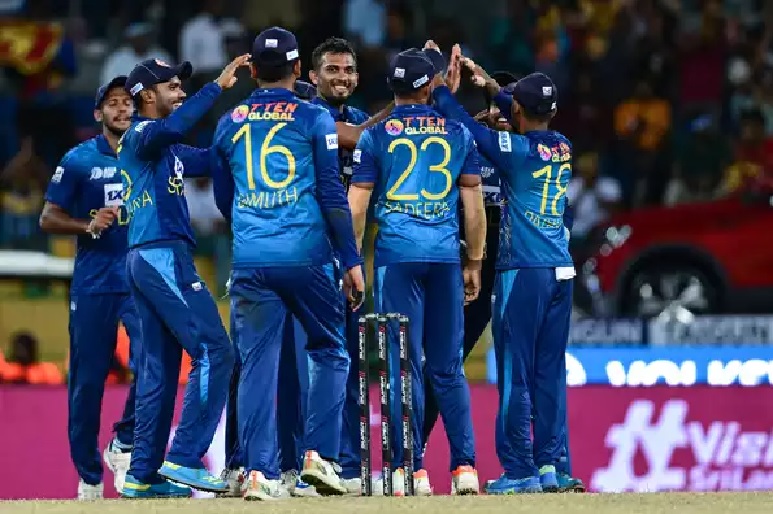
An impressive 72-ball 93 from Sadeera Samarawickrama on a trying wicket, followed by three-wicket hauls for Dasun Shanaka and Maheesh Theekshana, helped Sri Lanka begin the Super Fours of the Asia Cup with a 21-run victory in Colombo on Saturday (September 9). Towhid Hridoy came up with a fighting 82 off 97 in the chase of 257 but regular wickets meant that Bangladesh ended up short, as they suffered their second successive defeat in the second leg of the tournament while Sri Lanka recorded their 13th successive victory in ODI cricket.
Mehidy Hasan and Mohammad Naim were involved in a half-century stand to help Bangladesh make a steady start in the chase. Mehidy cashed in on some loose deliveries to strike two fours off Theekshana while Naim was slightly jittery at the other end, playing and missing multiple times, and he was also slower with his scoring compared to his partner. Bangladesh, though, brought up the fifty in the 11th over, with Mehidy scoring at a run-a-ball. However, his stay came to an end when Shanaka bowled a short one and Mehidy was late on the pull, handing a catch to midwicket. Naim’s, 46-ball struggle for only 21 runs was ended by the Sri Lanka skipper, again with a short ball.
Bangladesh were in more trouble when Matheesha Pathirana removed Shakib Al Hasan in the 16th over. Shakib poked at a delivery outside off and ended up getting an edge to the ‘keeper, with Sri Lanka having to take the review route to send the Bangladesh skipper back to the hut. The procession continued as they slipped to 83/4 when Litton Das got an inside edge off Dunith Wellalage and the ball bounced off ‘keeper Kusal Mendis’s knee before he juggled and held on to it. The quick wickets meant that Towhid Hridoy and Mushfiqur Rahim had to minimise the risks in their rebuilding job, raising a half-century stand in 84 deliveries as the required rate rose past seven in the 33rd Over.
Hridoy and Rahim extended their partnership to 72 before Shanaka returned to dismiss the latter who failed to clear mid-off. Hridoy brought up a 73-ball fifty with a four and also struck two boundaries off Theekshana, with the equation reading 81 off the last 10 overs. After seeing Shamim Hossain out lbw to Theekshana, Hridoy struck a four off Pathirana and a six off Theekshana. But Sri Lanka got a huge advantage in the game when Theekshana had Hridoy out lbw in the 80s, with a review failing to help him. Pathirana cleaned up the tail to also pick up three as Bangladesh’s innings ended in the 49th over.
Earlier, Sri Lanka got off to a good start after being asked to bat, with Dimuth Karunaratne and Pathum Nissanka putting on a brisk 34-run partnership. Hasan Mahmud ended the stand by having Karunaratne caught behind but another good partnership ensued, between Nissanka and Mendis, setting up a good platform for Sri Lanka. Bangladesh did well to apply the brakes on the scoring but their catching left the bowlers disappointed as both Nissanka and Mendis got lucky breaks. Shoriful finally ended the 74-run stand by having Nissanka trapped leg-before, and also picked up the wicket of Mendis soon after the No.3 reached fifty.
Taskin Ahmed bowled a slower ball to have Charith Asalanka caught at mid-on and Dhananjaya fell to Mahmud attempting a backfoot punch. While wickets fell around him, Samarawickrama played a steady hand with good strike rotation and timely boundaries. Scoring at a good rate, he powered his team’s progress as he went past fifty in the 42nd over, with Sri Lanka crossing 200 in the next. Shanaka, who played second fiddle in a 60-run stand with Samarawickrama, became Mahmud’s third scalp. Samarawickrama entered the 80s by scoring the first six of the innings, off Mahmud, who then had Wellalage run out by kicking the ball onto the stumps. Taskin accounted for Theekshana in the final over but Samarawickrama responded with a four and a six, before getting out.
Brief scores:
Sri Lanka 257/9 in 50 overs (Sadeera Samarawickrama 93, Kusal Mendis 50; Hasan Mahmud 3-57, Taskin Ahmed 3-62) beat Bangladesh 236 in 48.1 overs (Towhid Hridoy 82, Dasun Shanaka 3-28, Matheesha Pathirana 3-58) by 21 runs.









Hurdler Kaveesha Dilshan of Kularathna MV, Godakawela and sprinter Risansa Hirupama of Lyceum International, Wattala were named best athletes for their outstanding performances at the All Island Schools Games Athletics Championships, which concluded at Diyagama on Tuesday.
Dilshan earned the title with a 14.02-second run in the Under 20 boys’ 110m hurdles. Kishal Oshada, the best athlete in the Under 18 category, also comes from his school. Both hurdlers are trained by Thiron Gamage, and both outclassed their opponents in the sprint hurdles.
Hirupama excelled in the Under 20 girls’ 200m. Her time of 24.23 seconds earned the highest score in the girls’ events (1,026 points).
St. Joseph Vaz’s College, Wennappuwa, and Lyceum International, Wattala, claimed the overall boys’ and girls’ championships respectively.

Kaveesha Dilshan and sprinter Risansa Hirupama with
their best athlete awards. (Pix by Kamal Wanniarachchi
St. Joseph Vaz’s amassed 118 points to finish ahead of Maris Stella College, Thimbirigaskatuwa (95). Rahula College, Matara, took third place with 82 points. Former track and field powerhouses St. Benedict’s, Kotahena (54), and Maris Stella, Negombo (54), missed out on the top three.
Lyceum dominated the girls’ category with 215 points. Dharmapala College, Pannipitiya (70), and Ave Maria Convent, Negombo (62), finished second and third respectively.
For the first time in more than two decades, Ratnayake Central were not among the leading teams in the girls’ category. Most of their athletes struggled after an outbreak of flu, but late performances over the last two days helped them secure fourth place. (RF)

Mahanma College, Colombo and Nalanda College Colombo registeted convincing victories in the quarter finals while dark horses Wesley ended Richmond’s unbeaten run with a win according to the DLS method to seal the semi-final spots of the Under 19 Division I Tier A tournament on Tuesday.
Mahanama rattled St. Joseph’s for meagre 84 runs before cruising to a seven-wicket win at Mattegoda. Kaushika Thilakarathne and Sanuka Ganepola shared seven wickets between them to trouble the Joes.
Thilakarathne spearheaded the bowling attack, claiming four wickets for 13 runs in nine overs, while Sanuka Ganepola supported him with an impressive spell of three for nine in nine overs. Sanul Weerarathne captured two wickets for 12 runs.
Mahanama reached 85 for three wickets as Sineth Veerarathne top scored with 52 runs (53 balls).
Nalanda College defeated St. Anthony’s College, Katugastota by 77 runs at Campbell Place.
Nalanda posted a competitive 234 for six in their allotted 50 overs, with Ranmith Senarath top-scoring with 52 off 79 balls. Nemindu Akmeemana contributed 47, while Lithum Wijekumara made 32. Mihin Zoysa added 29 before Santhul Wijeyarathne provided a late boost with an unbeaten 30 off just 13 deliveries.
In their essay St. Anthony’s were dismissed for 157 in 44 overs. Sadew Amarakoon fought hard with 47 off 94 balls, while Kaushika Kumarasinghe scored 38 off 41 deliveries. However, Nalanda’s bowlers maintained control, with Rusandu Silva taking four wickets for 22 runs. Osanda Pamuditha supported him with two wickets for 22 runs to seal a convincing victory for the hosts.
After posting 141 for six in 30 overs, Wesley did well to restrict Richmond to 109 for eight in 23 overs to stay ahead according to DLS method at Weeraketiya.
Adhyaan Zain and Senura Lakshan bowled controlled spells taking three wickets each to seal the semi-final place. Wesley are set to meet Nalanda in the semis. (RF)

by Reemus Fernando
Heshara Jayasinghe, Shashen Rajapaksha and Dilini Rajapaksha were among the athletes who excelled creating meet records during the morning session of the final day of the All Island Schools Games Athletics Championship at Diyagama on Tuesday.
Shashen Ravihansa Rajapaksha of Ratnayake Central Walala set the tone on the track, clocking an impressive 8:58.50 to win the Under 18 boys’ 3000 metres. The time established a new meet record and made the school’s presence felt to a great extent. Many Ratnayake Central athletes had fallen ill recently denying them their usual top positions in the overall points table.

Dilini Rajapaksha in action in the Under 18 girls’ triple jump (L) / K.K. Baalasooriya of Sumana Balika Vidyalaya Ratnapura in action in the Under 20 girls’ discuss throw (R)
In field events, Heshara Jayasinghe of St. Joseph Vaz’s College Wennappuwa produced a landmark performance in the Under 20 boys’ shot put. His effort of 17.30 metres made him the first athlete in the event’s history to clear the 17 metre mark, and it also broke the meet record previously held by Jayavi Ranhinda Alwis.
Abhimani Kodituwakku of Dharmapala College Pannipitiya delivered a remarkable run in the Under 20 girls’ 400 metres hurdles. Her time of 1:01.57 erased the nine-year-old record held by Yamani Dulanjali of Ambagamuwa Central.
K.K. Baalasooriya of Sumana Balika Vidyalaya Ratnapura joined the record-breakers with a throw of 41.82 metres in the Under 20 girls’ discus throw.
Lyceum International Wattala’s Dilini Rajapaksha then created a new meet record in the Under 18 girls’ triple jump, clearing 12.73 metres.

Shashen Ravihansa Rajapaksha of Ratnayake Central Walala
won the Under 18 boys’ 3000 metres with a new record mark. (L) / Gimhani Pulle of St. Andrew’s MV won the Under 18 girls’ 3,000 metres. (R)

Showers above 100 mm are likely at some places in the Western, Sabaragamuwa, Central, North-western, Northern and Southern provinces and in Anuradhapura district.

Low-quality coal causes power cuts: Ex-LECO Chief

Power cuts continue

GL stresses importance of post-war Shangri-La investment after CIABOC questions him

Coal inquiry gets extension until 16 December

Dilshan, Hirupama named best athletes at All Island Schools Games Athletics Championships

‘Dates have the highest sugar content to fight Coronavirus’

Sunday Island 27 December – Headlines

#SundayIsland 17th December – Headlines

Sunday Island – 28th March

Sunday Island Headlines – 21 March

Sunday Island – 21st February – Headlines
-

 Features3 days ago
Kotahena:A Small Enclave, An Extraordinary Legacy
-

 News4 days ago
Asgiri Mahanayake calls for immediate release of Gnanasara Thera
-

 News3 days ago
Record 1,600 students take Russian Classical Ballet examination in Sri Lanka
-
 News6 days ago
AC President recuses himself from hearing prison attire case pertaining to Gnanasara Thera
-

 News5 days ago
Naval officer testifies Yoshitha received Rs. 5.15 mn in salaries during SLN service
-

 News3 days ago
Karannagoda pushed for £24,536 for Yoshitha’s UK training, Court told
-

 Editorial5 days ago
Saving Anojan: Beyond Executioner’s Blade
-

 News6 days ago
CID informs Fort Magistrate’s Court investigation into money laundering case against Namal completed