
Latest News
Salt’s second ton leads England to series-levelling victory


Whoever said “don’t answer back” had never been overlooked for a big pay cheque, or found the belligerence of Phil Salt. Responding to his IPL auction snub and resuming where his unbeaten century in the third match had kept England alive in this series, Salt thrashed a 57-ball 119 to set West Indies an eye-watering target of 268 if they wanted to end it now. They couldn’t, falling to a 75-run defeat in Taruouba as England drew level at 2-2, setting up a decider at the same ground on Thursday.
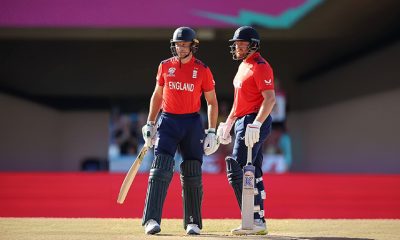
After losing the toss and admitting he would have liked to chase too, England captain Buttler combined with Salt for a second century opening stand in a row to set England off towards 267 for 3, the second highest score by a Full Member nation in T20Is. Salt reached his century off just 48 balls en route to England’s highest individual T20I score. He found willing partners after Buttler fell for 55 in Will Jacks and Liam Livingstone, who reached an unbeaten half-century.
In an entertaining match yielding 33 sixes, the third most in men’s T20Is, Andre Russel scored five of them and Nicholas Pooran four but even combined they couldn’t better Salt’s 10. Their side was bowled out inside 16 overs, with Reece Topley taking three wickets and Sam Curran and Rehan Ahmed two apiece.
England milked 12 runs off T20I debutante Mathew Forde in the first over. All but one of them went to Salt, who cleared the rope at long-on and followed that immediately with a drive through mid-off for four. Buttler joined in with a superb reverse-swept six off Akeal Hosein then a sweep for four next ball before Forde conceded 22 runs off the fifth over so that by the end of the powerplay England were flying at 68 without loss.
It compounded West Indies’ bowling woes in the powerplay. They have taken only one wicket inside the first six overs of England’s innings so far this series, with Salt and Buttler racking up opening stands of 77, 9, 115 and 117. Salt brought up his fifty off just 23 balls with back-to-back fours off Russell. Of all England’s power hitting during their union, Buttler’s effortless 83-metre six over extra cover off Gudakesh Motie looked like being the shot of the day until it was followed straight away by another maximum, dispatched even deeper into the stands at long-on to bring up his half-century off 26 deliveries. Buttler perished a short time later when he picked out Rovman Powell at long-on off the bowling of Jason Holder but he had helped put his side in an excellent position after 9.5 overs.
Salt picked up where he left off with an unbeaten 109 off 56 balls in the previous game. After Buttler went, Salt simply carried on, launching three sixes in a row off the start of Sherfane Rutherford’s solitary over. Jacks kept tempo with his partner, taking England past the 150-mark with a reverse sweep for four and nonchalant six over backward square leg off Hosein as he and Salt muscled their stand to 55 off just 19 balls. It ended on 56 just three balls later when Jacks was pinned lbw by Hosein after a nine-ball 24. When Salt brought up his century he tore off his helmet and launched a scream skywards, becoming only the second man from a Full Member nation – and third in all – to register back-to-back hundreds in T20Is.
As if West Indies’ early bowling troubles weren’t enough, their death bowling has also been a problem and, as Livingstone met Forde with a triumvirate of sixes in the 18th over, that hadn’t changed. It took Russell nailing his yorker with a hint of reverse swing to remove Salt, bowled through his legs as he tried to slog-sweep, but not before he had taken England past their previous best total in the format of 241 for 3, scored against New Zealand in 2019. Livingstone pounced on a Holder full toss to reach what was only his second 50-plus score in 37 T20Is with a swept four through square leg and he rubbed it in when Holder’s yorker flew off his outside edge through third man for one more boundary.
Brandon King was reportedly taken for X-rays after being struck on the knee by the ball while fielding early in England’s innings, but he reappeared to open the batting only to fall first ball to an understandably attacking mindset. Looking to cut a Moeen Ali delivery, he managed only a top edge which found the hands of a leaping Topley at short third. Pooran proceeded to smash 20 off the last four balls of the over, culminating in a mammoth 93m six over deep midwicket. Topley conceded 12 runs off the next over before he had Kyle Mayers held second grab at midwicket by Chris Woakes, who had woken to the news that he’d been picked up by Punjab Kings in the IPL auction. Woakes was then smashed for 16 runs off three balls at the end of his first over, Pooran dishing out some Jacks-style hitting at No. 3 as West Indies raced to 58 for 2 after just four overs. But Pooran fell for an impressive 39 off 15 when Harry Brook took a wonderful catch, running in from long-on and diving forwards to hold on to one struck high in the air off Curran.
Salt and Buttler teamed up in more ways than one, with the former taking the wicketkeeping gloves to give his captain “a different perspective from the field”, Buttler later told broadcasters. Salt stayed in the action with a simple catch to remove Shai Hope off Woakes. By the end of the powerplay, West Indies were 87 for 4 with Rutherford looking set to let loose. He did with three consecutive fours in Rehan’s first over to take West Indies to the 100-mark in the seventh.
Adil Rashid entered the attack in the eighth over and his fifth ball accounted for Powell, a peach that deceived the West Indies skipper and crashed into off stump. Rehan saw two balls in three sent over the fence at deep midwicket, first by Russell, then Rutherford. But Rehan responded with two wickets in as many deliveries, Rutherford lbw and Holder caught by Jacks at deep midwicket for a first-ball duck. By the halfway point of the innings, West Indies were seven down.
England returned to seam with Curran removing Hosein and Buttler, fielding at cover, taking a simple catch off the bowling of Topley to dismiss Forde, who had made his international debut when West Indies sealed a 2-1 victory in the ODI leg of England’s visit. Russell maintained his defiance, smashing a 108-metre six off Topley to move within one boundary of his fifty and passing the mark when Brook misfielded just inside the rope at long-off but when he holed out to Brook next ball, it was all over.
Brief scores:
England 267 for 3 in 20 overs (Phil Salt 119, Jos Buttler 55, Will Jacks 24, Liam Livingstone 54*) beat West Indies 192 in 15.3 overs (Andre Russell 51, Nicholas Pooran 39, Sherfane Rutherford 36; Reece Topley 3-37, Sam Curran 2-25, Rehan Ahmed 2-42) by 75 runs
(Cricinfo)







Latest News
Showers above 100 mm are likely at some places in the Western, Sabaragamuwa, Central, Uva and Southern provinces and in Anuradhapura district

WEATHER FORECAST FOR 08 OCTOBER 2026
Issued at 05.30 a.m. on 08 October 2026 by the Department of Meteorology
Misty conditions can be expected at some places in the Western, Sabaragamuwa, Central and Uva provinces and in Galle and Matara districts during the early hours of the morning.
Showers or thundershowers will occur in the most part of the island after 1.00 p.m. Heavy showers above 100 mm are likely at some places in Western, Sabaragamuwa, Central, Uva and Southern provinces and in Anuradhapura district.
The general public is kindly requested to take adequate precautions to minimize damage caused by temporary localized strong winds and lightning during thundershowers.

Former first lady Shiranthi Rajapaksa, wife of former President Mahinda Rajapaksa was produced before the Hulftsdorp court, after being arrested by officers of the Commission to Investigate Allegations of Bribery or Corruption (CIABOC) and produce
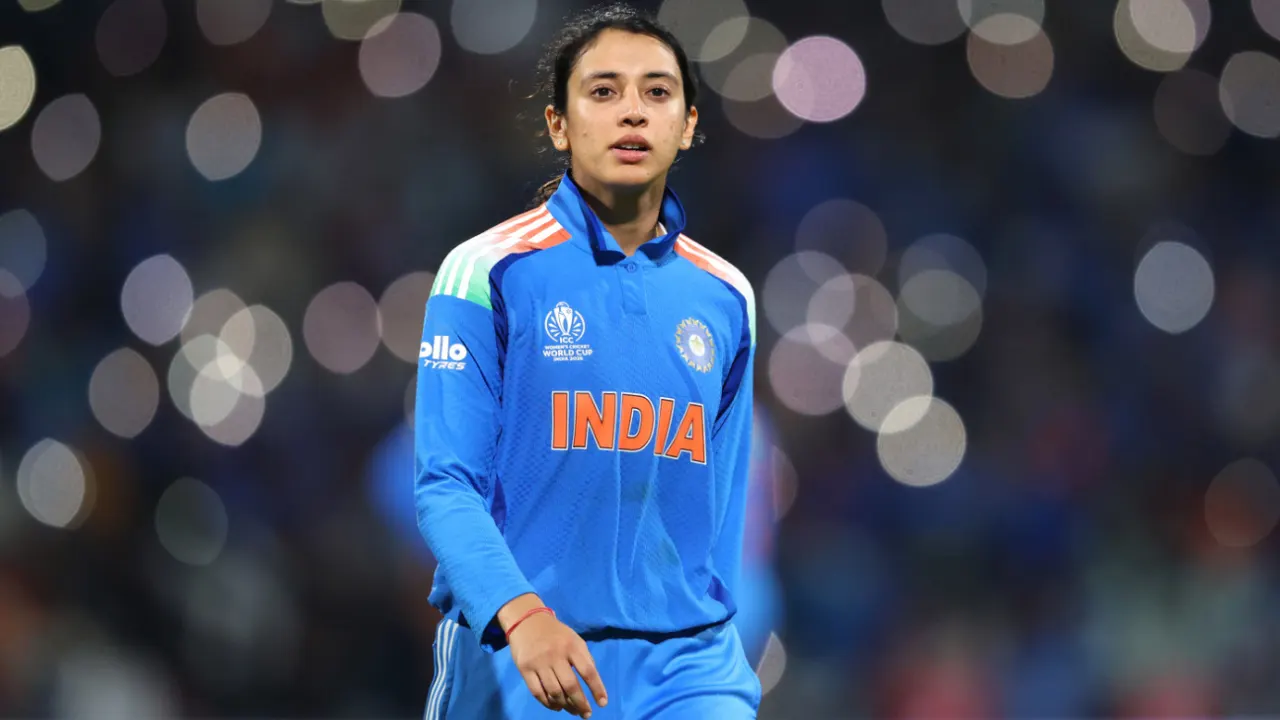
Smriti Mandhana has been named India’s all-format women’s captain on the same day Harmanpreet Kaur stepped down from the role after nearly a decade since she first took over.
Mandhana – vice-captain to Harmanpreet for much of this period – has previously led India in four ODIs and 18 T20Is, apart from captaining Maharashtra in domestic cricket and Royal Challengers Bengaluru in the Women’s Premier League.
Mandhana’s first assignment will be the limited-overs series against Zimbabwe beginning with the three T20Is in Raipur from October 16. On Tuesday, Mandhana was part of the selection meeting chaired by Amita Sharma to pick the squad for the tour.
Terming the appointment a “special honour”, Mandhana also acknowledged the contributions of her predecessor in her welcome note.
“I would also like to acknowledge Harmanpreet and the contribution she has made as captain over the years,” she was quoted as saying by the BCCI. “She has led the team with great commitment and has been an important part of our journey.
“I understand the responsibility that comes with this role and look forward to working with the team, learning along the way and giving my best to take Indian cricket forward.”
Mandhana’s appointment comes on the back of a review meeting held on Monday in Guwahati. Chaired by secretary Devajit Saikia, the meeting was also attended by Mandhana, Harmanpreet and head coach Amol Muzumdar to chart a roadmap forward, with an eye on next year’s inaugural Women’s Champions Trophy in February as well as the T20 World Cup and Los Angeles Olympics in 2028.
Mandhana, India’s best all-format batter, has been knocking on the doors for a while. Earlier this year, she led RCB to their second WPL title, in which she also top-scored in the final.
In September, she overtook Mithali Raj to become the leading run-scorer in women’s international across formats. Her 18 international hundreds are also the most in women’s cricket. She is also the first Indian woman to score centuries in all formats.
[Cricinfo]

Showers above 100 mm are likely at some places in the Western, Sabaragamuwa, Central, Uva and Southern provinces and in Anuradhapura district

PSTA worse than PTA: FSP

Shiranthi R remanded until 13 Oct.

Former NSB Chairman Kariyawasam granted bail

Katchatheevu row: India SC urges fishermen to avoid Sri Lankan waters

Remembering Juvenal, Coke, Acton and Machiavelli

‘Dates have the highest sugar content to fight Coronavirus’

Sunday Island 27 December – Headlines

#SundayIsland 17th December – Headlines

Sunday Island – 28th March

Sunday Island Headlines – 21 March

Sunday Island – 21st February – Headlines
-

 Editorial6 days ago
Colombo Port drug bust: The plot thickens
-

 Features4 days ago
The first woman in the foreign service or Ceylon Overseas Service it was then called
-

 Editorial5 days ago
Fuelling discontent and protest
-

 News3 days ago
Geneva takes up Sallay’s case and govt. ignores opportunity to answer accusations
-

 Latest News5 days ago
Tharindu Rathnayake, bowlers secure Asian Games Bronze for Sri Lanka
-

 Foreign News5 days ago
Ten injured after car crashes into rugby supporters in Australia
-

 Features3 days ago
Sri Lanka Cricket Bill: Governance reform is not yet a cricket strategy
-

 News4 days ago
Nearly 20 Iranian tankers stranded off Lanka amid US sanctions