
News
Sacking of SLMC president, council members sparks a furore

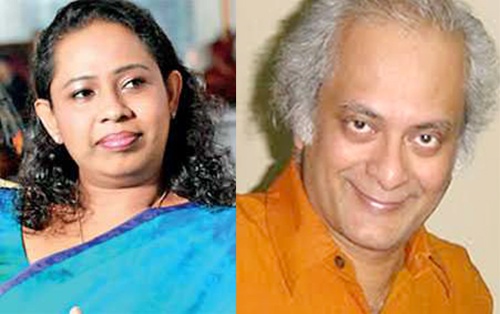
Health Minister’s move ‘completely flawed’
bY SURESH PERERA
The sacking of the president and four members nominated to the Sri Lanka Medical Council (SLMC) by the previous government has triggered an uproar, with medical professionals slamming Health Minister Pavithra Wanniarachchi’s move as “completely flawed” and “an attempt to undermine the autonomy and independence of the apex regulatory body”.
Expressing consternation over his sudden dismissal as the president of the statutory body, eminent Specialist Consultant Paediatrician, Prof. Harendra de Silva, said he was contemplating legal action against his removal by the Minister.
“I will be challenging my dismissal in the Court of Appeal”, he said.
In terms of the Medical Ordinance, there is no provision to remove the president or any of the four council members nominated by the serving Health Minister of the time, he asserted.
“Before I was informed of my termination, some Health Ministry officials urged me to resign, but I declined to do so”, Dr. de Silva told The Sunday Island.
 Pressure was also exerted on the other four members of the council to step down, he noted. “However, we collectively stood our ground and refused to throw in the towel”.
“It was after I dismissed the overtures calling for my resignation that a letter indicating that I have been removed as SLMC president was sent across”, he further said.
Prof. Narada Warnasuriya and Dr. Pushpika Ubesiri, two of the other council members who were dismissed, said that they will also be seeking legal redress over their removal in “contravention of the Medical Ordinance”.
Apart from them, the other two ‘Minister’s nominees’, as they are called, who were given the marching orders were Dr. Upul Gunasekara and Dr. Sunil Ratnapriya. However, there was still no word on the four new nominees of the Minister.
Under the Medical Ordinance, the serving Health Minister can name the president and four nominees to the 25-member council. Apart from the Minister’s nominees, the other members are drawn on the basis of one each (generally the Dean) from Faculties of Medicine, and other diverse medical spheres. The Director-General of Health Services is an ex-officio member.
The Government Medical Officers’ Association (GMOA) has four elected representatives in the council – Dr. Anuruddha Padeniya, Dr. Naveen de Zoysa, Dr. Nalinda Herath and Dr. Harris Pathirage. However, Dr. Pathirage has since resigned from the council citing personal reasons, GMOA Assistant Secretary, Dr. Chandana Dharmaratne said.
The SLMC election was on the cards but had to be put off indefinitely due to the worsening Covid-19 pandemic.
Though the Health Minister claimed that the dismissal of the SLMC president and the four nominated council members was based on the findings of the five-member committee appointed by her, that’s not the factual position, said Dr. L. A. Ranasinghe, president of the Association of Medical Specialists (AMS).
“Contrary to the Minister’s assertion in her letter to the SLMC president, personal communications we had with some of the committee members (Dr. Hemantha Perera and Dr. Anula Wijesundara) indicated that they had not singled out any member or the president in their report as responsible person/s for the deficiencies of the SLMC. Neither did they recommended the removal of anyone from the council”, he noted.
According to the committee members, the whole council is responsible for their decisions and actions and not individual members (similar to collective responsibility of Cabinet decisions), he explained.
As far as we know, there is no legal provision for the Minister to remove the SLMC president or any member according to his/her wishes without following the regulations stipulated in the Medical Ordinance, Dr. Ranasinghe remarked.
The process the Health Minister followed is completely flawed and purely based on the agenda of a trade union. This has created a very bad precedent that could be “the first step towards undermining the autonomy and independence of the SLMC”, which is tasked with the regulation of Sri Lanka’s medical profession, the AMS chief further said.
The SLMC is facing a crisis never witnessed in its recent history, he continued, while urging the Health Minister to reverse her decision immediately to avoid unnecessary turbulence in the field of medicine in this hour of dire need.
The five-member committee Health Minister Pavithra Wanniarachchi appointed in September 2020 to “look into the activities of the SLMC” comprised Specialist Prof. Hemantha Perera, former Dean of the Ragama Medical Faculty, Specialist Prof. Prashantha Wijesinghe, Specialist Dr. Anula Wijesundera, Specialist Dr. Maithri Chandraratne and Specialist Dr. Dharshana Sirisena.
The Minister said at the time that the SLMC is an independent body established by a charter and its primary function is to maintain a quality medical service by protecting the rights of patients. The institution protects the quality of medical education and regulates physicians.
Under Section 15 of the Medical Ordinance, the president/council member is deemed to have vacated his post in the event of death, resignation, declared insolvent or bankrupt by a competent court, found guilty by a court of law, cancellation of medical registration, non-attendance of three consecutive board meetings or being away from the country for a period of one year or more, medical officials said.
“Whatever the reasons adduced, the crux of the matter here is that the present regime was not comfortable with a president and council that was appointed by former Health Minister, Dr. Rajitha Senaratne under the UNP administration”, they claimed.
“The reality of the situation was that the incumbent Health Minister buckled under pressure from the GMOA to sack the SLMC president and the four nominated members”,
With the appointment of Prof. Vajira H. W. Dissanayake, the Dean of Colombo Medical Faculty, as the new SLMC president, the GMOA welcomed what it called the “restoration of the independence and dignity” of the statutory body.
GMOA Secretary, Dr. Senal Fernando charged that that former Health Minister Rajitha Senaratne interfered with the functions of the SLMC by appointing his henchmen to the council, which resulted in more than one thousand individuals, who failed all three subjects at the Advanced Level examination, being registered as doctors.
He further accused the SLMC of undermining medical education by striking out three recognized Russian universities from the list of foreign universities recognized by Sri Lanka. These higher seats of learning included the world-renowned Patrice Lumumba University, which admit Sri Lankan students for medical degrees.
Expressing dismay over the developments, the Government Medical Officers’ Forum (GMOF) said that never in Sri Lanka’s history has a Health Minister of a government elected to power interfered with the SLMC in this manner by dismissing the nominees of the previous Minister.
Over the years, Nimal Siripala de Silva, Maithripala Sirisena and Rajitha Senaratne, as Health Ministers, respected the independence of the SLMC and the appointments made to it by their predecessors, says GMOF president, Dr. Rukshan Bellana.
They are trying to politicize the SLMC, he charged. “The incumbent Health Minister is giving into the dictates of the GMOA and lost her sense of direction as a result”.
President of the Public Service United Nurses Union, Ven. Muruththettuwe Ananda Thera, said the Health Minister has no right to meddle with the SLMC, which is an independent regulatory body.
Members to the SLMC are nominated to the SLMC for a five-year term by an incumbent Health Minister and dismissing them before they complete their tenure violates the Medical Ordinance, the prelate noted.
He said that health services in the country have plunged to a new low so much so it is more apt to describe the Health Ministry as “Unhealthy Ministry”.
The mess in the health sector could have been prevented if there was at least a secretary with a backbone in charge of the ministry, he asserted.
The Sri Lanka Medical Council (SLMC) was established in 1998 as a statutory body. It replaced the former Ceylon Medical Council formed in 1924.



The Ceylon Electricity Board Engineers’ Union (CEBEU) yesterday warned that uncertainty surrounding the ongoing restructuring of the Ceylon Electricity Board (CEB) had forced many employees to refrain from performing their regular duties, raising concerns about potential disruptions to electricity sector operations.
The engineers’ union said the current situation had arisen due to what it described as either deliberate actions or extreme negligence in implementing the restructuring process, which has created significant confusion among staff who previously served under the CEB.
According to the union, although the state power utility has been formally restructured and new companies established, a large majority of former CEB employees have yet to receive official appointment letters, confirming their positions in the newly formed entities.
“The reality is that the institution, previously known as the Ceylon Electricity Board, no longer exists in its earlier form, yet most employees, who served under it, have not been issued proper appointment letters, or related documentation, assigning them to the newly established companies,” the CEBEU said.
The union said that while some workers had been issued “assignation letters”, those documents merely indicate the institution to which an employee has been attached and do not clearly define employment conditions, responsibilities, authority, or reporting structures.
“As a result, employees currently lack the necessary legal framework confirming their employment status, their duties, the authority under which they operate, and who they are accountable to within the new institutions,” the CEBEU said.
The engineers’ union emphasised that the current crisis was not created by employees but was the direct result of, what it called, shortsighted and questionable actions taken by those responsible for implementing the reforms.
It also expressed concern that the relevant Minister, appointed through the National List, had failed to hold meaningful discussions with employees, despite having previously advocated strongly for workers’ rights.
The union said trade union action had been launched only after months of unsuccessful attempts to resolve the issues through verbal requests and written communication with the authorities.
“Despite repeated appeals made over several months, there has been no satisfactory response. Decisions appear to have been taken under the assumption that a government with a strong mandate can proceed without proper consultation,” the union said.
However, the CEBEU stressed that employees engaged in essential operations—including power generation, transmission, and distribution—continue to work in order to ensure electricity supply to the public.
“These staff members are continuing their duties under considerable risk to prevent major disruptions to the electricity supply,” the union noted.
Nevertheless, the union warned that the prevailing uncertainty could affect certain operational activities, and restoration work following breakdowns may take longer than usual.
The CEBEU appealed to the public to understand the situation and expressed regret for any inconvenience that may arise.
“We request the public to understand the situation and cooperate with us during this difficult period. We sincerely regret any inconvenience that may be caused,” the union added.
By Ifham Nizam
News
Remittances up compared to last year before outbreak of war, but the economic picture is not rosy

Sri Lanka Bureau of Foreign Employment (SLBFE) yesterday said that foreign remittances, during January and February this year, had been 32% higher than the corresponding period in the previous year.
According to a press release issued by the SLBFE, Sri Lanka received Rs 1,480.1 mn during January and February this year, whereas in 2025 the country received Rs1,121 mn during the corresponding period. During the first two months of this year, 47,819 Sri Lankans had left the country for employment abroad.
However, Prof. Priyanga Dunusinghe has warned that Sri Lanka could face a catastrophic situation due to a rapid and sharp drop in revenue caused by the escalating Gulf war. Fighting erupted on February 28 following a joint US-Israel attacks on Iran.
Appearing on Derana ‘Big Focus’ on Monday, the Professor in Economics in the Department of Economics, and Head – Department of Information Technology, University of Colombo, Dunusinghe said that that the drop in remittances from the Middle East, as well as exports, should be examined against the backdrop of runaway oil prices.
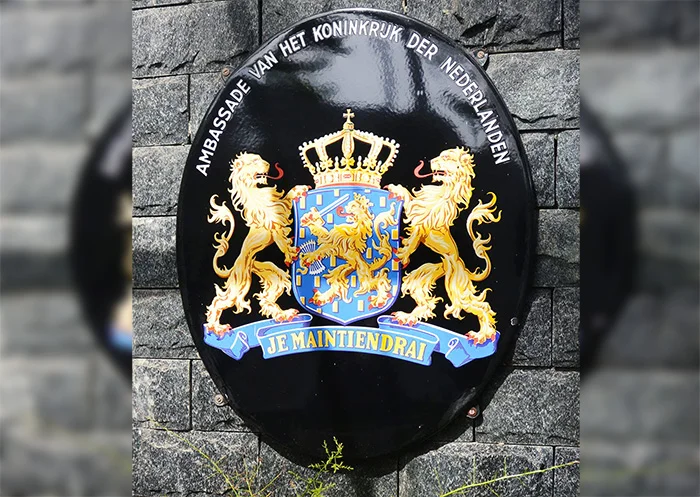
The Netherlands Embassy in Colombo has accused the Russian Embassy of trying to limit freedom of expression and right to know in Sri Lanka. The Embassy yesterday issued the following statement: “The Embassy of the Kingdom of the Netherlands’ attention has been drawn to the attempts by the Russian Embassy in Colombo to deny the people of Sri Lanka’s right to information and freedom of expression by demanding photos related to “Russia’s war of aggression” on Ukraine be removed from the World Press Photo exhibition, currently on display in Sri Lanka.
The 2025 edition of the World Press Photo Exhibition was officially opened by Dr Kaushalya Ariyaratne, Deputy Minister of Mass Media, and Wiebe de Boer, Ambassador of the Kingdom of the Netherlands on February 27, 2026, at One Galle Face. The same exhibition will be held in Kandy from 13 to 17 March 2026 at Sahas Uyana.
The Ambassador of the Russian Federation to Sri Lanka visited the exhibition during the weekend of March 7 and 8 and demanded the photographs, related to “Russia’s war of aggression on Ukraine,” be removed from the exhibition, and threatened to stage a protest if the organisers failed to do so.
The exhibition is jointly organised by the Netherlands Embassy, along with the Sri Lanka Press Institute, and the World Press Photo Foundation in the Netherlands.
Continuing the same demand, the Russian Embassy has now approached the Sri Lankan Ministry of Foreign Affairs to remove the said photos from the exhibition in Kandy. The same exhibition is currently underway in the USA and Germany and is showing all around the world in dozens of countries with freedom of expression.
The photos, including the photos that the Russian Embassy in Colombo wanted to hide from the Sri Lankan citizens, are also available online on the World Press Photo website for free for anyone to access them.
The Embassy of the Kingdom of the Netherlands deplores the attempts by any party to compromise people’s right to know and right to freedom of expression. It also amounts to a violation of the host country’s sovereignty if an Embassy attempts to decide what and which content its citizens should see and not. While we, as the Embassy of the Kingdom of the Netherlands, assure the Sri Lankan public that as our commitment to protect press freedom and respect for editorial integrity, we will continue the exhibition in Kandy with its full content without censoring any photos of the exhibition.
The exhibition is open to the public, free of charge, from 10.30am on Friday, March 13, till March 17, at Sahas Uyana in Kandy.”

Australia grants asylum to 2 more members of Iranian women’s football team

Showers are likely in the Northern, Eastern, Sabaragamuwa, Southern and Uva provinces and in Kandy and Nuwara-Eliya districts

CEBEU warns of operational disruptions amid uncertainty over CEB restructuring

Remittances up compared to last year before outbreak of war, but the economic picture is not rosy

The Netherlands alleges Russian Embassy interfering in World Press Photo Exhibition

Switzerland appreciates GoSL’s stand on ME situation

‘Dates have the highest sugar content to fight Coronavirus’

Sunday Island 27 December – Headlines

#SundayIsland 17th December – Headlines

Sunday Island – 28th March

Sunday Island Headlines – 21 March

Sunday Island – 21st February – Headlines
-

 News6 days ago
University of Wolverhampton confirms Ranil was officially invited
-

 News7 days ago
Legal experts decry move to demolish STC dining hall
-

 News6 days ago
Female lawyer given 12 years RI for preparing forged deeds for Borella land
-

 News5 days ago
Peradeniya Uni issues alert over leopards in its premises
-

 News3 days ago
Repatriation of Iranian naval personnel Sri Lanka’s call: Washington
-
 News6 days ago
Library crisis hits Pera university
-

 News5 days ago
Wife raises alarm over Sallay’s detention under PTA
-

 News6 days ago
‘IRIS Dena was Indian Navy guest, hit without warning’, Iran warns US of bitter regret