
Foreign News
Russia sends navy to guard oil tanker being pursued by US forces

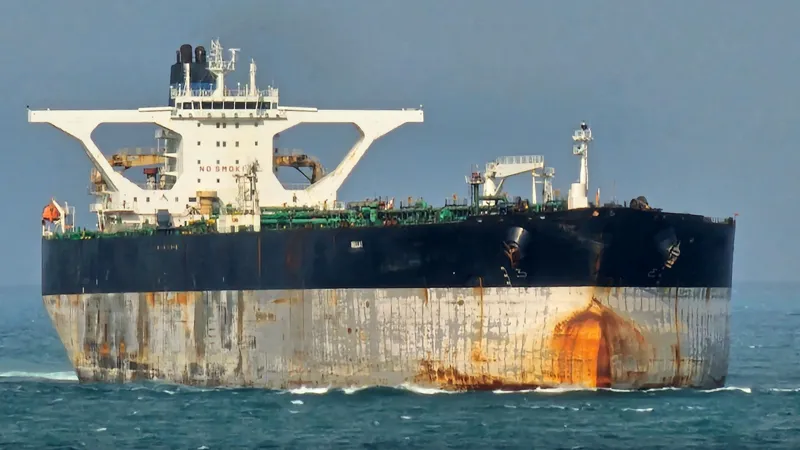
Russia has reportedly deployed a submarine and other vessels to escort an oil tanker – which is also being pursued by US forces – across the Atlantic.
The ship, currently between Iceland and the British Isles, has been accused of breaking US sanctions and shipping Iranian oil. It has historically transported Venezuelan crude oil but is reporting to be empty at the moment.
Previously named Bella 1, its name has been changed to Marinera and it has also reportedly been reflagged from a Guyanese to a Russian vessel.
President Donald Trump said last month that he was ordering a ‘blockade’ of sanctioned oil tankers entering and leaving Venezuela, a move the government there described as “theft”
Two US officials have confirmed to CBS News, the BBC’s US media partner, that Russia has sent a submarine and other navy vessels to escort the tanker.
The US Coast Guard tried to board it last month in the Caribbean when it was believed to be heading towards Venezuela. The Coast Guard had a warrant to seize the ship over its alleged breaking of sanctions.
The vessel has since dramatically changed course and its approach to Europe has coincided with the arrival of around 10 US military transport aircraft as well as helicopters.
Russia says it is “monitoring with concern” the situation around the ship.
“At present, our vessel is sailing in the international waters of the North Atlantic under the state flag of the Russian Federation and in full compliance with the norms of international maritime law,” its foreign ministry said.
“For reasons unclear to us, the Russian ship is being given increased and clearly disproportionate attention by the US and Nato military, despite its peaceful status,” it said.
Two US officials told CBS News earlier on Tuesday that American forces were planning to board the ship, and that Washington preferred to seize it rather than sink it.
BBC Verify has been looking at footage released by Russia Today, reportedly taken onboard an oil tanker, which shows a ship in the distance matching the profile of a US Coast Guard Legend-class cutter.
It has also been monitoring the latest reported location of the Marinera. According to AIS location data from ship-tracking platform Marine Traffic, its location as of Tuesday morning was in the North Atlantic Ocean, about 300km (186 miles) south of Iceland’s shoreline.
Previous AIS tracking data suggests it travelled north, past the western coast of the UK over the past two days.
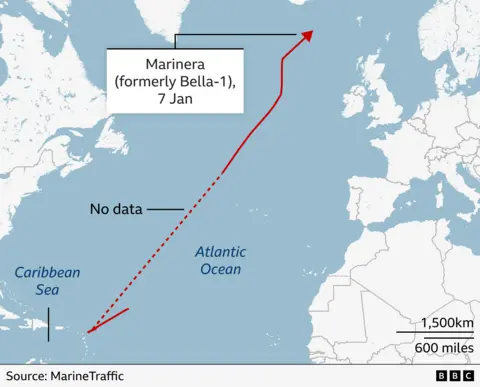
On Tuesday, the US military’s Southern Command posted on social media that it “remains ready to support our US government agency partners in standing against sanctioned vessels and actors transiting through this region.
“Our sea services are vigilant, agile, and postured to track vessels of interest. When the call comes, we will be there.”
Before any US military operation was launched from the UK, Washington would be expected to inform its ally.
For now, the UK Ministry of Defence says it will not comment on other nations’ military activities.
The US officials quoted by CBS suggested that America could mount an operation like one conducted last month when US forces seized the Skipper, a large crude oil tanker, flagged to Guyana, that had just left port in Venezuela.
Under international law, vessels flying a country’s flag are under the protection of that nation. However, simply changing a ship’s name and flag doesn’t necessarily change much, Dimitris Ampatzidis, senior risk and compliance analyst at maritime intelligence firm Kpler, told BBC Verify.
“US action is driven by the vessel’s underlying identity [IMO number], ownership/control networks, and sanctions history, not by its painted markings or flag claim,” he said.
Michelle Bockmann, a maritime intelligence analyst at Windward, said changing to a Russian registry could “complicate US enforcement efforts”.
“Under the UN Convention of the Law of the Sea, there’s a provision that allows a stateless vessel to be boarded by authorities. By reflagging to Russia, the vessel is no longer able to be boarded under this provision,” she explained.
Bockmann adds that she has previously observed vessels changing their flag mid-voyage, but “it’s highly unusual and only seen with dark fleet tankers”.
The potential stand-off over the oil tanker comes days after the US shocked the world with the arrest of Venezuela’s Nicolás Maduro in Caracas. It bombarded targets in the city during the operation to extricate him and his wife on suspicion of weapon and drug offences.
Since he was seized, BBC Verify has identified three US-sanctioned tankers that have switched to a Russian registry, including the Marinera.
This follows a broader trend.
Since the seizure of the Skipper, BBC Verify has identified 19 US-sanctioned oil tankers that have switched to a Russian registry, with many of them having previously sailed under a false flag.
[BBC]

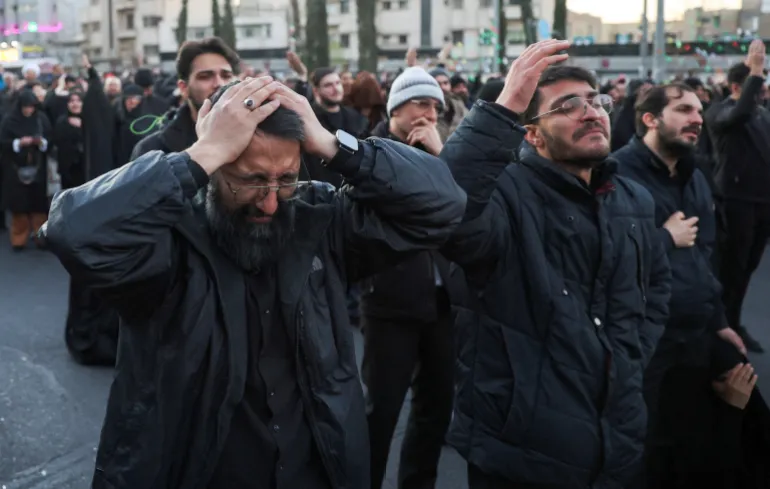
Iran has begun 40 days of mourning after Supreme Leader Ayatollah Ali Khamenei was killed in ongoing attacks by the United States and Israel, according to Iranian state media.
Top security officials were also killed in Saturday’s strikes, along with Khamenei’s daughter, son-in-law and grandson. The killings mark one of the most significant blows to Iran’s leadership since the 1979 Islamic revolution.
President Masoud Pezeshkian condemned the killing as “a great crime”, according to a statement from his office. He also declared seven days of public holidays in addition to the 40-day mourning period.
Reporting from Tehran, Al Jazeera’s Tohid Asadi said people were pouring into the streets of the capital following the news of Khamenei’s killing.
“There will be expected ceremonies,” he said, noting they would likely take place amid continuing bombardment across the country.
Protests denouncing Khamenei’s killing were also reported elsewhere, including Shiraz, Yasuj and Lorestan.
Footage aired by Iranian state media showed supporters mourning at the shrine of Imam Reza in Mashhad, with several people seen crying and collapsing in grief.
The killing also led to protests in neighbouring Iraq, which declared three days of public mourning. In Baghdad, protesters confronted security forces in the heavily fortified Green Zone, which houses Iraqi government buildings and foreign embassies.
Videos verified by Al Jazeera showed demonstrators waving flags and shouting slogans, with witnesses saying some were attempting to mobilise towards the US Embassy. Footage also showed protesters blocking vehicles at a roundabout near one of the entrances to the area.

There was also a protest in the Pakistani city of Karachi, where footage, verified by Al Jazeera, showed people setting fire to and smashing the windows of the US consulate.
However, there have also been reports of celebrations in Iran, with the Reuters news agency quoting witnesses as saying some people had taken to the streets in Tehran, the nearby city of Karaj and the central city of Isfahan.
Meanwhile, the official IRNA news agency reported that a three-person council, consisting of the country’s president, the chief of the judiciary, and one of the jurists of the Guardian Council, will temporarily assume all leadership duties in the country. The body will temporarily oversee the country until a new supreme leader is elected.
Khamenei assumed leadership of Iran in 1989 following the death of Ayatollah Ruhollah Khomeini, who had led the Islamic revolution a decade earlier.
While Khomeini was regarded as the ideological force behind the revolution that ended the Pahlavi monarchy, Khamenei went on to shape Iran’s military and paramilitary apparatus, strengthening both its domestic control and its regional influence.
Meanwhile, the Islamic Revolutionary Guard Corps (IRGC) pledged revenge and said it had launched strikes on 27 bases hosting US troops in the region, as well as Israeli military facilities in Tel Aviv.
[Aljazeera]
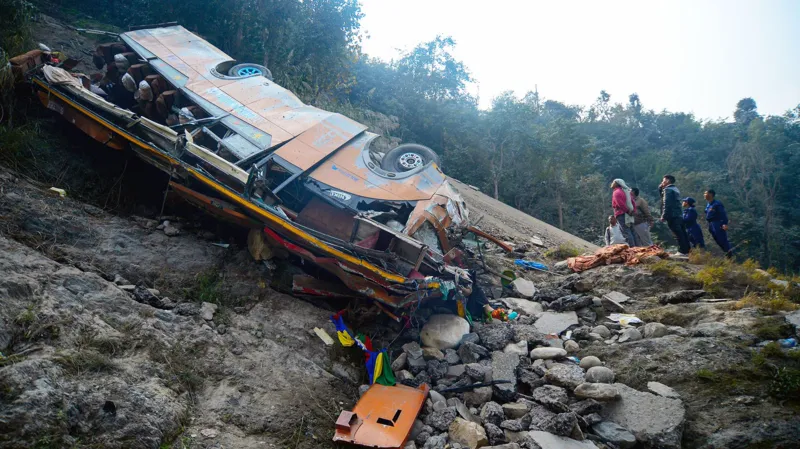
A 24-year-old British man is among 19 people who were killed in a bus crash in Nepal, police say.
The bus – which had been carrying tourists – had been travelling to the capital, Kathmandu, when it lost control and fell 200m on to the bank of the Trishuli river, in the country’s central Dhading district, in the early hours of Monday morning.
There were 44 people onboard including the driver, 25 of whom suffered injuries. The bus had been travelling from Pokhara, a popular tourist spot.
Nepal’s Home Ministry has created a five-member taskforce to investigate the cause of the incident. The UK Foreign Office said it was assisting the family of the Briton who was killed.
Nepalese authorities identified him as Stewart Dominic Ethan. His name has not been confirmed by the Foreign Office.
Nepalese police say they have identified all 19 bodies, including a 40-year-old Chinese woman and a 32-year-old man from India. Among the injured is a Chinese national and a New Zealander.
All the injured had been taken to hospitals in the capital, they added. Children were among those onboard.
Multiple teams were sent to the site, including police units, the army and a rescue team of divers, authorities said.
Police spokesman Abinarayan Kafle said 17 people died at the scene, with two more dying while receiving treatment, BBC Nepali reported.
Road accidents are relatively commonplace in Nepal, due to a range of factors including poor road maintenance and narrow paths in mountainous areas.
In 2024, at least 14 people died after a bus travelling from Pokhara to Kathmandu fell into the Marsyangdi river in the Tanahun district.
“We are supporting the family of a British man who has died in Nepal and are in contact with the local authorities,” a Foreign Office spokesman told the BBC.
Nepal is a popular destination for many international visitors, especially climbers, who travel there to access a key section of the Himalaya mountain range that includes Mount Everest.
Home to eight of the world’s tallest peaks, mountaineering is a significant source of revenue for the country – in 2024 climbing fees brought in $5.9m.
[BBC]
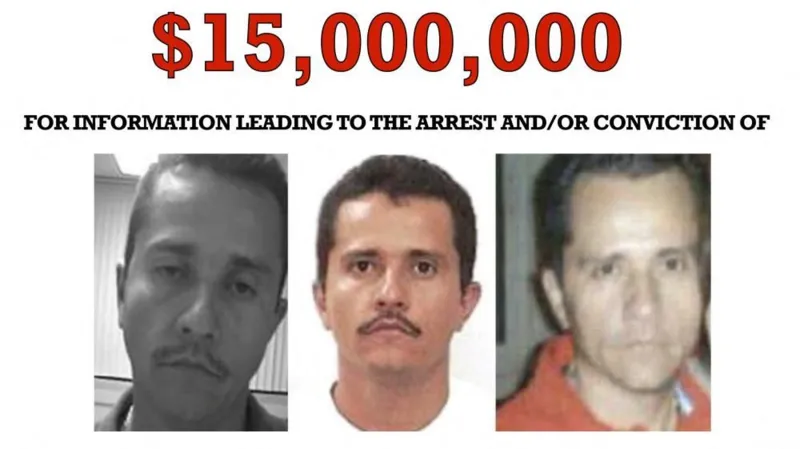
Mexico’s most wanted man and the leader of the feared Jalisco New Generation (CJNG) drug cartel has been killed during a security operation to arrest him, the defence ministry has said.
Nemesio Oseguera Cervantes, known as “El Mencho”, died on Sunday as he was being taken to the capital Mexico City, after being seriously injured in clashes between his supporters and the army.
Four CJNG members were killed in the town of Tapalpa, the central-western Jalisco state. Three army personnel were also injured. The US had given Mexico with information that assisted the operation.
CJNG retaliated by setting cars alight, building roadblocks and attacking security forces in eight states.
Mexico’s President Claudia Sheinbaum Pardo later urged people to remain “calm”.
In a post on X, she wrote that “in most parts of the country, activities are proceeding normally”.
The CJNG cartel – which had its original power base in Jalisco – is now present across Mexico.
El Mencho, a 59-year-old former police officer, ran a vast criminal organisation responsible for trafficking huge quantities of cocaine, methamphetamine and fentanyl into the US.
It had offered a $15m (£11.1m) reward for information leading to El Mencho’s capture.
In a statement, the Mexican defence ministry said the operation was “planned and executed” by the country’s special forces.
Aircraft from the Mexican Air Force and the National Guard were also deployed.
It also said that several armoured vehicles and weapons – including rocket launchers – were seized during the operation.
The US had been providing information to Mexico that assisted its operation, the statement said.
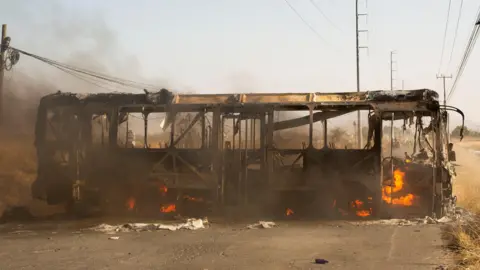
Eyewitnesses have filmed plumes of smoke rising over several cities including Guadalajara – one of the host cities of the forthcoming Fifa World Cup.
In the tourist hotspot of Puerto Vallarta, on the Jalisco coast, potentially thousands of tourists are trapped in the resort around the fighting.
Throughout Sunday, there were reports of gunmen on the streets in Jalisco and elsewhere.
The governor of Jalisco, Pablo Lemus Navarro, on social media advised residents of the state to adhere to a code red warning and avoid leaving their homes.
He also said that public transport was suspended in the state.
The US Department of State issued a shelter-in-place warning for US citizens in the states of Jalisco, Tamaulipas, as well as some areas in Michoacan, Guerrero and Nuevo Leon.
Former US ambassador to Mexico and Deputy Secretary of State Christopher Landau described El Mencho on social media as “one of the bloodiest and most ruthless drug kingpins.”
He added that El Mencho’s death was “a great development for Mexico, the US, Latin America, and the world”.
The killing of El Mencho represents a victory for the Mexican president in her fight against the country’s drug cartels.
It also could strengthen her relationship with US President Trump, who often has demanded more progress on security in Mexico.
However, if the security forces can’t bring the situation under control quickly, the Mexican administration’s victory may be overshadowed by the cartel’s violent response.
The Jalisco cartel has gained notoriety since it was formed in about 2010 for a series of attacks on security forces and public officials.
It has downed an army helicopter with a rocket-propelled grenade, killed dozens of state officials, and has even been known to hang the bodies of its victims from bridges to intimidate its rivals.
[BBC]

South Africa go into semis unbeaten despite Raza’s heroics

One killed and 11 injured at Dubai and Abu Dhabi airports as Iran strikes region

Unchanged India opt to bowl; Hosein replaces King for West Indies

Healy plunders 158 off 98 balls in final ODI as Australia secure huge win

Zimbabwe elect to bat

Iran begins 40-day mourning after Khamenei killed in US-Israeli attack

‘Dates have the highest sugar content to fight Coronavirus’

Sunday Island 27 December – Headlines

#SundayIsland 17th December – Headlines

Sunday Island – 28th March

Sunday Island Headlines – 21 March

Sunday Island – 21st February – Headlines
-

 Features7 days ago
LOVEABLE BUT LETHAL: When four-legged stars remind us of a silent killer
-

 Business7 days ago
Bathiya & Santhush make a strategic bet on Colombo
-

 Business7 days ago
Seeing is believing – the silent scale behind SriLankan’s ground operation
-

 Features7 days ago
Protection of Occupants Bill: Good, Bad and Ugly
-

 News6 days ago
Prime Minister Attends the 40th Anniversary of the Sri Lanka Nippon Educational and Cultural Centre
-

 News7 days ago
Coal ash surge at N’cholai power plant raises fresh environmental concerns
-

 Business7 days ago
Huawei unveils Top 10 Smart PV & ESS Trends for 2026
-

 Opinion3 days ago
Jamming and re-setting the world: What is the role of Donald Trump?