
News
Rubber growers call for immediate government intervention to solve ‘rubber industry’s COVID-19′

by Sanath Nanayakkare
Sri Lanka’s rubber plantations are potentially on the brink of being wiped out, battered by a fast-spreading leaf disease and the sector could be nearing the ‘point of no-return’, commercial rubber growers claim, requesting for urgent government intervention to address the pressing issue.
The crisis, which evokes comparisons with the ‘coffee rust’ blight which wiped out Sri Lanka’s coffee plantations in the late 1800s, need to be immediately addressed since output has declined by nearly a third already in some rubber plantations and the industry is fast becoming unviable, growers claim.
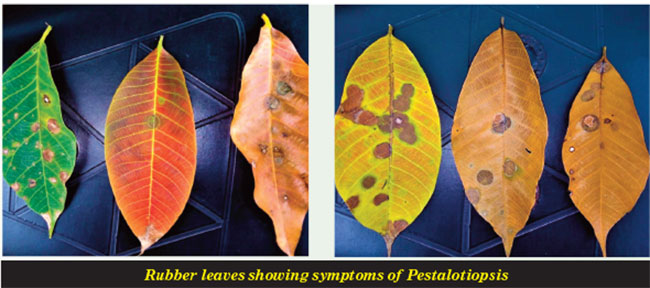
Regional Plantation Companies (RPCs) that are involved in the commercial-scale cultivation of rubber, have joined together to voice the critical need to halt the spread of ‘Pestalotiopsis’, by requesting the government to ensure the availability of suitable fertilizer and agrochemicals in sufficient quantities, together with a proven mechanism which would allow the application of the necessary agrochemicals.
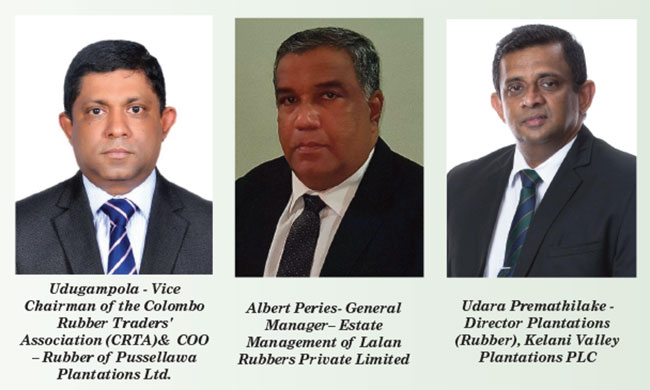
“This leaf disease is possibly best described as the equivalent of COVID-19 in the case of the rubber industry, considering both its devastation and the rapid speed at which it is spreading,” rubber industry veteran, Manoj Udugampola says. Udugampola has more than 30 years of experience in the sector and is the current Vice Chairman of the Colombo Rubber Traders’ Association (CRTA) and the Chief Operating Officer – Rubber of Pussellawa Plantations Ltd.
According to Udugampola, up to now, Pestalotiopsis, which causes leaves of rubber trees to fall off, has affected more than 20,000 hectares across nearly all rubber-growing regions in Sri Lanka. According to the statistics of Rubber Development Department (RDD), the extent of rubber cultivation under tapping in Sri Lanka (by both smallholders and commercial plantations) stood at 107,000 hectares in 2018. Hence, the leaf disease has already spread to approximately a fifth of the country’s rubber cultivation under tapping, based on 2018 figures.
Beyond the extent, the speed of the spread of Pestalotiopsis has also been alarming. While the issue only came into prominence in Sri Lanka during the second half of last year, Pestalotiopsis has spread rapidly from affecting 10,000 hectares of cultivation at the end of 2020 to double the extent by August 2021. However, Udugampola, like many others in the industry, fear that the worst is yet to come, based on the experiences of other rubber producing countries which have been previously affected by the leaf disease.
“Unfortunately, the wet weather conditions in many areas in which rubber is grown in Sri Lanka are ideal for the disease. The key issue is that while rubber trees need good foliage to produce output, Pestalotiopsis causes the leaves to fall off, so production declines significantly. When we look at the experiences of other rubber producing countries with this disease, the situation becomes even more grim.”
The industry’s fears appear to be well-founded, considering foreign news reports on Pestalotiopsis outbreaks in other rubber producing countries. By August 2019, a rubber cultivation extent equivalent to nearly three times Sri Lanka’s total rubber extent under cultivation in 2018, had been affected by the disease in Indonesia, resulting in the country reducing its annual rubber output target for the year by 15%. Similarly, news reports from Thailand, which too saw vast extents of plantations far greater than Sri Lanka’s total rubber cultivation extent being affected in 2019 by Pestalotiopsis, notes that the disease can halve the output of rubber plantations.
“By around April – May this year we were already seeing a 10 % to 20% reduction in output from rubber plantations due to Pestalotiopsis,” Udara Premathilake, Director Plantations (Rubber), Kelani Valley Plantations PLC says, supporting the views of Udugampola. “Since we continue to incur huge fixed costs including labour costs in running our operations, the reduction in output is reducing our revenue substantially and therefore our profits, so the industry is fast becoming unviable.”
“At this rate by year-end we are looking at a 15% to 20% reduction of the annual output. We are not sure where the industry would stand by next year. Companies are already looking at other crops like cardamom, pepper and cinnamon, which could spell the end of Sri Lanka’s rubber cultivation,” Premathilake said.
His prognosis is backed by Udugampola, who also points out that the Pestalotiopsis and related issues extend far beyond short-term remedies and is threatening the industry’s long-term viability.
“When this disease spreads to immature plants, their long-term growth will be badly affected. Since rubber trees have a life span of around 30 years this translates to a long-term decline in production. As concerted action should be taken at least now, or the industry will be unviable both in the short and the long-run.”
One of the key issues in addressing Pestalotiopsis is the lack of necessary fertilizer and the required agrochemicals (Carbendazim and Hexaconazole) in sufficient quantities. Since rubber trees lose their foliage due to the disease, to compensate and provide extra nourishment for foliage re-growth, Rubber Research Institute’s main recommendations is to apply additional fertilizer. However, following the fertilizer and agrochemical ban, let alone additional quantities, not even the required quantities are available, according to the Regional Plantation Companies (RPCs).
While earlier at least these inputs had been available at exorbitant prices (at double the amount prior to the ban), now there is no fertilizer available in the market at present. In addition, the recommendation is to apply fertilizer for mature rubber fields primarily before July/August, which was not possible due to the ban of fertilizer.
The RPCs also point out that despite Rubber Research Institute’s significant efforts and the appointment of a taskforce by the Plantation Ministry to arrest the spread of the disease, a solution is yet to be provided on how agrochemicals can be applied, since existing equipment is not sufficiently powerful to spray agrochemicals to the canopies of full-grown rubber trees.
However, RPCs’ have taken proactive measures themselves to halt the spread of Pestalotiopsis, but these efforts have not yielded the expected results.
“Bearing significant costs, we tested the feasibility of using drones to apply pesticides to the canopies of mature rubber trees in some of our plantations,” Albert Peries, General Manager– Estate Management of Lalan Rubbers Private Limited said. “However, despite being extremely costly, it was not entirely successful, particularly since most rubber plantations are steep land, rather than flat areas, which appears to be an issue for the drones.”
“Hence, we need a commercially-viable solution for Pestalotiopsis and we need one right now, since the industry is in no condition to bear these kinds of exorbitant costs continuously.”
Peries notes that even the spraying of chemicals would only provide temporary protection for a period of few months. He points out that even if one plantation applies agrochemicals but the adjoining one fails to do so, the disease can still spread from the untreated cultivation.
Hence, it is critical that the disease must be dealt with at the national-level by the government, considering especially that a vast majority of Sri Lanka’s rubber plantations are managed by smallholders, not commercial growers.
An immediate solution to Pestalotiopsis
While calling on the government’s intervention to finding a commercially viable solution to apply the necessary agrochemicals, the industry highlights that ensuring the availability of sufficient fertilizer and agrochemicals could provide a starting point in addressing the issue, especially since application of additional fertilizer and agrochemicals are a key recommendation in mitigating the disease’s impact on rubber cultivations.
In the long-run, the industry stresses the need to strengthen the mechanisms available to deal with similar issues, if rubber plantations are to prosper.
“We do appreciate the efforts of government institutions such as the Rubber Research Institute,” Premathilake says. “However, unfortunately, they lack sufficient resources and their capabilities such as research need to be strengthened if we are to effectively tackle these issues. Small growers also need to be made more aware of Pestalotiopsis, since they may not fully know its danger.”
Pieris concurs with this view, also pointing out that the lack of a viable solution to Pestalotiopsis carries a significant opportunity cost to both the industry and the country as a whole.
“As an export industry, rubber has great potential to become an important player to generate much needed foreign exchange for Sri Lanka. In fact, the conditions now are ideal for this purpose since rubber prices are at their highest since 2011. This could have been a golden opportunity even for smallholders to earn a good income and to revive the industry, which has been declining in terms of production volumes since around 2013 due to low prices.”
“However, unfortunately, due to Pestalotiopsis the volumes produced are significantly lower than the potential, despite high prices and both the industry and the country is losing out.”
“While the industry is eager to collaborate and address the issue, with no solution in sight, the clock appears to be ticking for Sri Lanka’s rubber industry, an important earner of foreign exchange for the economy, a provider of employment and livelihoods and a source of pride for the country, considering its global reputation as a high-quality rubber supplier. However, a solution, together with ensuring the availability of the necessary fertilizer and agrochemicals, could still potentially save Sri Lanka’s rubber cultivations, a matter now entirely in the hands of the government.”, Pieris said.

The government has chosen not to respond to questions raised by the United Nations Human Rights Council (UNHRC) regarding the detention of retired Maj. Gen. Suresh Sallay in connection with the ongoing investigations into the 2019 Easter Sunday attacks.
The Criminal Investigation Department (CID) arrested the ex-official in late February this year. The Special Rapporteur on the promotion and protection of human rights and fundamental freedoms while countering terrorism, the Working Group on Arbitrary Detention, the Special Rapporteur on the right of everyone to the enjoyment of the highest attainable standard of physical and mental health and the Special Rapporteur on the independence of judges and lawyers have jointly raised the issue on 20 July, 2026.
Drawing attention of President Anura Kumara Dissanayake to what they called alleged arbitrary detention of Sallay, former Director General of the State Intelligence Service (SIS) and former Director of Military Intelligence (DMI), under the Prevention of Terrorism Act (PTA), as well as allegations of torture and other cruel, inhuman or degrading treatment while in custody, resulting in the grave deterioration of his health, and imminent risks of retaliation through further torture and ill-treatment resulting in irreparable harm, should he be released from hospital and returned to custody, the UN sought the government explanation with a 60-day period.
The UN has stated: “This communication, and any response received from your Excellency’s Government, will be made public via the communications reporting website at the 60 days mark. Should your Excellency’s Government respond within 60 days, both the communication and the response, may be published before the 60 days mark. The communications and responses
will also be made available in the subsequent periodic report to be presented to the Human Rights Council.”
In the absence of the government’s response, the UN posted the letter, dated 20 July, 2026, addressed to President Dissanayake. The full letter can be accessed https://spcommreports.ohchr.org/TMResultsBase/DownLoadPublicCommunicationFile?gId=31125
News
Section of wartime KKS High Security Zone vacated to facilitate economic development in the area

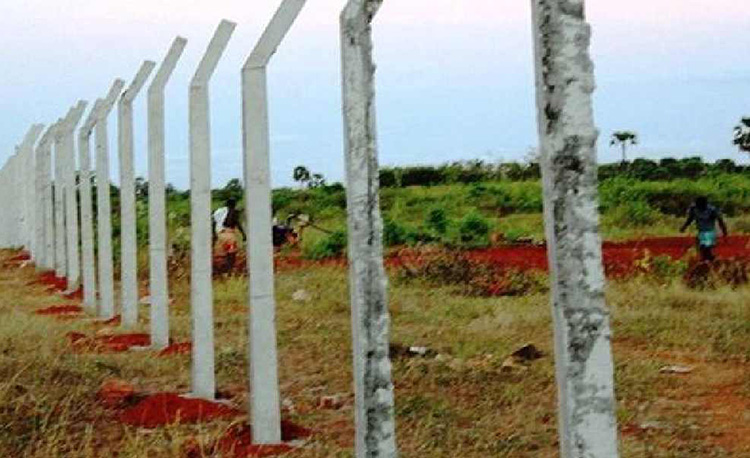
The Army, last week, vacated an area, within the wartime high security zone in the Jaffna peninsula. The Defence Ministry said that an extent of 187.56 acres of land, belonging to the Cement Corporation in Kankesanthurai, Jaffna, has been released by the military. The released land, located in Grama Niladhari Division J/233, Kankesanthurai West, within the Valikamam North (Tellippalai) Divisional Secretariat Division, had been utilised by the Sri Lanka Army since the middle of 1997.
The release of the 187.56-acre extent forms part of the initiative to make State land available for the proposed investment zone in Kankesanthurai, thereby facilitating future investment and economic development in the area.
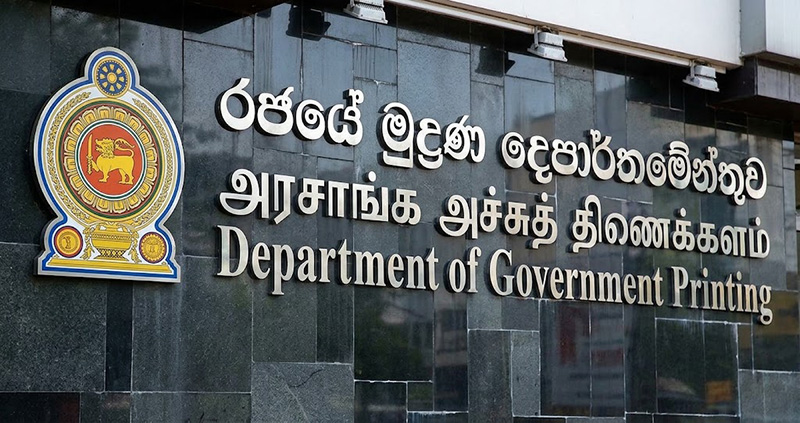
A complaint has been lodged with the Colombo Fraud Investigation Bureau against the Government Printer and the Secretary to the Ministry of Media regarding the online release of falsified documents bearing a forged Speaker’s certificate.
Attorney-at-Law Aruna Laksiri has lodged a complaint with the Colombo Fraud Investigation Bureau requesting legal action against the Government Printer of the Department of Government Printing (No. 118, Dr. Danister de Silva Mawatha, Colombo 08), Prasanna Jayaratne, and the Secretary to the Ministry of Mass Media (Asidisi Medura, 163, Kirulapone Mawatha, Polhengoda, Colombo 05), Dr. Anil Jasinghe.
The complaint alleges the commission of offences by forging and uploading falsified documents online using a forged Speaker’s certification, failure to perform statutory duties, and misappropriation of public property.
The complaint states that a copy of the English translation of the 22nd Amendment to the Constitution was downloaded and printed from the official website of the Government Printing Department (www.documents.gov.lk), which operates under the Ministry of Mass Media. On its outer cover and on page 1, the text “certified on 25th of September, 2026” is inscribed inside brackets.
The complaint pointed out that the Speaker has certified an English translation. Under Articles 23, 79, 83, and 80 of the Constitution, Parliament enacts laws and the Speaker certifies bills strictly in the Sinhala and Tamil languages; under the Constitution, therefore the Speaker cannot apply such certification to an English translation.

Showers or thundershowers will occur at several places in the most part of the island after 1.00 p.m

Geneva takes up Sallay’s case and govt. ignores opportunity to answer accusations

Section of wartime KKS High Security Zone vacated to facilitate economic development in the area

Lawyer lodges complaint against Govt. Printer, Media Ministry Secy.

Sri Lankan troops in joint anti-terrorist exercise in Russia

Nine Indian poachers brought to KKS with their boat

‘Dates have the highest sugar content to fight Coronavirus’

Sunday Island 27 December – Headlines

#SundayIsland 17th December – Headlines

Sunday Island – 28th March

Sunday Island Headlines – 21 March

Sunday Island – 21st February – Headlines
-

 Latest News5 days ago
Gold winner Tharanga gets brand-new Honda Vezel from SLAAJ
-

 Features5 days ago
Why Sri Lanka needs an Inclusive Civic Nationalism – urgently
-

 News4 days ago
US-assisted ‘Ice’ detection: NPC to examine IGP’s move to transfer drug-busting team
-

 Features6 days ago
Thailand’s biggest new global star …
-

 News6 days ago
First cases taken up by SC after enactment of 22A dismissed
-

 News5 days ago
Civil society activist accuses govt. of favouring Ven. Gnanasara
-

 Editorial3 days ago
Colombo Port drug bust: The plot thickens
-

 Editorial6 days ago
Aftershocks of 22A