
Sports
Royal record first innings win over Gurukula


Royal scored a first innings win over Gurukula after they restricted the team from Kelniya to 215 runs in reply to their 302 in the Under 19 Division I Tier ‘A’ match at Reid Avenue on Sunday.
For the home team open bat Hirun Liyanarachchi scored back to back half centuries. He remained unbeaten on 56 in the second innings.
For the visitors Ohas Sadew picked up six wickets.
Scores
Royal 302 for 9 decl. in 80 overs (Hirun Liyanarachchi 50, Dushen Udawela 25, Ramiru Perera 60, Yasindu Dissanayake 41, Thevindu Wewalwala 36, Manuth Disanayake 42, Udantha Gangewatta
22n.o.; Ohas Sadew 6/101) and 130 for 2 in 39 overs (Hirun Liyanarachchi 56n.o., Rehan Peiris 59)
Gurukula
215 all out in 75.2 overs (Sahas Induwara 35, Denura Dimansith 79, Janith Mihiranga 44; Himaru Deshan 2/65, Ramiru Perera 2/58) (RF)



There are few sweeter sights in sport than Australia being knocked off their perch. With a population no larger than Sri Lanka’s, they punch above their weight in everything from cricket to the Olympics to rugby. Success breeds envy and the Aussies have long dined at the top table. So, when they were served humble pie by Zimbabwe on Friday, there were more than a few quiet smiles around Colombo.
Australia have earned a reputation for bit of arrogance. Their delay in naming a replacement for the injured Josh Hazlewood raised eyebrows. The grapevine suggested they were backing themselves to stroll through the group stage and tailor the replacement according to oppositions in the second round. Looking too far down the track, however, is a risky business, in sport and in life. As Lord Buddha preached, live in the present. The Aussies, it seems, were already eyeing the semi-finals before surviving the preliminaries.
Now their backs are firmly against the wall. Defeat to Sri Lanka on Monday would mean curtains for the former champions. Sri Lanka themselves are walking a tightrope, one loss would leave them sweating over calculators with Net Run Rate coming into the equation.
On paper, Australia remain the superior outfit. Zimbabwe are not supposed to outmuscle them. But cricket, especially at RPS, is not played on paper. It is played on a surface that demand nous. Zimbabwe sized up conditions to perfection. Australia, by contrast, attempted to impose a brand of T20 that belongs on truer decks, see ball, hit ball, clear ropes, repeat.
That approach can be box-office entertainment elsewhere. At RPS, it is a fool’s errand.
Australia have already lost two bilateral series to Sri Lanka at this venue in the last four years. They should have known better. T20 may be a game of flair, but RPS is a theatre of graft. It demands elbow grease, soft hands and sharp cricketing brains. It is about rotating strike, playing percentages and waiting for the loose ball rather than manufacturing one. Trying to muscle every other delivery into the stands is asking for trouble and trouble duly arrived. Several Australian batters perished chasing glory shots, undone by impatience rather than skill.
Zimbabwe opener Brian Bennett offered a masterclass in tempo. His 64 off 56 balls will not feature in any highlight reel, but it was worth its weight in gold. Even after raising his half-century and with wickets in hand, Bennett refused to throw caution to the wind. No wild hoicks, no cowboy cricket. He batted deep and shepherded the innings. Once the target crept towards 170 it was game on.
There is a method to succeeding at RPS. It is not a playground for flat-track bullies. It rewards those willing to roll up their sleeves, not those swinging from the hip.
One of the so-called “big three” has already stumbled in what will go down as one of the tournament’s major upsets. Others who mistake Colombo for a batting paradise may follow.
Sri Lanka, though, will not have home advantage at RPS against Australia. Their showdown is set for Pallekele, where the ball comes on sweeter and the outfield runs like a greyhound. That is terrain Australia will relish.
But in Colombo, the lesson has been served: respect the pitch, or be prepared to eat humble pie.
by Rex Clementine

The TASS WELLNESS RUN powered by NESTOMALT, will energize Colombo today [15 February 2026], starting at 5.30 a.m. at Viharamahadevi Park. The event brings together individuals from every corner of the community to celebrate fitness, movement and the power of leading an active, wholesome lifestyle.
Designed to be inclusive and high‑spirited, the run features 5 km and 10 km race categories, giving everyone – from first‑time joggers to seasoned runners – the chance to take on an exciting challenge at their own pace.
More than just a run, the TASS WELLNESS RUN powered by NESTOMALT champions the importance of daily physical activity, inspiring Sri Lankans to embrace habits that support long‑term physical and mental wellbeing. With an energizing start to the morning, the event reinforces NESTOMALT’s commitment to helping individuals and families stay active, strong and empowered, making wellness not just a moment, but a way of life.
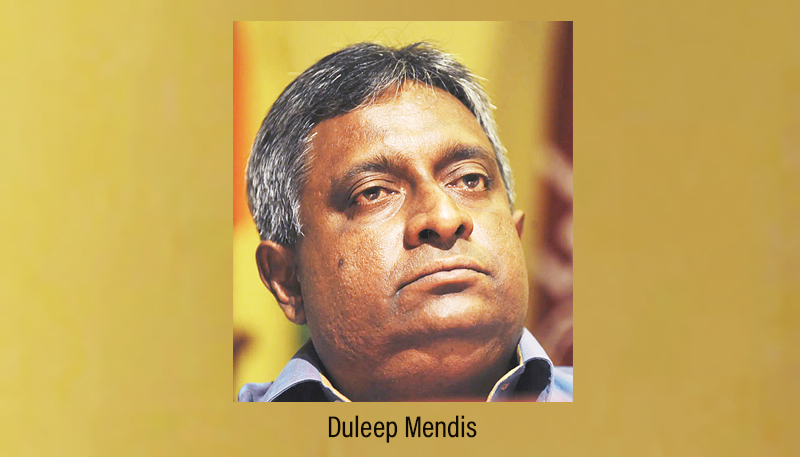
When Duleep Mendis first arrived in Muscat to help a budding nation find its footing in international cricket, he expected his stay to be brief. That was 13 years ago.
The 2026 tournament in India and Sri Lanka is Oman’s fourth T20 World Cup and Mendis has been around for the whole journey. He had not expected to stay and find a second home in a desert nation that has grown into a competitive force in Associate cricket.
“Initially I went for one or two years and ended up being there for about 14 years now,” Mendis, the Oman head coach, says while in his old stomping grounds, Colombo, where they are based for all their Group B matches.
“Pankaj Khimji, Chairman of Oman Cricket asked me how long I was going to keep shuffling up and down and whether I would like to come and settle down,” Mendis says. “By that time, I found out it was the right place. And more than anything I must say the people who were administering Oman cricket were fantastic guys.”
What Mendis found was rare in international sport. While many coaches battle board interference, he had a group of leaders who offered him a “free hand” to build.
“I liked very much working for the board because they gave me the authority. There were many proposals that we took forward. You are given a free hand and there were times that we failed, but you correct it and go forward.”
To comprehend the breadth and depth of growth in Oman cricket during Mendis’ tenure, one must first take a step back. When he started, their infrastructure was minimal. Founded in 1979 by the late Kanaksi G Khimji, Oman Cricket became an Affiliate Member of the ICC in 2000, gained T20I status in 2015, three years after Mendis joined and ODI status in 2019. Today, Muscat boasts world-class facilities that rival those in most Test nations.
The academy features a state-of-the-art indoor facility with seven pitches (fast, slow and ordinary) in a fully air-conditioned environment, while barren land has been replaced by “beautiful lush green” turf, with the government recently gifting the board three additional grounds.
While centred in Muscat, Mendis is pushing to take the game to Salalah and Sohar, to ensure cricket isn’t just a capital city sport. However, the road to the top division of international cricket has not been without complications.
The transition from “honorary” board to professional entity reached breaking point following the 2024 T20 World Cup when 11 senior players, including stars like Aqib Ilyas and Zeeshan Maqsood, clashed with the board over unpaid prize money.
The fallout was severe. The board suspended central contracts and because residency in Oman is often tied to these sporting visas, several players were forced to leave the country.
While the board eventually pledged to clear all dues by July 2025, attributing the delay to procedural hurdles, the incident highlighted friction in a rapidly evolving system.
For Mendis, who views the board members as “passionate guys who only wanted to do well,” these obstacles were part of the journey.
“I would say the hurdles were there, you had to just cross it,” Mendis says philosophically. “When the obstacles are coming, we discuss it as a panel and try to take constructive decisions. We are an Associate country, and there is a big difference from Associate to Test.”
Mendis is a realist regarding priorities in the region. He understands that in the Gulf Cooperation Council, of which Oman is a part, the focus is on white-ball cricket, which fits the working schedules of their player pool.
“The infrastructure and everything is suited for the white-ball game,” Mendis says. “Most of them are there for work, though that is slightly changing now. When the team does well, people start talking… it’s like back in ’96 when we [Sri Lanka] won the World Cup.”
As a batter who faced the world’s most fearsome bowlers in the 1970s and 80s, Mendis views the modern game with a nuanced eye. While he marvels at the athleticism, he sees a decline in the purer arts.
“Modern day cricket is completely different… it is almost like athletes playing. But I would say batting technique and standards have dropped a little.”
But despite that, he does envy the security the modern player has compared to his era. “Today you can come into cricket and say I will make it a career. That is an advantage.”
[Cricinfo]
by Madushka Balasuriya

Big Brother coming?

Reconciliation: Grand Hopes or Simple Steps

Salman Faiz leads with vision and legacy

The Rise of Takaichi

Rebuilding Sri Lanka’s Farming After Cyclone Ditwah: A Reform Agenda, Not a Repair Job

Assuming office as Finance Minister while being a relative newcomer to politics

‘Dates have the highest sugar content to fight Coronavirus’

Sunday Island 27 December – Headlines

#SundayIsland 17th December – Headlines

Sunday Island – 28th March

Sunday Island Headlines – 21 March

Sunday Island – 21st February – Headlines
-

 Business4 days ago
Autodoc 360 relocates to reinforce commitment to premium auto care
-

 Midweek Review4 days ago
A question of national pride
-
 Opinion3 days ago
Will computers ever be intelligent?
-
 Midweek Review4 days ago
Theatre and Anthropocentrism in the age of Climate Emergency
-

 Editorial6 days ago
The JRJ syndrome
-

 Opinion4 days ago
The Walk for Peace in America a Sri Lankan initiative: A startling truth hidden by govt.
-

 Foreign News6 days ago
Portugal elects Socialist Party’s Seguro as president in landslide
-

 Foreign News7 days ago
Washington Post chief executive steps down after mass lay-offs