
Latest News
Royal Challengers Bengaluru vs Punjab Kings – An IPL final with the potential for great joy and heartbreak


Seven teams have their names etched on the IPL trophy. One of them doesn’t exist anymore. Two weren’t part of the league when it began.
Royal Challengers Bengaluru (RCB) and Punjab Kings (PBKS) have been IPL ever-presents. They’ve made four finals between them, but neither has won the title.
RCB and PBKS have instead come to be grouped with Delhi Capitals (DC), another trophy-less OG franchise, into what social media refers to as the IPL’s Holy Trinity. There’s a certain amount of derision in the nickname, but it’s acquired a softer, warmer feel over the years, with even fans of the three teams using it with a sense of irony and solidarity with their fellow sufferers.
On Tuesday night, the trinity won’t be a trinity anymore. One of RCB and PBKS will have finally won the IPL, on their 18th attempt. The other… well, you wouldn’t want to be in that camp.
For a PBKS fan, it would be another pre-season reset – they’ve had too many to keep count of – coming to nothing, and an anticlimactic finish to a campaign full of ingredients that would make for a rollicking sports film: a coach who went out of his way to bring in a captain with a point to prove, the two of them creating a space for a group of uncapped, unheralded local players to grow into starring roles, bringing hope to a team that had till then only known misery.
For an RCB fan, it would be a fourth defeat in a fourth final, and all the promise of a new way – a team that finally found the perfect balance between bat and ball, between top-order flash and batting depth, between superstars and support cast – coming to the same old end.
It would be, above all, another bitter blow for Virat Kohli, who has put together another season of insatiable run-scoring – a record eighth with 500-plus runs – at the tail-end of a monumental 12 months that have included T20 World Cup and Champions Trophy triumphs on the one hand and a bittersweet Test retirement on the other. Destiny, surely, cannot be planning an 18th trophy-less IPL season for the man with 18 on his back?
Two teams, then, are tantalisingly close to finding the fulfillment that has eluded them for 17 years, but one will fall at the last step of the journey. Seldom has an IPL final promised so much joy and so much heartbreak all at once.
Rajat Patidar’s winning six in Qualifier 1 against PBKS was a symbolic moment for RCB, because their batting approach through IPL 2025 has mirrored that of the captain who took over at the start of the season. He set the tone early on too, with Player-of-the-Match performances that helped RCB beat Chennai Super Kings (CSK) at Chepauk for the first time in 17 years and Mumbai Indians in Mumbai for the first time in ten years. His returns have tailed off since, though, and his numbers for the season – 286 runs at an average of 23.83 and a strike rate of 142.28 – don’t quite capture his impact. The dip won’t faze him though; he’ll come out playing his shots, and that’s just how RCB might need to bat against a powerhouse PBKS line-up in Ahmedabad, which has been one of the highest-scoring venues this year.
Yuzvendra Chahal has won the IPL once, technically, having played one match for MI when they won the title in 2013. He won’t feel like he’s won it, though: he’s been in two previous finals, with RCB and Rajasthan Royals (RR), and lost both of them. On Tuesday he’ll be up against RCB, with whom he played for eight seasons. A hand injury kept him out of PBKS’ defeat to RCB in Qualifier 1, but he made match-winning contributions against his two other old teams either side of that. In Chahal’s last game before the injury break, his middle-overs craft helped slow RR down after a rollicking start to a chase of 220 – PBKS eventually won by 10 runs. Then, on his comeback, he took the big wicket of Suryakumar Yadav in Qualifier 2 against MI. Chahal has already hurt RCB once this season, taking 2 for 11 in a low-scoring, rain-shortened contest in Bengaluru; can he do it again in the biggest match of the season?
The one major injury doubt ahead of the final surrounds Tim David, who missed RCB’s last two games with a hamstring injury. If he’s fit, he is likely to come straight back into their line-up at the expense of Liam Livingstone.
Royal Challengers Bengaluru (probable): Phil Salt, Virat Kohli, Mayank Agarwal, Rajat Patidar (capt), Liam Livingstone/Tim David, Jitesh Sharma (wk), Romario Shepherd, Krunal Pandya, Bhuvneshwar Kumar, Yash Dayal, Josh Hazlewood, Suyash Sharma.
Two days after winning Qualifier 2 against MI at the same ground, PBKS are likely to stick to the same combination. Chahal played against MI and bowled his full quota, but PBKS bowling coach James Hopes revealed after the game that he had been at less than full fitness. If Chahal’s hand doesn’t allow him to play the final, PBKS could either go with just one spinner or bring in Harpreet Brar.
Punjab Kings (probable): Priyansh Arya, Prabhsimran Singh, Josh Inglis (wk), Shreyas Iyer (capt), Nehal Wadhera, Shashank Singh, Marcus Stoinis, Azmatullah Omarzai, Vijaykumar Vyshak, Kyle Jamieson, Arshdeep Singh, Yuzvendra Chahal/Harpreet Brar.
[Cricinfo]

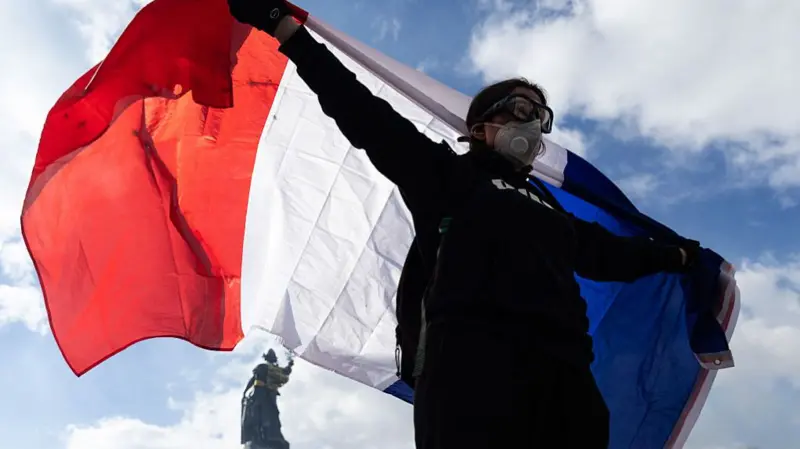
An estimated 550,000 people took part in demonstrations across France today to protest against teaching conditions in schools, rising fuel prices and the cost of living.
Marches were largely peaceful and took place in several major French cities, including Paris, where 110,000 people attended.
“We just want to study, we just want a future” one student taking part in the protest in the capital told BBC News, while another said they were ” just trying to make things change”.
But French Interior Minister Laurent Nunez said some groups “at the margins of these protests” caused the situation to “degenerate”.
According to the French Prime Minister Sébastien Lecornu, 1200 people were arrested. Officials also reported looting in cities such as Marseille, where masked 8ntruders also entered the city hall. In Lyon, the tourist office was set on fire and shops were damaged.
French President Emmanuel Macron said any vandals and looters would be “prosecuted and punished”, while Jean-Luc Mélenchon, the leader of left-wing party La France Insoumise, said demonstrations had been calmly mobilised.
Meanwhile, firefighters are continuing to battle a blaze at Limoges City Hall after a reported break-in and arson inside the 19th-century building during protests there.
(BBC)
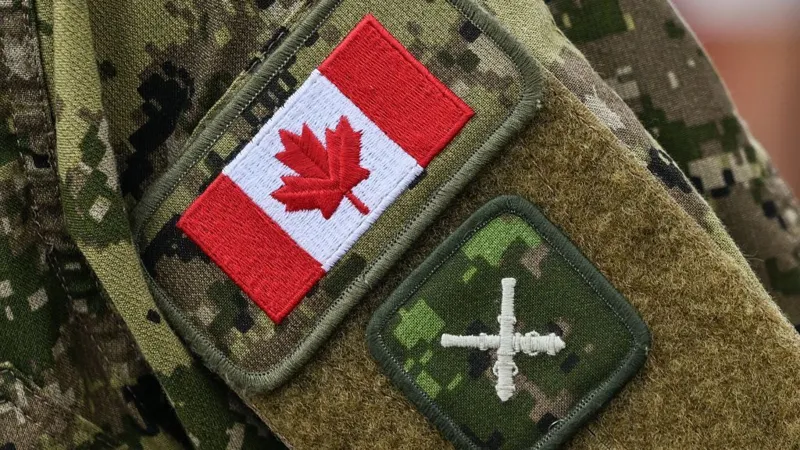
A large fire near a Canadian military base in Alberta has killed and injured some people, the defence minister said, without confirming the number of casualties.
The Canadian Armed Forces were working with local authorities to manage the fire and were looking into what caused it, David McGuinty said, describing the situation as “very, very active and delicate”.
Canada’s Prime Minister Mark Carney said on X that a “serious incident creating a major fire” had occurred, adding his “thoughts are with all the brave women and men affected”.
Canadian Forces Base Wainwright, where the fire broke out, is one of the country’s busiest military training bases.
The blaze “spread rapidly due to high winds” and had torn through the fences of the base, the Municipal District of Wainwright said.
McGuinty told reporters he “cannot recall an incident like this in recent memory”.
It is unclear when the fire broke out, but the district first posted about the incident at about 17:30 local time.
Local authorities have urged residents to avoid the area and give all emergency vehicles right of way.
(BBC)

The Asian Youth Games gold medallist who has run sub four minutes previously returned a time of 3:55.97 seconds to become the first athlete in his age category at these championships to run the distance under four minutes.
Achintha who has a personal best of 3:53.05 from last year was representing Prince College Ratnapura today.
In another impressive 1,500 m feat Tharushi Abhisheka of Lyceum International School, Wattala established a new meet record in the Under-20 Girls’ 1,500m as she returned a time of 4:34.59 seconds to win.
By the end of the second day of the meet seven new meet records had been established.
D. V. C. de Soysa (of Galewela Central College) Under-16 Boys’ Discus Throw – 55.83m.
D. G. Lahiru Achintha (of Ratnapura Kumara Vidyalaya) Under-18 Boys’ 1,500m – 3:55.97 secs.
W. P. Nethula Induwara (Rahula College, Matara) Under-14 Boys’ 100m – 11.70 seconds
K. V. R. Gayesha (Ira Handa Kotuwa Wewa Maha Vidyalaya, Polonnaruwa) Under-16 Girls’ High Jump – 1.70m
H. M. D. S. Herath (Maris Stella College, Thimbirigaskatuwa) Under-20 Boys’ Long Jump – 7.65m
P. M. Amaya Semindi (Vijitha Central College, Dikwella) Under-14 Girls’ High Jump – 1.58m

Record 1,600 students take Russian Classical Ballet examination in Sri Lanka

Half a million people join protests in France, but some turn violent

Deadly fire breaks out at Canada military base

Showers or thundershowers will occur in most parts of the island after 1.00 p.m.

Buddhist hierarchy demands prison perks for monk convicts

Debate on NCM against Speaker postponed indefinitely

‘Dates have the highest sugar content to fight Coronavirus’

Sunday Island 27 December – Headlines

#SundayIsland 17th December – Headlines

Sunday Island – 28th March

Sunday Island Headlines – 21 March

Sunday Island – 21st February – Headlines
-

 Latest News5 days ago
Nissanka’s return headlines Sri Lanka’s Test squad against Pakistan
-

 Latest News7 days ago
Farhan and Sadaqat help Pakistan seal series in style
-

 Features7 days ago
Intake 16: 45 years of duty and honour
-

 News7 days ago
Malwathu Chapter issues statement on talks with President over Gnanasara Thera’s robes
-
 News7 days ago
CP alleges NPP has taken the blame for illegal US sanctions on Iranian vessels
-

 News5 days ago
Sri Lanka, India caught in US-Iran ship crisis
-

 Opinion7 days ago
How long can Sri Lanka remain silent on its demographic crisis?
-

 Latest News5 days ago
Kusal Mendis’ unbeaten 87 hands Sri Lanka consolation win