
Sports
Richards and Botham replace Wisden Trophy

by Rex Clementine
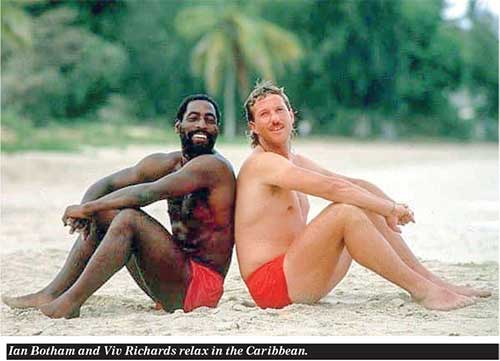
Watching County Cricket in the 1980s must have been fun. There were some quality players around. Hampshire had David Gower and Malcolm Marshall; Essex had Graham Gooch and Allan Border while Somerset had Sir Ian Botham and Sir Viv Richards. Watching the two friends trying to outhit each other over River Tone would have been quite an experience. England and West Indies have been playing Test cricket for the last 57 years for the Wisden Trophy and the two cricket boards announced on Friday that they are naming the series after two former greats – Richards and Botham.
The Wisden Trophy was introduced to mark the centenary anniversary of the Almanac. Both Richards and Botham played for it. The need to change the title and dedicate the series after some of the finest players the countries have seen was first suggested by former England captain Mike Atherton, who is now a prominent cricket writer and broadcaster in Britain.
There are of course those who ask the question whether instead of naming the series after the two terrific players, whether it should have been just named Sir Viv Richards Trophy. Like Sir Frank Worrell Trophy for which Australia and West Indies contest.
The simple reason for it is that Botham never was part of a winning side when he played the West Indies, who dominated the sport from late 1970s to early 1990s. Botham averaged 21 with the bat and 35 with the ball against the West Indies and scored no hundreds. Richards whereas always raised his game when playing against England. He averaged 62 against them, way above his career average of 50.
But there is more to cricket than stats alone. Botham calls Richards a ‘blood brother’. Richards recalls how Botham used to get hate mail simply because the Antiguan was his friend. Not just that. Richards was Botham’s first born’s godfather. Liam was born in 1977, and Richards was yet to become a superstar. That must have been a very unpopular decision in Britain in 1970s. But Botham stood by his mate.
Twice, Botham was offered lucrative contracts by South Africans during the apartheid era to be part of ‘rebel tours’. Botham turned down both offers simply because Richards was his friend. Botham calls Richards ‘smoky’ and Richards calls Botham ‘beefy’. Nicknames that stuck.
Those who argue that Botham’s name should not have been there should be reminded that Australia and Sri Lanka play for Warne – Murali Trophy. Now then, what’s Murali’s stats against the Aussies? World’s highest wicket taker averaged 36 against the Aussies, whereas his career average was 22. Nobody argues about Murali’s name being there.
Botham’s was knighted for his services for the game of cricket. He could have been knighted for his charitable acts as well. Many walks that he undertook to help leukemia patients has been appreciated by all and sundry. Not just in the cold climes of Britain. Even in the heat and humidity of Sri Lanka, Botham walked from north to south for several days. Funds poured in and were utilized to help the poor.
Sportsman can do much to make others’ life better. Both Botham and Richards have done much. It’s time to retire the Wisden Trophy to the Lord’s museum. Let’s celebrate cricket by appreciating some of our finest players.



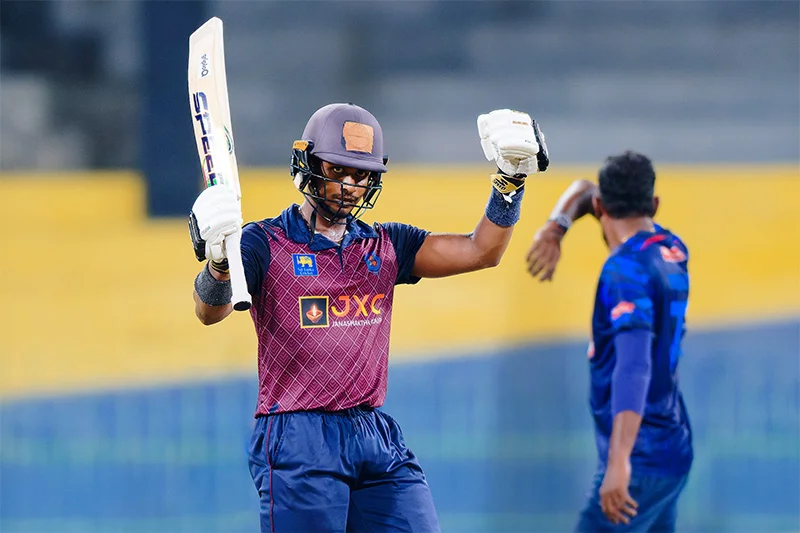
Sri Lanka will begin their three match T20I series against Pakistan in Rawalpindi on Friday with an opportunity for several youngsters to stake their claims, although the absence of Pathum Nissanka leaves a sizeable hole at the top of the order.
Nissanka, Sri Lanka’s highest-ranked batter in the ICC T20I rankings, has been one of the side’s most consistent performers in recent years and his absence deprives the tourists of a proven match-winner against a Pakistan attack that will still carry plenty of firepower despite resting several senior players.
The three T20Is will be played in Rawalpindi on October 9, 11 and 13 before attention switches to the seven match ODI tri-series involving hosts Pakistan, Sri Lanka and England.
While Sri Lanka will miss Nissanka, his absence opens the door for highly rated Sineth Jayawardene, who has been earmarked as one for the future. The former Sri Lanka Under-19 captain now has an opportunity to show that he can make the considerable jump from domestic and age group cricket to the international stage. Sineth skippered Royal College, Colombo with distinction.
There will also be considerable interest in leg-spinner Vijayakanth Viyaskanth, another player Sri Lanka have invested in with an eye on the future. With Wanindu Hasaranga out of the equation, Viyaskanth has an opportunity to make a strong case for a regular berth rather than remain on the fringes.
Sri Lanka will be encouraged by the fact that Pakistan too have opted to look beyond some of their established names for the T20I leg of the tour.
Sahibzada Farhan will captain Pakistan after leading them at the recently concluded Asian Games in Japan, taking over from Salman Ali Agha, who has been left out of the T20I squad. Salman remains part of Pakistan’s ODI plans.
Pakistan have also rested Babar Azam and Shaheen Shah Afridi for the T20Is, although both return for the ODI tri-series, where Shaheen will continue as captain.
The hosts have named uncapped all-rounders Razaullah and Mohammad Imran Randhawa in their 15-member T20I squad, while Maaz Sadaqat and Hasan Nawaz have been rewarded for impressive performances at the Asian Games.
Hasan finished the tournament as Pakistan’s leading run scorer with 123 runs, including a blistering 96 off 51 balls against India in the final, although Pakistan had to settle for silver.
Fast bowler Naseem Shah returns to Pakistan’s T20I squad having last played the format against Sri Lanka in February, while Shadab Khan, Fakhar Zaman, Saim Ayub and Abrar Ahmed provide experience.
For Sri Lanka, while Nissanka’s runs will be sorely missed his absence means someone else has the chance to put his hand up. Sri Lanka will hope one or two of their young guns grab that opportunity with both hands.
The ODI tri-series will follow the T20Is, with the first three matches being played in Rawalpindi before the tournament moves to Lahore for the remaining league games and the final.
Pakistan have retained a more experienced core for the 50-over competition, with Babar, Salman, Haris Rauf and Faheem Ashraf among those included.
Former Pakistan Under-19 captain Saad Baig has earned his maiden ODI call-up after scoring more than 1,000 runs in the 2025-26 Quaid-e-Azam Trophy, while left-arm wrist-spinner Sufiyan Moqim is another notable inclusion.
Pakistan have also strengthened their backroom staff, bringing back former Australian fast bowler Shaun Tait as bowling consultant. Tait previously served as Pakistan’s bowling coach in 2022-23 and replaces Ashley Noffke, who left after the Asian Games to take over as Netherlands head coach.
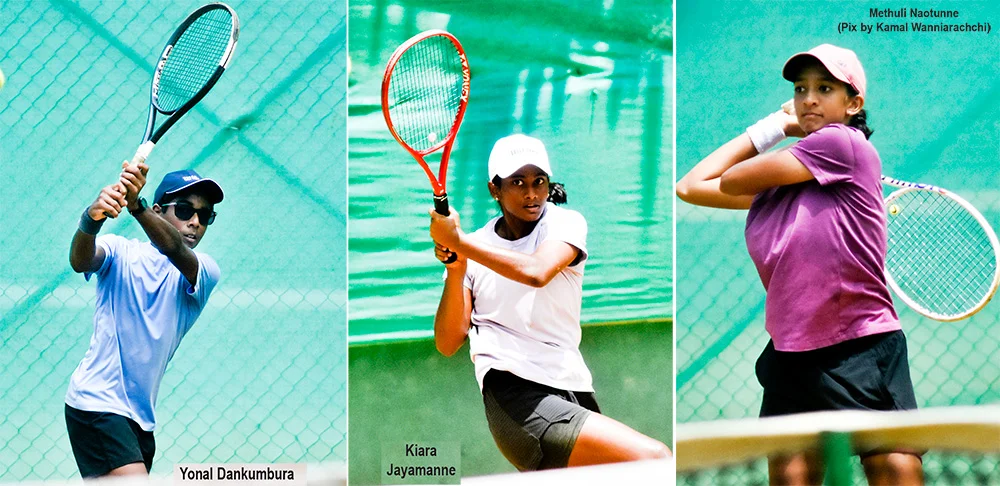
ATF Under-16 Colombo Week 1 Tennis
Sri Lanka’s junior players delivered a series of impressive performances on Wednesday, with the girls claiming all four semi-final places at the ATF Under-16 Colombo 2026 Week 1 tournament, held at the Sri Lanka Tennis Association courts.
Damsath Peiris
Methuli Naotunne led the charge with a notable quarter-final win over India’s Yashmitha Santhosh, recovering from a set loss to prevail 4-6, 7-5, 6-1. Kiara Jayamanne also came from behind to beat India’s Ahnavi Shaw 5-7, 6-4, 6-2.
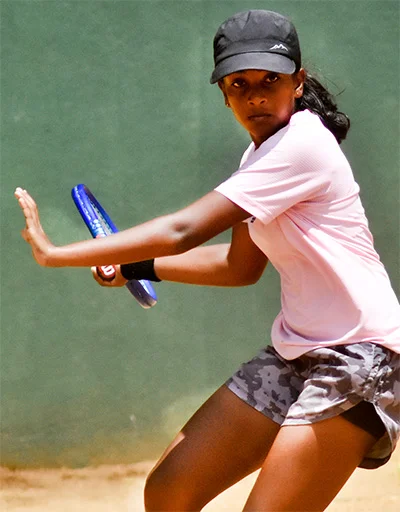
Risindi
Hewawasam
In an all-Sri Lankan quarter-final, Risindi Hewawasam overcame Desandi Peiris 4-6, 6-2, 6-3, while Disini Samaraweera defeated Sayli Basnayake 3-6, 6-2, 6-0.
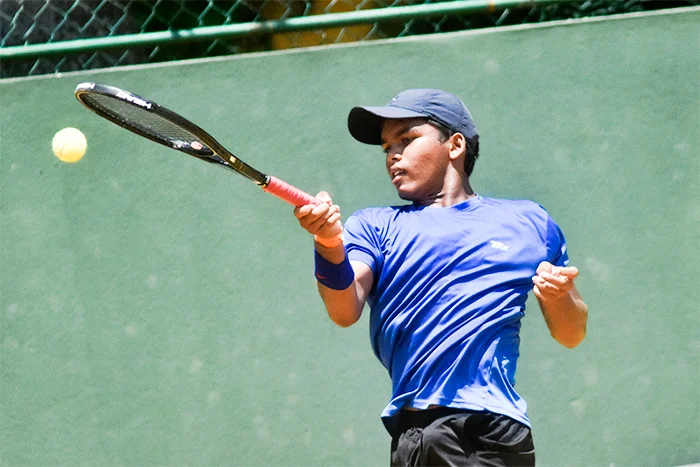
The Sri Lankan boys also impressed. Damsath Peiris beat Buvindu Jayawardhana 8-2, 7-6, and Yonal Dankumbura battled to a 4-6, 6-3, 6-3 victory over Jayan Sebastian.
The visiting players, however, proved tough to beat. The Philippines’ Anthony Castigador defeated Sri Lanka’s Dehan Wickramasinghe 6-2, 6-4, and India’s Gurshaan Chahal fought back to overcome Udeera Gunasinghe 2-6, 7-5, 7-5.
(RF)
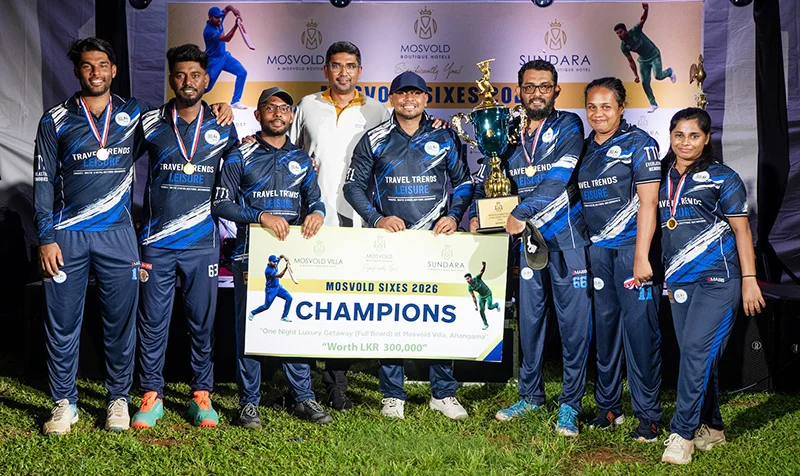
Mosvold Sixes 2026 concluded on Sunday at the Colombo Malay Cricket Club with Travel Trends Leisure crowned champions after a closely fought final against last year’s winners, Connaissance De Ceylan Sri Lanka, who finished as runners-up. Transco Travels were second runners-up.
Twenty three destination management companies took part in the six-a-side softball cricket tournament, organised by Mosvold Sri Lanka.
The Mosvold Martinus Challenge Trophy 2026 was presented to the champions by Nilanka Martinus, Co-Founder and Managing Director, Mosvold Boutique Hotels. Chief Guest Farveez Maharoof, the former Sri Lanka all-rounder, presented the runners-up award to Connaissance De Ceylan Sri Lanka.
This year’s twenty three competing DMCs were Tangerine Tours, Sri Lanka Tailormade, Olanka Travels, Antiquity Sri Lanka, Travel Trends Leisure, House of Travels & Tourism, NKAR Travels & Tours, Jetwing Travels, Walkers Tours, Connaissance De Ceylan Sri Lanka, Delux Holidays, Ceylon Roots, Spiceland Holidays, Infinity Vacations, Tropiculture, Serene Travels, Authenticities, Red Apple Travel & Holidays Lanka, DTH Travel Lanka, Hayleys Travels, We stay Ceylon, Transco Travels and Ceylon Tours.

Showers above 100 mm are likely at some places in the Western, Sabaragamuwa, Central, Uva and Southern provinces and in Anuradhapura district

PSTA worse than PTA: FSP

Shiranthi R remanded until 13 Oct.

Former NSB Chairman Kariyawasam granted bail

Katchatheevu row: India SC urges fishermen to avoid Sri Lankan waters

Remembering Juvenal, Coke, Acton and Machiavelli

‘Dates have the highest sugar content to fight Coronavirus’

Sunday Island 27 December – Headlines

#SundayIsland 17th December – Headlines

Sunday Island – 28th March

Sunday Island Headlines – 21 March

Sunday Island – 21st February – Headlines
-

 Editorial6 days ago
Colombo Port drug bust: The plot thickens
-

 Features4 days ago
The first woman in the foreign service or Ceylon Overseas Service it was then called
-

 News3 days ago
Geneva takes up Sallay’s case and govt. ignores opportunity to answer accusations
-

 Editorial5 days ago
Fuelling discontent and protest
-

 Latest News5 days ago
Tharindu Rathnayake, bowlers secure Asian Games Bronze for Sri Lanka
-

 Foreign News5 days ago
Ten injured after car crashes into rugby supporters in Australia
-

 Features3 days ago
Sri Lanka Cricket Bill: Governance reform is not yet a cricket strategy
-

 News4 days ago
Nearly 20 Iranian tankers stranded off Lanka amid US sanctions