
Life style
Rice morning , noon ,and night in Sri Lanka

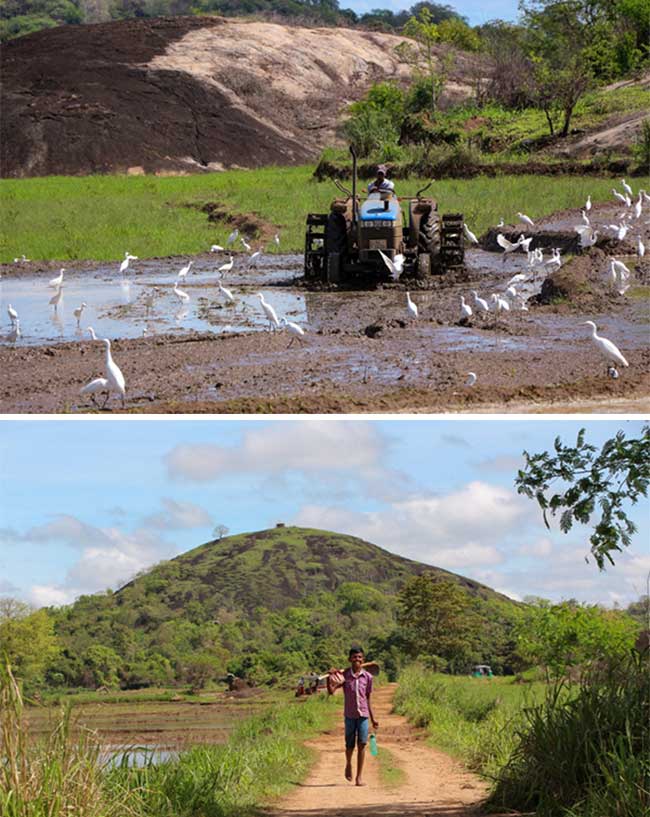
By Zinara Rathnayake
My mother is a good cook. My father is just slightly better. That’s how my younger sister would always describe my parents’ food. She’s right. My mother cooked delicious curries. But my father cooked the food we hold dear.My father grew up in Nabiriththawewa, a small village in Kurunegala.
Unlike his two older brothers who were more interested in going out with their friends, my father accompanied my grandfather to every village wedding. From what I could gather, my grandfather was the chef at every function in the village. He had cooked to feed hundreds.
“I followed him like a thread follows the needle. That’s how I learned to cook,” my father would say.
Although I wish I had met him, I never saw my grandfather, he was already a distant memory when I came to this world.When I was eight years old, my family lived in a small house by the rice fields in my father’s village. My father worked a tedious office job, commuting for hours on a passenger train every day.But when he was home, he would spend time doing two things: gardening and cooking.My father lived a frugal life so he could build a secure future for his two daughters.
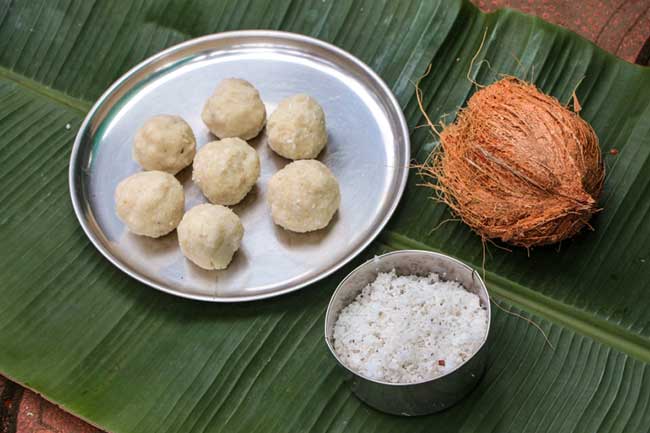
He was also a frugal cook, making use of every ingredient so nothing in his kitchen ended up in the waste pit. He mastered the art of delicious snacks, like bath aggala, a Sri Lankan sweet he makes using coconut and leftover rice and that marked our teatime ritual growing up. In Sinhala, aggala are sweet ball-shaped snacks and bath is cooked rice.
At home, teatime was when I cycled home through the rice paddies from the neighbours’ to find my little sister still in her bright sequined nursery dress with her colouring books. Outside, kids would be flying kites as men worked in the fields and women in colourful headwraps reaped golden-yellow paddy with their sharp sickles.
My mother, who was a government school teacher, would be just getting up from her afternoon nap to make tea with powdered milk for us.During the week, teatime meant a cup of tea with a packet of biscuits or a loaf of white bread to dip. But on the weekends, it was my father’s bath aggala, eaten as we sat on the verandah watching the world. Sometimes, my parents would tell us about their childhood. Or we would just watch colonies of bats dart across the evening sky as night fell, and giggle over something my little sister said.
As I look back on those teatimes spent at home, I miss the sounds and colours of those evenings that held us together, and the taste of my father’s bath aggala.It is only now that I understand that, for my father, bath aggala was more than sweet rice balls he made for his family. For him, it was making the most of rice: a grain beloved to him and all Sri Lankans.
The beloved grain
“Udetath bath, dawaltath bath, retath bath”
is a popular Sinhala saying that means “Rice for the morning, afternoon, and night.”
Nothing reflects the essence of my island and people better than that. Rice is not only the main staple for Sri Lankans, it’s more than that.In island kitchens, rice boils every day in clay pots over firewood or steams in electric rice cookers. A pot of steamed rice dominates our tables often, paired with other dishes and condiments. When rice is not cooked this way for breakfast or dinner, another rice-based food blesses our empty plates.
It could be kiribath, a sticky blend of rice and coconut milk eaten for breakfast. Or rice flour is used to make idi appa or idiyappam, discs of steamed thin noodles. Or appa or appam, bowl-shaped snacks with crispy edges and fluffy centres. Or dosa, thin, crisp flatbreads made with a fermented rice-lentil mix. Or levariya, sweet-savoury pockets of rice noodles filled with caramelised coconut.
We use soaked, ground rice to prepare sweetmeats for our New Year every April and when guests come over, we cook rice with aromatics like curry leaves and cinnamon and garnish it with crunchy cashews to prepare golden kaha bath.
When food is scarce, families soak leftover rice to eat in the morning with kiri hodi, a turmeric-infused coconut gravy soured with lime. This modest meal was my father’s favourite breakfast, paired with fresh green chilli.
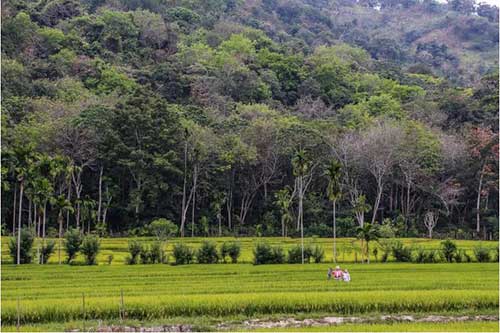
Rice feeds us, builds us, and shapes us in many ways. This humble grain that thrives in the mud holds a place in every Sri Lankan meal and has crept into every nook and cranny of our society.Rice has a large share of the island’s agriculture, frames its economy, and unpacks our history. And our love for it has given birth to a host of flavourful dishes.I learned how rice grew when we moved to our father’s village. Paddy – the word for the plant and the grain before removing the hull – flourished in the fields thanks to the farmers toiling in the sun.
My father grew paddy in a small field inherited from his parents, which grew enough rice for us. While he readied the field, I would run behind him, getting my feet muddy. Once or twice, I helped him plant seedlings.The earliest stone carving of paddy cultivation in Sri Lanka dates back to 939-940 AD, says Professor Buddhi Marambe, who specialises in weed science and food security. Ancient Sri Lankan rulers built reservoirs to harness rainwater while people developed and preserved rice varieties for more than 3,000 years.
But when the island was colonised by the British in 1815, cash crops like tea and rubber were imposed on farmers to make money for the colonisers. British propaganda campaigns also encouraged people to replace rice with wheat in their diet. “By the 1940s, Sri Lanka had to import 60 percent of the rice needed for the country’s meagre six million population,” says Marambe.In the following decades, refined wheat flour and white bread rose in popularity while native rice was replaced by high-yield varieties to sustain the growing population – varieties that needed chemical fertilisers and pesticides.
In 2020, there was enough locally produced rice to feed Sri Lanka’s population of 21 million, Marambe says. But the then-government abruptly banned synthetic fertilisers in April 2021, forcing farmers to turn to organic fertilisers they were not used to. Farmers lost their harvest, and many deserted their rice fields.
By the time the ban was lifted in November last year, Sri Lanka did not have enough foreign currency to import chemical fertilisers and pesticides. The hard currency shortage also resulted in a fuel crisis, and farmers have to pay more now for reaping and threshing machines.
“Most people [in our village] are abandoning their fields now,” my mother said when I rang her recently. “The machine is charging 240 rupees [$0.66] per minute. They can’t afford it.”
Sri Lanka’s future rice production now depends on a crippled economy and tentative foreign loans that may or may not come.In the past, leftover rice was considered “poor man’s food”, so people stopped eating foods like diya bath (fermented rice porridge with coconut milk) for breakfast, reaching for refined white bread slathered in preservative-laden bottled jam instead.
But, in June, food inflation was more than 60 percent in Sri Lanka and has since kept climbing. Prices soar daily, and most low-income families eat just one or two meals a day. As people rethink their food choices, frugal cooking has made a comeback.
My parents no longer buy biscuits or white bread. A packet of biscuits that cost 200 Sri Lankan rupees ($0.55) a week ago is now 600 rupees ($1.65). “Who would pay that much for biscuits,” my mother said. She wants me to bring her some from India, where I’m currently travelling.My father makes bath aggala more often now. It’s a dish he learned to make by watching his parents and older sisters, he told me recently on the phone.
When my father was a teenager, Sri Lanka was battling drought and an economic crisis in the 1970s. Even though his family had land to grow rice, there wasn’t enough water. So my grandparents made the most of what was available.
“They told us never to throw away rice, not even a single grain of it,” my father said. “When I saw a little boy digging in a dustbin for food at school, I realised what it means to have food on the table.”
Rice and coconuts
I don’t remember us ever buying rice. Even when I left home to live in Colombo, my parents would visit me with tightly packed grocery bags of rice from my father’s fields. But recently when I called home, my mother said she might have to buy rice for the first time in her life.
“The [threshing] machine will only come if we give them diesel,” my mother said. “And we can’t get diesel.”
Many families in the village are now eating diya bath in the morning, my mother said.
Making diya bath involves a few steps if you, like my father, want to eat it hot. Many people eat diya bath cold, which is faster.
If there is rice left over after dinner, my father soaks it in water, letting it soak overnight and draining it the next morning. Then he heats up the coconut milk in a pot, adds dried red chilli, curry leaves, onion, salt, half a teaspoon of turmeric powder, and Maldive fish flakes (dried, cured tuna fish), and lets it simmer.
For sourness, he squeezes in half a lime or adds a few pods of dark brown sun-dried tamarind. (This concoction alone is called kiri hodi). When it’s ready, my father pours it, piping hot, onto a bowl of rice and eats it with fresh green chilli and, sometimes, fried dried fish.
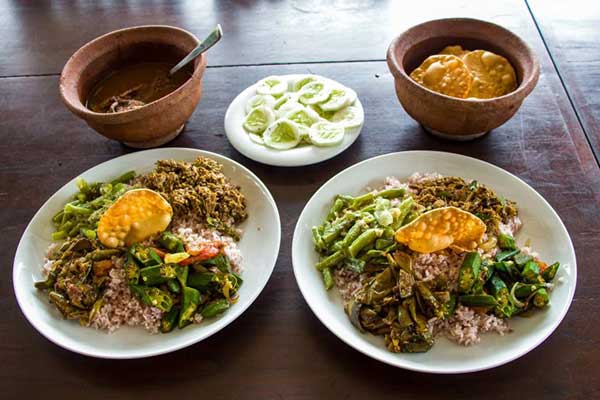
Cold diya bath
is a no-cook meal: mix two cups of coconut milk with one cup of soaked rice. Then add thinly-sliced red onion, two tablespoons of lime juice, three-four roasted dried red chillies, one teaspoon of grated Maldive fish, and salt to taste. If you like it sourer, squeeze in some more lime juice.
Some people like fresh green chilli instead of dried red chilli. Maldive fish is optional, but it adds a nice umami punch. Many elders believe that diya bath, with its fermented rice and coconut milk, cools the body and prevents heartburn.
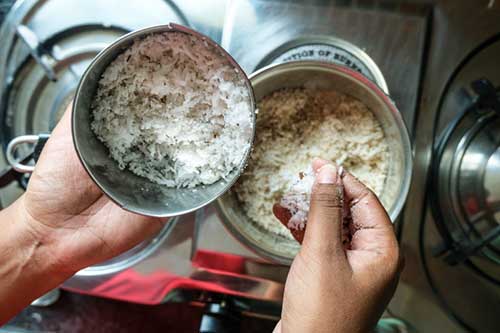
Speaking of coconut milk, when I make diya bath, I reach for coconut milk that comes in sealed cardboard containers but my parents have never bought coconut milk in their life, they make it. My father plucks coconuts from our garden, removes the fibrous outer husk, halves the nut, and scrapes it with a hiramanaya – a traditional grater with a wooden seat for the person to sit while grating. He mixes the grated coconut with water, squeezing it several times with his hands to make coconut milk.
Making coconut milk is laborious, but my parents still do it. If rice is our staple, coconut is its mate. It thickens our curries, binds our sambals, flavours our foods, and balances meals with healthy fats. Coconuts also make our condiments richer to pair with humble rice.
More than aggala
While people usually boil fresh rice for aggala, my father soaks leftover rice to make sugary, coconutty balls with a slight crunch. For him, bath aggala is food security. It is minimising waste.To make this teatime snack, he ferments leftover cooked rice overnight in water. In the morning, he drains and sun-dries the rice until it is crisp, then roasts it for about 20 minutes in a skillet on a low flame, until it turns brown.
When I made bath aggala recently, I roasted the rice for five to eight minutes and switched off the stove before it changed colour, so it stayed white. Do as you like, roasting for longer gives aggala a golden-brown colour and nutty flavour.Using a pestle and mortar, my father grinds the warm, roasted rice until he gets an uneven texture with pieces of broken rice that add a delightful crunch. You can use an electric grinder as I do, just don’t grind it into powder.
Take 250g of this ground rice and add about 100g of grated coconut, half a cup of sugar, half a teaspoon of salt, and half a cup of water. Mix it well with your hands and shape it into little balls. Some people prefer a bit of a spice kick to their aggala, which is easily done by sprinkling a hint of black pepper into the mix.Once ready, always serve with a cup of tea.
My father’s bath aggala is a testimony to Sri Lanka’s longstanding relationship with rice. It bears witness to the island’s often troubled history and present, twisted and framed by politics and economic interests.The road to recovery is long. But for now, I’d like to be lulled into sweet teatimes at home. One bath aggala at a time.
– Al Jazeera


Cinnamon Life that has re-defined Colombo’s skyline added another accolade to its journey as it officially received its five star certification placing it among the most distinguished luxury properties in Sri Lanka’s hospitality landscape.
Receiving the five star classification is a significant achievement for any hotel but Cinnamon Life – the flagship of Sri Lanka’s most ambitious integrated lifestyle development, the accolade carries exceptional meaning. The recognition follows a rigorous evaluation of service standards,facilities,and operational excellence,underscoring the property’s commitment to delivering world class guest experiences
– Cinnamon Life at City of Dreams has been officially awarded the esteemed Five-Star Certification by the Sri Lanka Tourism Development Authority (SLTDA), underscoring its status as a landmark in Sri Lanka’s hospitality landscape and a benchmark for excellence in the region.
As South Asia’s largest and first fully integrated resort, Cinnamon Life at City of Dreams represents a transformative investment in Sri Lanka’s tourism and leisure economy. Developed by John Keells Holdings PLC with a historic USD 1.2 billion investment – the largest private development in the country – the resort has reshaped Colombo into a premier destination for luxury travel, entertainment, world-class events, and international business.

The team marks a major milestone with the property’s five star accreditation
A hallmark of the property is its extensive event and convention infrastructure, featuring over 160,000 sq. ft. of versatile, high-spec event space. With five signature ballrooms, cutting-edge technology, and three exceptional outdoor venues offering panoramic views of the ocean and the Colombo skyline, Cinnamon Life has established itself as an unrivalled hub for global conferences, high-profile celebrations, and corporate gatherings for both local and international travellers.
“We are deeply honoured to receive this Five-Star Certification from the Sri Lanka Tourism Development Authority,” said Sanjiv Hulugalle, CEO and General Manager of Cinnamon Life at City of Dreams. “This recognition reflects our unwavering commitment to world-class service, guest centric innovation, and the elevated experiences that define Cinnamon Life. Our aspiration is to set new standards for luxury, leisure, and MICE tourism in the region, while supporting Sri Lanka’s positioning on the global stage.”
The Five-Star Certification further cements Cinnamon Life at City of Dreams as one of Sri Lanka’s foremost luxury destinations. With its two luxury hotels, curated signature dining concepts, immersive entertainment arenas, and a vibrant retail and lifestyle precinct, the resort offers an unparalleled blend of hospitality, lifestyle, and experiences under one iconic address.
The certification was presented at Cinnamon Life, attended by senior leadership from SLTDA and Cinnamon Life, members of the hospitality industry, and media representatives. The event celebrated this milestone achievement and marked a significant step forward in elevating Sri Lanka’s luxury hospitality offering.
About City of Dreams
City of Dreams is Sri Lanka’s largest and most ambitious integrated resort, redefining Colombo’s skyline as a symbol of modern luxury and innovation. Designed as a “city within a city,” the destination offers 800 luxury rooms and suites, with 687 at Cinnamon Life and 113 at NUWA, complemented by a diverse selection of 13 restaurants and bars that showcase global cuisines alongside Sri Lanka’s rich culinary heritage. Adding to its appeal is a vibrant mix of high-end retail, Sri Lanka’s premier entertainment arena, a shopping mall, office towers, and luxury residences. This integrated ecosystem enables delegates to stay, work, meet, dine, shop, and celebrate seamlessly under one roof, delivering unmatched convenience and engagement.
Cyclone Ditwah carved a trail of devastation as it roared across many regions, unleashing a deluge that transformed the entire towns into destruction. This is one of the most unforgiving storms in recent years – bringing torrential rains, violent winds and a trail of destruction that left thousands displaced in a matter of hours. Homes swept away, roads disappeared and families were forced to flee.
Yet beneath the chaos and loss, a quiet resilience emerged, communities rallied, rescue teams worked around the clock to restore roads, relocate displaced families and ensure the safety of the tourists.
Now with waters slowly receding, the full story of Ditwah’s impact is only a beginning to unfold – a story of heartbreak, survival and the long road to rebuilding.
Cyclone Ditwah delivered a sharp blow to the tourism sector within hours and days, disrupting travel routes, damaging coastal routes, and forcing authorities to reassess visitor safety. as hoteliers,tour operators,and government agencies worked round the clock to stabilise operations.The industry soon reassured global travellers that the island remains open and resilient.Rescue teams were deployed immediately, working around the clock to evacuate families and restore essential services.
While several areas experienced significant damages, authorities assured that key tourism zones remain safe and operational.
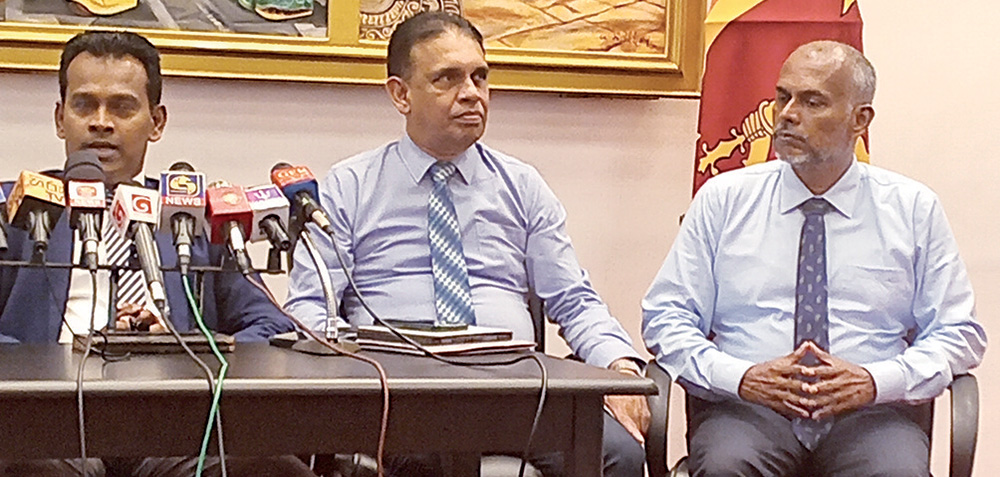
 A press conference was summoned by the Ministry of Tourism and Foreign affairs, last week bringing together top officials, media and other hospitality partners to address growing public concern,assure international travellers and outline the immediate steps taken to ensure safety across all tourist zones. The Deputy Minister of Tourism, Professor Ruwan Ranasinghe and Chairman of SLTPB, Buddhika Hewawasam stepped forward to present a clear,unified message that Sri Lanka remains safe, prepared and committed in protecting the visitors. They calmed anxieties,dispelled myths,rumours and dispelled misinformation and revealed the coordinated efforts of the government to keep the hospitality industry unshaken.
Tourism authorities pointed out even in the aftermath of Ditwah,the arrival of the cruise ship sent a powerful message. the ship’s docking underscored that Sri Lanka is safe . The arrival of this luxury cruise liner carrying hundreds of international passengers, was part of a regional voyage from Mumbai to Singapore. This was a symbolic moment unfolding at the harbour, it was a glimmer of hope in a week overshadowed by stormy clouds. The Tourism authorities reflected this arrival as a sign that confidence in Sri Lanka had not lost hope and showed Sri Lanka is steady,ready,and open.
The Deputy Minister of Tourism Professor Ruwan Ranasinghe in a speech marked by confidence and determination said. “Our teams have worked round the clock to ensure safety, restore access routes and support our travellers”.
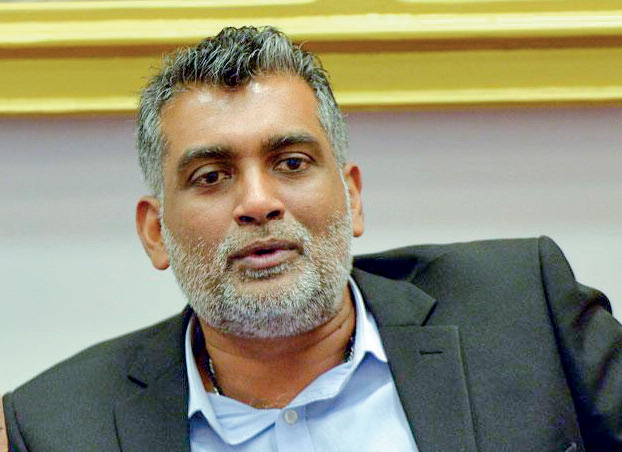
SLTPB Chairman, Buddhika Hewawasam
Today I assured every traveller Sri Lanka is safe, Sri Lanka is open, and Sri Lanka is ready. He confirmed that all major coastal resorts from Negombo to Bentota remain fully operational. Cultural destinations such as Kandy, Dambulla, Kandy,Sigiriya, are now open. He further noted that national parks,including Yala, Udawalawe,Wilpattu had returned operations following rapid assessments. Our key tourist zones are open,accessible and operating under verified safety conditions. He assured that every tourist in the island was safe,
He praised the rescue teams who had worked round the clock, cleaning roads, supporting displaced families and ensuring tourism infrastructure remained intact. To the world I say please come visit, and explore. Our island stands tall and more ready than ever to welcome you. This is not just recovery, he concluded,this is resilience in action. Finally he stressed that Sri Lanka’s tourism sector had demonstrated structural resilience,operational continuity and readiness to maintain international confidence.
The Chairman of the SLTPB Buddika Hewawasam also briefed the media on the ongoing relief operations. He acknowledged the sharp blow and destruction but underscored the country’s resilience. We want to assure travellers that Sri Lanka remains safe. Our teams are on the ground, our infrastructure is being restored and our hospitality sector stands ready to welcome visitors as recovery unfolds.
He said “New the waters have receded, and Sri Lanka is ready to welcome the world. Cyclone Ditwah swept through the island with devastating force, but in its aftermath, a story of resilience, beauty and unwavering hospitality has emerged – one that travellers are invited to witness firsthand”.
For travellers, this is a chance to experience a Sri Lanka that is vibrant and sparkling with life where cultural heritage, natural beauty and warm hospitality blend. Cyclone Ditwah may have left a mark, but it could not dim the island’s radiance.
The Tourism sector is preparing to move forward with renewed emphasis on resilience, safety and rebuilding confidence among international travellers. Sri Lanka has weathered the storm and the world is already sailing back to its shores.

Tiesh jewellery , announced a meaningful partnership with the Infinite Grace Foundation Sri Lanka, an organisation dedicated to transforming lives through love, dignity, purpose, and long-term social impact.
This collaboration marks a significant milestone as two Sri Lankan entities join hands to address some of the country’s most urgent and overlooked challenges, including mental health, drug addiction, prisoner rehabilitation, anti-human trafficking awareness, and the empowerment of estate communities.
Founded on the belief that “Every life deserves to be seen and loved,” the Infinite Grace Foundation symbolises hope, transformation, and inclusion. The Foundation works to extend a lifeline to those often ignored or marginalised, ensuring they are reminded that they are valued, loved, and never alone.
Their vision is deeply aligned to create a Clean Sri Lanka—not only in its physical environment, but in its hearts, minds, and communities. Through systemic intervention, awareness, and rehabilitation, the organisation aims to restore dignity, provide second chances, and help individuals reclaim their potential.
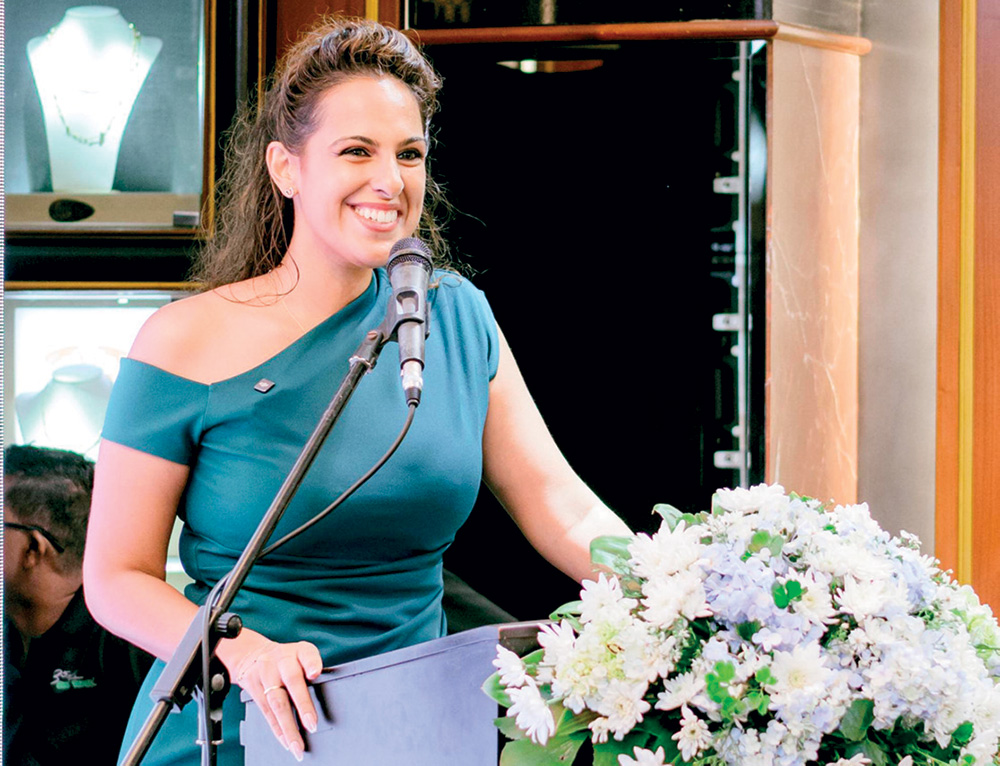
Stephanie Siriwardhana, Founder of the Infinite Grace Foundation and Brand Ambassador for Pure Gold by Tiesh
As part of its awareness and empowerment initiatives, Infinite Grace Foundation has launched the “I See You” campaign—an effort to recognise, support, and uplift individuals who have long been overlooked. Through this campaign, the foundation aims to promote year-round advocacy, encompassing mental health support, panel discussions, and collaborations with organisations and hotlines that support vulnerable groups across the island.
In support of this meaningful initiative, Tiesh has designed an exclusive jewellery collection created with intention and purpose. All proceeds from the collection will be donated directly to the Infinite Grace Foundation. The range features intricately crafted earrings, pendants, chains, rings, and more for women, as well as bracelets, cufflinks, lapel pins, and rings for men. Offered in diamonds, as well as gold and silver, each piece carries a profound message—that every life deserves to be seen, acknowledged, and loved.
With a legacy spanning more than two decades, Tiesh founded by Lasantha and Bryony De Fonseka, has become synonymous with innovation, excellence, and artistry in Sri Lanka’s jewellery landscape. Today, the family-run business is led by the next generation, with Directors Ayesh De Fonseka and Thiyasha De Fonseka continuing to uphold the brand’s commitment to integrity, community, and craftsmanship.
Stephanie Siriwardhana, Founder of the Infinite Grace Foundation and Brand Ambassador for Pure Gold by Tiesh, expressed the impact of this partnership: “This collaboration is special in many ways, and I’m truly grateful that a prestigious jeweller like Tiesh cares about communities that are often unseen—such as prisoners and estate workers. When you change one life, you change a family. When families transform, communities transform, and soon you change the nation. This initiative comes from a personal place. Many people struggle to ask for help, including myself. Through the ‘I See You’ campaign, we aim to provide support, raise awareness, and offer year-round mental health programs, alongside organisations and hotlines that are equipped to help victims and individuals in need. This partnership with Tiesh will be deeply impactful.”
The work of the Infinite Grace Foundation spans multiple critical pillars, including prison reforms, addiction rehabilitation, community education, vocational training, anti-human trafficking awareness, and mental health destigmatisation—all designed to create long-term, sustainable change across Sri Lanka.
Reflecting on the significance of the collaboration, Director of Tiesh, Ayesh De Fonseka, added, “Helping the community is rooted in our beliefs and upbringing. This partnership presented a meaningful opportunity to give back and support an important cause. We believe in second chances, and many individuals need guidance, care, and the opportunity to rebuild their lives. We are honoured to donate all profits from this collection. In the future, we hope to extend support further by offering job opportunities—whether in jewellery craftsmanship, box making, design, or other livelihood pathways.”
Through this partnership, Tiesh and Infinite Grace Foundation reaffirm their shared commitment to building a Sri Lanka where hope thrives, opportunities are equitable, and transformation is within reach for all.
For those wishing to support this initiative or explore the special collection, please visit the Tiesh showroom at 253 R. A. De Mel Mawatha, Colombo 03, or follow Tiesh on social media for updates and campaign information.

US to host Qatari, Turkish and Egyptian officials for Gaza ceasefire talks

Noritake Company Limited donates Rs. 20 million to the Government’s disaster relief programme

Subhan, Minhas star as Pakistan set up U-19 final with India

Malhotra, George fifties set up India vs Pakistan final

Sri Lanka replace Asalanka with Shanaka as captain ahead of T20 World Cup

GovPay Concludes 2025 with Rs. 2 Billion in digital transactions, marking a major milestone in Sri Lanka’s digital transformation

‘Dates have the highest sugar content to fight Coronavirus’

Sunday Island 27 December – Headlines

#SundayIsland 17th December – Headlines

Sunday Island – 28th March

Sunday Island Headlines – 21 March

Sunday Island – 21st February – Headlines
-

 Midweek Review3 days ago
How massive Akuregoda defence complex was built with proceeds from sale of Galle Face land to Shangri-La
-

 Features6 days ago
Why Sri Lanka Still Has No Doppler Radar – and Who Should Be Held Accountable
-

 News2 days ago
Pakistan hands over 200 tonnes of humanitarian aid to Lanka
-
 News2 days ago
Pope fires broadside: ‘The Holy See won’t be a silent bystander to the grave disparities, injustices, and fundamental human rights violations’
-

 Latest News6 days ago
Landslide early warnings in force in the Districts of Badulla, Kandy, Kegalle, Kurunegala, Matale, Nuwara Eliya and Ratnapura
-
 News3 days ago
Burnt elephant dies after delayed rescue; activists demand arrests
-
 Features6 days ago
Srima Dissanayake runs for president and I get sidelined in the UNP
-

 News7 days ago
Govt. okays postgraduate medical training for Maldivian medical officers and dental surgeons