
Foreign News
RFK Jr sacks entire US vaccine committee

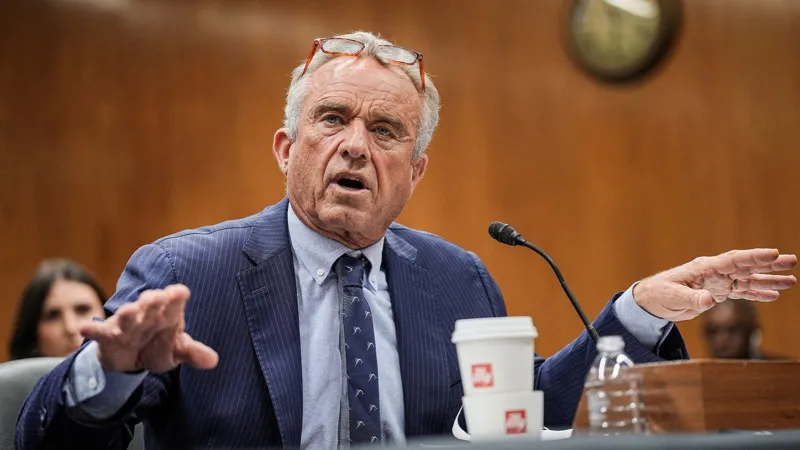
US Health Secretary Robert F Kennedy Jr, a vaccine sceptic, has removed all 17 members of a committee that issues official government recommendations on immunisations.
Announcing the move in an editorial in the Wall Street Journal, Kennedy said that conflicts of interest on the Advisory Committee on Immunization Practices (Acip) were responsible for undermining trust in vaccinations.
Kennedy said he wanted to “ensure the American people receive the safest vaccines possible.”
Doctors and health experts have criticised Kennedy’s longstanding questioning of the safety and efficacy of a number of vaccines, although in his Senate confirmation hearing he said he is “not going to take them away.”
On Monday he said he was “retiring” all of the Acip panel members. Eight of the 17 panellists were appointed in January 2025, in the last days of President Biden’s term.
Most of the members are practising doctors and experts attached to major university medical centres.
After the US Food and Drug Administration (FDA) approves vaccines based on whether the benefits of the shot outweigh the risks, Acip recommends which groups should be given the shots and when, which also determines insurance coverage of the shots.
Noel Brewer, a professor at the University of North Carolina Gillings School of Global Public Health who served on Acip for a year, called Kennedy’s decision “norm-breaking”.
“I was stunned, but not surprised,” he told the BBC. “It was deeply disappointing and more than a bit upsetting.”
Kennedy noted that if he did not remove the committee members, President Trump would not have been able to appoint a majority on the panel until 2028.
“The committee has been plagued with persistent conflicts of interest and has become little more than a rubber stamp for any vaccine,” Kennedy wrote.
He claimed that health authorities and drug companies were responsible for a “crisis of public trust” that some try to explain “by blaming misinformation or antiscience attitudes.”
In the editorial, Kennedy cited examples from the 1990s and 2000s and alleged that conflicts of interest persist.
“Most of ACIP’s members have received substantial funding from pharmaceutical companies, including those marketing vaccines,” he wrote in the Wall Street Journal.
Acip members are required to disclose conflicts of interest, which are posted online, and to recuse themselves from voting on decisions where they may have a conflict.
Dr Brewer said the panel had “one of the most rigorous conflict of interest procedures of any federal committee”.
The members had a wide range of vaccine expertise, and thoroughly reviewed and debated vaccine data to make the best decisions for the public, said Paul Offit, a former Acip member and director of the Vaccine Education Center at Children’s Hospital of Philadelphia.
In his editorial, Kennedy said that the “problem isn’t necessarily that ACIP members are corrupt”.
“The problem is their immersion in a system of industry-aligned incentives and paradigms that enforce a narrow pro-industry orthodoxy,” he claimed.
Dr Bruce Scott, president of the American Medical Association, a professional organisation for American doctors, said mass sacking “upends a transparent process that has saved countless lives.”
“With an ongoing measles outbreak and routine child vaccination rates declining, this move will further fuel the spread of vaccine-preventable illnesses,” Dr Scott said in a statement.
Kennedy’s move appears contrary to assurances he gave during his confirmation hearings. Bill Cassidy, a Republican senator from Louisiana who is also a doctor, reported that he received commitments from the health secretary that Acip would be maintained “without changes.”
On Monday, Cassidy wrote on X: “Of course, now the fear is that the Acip will be filled up with people who know nothing about vaccines except suspicion.
“I’ve just spoken with Secretary Kennedy, and I’ll continue to talk with him to ensure this is not the case.”
Public health experts share Cassidy’s concerns that Kennedy may appoint vaccine-sceptics to the board.
Such replacements would mean some vaccines “won’t be recommended at all” and other effective shots could “no longer be reimbursable by insurance companies”, said Peter Lurie, a former FDA official.
“As a consequence, we will see still further declines in vaccination rates, and then a resurgence of the diseases that they could have prevented,” he said.
Kennedy did not say who he would appoint to replace the board members. The health secretary appears to be calling people himself and asking them to serve on the panel, said Dr Offit, who said he has heard from at least two people Kennedy called.
“His whole notion of radical transparency – this is the opposite of that,” Dr Offit said. “This is one man making a decision behind closed doors.”
Acip has a meeting scheduled starting 25 June, at which members are scheduled to vote on recommendations for vaccines for Covid, flu, meningococcal disease, RSV and other illnesses.
Dr Brewer said Acip had some of the “best scientists in the world”, adding that the secretary would have a hard time finding that calibre of experts again on short-term notice.
The BBC contacted the US Department of Health and Human Services and the Acip chair, Dr Helen Keipp Talbot, for comment.
[BBC]

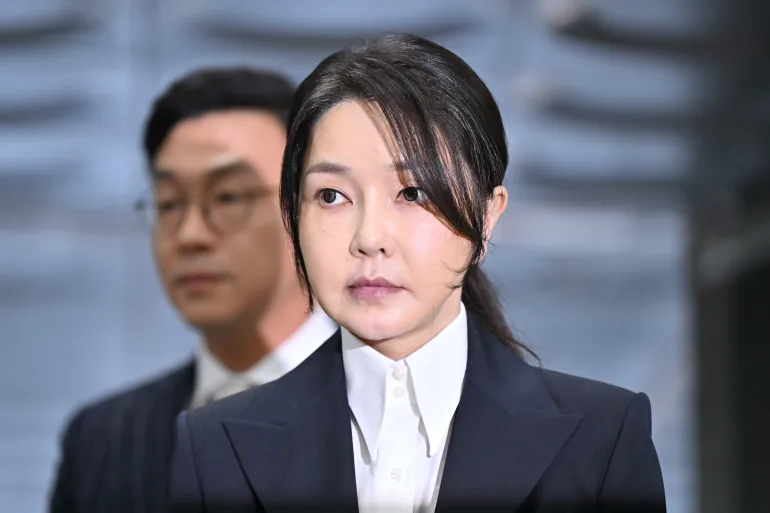
A South Korean court has sentenced former First Lady Kim Keon Hee to one year and eight months in prison after finding her guilty of accepting bribes from the Unification Church, according to South Korea’s official Yonhap news agency.
The Seoul Central District Court on Wednesday cleared Kim, the wife of disgraced ex-President Yoon Suk Yeol, of additional charges of stock price manipulation and violating the political funds act.
Kim was accused of receiving bribes and lavish gifts from businesses and politicians, as well as the Unification Church, totaling at least $200,000.
The prosecution team had also indicted Unification Church leader Han Hak-ja, now on trial, after the religious group was suspected of giving Kim valuables, including two Chanel handbags and a diamond necklace, as part of its efforts to win influence with the president’s wife.
Prosecutors in December said Kim had “stood above the law” and colluded with the religious sect to undermine “the constitutionally mandated separation of religion and state”.

Prosecutor Min Joong-ki also said South Korea’s institutions were “severely undermined by abuses of power” committed by Kim.
The former first lady had denied all the charges, claiming the allegations against her were “deeply unjust” in her final testimony last month.
But she has also apologised for “causing trouble despite being a person of no importance”.
[Aljazeera]
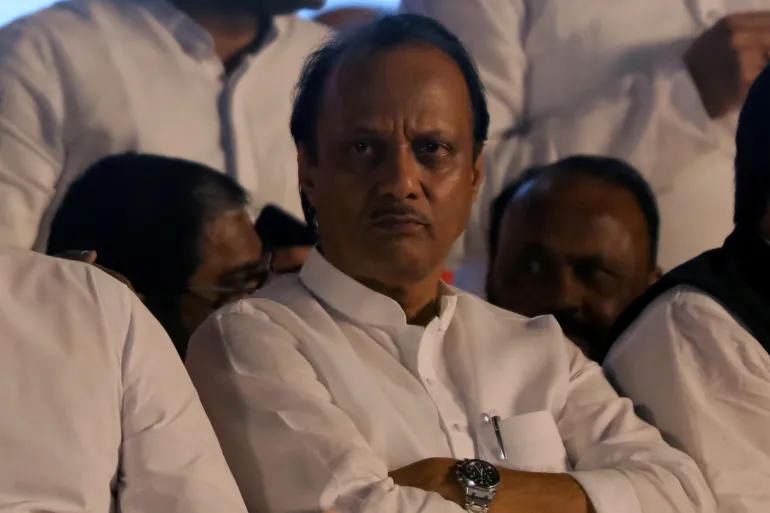
A plane crash has killed the deputy chief minister of India’s Maharashtra state, Ajit Pawar, the country’s aviation regulator has said.
The plane, which took off from the state capital, Mumbai, on Wednesday, crash-landed at the airport in Pawar’s constituency of Baramati, according to the Directorate General of Civil Aviation (DGCA).
Two members of the prominent politician’s staff and two crew members were also reported to have been killed.
The cause of the crash has not yet been officially confirmed.
Flightradar24, an online flight tracking service, said the aircraft was attempting a second approach to Baramati airport when it crashed.
The Times of India newspaper quoted DGCA officials as saying the aircraft, a Learjet 45 operated by a company called VSR, crashed at about 8:45am local time (03:15 GMT).
The daily said Pawar, the nephew of veteran politician Sharad Pawar, who founded the Nationalist Congress Party (NCP), was on his way to attend a public rally for the district council elections.
A witness quoted by the newspaper said the aircraft exploded moments after hitting the ground.
“When we rushed to the spot, the aircraft was on fire. There were four to five more explosions. People tried to pull the passengers out, but the fire was too intense,” said the witness.

Pawar, 66, built his political base through the grassroots cooperative movement. He was a key figure in state politics and served as the second-highest elected official in Maharashtra, as part of the larger federal governing coalition led by Prime Minister Narendra Modi.
He wielded considerable influence in the state’s vibrant sugar belt and was known for his ability to mobilise rural voters.
[Aljazeera]
Foreign News
Naqvi casts uncertainty on Pakistan’s participation in T20 World Cup after Bangladesh ouster
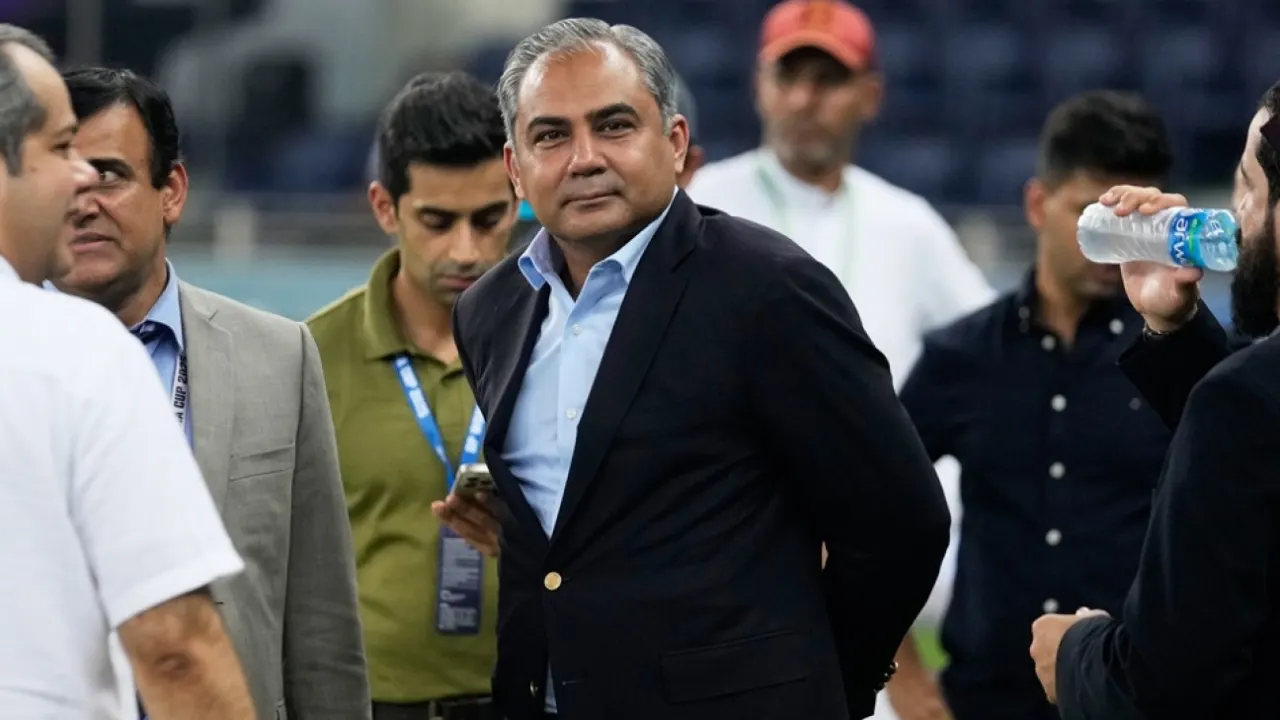
Pakistan’s participation at the upcoming Men’s T20 World Cup 2026 has been thrown into uncertainty after the PCB chairman Mohsin Naqvi said a final decision would be made after talking to Pakistan’s government. Speaking shortly after the ICC officially removed Bangladesh from the T20 World Cup owing to their refusal to play in India, Naqvi accused the ICC of “double standards” favouring India, and termed what happened to Bangladesh “an injustice”.
“Our stance on World Cup participation will be what the government of Pakistan instructs me,” he said. “The Prime Minister is not in Pakistan right now. When he returns, I’ll be able to give you our final decision. It’s the government’s decision. We obey them, not the ICC.”
Over the past week or so, Pakistan has firmly thrown its support behind Bangladesh in their dispute with the ICC demanding a venue outside of India to play their T20 World Cup matches. At an ICC meeting last week, the PCB was understood to be the only board to back the BCB in their stance. The tournament is jointly hosted by India and Sri Lanka, but Bangladesh’s games were all scheduled in India. Bangladesh, however, have said it is no longer safe for them to play in India after the BCCI, on January 3, instructed Kilkata Knight Riders to release Mustafizur Rahman rom their IPL 2026 squad.
Though no reason was stated for that directive, it came amid deteriorating relations between India and Bangladesh. On January 4, the BCB wrote to the ICC after consultation with the government that the Bangladesh team would not travel to India for its T20 World Cup matches due to security concerns, a stance it stuck to through several subsequent discussions with the ICC.
The ICC has repeatedly refused Bangladesh’s request, and earlier this week gave them an ultimatum demanding them to accept the schedule as it was, or face being removed from the tournament. On Saturday, with Bangladesh sticking to their position, the ICC formally announced Bangladesh would not be part of the T20 World Cup, and would be replaced instead by Scotland.
Naqvi was critical of the decision, calling it an injustice to Bangladesh. “I think Bangladesh has been hard done by,” he said. “You can’t have double standards. You can’t say for one country [India] they can do whatever they want and for the others to have to do the complete opposite. That’s why we’ve taken this stand, and made clear Bangladesh have had an injustice done to them. They should play in the World Cup, they are a major stakeholder in cricket.”
While there have been local, unverified reports that the PCB would refuse to participate in the World Cup in solidarity with Bangladesh should they be removed, the PCB has declined to confirm to ESPNcricinfo when approached. Naqvi’s comments to the media on Saturday was the first time anyone at the PCB has directly addressed the issue, where he repeatedly said the decision was no longer in the hands of the PCB.
“If the government of Pakistan says we mustn’t play, then maybe the ICC will bring in a 22nd team (after Scotland). It’s up to the government.”
No specific reason was given by Naqvi other than to support Bangladesh, as to why government permission would now be required for an event that starts in two weeks. Last year, both BCCI and PCB, with the approval of ICC, signed up to a hybrid model agreement by which both countries would play each other on neutral territory for all global events in the 2024-27 rights cycle.
Pakistan play all their games in Sri Lanka for this event (which already was a co-hosted event) and are scheduled to play the opening game of the tournament, against Netherlands on February 7. They are scheduled to play India on February 15 in Colombo in their group stage clash.
[Cricinfo]

Rathnayake in Sri Lanka squad for England T20Is; Thushara, Kamindu left out

U19 World Cup: Peake ton fires Australia into the semis

The National Strategic Action Plan to monitor and combat human trafficking (2026-2030) officially launched

Seifert, Santner headline New Zealand’s massive win despite Dube’s 15-ball fifty

Dry weather will prevail inmost parts of the island.

No changes to IMF agreement despite Cyclone Ditwah impact

‘Dates have the highest sugar content to fight Coronavirus’

Sunday Island 27 December – Headlines

#SundayIsland 17th December – Headlines

Sunday Island – 28th March

Sunday Island Headlines – 21 March

Sunday Island – 21st February – Headlines
-
 Business3 days ago
ComBank, UnionPay launch SplendorPlus Card for travelers to China
-
 Business4 days ago
ComBank advances ForwardTogether agenda with event on sustainable business transformation
-
 Opinion4 days ago
Conference “Microfinance and Credit Regulatory Authority Bill: Neither Here, Nor There”
-
 Opinion6 days ago
A puppet show?
-
 Opinion3 days ago
Luck knocks at your door every day
-
 Features6 days ago
‘Building Blocks’ of early childhood education: Some reflections
-

 Business5 days ago
Dialog Brings the ICC Men’s T20 Cricket World Cup 2026 Closer to Sri Lankans
-
 News4 days ago
Rising climate risks and poverty in focus at CEPA policy panel tomorrow at Open University