
News
Restarting economies – Bankers and Telcos must rethink strategies to help Ecommerce


by Kshama Ranawana
The COVID-19 pandemic has facilitated lifestyle changes for most globally, and in this new normal, more consumers are turning to e-Commerce to purchase their daily needs.
Even though shopping online has and will, for the most part, be a trend amongst high and middle-income earners at least in the foreseeable future, the curfews and lockdowns enforced in countries across the globe in the wake of the pandemic, has brought this method of purchasing daily needs, to the notice of almost everyone.
And as online shopping becomes an attractive option for consumers, Dulith Herath, Founder and Chairman of Kapruka.com states that if e-Commerce is to become more sustainable as other businesses move towards on-line trading, governments need to take a more proactive approach to boost infrastructure.
Speaking on the ‘Restart Asian Economies” series hosted by the Friedrich Nauman Foundation for Freedom, (FNF) South Asia office, on “Ideas and Actions for the e-Commerce industry,’ on Monday, November 2nd, Herath listed four areas, which he said were on his wish list, that would give e-Commerce the much-needed support to enhance services.
Herath was joined on the panel by Sonam Chophel, the founder of Druksell in Bhutan to share their experiences and ideas on how COVID-19 impacted their businesses. The session was moderated by Dr Najamul Hossain, Country Representative, FNF Bangladesh.
In Sri Lanka for instance, explained Herath, Telecommunication Companies (Telcos) provide island-wide coverage, yet, if online shopping is to be a more viable option, then Telcos must be more competitive in its data pricing, making it more affordable for all. The government must ensure that telecommunication companies do not look only at their profits, but make pricing a level playing field so more consumers could take advantage of the e-Commerce option.
As well, it is important for bankers to think outside the box. Herath points out that, while bankers are happy to approve a loan for a farmer, owing to their limited knowledge or understanding of e-Commerce, they are more hesitant in supporting these new-wave tech businesses. He proposes that every Bank have on its Board of Directors at least one individual with an understanding of or expertise on e-Commerce.
One of the most interesting points Herath raised was the under-utilisation of the Post Office system. He asks why, a robust set up such as the Post, with a network that reaches all corners of the world, with the infrastructure and the human resources to support it is not transformed to being another FEDEX or UPS? Drawing inspiration from another of his ventures, Grasshoppers.lk, a courier company, Herath claims that all a government needs to do is to put money into that system and restructure it.
For both Herath and Chophel one of the most important aspects of the trade is ensuring that personal data collected from customers remains safe. In countries where privacy laws are either lacking or inadequate, it is up to the company to ensure that practices are in place to ensure customer databases are not shared, and that, says Herath must be enforced from top management down.
Unlike Kapruka, Chophel’s Druksell is a relatively young company and focuses on marketing Bhutanese creations, through partnerships with local artisans. Supporting a niche market, where large scale purchasing and foreign transactions are limited, the Bhutanese companies also encounter more challenges such as strong import regulations and the logistics of last-mile delivery, given the difficult and hilly terrain, one must traverse to get a product to a consumer.
However, even though most still do not understand the concept of e-Commerce, Chophel stated that with curfews and lockdowns, his countrymen realised that shopping online was the best way to obtain their groceries and other daily needs. More than e-Commerce, he pointed out, Bhutanese took to social commerce, using Instagram and Facebook to trade their products. The COVID pandemic, he says saw a spike in the domestic market, as social commerce picked up across the country.
Chophel, who explains that the Bhutanese government is currently drawing up an e-Commerce policy, which is expected to be implemented next year, states that the onus is on the government to put in the right infrastructure and investment and also take the lead in promoting better regional ties at both micro and macro level.
While Chophel finds selling within ASEAN easier than in SAARC countries, he emphasises, that it is time governments re-visited trade agreements and introduced reforms that would promote cross-border trading. Current regulations in countries within the region, he points out are restrictive and discourages e-Commerce entrepreneurs.
But Herath does not see much of a market within the region, which he points out, has the same products to offer, be in garments or tea. Instead, he has found a demand for Sri Lankan products in developed nations. When he found out that local teas were available in popular supermarkets in developed countries, but were not available on Amazon or eBay, Herath had shipped a small consignment of a well-known brand to the US, and had sold it on-line within three months. That was three years ago, and Kapruka is now the e-Commerce seller of local products overseas, with two warehouses in the US and netting in about a half a million dollars, last month, he said.
In Bhutan, though micro-businesses benefitted by pandemic induced closures, with customers reaching out more to this method of obtaining groceries etc., it is still too early to predict whether e-Commerce is the preferred option for consumers, explained Chopel.
Kapruka had a similar experience according to Herath, who stated that when the lockdown was imposed in early March this year, their daily orders which ranged from 5000 to 8000 a day, had suddenly spiked to 80,000. Despite limitations such as human resources and supply chain issues, his company had continued to take orders, Herath said, adding that in hindsight they realise that was a mistake. Ninety percent of the new customers were first time on-line shoppers, and Kapruka failed to meet their expectations. Refunding customers too had been a nightmare, because the mechanism is not set up to handle thousands of refunds a day. They have, however, retained their loyal customers, many of them expatriates.
“With COVID, we initially believed the industry would expand from one to ten, but later realised that was an artificial surge. It only doubled.’ Along with supply chain issues, the company also had to ensure all their delivery staff who visit twenty to thirty buildings a day, were safe from the virus.
Druksell also considers support from the government as vital in reaching consumers in hard to reach areas of the country. Similarly, Kapruka too focusses on delivering to second and third-tier cities which, unlike major cities have limited to access to other markets. Cash on delivery is an attractive option for consumers, who have nothing to lose if an order does not turn up.
In spite of the convenience of online shopping, one of the biggest accusations against e-Commerce is the large scale waste involving packaging. Hossain noted that of the 1.3 million tonnes of e-Commerce generated cardboard in the US in 2018, only 35% was recyclable.
Both Druksell and Kapruka, the panellists explained are concerned about the environment. In fact, Bhutan itself has very strict policies to protect the environment with its National Environment Commission making regular checks on businesses to ensure adherence to the policy. Recycled papers, encouraging consumers to order more than one product at a time to reduce packaging waste and contributing to the country’s annual tree-planting campaign are some of Druksell’s initiatives. As well, the company encourages its customers to have a stake in the well-being of Bhutan’s environment, by contributing towards their programme.
In the case of Kapruka, Herath explained that they have been successful in persuading at least one manufacturer to discontinue the use of plastic packaging. That move, and the online campaign that went with it, he said, had increased sale of the product by 40%. The company itself has invested in seeded paper for their packaging, which means that if a customer throws away the box, the seeds would grow into plants.
Chophel and Herath caution customers from purchasing goods from little known entities as the probability of fraud could be higher. As well, be wary of those who offer discounts, they say, as, in the business of e-Commerce, trust and reliability are key. Discounted products could well be nearing expiry date.
Even a small business, using Facebook as a marketing tool, should be registered with the Consumer Protection Authority to ensure legitimacy. Herath also proposes that e-Commerce be treated like just any other retail trade instead of as a lone type of business. Being considered as one group will strengthen all businesses.
One of the negative aspects of e-Commerce, they say is dealing with returns, especially the logistics involved for cross borders purchasers. Both companies have built-in pricing to deal with such situations. Herath suggests setting up a Regional returns logistics centre, preferably in Sri Lanka, while Chophel would like to see a well-regulated method to handle refunds and returns.
Both panellists see a role for FNF in the e-Commerce business; FNF, says Chophel could bring policymakers across the region together and provide capacity building training and exposure to local entrepreneurs, while Herath believes that FNF could provide small businesses training in online marketing tactics.
(ECONOMYNEXT)

Latest News
“I extend my heartfelt wishes to all Sri Lankans for a peaceful and joyous Sinhala and Tamil New Year!” – President


President Anura Kumara Dissanayake, issuing a New Year message, extend his heartfelt wishes to all Sri Lankans for a peaceful and joyous Sinhala and Tamil New Year!
The Sinhala and Tamil New Year, which symbolises the aspiration for renewal both physically and spiritually, is the foremost cultural festival of the people of this country.
During the Sinhala and Tamil New Year, traditional customs are upheld, with priority accorded to rituals and religious observances, and activities undertaken collectively at a common auspicious time. This shared cultural practice vividly reflects our nation’s identity before the world, as well as the strong socio-cultural bonds that exist among our communities.
We firmly believe that the future path of national development can only be shaped in harmony with this invaluable culture and our distinguished historical heritage. Accordingly, it must be recalled that all our future development plans have been formulated upon the firm foundation of these precious traditions and cultural values.
Moreover, the common aspiration embodied in the customs and rituals associated with the solar transition is the nurturing of a compassionate individual who values togetherness, respects others, and lives in harmony with nature. I believe that the virtues and values of unity reflected in these New Year traditions should not be confined to these few days alone, but should instead be demonstrated throughout the year in our daily conduct.
In the face of the most significant recent natural disaster challenge encountered in the past year, we demonstrated to the world our resilience and capacity to withstand internal shocks. At the same time, in responding to the external challenges arising from the conflict in the Middle East, the Government has already set in motion a well-planned and effectively managed programme to overcome these difficulties.
As a nation, in overcoming these challenges together, I call upon all of you to further dedicate yourselves to enriching your lives through the values of togetherness, sharing, and solidarity exemplified during the Sinhala and Tamil New Year season.
As we strengthen the achievements we have secured and move forward with unwavering resolve in the face of emerging challenges, I invite everyone to join hands in unity to realise the vision of “A Thriving Nation – A Beautiful Life” for all.
I extend my heartfelt wishes to all Sri Lankans for a peaceful and joyous Sinhala and Tamil New Year!
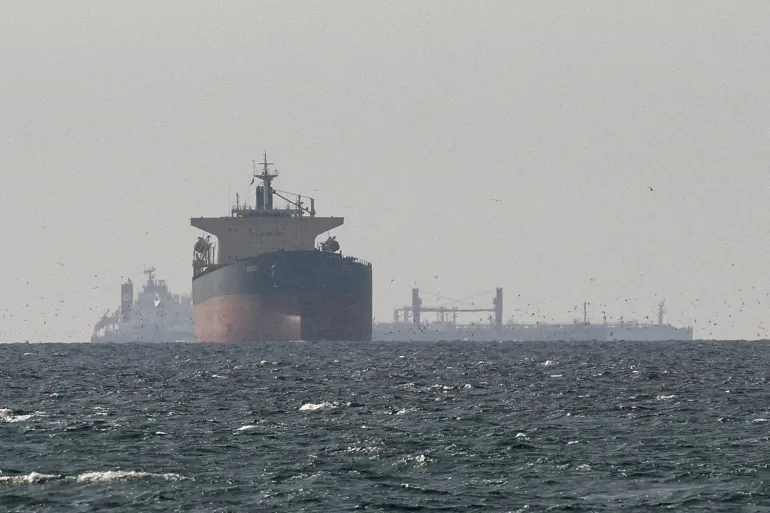
United States President Donald Trump’s planned naval blockade of Iran would further cripple international shipping, exacerbating the energy crisis roiling the global economy, analysts warn.
Oil prices surged above $100 a barrel on Monday after Trump announced that the US Navy would blockade the Strait of Hormuz and “interdict every vessel in international waters that has paid a toll to Iran”
“Iran will not be allowed to profit off this Illegal Act of EXTORTION,” Trump said on Truth Social.
Central Command, the US military’s command responsible for operations in the Middle East, said in a statement the blockade would affect only ships entering and exiting Iranian ports, an apparent scaling-back of Trump’s threat to fully block the strait.
Trita Parsi, cofounder of the US-based Quincy Institute for Responsible Statecraft, said a US blockade would have a cascading impact across the global economy.
“Anything that currently takes more oil off the market will push prices up, which in turn will push gas prices further,” Parsi told Al Jazeera.
Oil could rise above $150 a barrel if the blockade were to trigger retaliation from the Iran-aligned Houthis in Yemen, who could shut down Bab al-Mandeb, a strait that connects the Red Sea to the Gulf of Aden and Indian Ocean, Parsi said.
The strait is an alternative export route for Gulf oil and gas.
A blockade aimed at depriving Iran of revenues would mark a sudden reversal in policy by Washington.
The Trump administration last month announced it would waive some sanctions on Iranian oil exports as a way to help ease the global energy crunch.
Iran has essentially closed the strait since the start of the US-Israeli war on February 28, allowing only a small number of ships to transit after vetting and authorisation.
About 3,200 vessels were stranded west of the strait due to the blockage as of Saturday, according to the maritime intelligence company Windward.
Anas Alhajji, former chief economist at NGP Energy Capital Management, said expected non-Iranian ships would likely keep avoiding the strait despite the US military’s assurances that they will not be impeded because of elevated insurance premiums.
Ships may also fear retaliation from Iran, Alhajji said.
“Therefore, the Trump blockade of the Iranian ports is an actual blockade of the Hormuz Strait,” Alhajji told Al Jazeera.
The resulting rise in oil and gas prices would also cause the cost of chemicals, fertilisers and raw materials used to make plastics to increase, according to analysts.
Cameron Johnson, a senior partner at the Shanghai-based supply chain consultancy Tidalwave Solutions, said he expects prices of many raw materials to rise within several weeks if Trump makes good on his blockade threat.
“The wild card really is the timeframe on this,” Johnson told Al Jazeera.
“If this is a negotiating tactic – remember we still have eight or nine days left of the ceasefire – then it may not really matter. But if this prolongs itself into the end of the month and into the first week of May, you will see prices all over the world spike for raw materials.”
Deborah Elms, head of trade policy at the Hinrich Foundation in Singapore, said the situation for global supply chains could get “much worse” under the blockade.
“Some of the problems are obvious, but many are not. As an example, fabrics will get more expensive,” Elms told Al Jazeera.
“Packaging is already a challenge for firms. Many can’t get blister packs for pills or lids for consumer goods. We can expect consequences for food production later this year and into next year with fertiliser disruptions and lack of supply,” Elms said.
Chad Norville, president of the oil and gas industry news site Rigzone, said Trump’s threat is a further blow to confidence in the situation in the strait ever returning to normal.
The threat alone is likely to drive up insurance premiums for shipping and logistics companies and reduce the volume of trade passing the strait each day, he said.
“Disruptions to shipping and elevated risk in the region were already well established due to the conflict,” Norville told Al Jazeera.
“This threat doesn’t create that baseline. It amplifies it by reinforcing uncertainty around one of the world’s most critical chokepoints.”
[Aljazeera]
Latest News
“Let us resolve, with renewed determination to overcome obstacles and build a better and more prosperous nation” -PM

Prime Minister Dr Harini Amarasooriya in her New Year message requested every Sri Lankan to resolve, with renewed determination to overcome obstacles and build a better and more prosperous nation.
The full text of the PM’s message:
“Marking the auspicious transition of the sun from one planet to another, and the arrival of the spring season following the harvest, the Sinhala and Tamil New Year celebrated by the people of Sri Lanka since ancient times, has dawned once again.
The New Year is not merely a festive occasion; it symbolizes a renewal of prosperity, unity, coexistence, and the strengthening of mutual relationships embedded within our cultural values.
On this occasion, I extend my wishes for a peaceful and prosperous Sinhala and Tamil New Year to all Sri Lankans who celebrate this occasion with their families and loved ones, observing customs at the auspicious time.
A unique feature of Sinhala and Tamil New Year is the way an entire nation comes together through a shared set of customs. Despite the demands and challenges of daily life, this season offers a valuable opportunity to move forward with renewed hope as families, communities and a nation.
The true blessing of the New Year lies in setting aside differences and grievances, and embracing a fresh beginning in a spirit of solidarity and goodwill. Especially in the face of ongoing global challenges, the courage, compassion and resilience shown by our people in facing various natural and economic hardships in recent times stand as an example to the world. It is our responsibility to carry forward that collective strength.
At this auspicious moment, I extend my greetings to our fellow Sri Lankans working overseas, who dedicate themselves to securing a better future for their families and for the country. In particular, I extend my thoughts for the safety and well-being of those living in the Middle East during these tumultuous times.
Let us resolve, with renewed determination to overcome obstacles and build a better and more prosperous nation. As we undertake in a significant social and political transformations, we remain committed to striving tirelessly towards a better future.
May this Sinhala and Tamil New Year be blessed with happiness and prosperity!”

“I extend my heartfelt wishes to all Sri Lankans for a peaceful and joyous Sinhala and Tamil New Year!” – President

US blockade of Iran would worsen global energy crisis, analysts say

Praful Hinge’s stunning debut ends Rajasthan Royal’s four-match winning streak

“Let us resolve, with renewed determination to overcome obstacles and build a better and more prosperous nation” -PM

Sun directly overhead Nawaladi, Paranthan, Murasumodai, Vellikkandal, Udapattukkandal, Puliyampokkanei about 12:10 noon today [14]

Heat Index at Caution Level in the Northern, North-central, North-western, Western and Southern provinces and in Trincomalee district.

‘Dates have the highest sugar content to fight Coronavirus’

Sunday Island 27 December – Headlines

#SundayIsland 17th December – Headlines

Sunday Island – 28th March

Sunday Island Headlines – 21 March

Sunday Island – 21st February – Headlines
-

 News3 days ago
CEB orders temporary shutdown of large rooftop solar systems
-

 News6 days ago
AG: Coal procurement full of irregularities
-

 Business5 days ago
Israeli attack on Lebanon triggers local stock market volatility
-

 Business6 days ago
Hayleys Mobility introduces Premium OMODA C9 PHEV
-

 Features3 days ago
From Royal College Platoon to National Cadet Corps: 145 years of discipline, leadership, and modern challenges
-

 Business5 days ago
HNB Assurance marks 25 years with strategic transformation to ‘HNB Life’
-

 Sports6 days ago
DS to face St. Anthony’s in ‘Bridges of Brotherhood’ cricket encounter
-
 News7 days ago
AKD admits import of substandard coal, blames technicalities and supplier