
Latest News
Farhan and Fakhar get the win but not the semi-final spot for Pakistan

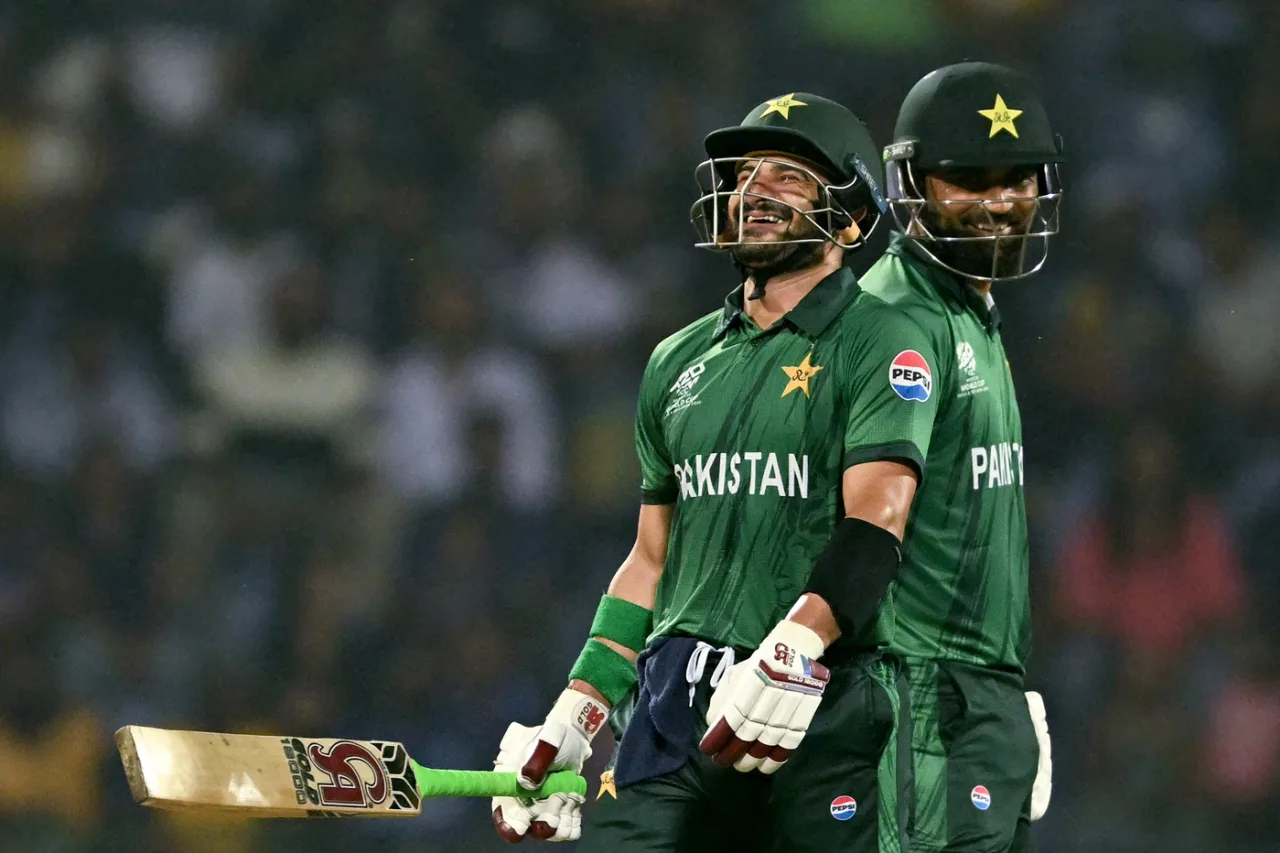
Sahibzada Farhan’s record-breaking hundred and Fakhar Zaman’s blazing 84 off 42 balls gave Pakistan a five-run win over Sti Lanka in Pallekele but it wasn’t enough to put them in the T20 World Cup semi-finals. It was New Zealand who became the second team from Group 2 to qualify for the knockouts.
After being sent in, Pakistan needed to win by about 65 runs to qualify, and for a large part of their innings, they were in business. Having made three changes – Babar Azam, Saim Ayub and Salman Mirza made way for Khawaja Nafay, Naseem Shah and Abrar Ahmed – they opened the innings with Fakhar and Farhan, and the two added 176 in 15.5 overs. It was the highest partnership for any wicket in T20 World Cups, bettering Finn Allen and Tim Seifert’s unbroken 175 against UAE from a few days ago.
Farhan’s hundred was his second of the tournament. No one else has made more than one in a single edition of the T20 World Cup. En route, he also broke Virat Kohli’s record for the most runs in a T20 World Cup. Kohli had scored 319 in 2014; Farhan finished on 383.
After the massive opening stand, Pakistan looked set for 220-plus. But the last four overs brought only 35 runs at the loss of seven wickets. As a result, they could post only 212 for 8, and needed to restrict Sri Lanka to 147 or below.
Despite Abrar’s three-for, Sri Lanka breached that mark in the 16th over. But Dasun Shanak wasn’t satisfied with just that. He wanted to win. When Shaheen Shah Afridi came on to bowl the final over, Sri Lanka needed 28. Shanaka started with 4, 6, 6, 6 to make it six required from two. Afridi went way outside off to beat a reverse scoop. Now it was six off one. Afridi tried to hide the ball again. Shanaka left it expecting a wide. It was extremely tight, but the umpire decided the delivery was legal and the game ended in total anti-climax.
Farhan and Fakhar showed positive intent right from the start. Facing his second ball, Fakhar stepped out and slogged Dilshan Madushanka through midwicket for four. From the other end, Farhan steered Dushmantha Chameera through cover-point before launching Madushanka for a four and a six in the third over. The pair took Pakistan to 64 for 0 at the end of the powerplay.
Even after the powerplay, the duo kept finding the boundary. The 11th over was the first and only boundary-less over of the innings. By then, Pakistan had crossed 100 and Farhan had brought up his fifty. Fakhar got to his in the following over, off 27 balls – five fewer than Farhan.
Sri Lanka were also let down by their fielders. Dunith Wellalage dropped Farhan on 75. Janith Liyanage caught him on 76 but stepped onto the boundary cushion. Chameera eventually broke through in the 16th over when he had Fakhar dragging a wide delivery onto his stumps. Farhan brought up his hundred off 59 balls but Pakistan kept losing wickets at the death in search of quick runs, which didn’t come.
Playing his first match of the World Cup, Naseem needed only three balls to pick up his first wicket. With Pathum Nissanka backing away early, he slipped in a back-of-the-hand slower ball, full and wide outside off. Nissanka reached for it but could only lob it towards extra cover where Mohammad Nawaz back-pedalled to complete the catch. Kamil Mishara was steering the chase single-handedly, but Abrar bowled him in the fifth over for 26 off 15. Then, Charith Asalanka and Pavan Rathnayake took Naseem for 12 in the sixth over to finish the powerplay on 49 for 2.
Asalanka and Rathnayake took Sri Lanka to 75 in the ninth over before Abrar struck again. He beat Asalanka’s slog sweep and bowled him. With the final ball of his spell, he sent back Kamindu Mendis too. When Mohammad Nawaz castled Liyanage, leaving Sri Lanka 101 for 5, Pakistan’s hopes were renewed. But Rathnayake and Shanaka crushed them with a flurry of sixes. In the space of ten balls, the pair hit four sixes and a four. Rathnayake brought up his fifty off 32 balls, and when Shanaka picked up a single off Tariq to take Sri Lanka to 148, Pakistan were knocked out.
Sri Lanka needed 53 from four overs. Shanaka started the 17th with a six off Naseem but Afridi gave away only six in the 18th and also removed Rathnayake. But Shanaka refused to give up. With 46 required from 12 balls, he took Shadab for two sixes in the 19th and then tore into Afridi. The way he was batting, Sri Lanka appeared to be the favourites with six needed from two balls.
On the penultimate delivery, Shanaka shaped up for a paddle sweep. But the ball was well wide outside off stump. Shanaka tried to go reverse last minute but couldn’t connect. For the final ball, Afridi once again went full and wide. Shanaka left it alone, expecting it to be given a wide. On most days, the decision would have been in his favour, but tonight the umpire remained unmoved, leaving him on 76 not out off 31 and Sri Lanka agonisingly close to their target.
Brief scores:
Pakistan 212 for 8 in 20 overs (Sahibzada Farhan 100, Fakhar Zaman 84, Dilshan Madushanka 3-33, Dushmantha Chameera 1-48, Dasun Shanak 2-42) beat Sri Lanka 207 for 6 in 20 overs (Kamil Mishara 26, Charith Asalanka 25, Dasun Shanaka 76*, Pavan Rathnayake 58; Shaheen Shah Afridi 1-48, Naseem Shah 1-36, Abrar Ahmed 3-23, Mohammad Nawaz 1-21) by five runs
[Cricinfo]

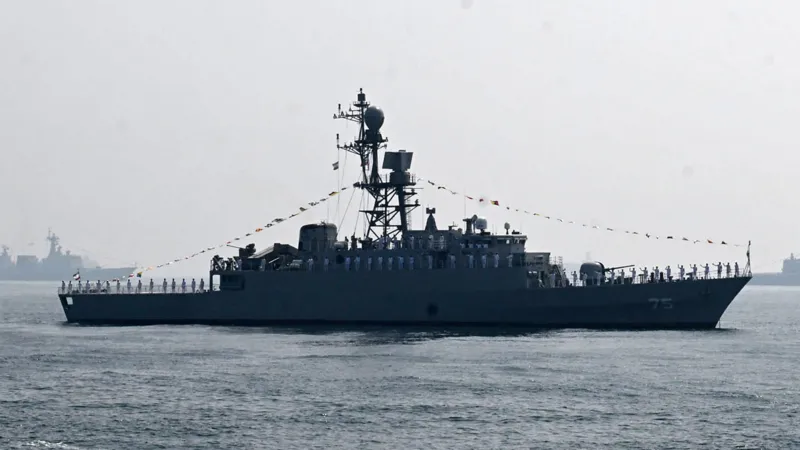
The Iranian warship Iris Dena was given permission by India to dock three days before it was torpedoed by a US submarine, India has said.
Foreign Minister S Jaishankar said Iran had sought permission for three of its ships to dock at Indian ports on 28 February – the day the US and Israel began a war on Iran – and permission was granted by India on 1 March.
The ships’ movements between 1 and 4 March are not clear and nor is why only one of them made it to India.
The sinking of the Iris Dena, with 130 sailors on board, in international waters off Sri Lanka’s southern coast on 4 March marked a dramatic widening of the war – and raised questions about India’s authority in its backyard.
It was the first military strike outside the Middle East since the US and Israel launched their war on Iran. President Donald Trump has said destroying Iran’s navy is one aim of the assault.
The three Iranian ships – Iris Dena, Iris Bushehr and Iris Lavan – had all participated in a military exercise hosted by India between 15 and 25 February in the coastal city of Visakhapatnam.
They left Indian waters on 25 February and were likely to have been in international waters on 28 February – when the US and Israel began attacking Iran.
“The Iranian side had requested permission on 28 February for three ships in the region to dock at our ports. This was accorded on 1 March,” Jaishankar told parliament on Monday. “Iris Lavan actually docked on 4 March in Kochi. The crew is currently in Indian naval facilities. We believe that this was the right thing to do.”
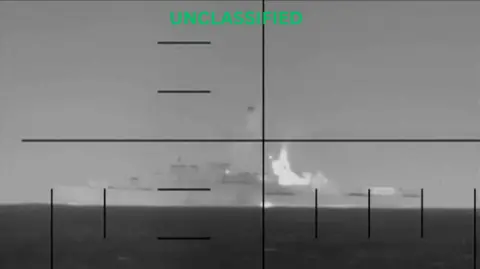
On 4 March, Iris Dena sank after being hit by a torpedo fired from a US submarine, killing at least 87 of its crew members.
According to the Indian Navy, the Iris Dena was operating about 20 nautical miles – roughly 23 miles (37km) – west of Galle in waters that fall under Sri Lanka’s designated search-and-rescue zone on the day it was struck.
The US tracks vessels across the world’s oceans, and a quarter of its submarine fleet of 65-70 is at sea at any given time, according to analysts.
Iran’s Foreign Minister Abbas Araghchi said last week the US had “perpetrated an atrocity at sea, 2,000 miles away from Iran’s shores” and that the warship was “struck in international waters without warning.”
Later, Sri Lanka said it had provided sanctuary for Iris Bushehr on 5 March, a day after it requested for docking following an engine malfunction.
Eventually, India also confirmed that Iris Lavan was docked in its southern city Kochi.
The BBC has written to the Iranian embassy in India and India’s external affairs ministry seeking clarification on the movements of the three Iranian naval vessels after Delhi granted them permission to dock.
US Defence Secretary Pete Hegseth has touted the attack on Iris Dena as an example of America’s military prowess, claiming it was “the first sinking of an enemy ship by a torpedo since World War Two”.
While it is the first time since 1945 that an American submarine has sunk an enemy ship this way, the UK and Pakistan have both sunk vessels using torpedoes since then.
The Iris Dena was one of about 20 Iranian navy vessels destroyed since Israel and the US launched co-ordinated strikes on Iran.
[BBC]

The white ball series between Afghanistan and Sri Lanka, scheduled to be held in the UAE from March 13 to 25, is likely to be postponed indefinitely due to the ongoing military conflict in West Asia.
While neither ACB nor SLC has issued an official statement, ESPNcricinfo has learned that both boards have agreed the series cannot take place in the UAE, keeping the ongoing crisis in mind. While both boards are still discussing alternatives, the bilateral series is unlikely to be shifted elsewhere due to logistical challenges.
The series comprising six white-ball matches was scheduled to start on March 13 starting with the three T20Is. The T20I leg was scheduled in Sharjah – on March 13, 15 and 17 – while the three ODIs were scheduled in Dubai on March 20, 22 and 25.
The series was set to be Afghanistan’s first under Ibrahim Zadran’s leadership, with the opener taking over the reins from Rashid Khan after a group-stage exit in the World Cup.
Last week, six matches of the ICC Men’s Cricket World Cup League 2 in Nepal involving Oman, UAE and the hosts were postponed because of the conflict.
The travel plans of several teams that were in India and Sri Lanka for the men’s T20 World Cup have also been disrupted owing to airspaces being closed or limited in West Asia.
Despite being knocked out over the last week, the contingents from West Indies and South Africa have been stuck in Kolkata, and received clarity only on Sunday, that they will be flying out on Tuesday.
[Cricinfo]

Sri Lanka Cricket (SLC) has officially announced the appointment of Gary Kirsten as the new head coach of the men’s national team. Kirsten, who comes with a hefty coaching pedigree, will take over the reins on April 15 on a two-year contract that runs until April 14 2028.
The former South Africa batter will take over a Sri Lankan side seeking stability and a blueprint for consistency in the modern game. While outgoing head coach Sanath Jayasuriya was undoubtedly a household name, Kirsten is without question the most blockbuster appointment to the position in Sri Lanka’s history.
He famously guided India to their 2011 ICC Cricket World Cup victory. And under his tenure, South Africa reached the top of the Test rankings. Most recently, he served as a consultant for Namibia during the 2026 ICC Men’s T20 World Cup.
As a player, Kirsten was a stalwart for South Africa, amassing over 14,000 international runs and becoming the first from his country to reach 100 Test matches.
Kirsten hopes to join a long line of non-Sri Lankan coaches who have significantly influenced the nation’s cricketing history. This tradition includes Dav Whatmore, who orchestrated the historic 1996 World Cup win; Tom Moody and Trevor Bayliss, who led the team to World Cup finals in 2007 and 2011; and Chris Silverwood, the most recent foreign head coach before Sanath Jayasuriya took over as interim and then full-time coach in late 2024.
The appointment comes at a critical juncture following the team’s limp exit from the 2026 T20 World Cup, and marks a pointed departure from the post-2024 World Cup pivot towards coaches with more local knowledge.
Jayasuriya, who officially resigned as head coach following the tournament’s conclusion, will now lead the High Performance Centre. Sri Lanka enjoyed historic home successes in 2024 under his leadership – including a first ODI series win against India in 27 years – but their recent World Cup campaign ended in the Super Eight after disappointing losses to England and New Zealand.
Sri Lanka’s campaign was marked by competing philosophies, with batters in particular seemingly lacking clarity in their roles. SLC, in a media release, stated that the “appointment of the new head coach is part of Sri Lanka Cricket’s efforts to revamp the structure of the National High Performance Center,” and Kirsten will first and foremost be tasked with establishing a clear path to success.
With the 2027 men’s ODI World Cup set to be held in his native South Africa, alongside Namibia and Zimbabwe, Kirsten’s intimate knowledge of those conditions would have also likely played a role in his hire, but SLC will be hoping that his impact will be longer lasting and help build a winning culture similar to those he helped established in India and South Africa.
[Cricinfo]

Prime Minister on official visit to Manila, Philippines

It is the government’s responsibility to ensure women’s rights are realized in everyday Life, and are not confined merely to Laws – PM

North Korea cancels Pyongyang Marathon for ‘some reasons’

Canadian officials rescue 23 people who floated away on ice sheet

India offered sanctuary to Iranian ship three days before US sank it

Afghanistan-Sri Lanka white-ball series set to be postponed due to West Asia conflict

‘Dates have the highest sugar content to fight Coronavirus’

Sunday Island 27 December – Headlines

#SundayIsland 17th December – Headlines

Sunday Island – 28th March

Sunday Island Headlines – 21 March

Sunday Island – 21st February – Headlines
-

 News4 days ago
University of Wolverhampton confirms Ranil was officially invited
-

 News5 days ago
Legal experts decry move to demolish STC dining hall
-

 News4 days ago
Female lawyer given 12 years RI for preparing forged deeds for Borella land
-

 News3 days ago
Peradeniya Uni issues alert over leopards in its premises
-

 Business5 days ago
Cabinet nod for the removal of Cess tax imposed on imported good
-

 News4 days ago
Library crisis hits Pera university
-

 News3 days ago
Wife raises alarm over Sallay’s detention under PTA
-

 Business6 days ago
War in Middle East sends shockwaves through Sri Lanka’s export sector