
News
Remembering dynamic duo


Gamini and Srima Dissanayake
By Rochelle Palipane Gunaratne
Gamini Dissanayake Foundation commemorates Gamini Dissanayake’s 79th Birth Anniversary on 20th March and Srima Dissanayake’s 2ndrd Death Anniversary on 29th March.
A visionary who forged ahead with undiminished zeal, Gamini Dissanayake was instrumental in making colossal changes which had a lasting effect in our Motherland. Like the flow and ebb of the Mahaweli River, his life had its sporadic moments of triumph and testing, but he flowed on towards his goal unperturbed by the daunting challenges that threatened to hinder his journey, until the diabolical monster called terrorism reared its monstrous assault on his life, on that fateful day in 1994.
‘A leader par excellence, Gamini Dissanayake was undisputedly a shining light in the political firmament of 20th Century Sri Lanka. Charismatic, erudite and honourable, he was one politician who early in his career demonstrated that he had all the qualities required to give true statesmanlike leadership to Sri Lanka.’
He was also the former Sri Lanka Cricket (SLC) President and was among the former presidents of the Asian Cricket Council (ACC) who received lifetime awards for his contribution to cricket at the ACC’s 25-year celebrations banquet. He waxed eloquent at the House of Lords in 1981, impressing the august gathering, which was a watershed moment resulting in Sri Lanka cricket being granted test status.
Charismatic leader
‘A greatness of a man is judged by the powerful and pervasive influence he exercises for the good of his generation and by the certainty of his influence on the generations yet unborn. Such people are National Leaders. To achieve this, they must be blessed with leadership qualities. Leadership is one of the most enduring human responsibilities. Leaders must take their ability to craft a vision, inspire action and empower others.
The first milestone on the journey to leadership, not only we demand leaders to be credible, but also, they be forward looking and that they have a sense of direction and a vision for the future. If you study leadership in depth, you would observe, the first and key principle of leadership is between a leader and a follower. Without a follower, there is no one to lead.’
Visionary
‘Gamini Dissanayake was a visionary. He was passionate, creative, flexible, inspiring, innovative courageous, imaginative, initiates change, experimental. This fine human being, possessed a charming, attractive personality and personal power and charisma. He is a man to inspire and motivate men. He had the ability to influence people toward the attainment of a country’s goal. He was a fine democratic leader, who delegate authority to others, encourage participation and relies on expert and referent power to manage subordinates.’
He comfortably secured his Nuwara_Eliya-Maskeliya multi electorate seat in the 1977 general elections and was appointed the Minister of Mahaweli Development. Dissanayake spearheaded the Mahaweli Development Project. This was a huge project which was expected to take 30 years to finish. But due to Dissanayake’s skills he managed to finish the project within six years. The Mahaweli Development Project is the largest development project conducted in Sri Lanka after independence. The whole country was affected by the project which focused on irrigation, hydro power generation, agriculture and town and country development. The majority of the energy requirement for local consumption is generated by these hydropower plants while an overwhelming majority of rice cultivation in Sri Lanka is practised in these Mahaweli areas.
‘He was always receptive to new and novel ideas that could march towards that vision. He knew the constraints in working through a slow-moving administrative system and was ever willing to support measures that could overcome them.
Minister Gamini was a champion of parliamentary democracy; he believed in the value of open and intense debate and dialogue to reach consensus as his parliamentary and public speeches would demonstrate; he accepted the role of intellectuals and professionals in the governance and development processes, the criticality of consistency and continuity in administrative and management structures for governance and the imperatives of keeping pace with emerging global trends through the medium of information technology that was beginning to sweep across the world. Armed with his wide knowledge base acquired through constant reading and combined with his remarkable communication skills as a public speaker Sri Lanka would have reached out to a very wide global audience and benefitted from their contributions the scale of which it is difficult to visualize in retrospect.’
Srima-wind beneath the wings
Following her husband’s untimely demise, his vision for Sri Lanka seemed to have been extinguished but the flames were reignited through the Gamini Dissanayake Foundation (GDF) which paved the way for Gamini Dissanayake Institute of Technology & Vocational Studies (GDITVS) – the brainchild of his wife, Srima Dissanayake. The enchanting lady by his side was a wonder woman in her own right and much ahead of her time, supporting her husband in his political quest to transform the lives of Sri Lankans. Thereafter, Srima, a lawyer by profession, dedicated her life to taking care of her children; Former United National Party MP, Navin Dissanayake, Samagi Tharuna Balawegaya candidate and former MP, Mayantha Dissanayake and daughter, Varuni Dissanayake. During this period she founded GDF, a magnanimous venture that reflects Gamini’s vision for the youth of Sri Lanka and actively lobbied for innovative methods to motivate them, until her passing on 29th March, 2019.
The month of March brings to mind the dynamic duo, Gamini and Srima Dissanayake who left a strong legacy.
(The italicized sections are excerpts from articles:
A LEADING MAN: Qualities of Gamini Dissanayake by Premasara Epasinghe on October 31, 2012, Daily News
Gamini Dissanayake – the Visionary by Nanda Abeywickrama on October 24, 2020 in The Island Newspaper).
Reflecting Dissanayake’s vision for the youth of Sri Lanka through GDF
GDF was formed with the intention of giving a new dimension to the youth of this land by equipping them to participate equally and with dignity in the mainstream of economic and cultural activities. They are provided with a plethora of opportunities to learn new skills while emphasis is given to human resource development to help hone entrepreneurial skills. The Foundation focuses on socially disadvantaged, marginalized and vulnerable communities to help them achieve a better quality of life as well as working toward the creation of mutual understanding, harmony and fellowship among all cultural, religious and ethnic groups.
At GDITVS, knowledge is disseminated through the STEM method which stands for Science, Technology, Engineering, and Mathematics. STEM is important because it extends throughout every part of our lives. Science is everywhere in the world around us. Technology is continuously expanding into every aspect of our lives. The basic designs of roads and bridges are derived from engineering, but it also tackles the challenges of changing global weather and environmentally-friendly changes to our home.
Mathematics has relevancy in every occupation, every activity we undertake in our lives. By exposing students to STEM and giving them opportunities to explore STEM-related concepts, they will develop a passion for it and hopefully pursue a job in a STEM field. A curriculum that is STEM-based makes use of real-life situations to help the student learn. Programmes like Engineering for Kids integrates multiple classes to provide opportunities to see how concepts relate to life in order to hopefully spark a passion for a future career in a STEM field. STEM activities provide hands-on and minds-on lessons for the student. Making Math and Science both fun and interesting helps the student do much more than just learn. The demand for jobs centred on STEM Education is on the rise and GDF has provided the opportunity for kids aged between 11 and 18 in Nuwara-Eliya to make their lives better in the future. During the lockdown period due to the pandemic, classes were conducted successfully through online platforms which proved to be equally successful and innovative.



It was decided at the committee appointed to oversee the distribution of essential goods to appoint five officials from the Ceylon Petroleum Corporation to cover all ministries in order to examine fuel-related issues and undertake the necessary interventions.
It was further discussed that the responsibility of these officials would be to examine fuel-related issues arising in institutions under each ministry and to intervene in providing solutions by maintaining coordination with the Corporation.
These matters were discussed at a meeting of the committee appointed to oversee the distribution of essential goods, chaired by Minister of Transport, Highways and Urban Development Bimal Rathnayake held on Friday (27) at the Presidential Secretariat.
It was also noted, with particular attention, that requests have been made by industrialists indicating that the current fuel quota allocated to vehicles for the distribution of their products across the country is insufficient. It was further discussed that, if these concerns are not addressed, there is a likelihood of an increase in the prices of goods, which could in turn cause significant hardship to the public during the festive season.
The committee also discussed the issuance of fuel for the distribution of essential food items by state and private institutions, including supermarkets such as Sathosa, wholesale importers, tourism-related service providers, hotels and other service-providing organisations.
Accordingly, it was discussed that requests for fuel quotas submitted by these institutions should be carefully considered and prompt action taken as necessary and that such requests should be forwarded to the Ministry of Energy through the relevant ministries.
Attention was also drawn to the need for the swift implementation of a QR code system for the issuance of fuel to other sectors, including agriculture and the fisheries industry, based on letters issued on the recommendations of the relevant government officials, including agricultural research officers, instead of the previous method of direct fuel allocation.
Minister Bimal Rathnayake emphasised the need to ensure a continuous and properly managed fuel supply, with particular focus on providing goods to the public without shortages and preventing excessive price increases during the forthcoming Sinhala and Hindu New Year season.
The discussion was attended by a group of government officials, including Minister of Trade, Commerce, Food Security and Cooperative Development Wasantha Samarasinghe, Deputy Minister of Power Arkam Ilyas, Senior Additional Secretary to the President, Kapila Janaka Bandara and Chairman of the Ceylon Petroleum Corporation, D. J. Rajakaruna.


Parliament:
… sexual harassment claims dismissed
Recommendations made by retired High Court Judge Ms. Sujatha Alahapperuma, following an inquiry into claims by a female employee of the Department of Information Systems and Management of Parliament, regarding sexual harassment, denial of due salary increments and other forms of harassment, were yet to be implemented, sources familiar with the investigation said.
The retired HC Judge handed over the report to Speaker Dr. Jagath Wickramaratne on 24 November, 2025. Secretary General of Parliament Kushani Rohanadeera was also present on that occasion.
The retired judge has recommended that administrative decisions be taken expeditiously to grant her salary increments due for 2024 and 2025, reevaluation of all employees attached to the Department of Information Systems and Management and keep them under close scrutiny and strengthening of the ‘Helpdesk’ to meet the requirements.
Sources said that none of the recommendations have been implemented and the concerned employee in spite of still being the Senior Helpdesk coordinator remained attached to the Supplies and Services Office. She had been ordered to report to the Supplies and Services Office in January 2025 following a continuing dispute with the top management of the Department of Information Systems and Management.
Parliamentary Staff Advisory Committee on 25.07.2025 decided to conduct an external investigation into the issue after the employee refused to accept the outcome of the internal inquiry conducted in the wake of SJB lawmaker Mujibur Rahman raising the issue in Parliament.
The retired judge has emphasised the urgent need to take tangible measures to address administrative issues with a view to enhance discipline and human resources management among other issues.
However, the retired judge has declared that the complainant or any other female employee attached to the of Department of Information Systems and Management hadn’t been subjected to any form of sexual harassment as alleged.
The retired judge further asserted that the complainant had been prejudicially treated by two interview boards when she appeared before them seeking posts of Database Administrator and Parliament Officer.
The retired judge has also asserted that the Supplies and Services Office where the complaint continued to serve even now was not suitable and not in line with her qualifications. Some of those who had appeared before the retired judge during the inquiry claimed that was a temporary transfer. However, the report dismissed that claim declaring that transfer appeared to have been done outside acceptable procedure and her increments stopped without giving any justifiable reason.
The retired judge has stated that for want of proper procedures and systems, the administration seems to be in turmoil.
By Shamindra Ferdinando
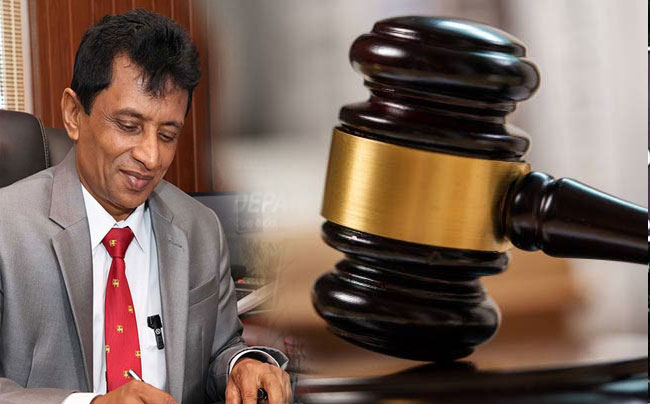
Motor Traffic Commissioner General Kamal Amarasinghe, taken into custody by the CID, was remanded until today (30) following his production before the Kurunegala Magistrate’s Court.
The investigation was launched after the Central Anti-Corruption Task Force received information regarding an illegally assembled taxi, which was later handed over to the CID for further inquiries.
Preliminary findings revealed that the vehicle’s registered chassis number had been altered and documents submitted to obtain a “weight certificate.” These documents were then used to assign a registration number to the taxi, while the chassis modification files were concealed. False declarations were allegedly made to facilitate the fraudulent assembly, with Commissioner General Amarasinghe accused of aiding and abetting the operation.
The suspect was taken into custody on the afternoon of Friday (27) by a CID team at the Hector Kobbekaduwa Road, Colombo 7.
In parallel, the Bribery and Corruption Commission has launched a separate probe into the matter.
The initial investigation was conducted under the direction of SSP Indika Weerasinghe, Head of the Central Anti-Corruption Task Force, along with DIG Rohan Olugala and Senior DIG of CID Kamal Ariyawansa.
BY Norman Palihawadane

A QR code system to be introduced for agricultural lands and other sectors requiring fuel

Rickelton, Rohit, Shardul break Mumbai’s first-game jinx

Oil tops $116 a barrel as Iran accuses US of preparing invasion

Iranian attack damages Kuwait power and desalination plant, kills worker

Warm weather conditions prevailing over the island are expected to continue

Inquiry into female employee’s complaint: Retired HC Judge’s recommendations ignored

‘Dates have the highest sugar content to fight Coronavirus’

Sunday Island 27 December – Headlines

#SundayIsland 17th December – Headlines

Sunday Island – 28th March

Sunday Island Headlines – 21 March

Sunday Island – 21st February – Headlines
-

 News5 days ago
Senior citizens above 70 years to receive March allowances on Thursday (26)
-

 Features2 days ago
A World Order in Crisis: War, Power, and Resistance
-

 News3 days ago
Energy Minister indicted on corruption charges ahead of no-faith motion against him
-

 News4 days ago
US dodges question on AKD’s claim SL denied permission for military aircraft to land
-

 Business4 days ago
Dialog Unveils Dialog Play Mini with Netflix and Apple TV
-

 Sports3 days ago
SLC to hold EGM in April
-

 News5 days ago
CEB Engineers warn public to be prepared for power cuts after New Year
-
 Business6 days ago
Postponement of Sri Lanka Investment Forum 2026