
Life style
Reinventing the face of the Handloom Industry for future sustainability

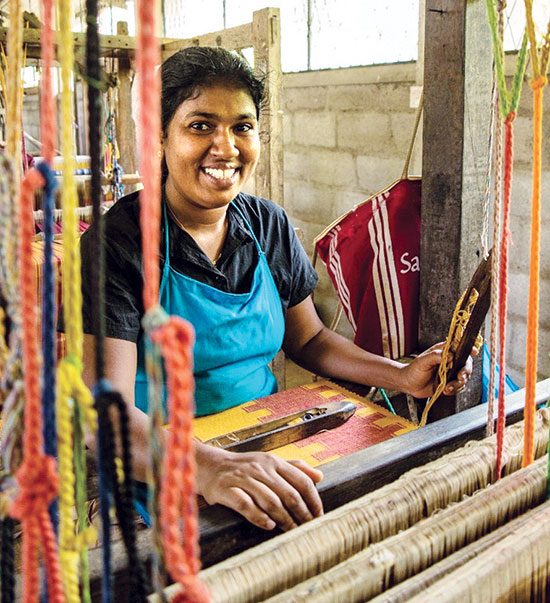
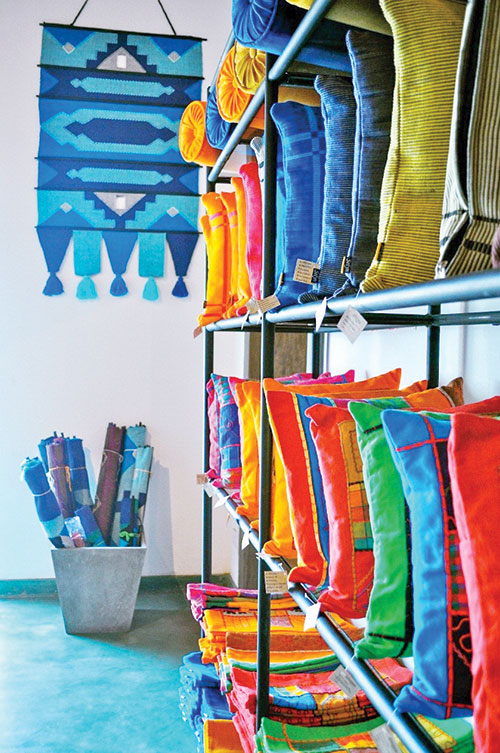
Selyn launches the ne ‘New30’
Q: What are the current challenges faced by the handloom industry?
Sri Lankan handloom has a long and venerable history of over 2500 years and has been a sustainable industry since its inception: energy consumption in production is low, and the industry has created thousands of jobs for rural artisans and communities across the country. However, despite various efforts, the industry finds itself in a state of deterioration owing to different factors, more recently the negative impact of degrowth of the tourism sector in Sri Lanka.
Unfortunately, handloom is no longer widely seen as an item of intrinsic value that speaks of our history and culture, and embodies the skills of talented artisans. Our artisans are no longer venerated for their skills, and are too often seen through a charity lens. It is crucial that Sri Lankan handlooms are pitched to premium or even luxury markets, which value quality over mass quantity and speed.
 In addition and perhaps more innovatively, increasing the transparency of our production methods with the integration of blockchain technology into our supply chains will be a crucial step to allow us to better tell the Sri Lankan handloom story, addressing the ‘green-washing’ debate, and providing consumers with verifiable data to inform the purchase of a higher value textile. Global emerging trends support this hypothesis, as these premium markets and more conscious customers are now craving the stories of heritage and responsibility that fair trade and ethical brands can tell. This is an opportunity, for not just the handloom industry but in my opinion, for many Sri Lankan brands.
Q: How is Selyn integrating Blockchain into their production system?
We envision a different future for the handloom sector. Having begun the process of integrating blockchain into our supply chain, we believe we can truly walk the talk and present to the world a truly authentic and responsible craft brand. Drawing on our fair-trade foundations and using our social enterprise credentials and with COVID19 accelerating our work, Selyn is repositioning its work in the handloom sector to address emerging market opportunities.
Q: What do you hope to achieve through this novel technology?
Our aim is to leverage a commitment to ethical and sustainable practices combined with greater transparency, and ultimately carve out a unique niche for handloom as an important part of Sri Lanka’s intangible cultural heritage. And, we are working hard to bring the industry along with us. We believe that the concept of blockchain in the handloom sector is an innovative step towards positioning Sri Lanka as an industry and global leader that combines technology and tradition to conquer sustainability.
Q: How can blockchain benefit Sri Lanka?
For those companies in control of their supply chains, especially those committed to fair trade and ethical
trading practices, blockchain is the perfect tool to validate authenticity and for story-telling. With blockchain integrated from the point of sourcing to point of purchase – from fiber to fashion – with the swipe of a QR code, a consumer can now be fully aware of what goes into their product, and how it is made. Blockchain technology ensures that each point in the production process is recorded so that consumers can access independently verified, real-time, detailed metadata of what they want to know. And that’s not all. Consumers can input their own information to the QR code, thereafter if it is given to a friend or resold; it enables the needed circularity for the product.
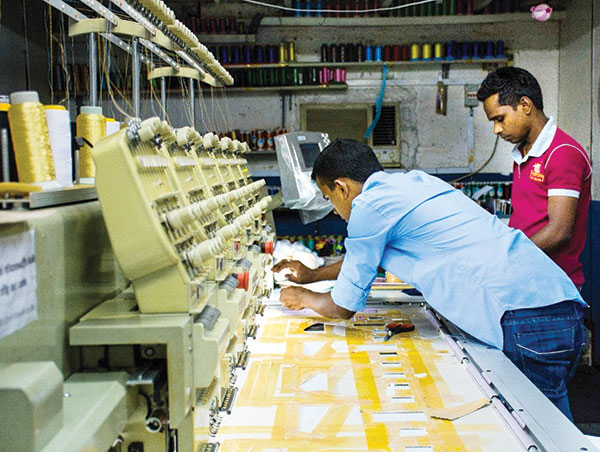
For us in the handloom industry and even for the larger apparel sector, this means openly sharing information about how, where, and by whom a product was made. This becomes more than a story-telling exercise, especially since this technology demands that we pay attention to people at all stages of the supply chain: who works for the brand, in what factories, under what conditions, are they safe, are they paid a living wage, how many hours do they work, do they have workers’ rights? It also demands that we be conscious of the waste we reject into the environment – into our forests and our seas and brings our attention to how we may be more carbon neutral as we maximise profit. It allows us to humanize our supply chains and spread the premiums gained fairly among all those involved in the process of taking a product to market.
Q: Why is Blockchain essential to the future?
We see the overuse of these words; “sustainable”, “empowerment” “circular” and are led to
believe it addresses and solves the bigger problems at hand. None of which mean anything or truly give impact, if we aren’t transparent about how we achieve these outcomes. In other words, the practice of openly sharing information about how, where, and by whom products are made is critical. We can’t achieve sustainability without being truly transparent, which is why blockchain has gained its well-earned prominence. About Selyna Peiris (Attorney-at- Law): Being the Director-Business Development at Selyn, Selyna is also Co-Founder and Partner at Positive Impact Consultancy, an advisory service assisting stakeholders in various sectors to make purpose led transformation to create a positive impact. She was previously the Deputy Director – Programmes at
the Office for National Unity & Reconciliation (ONUR), Government of Sri Lanka and has consulted for the UN and other international and non-governmental organizations. As a youth activist, she has spear-headed and
worked along many movements working towards a racism free Sri Lanka and continues to be a strong
advocate for equitable development especially for the women of SriLanka.



Representation matters:
By Ifham Nizam
“There are no books written about pirates with prosthetic limbs, sporting blades, or racing wheelchairs—that is, until now,” says award-winning international children’s author Jann Weeratunga, whose Polly’s Piralympics series is challenging conventional ideas about who gets to be the hero in children’s literature.
For Weeratunga, representation is not simply about placing a disabled character somewhere in a story. It is about putting that character at the centre—leading, competing, winning, making friends, overcoming challenges and, most importantly, having adventures on their own terms.
Her books are designed not merely to be read, but to be experienced. Through interactive pages, children can colour, draw, write and respond to the stories, leaving something of themselves behind as they explore themes, ranging from disability and bullying to friendship, resilience and family.
At the heart of her growing literary brand is Polly’s Piralympics, a series in which disability is not presented as a limitation, but as part of a character’s identity and adventure.
The inspiration came from an unexpected moment during the closing speech of the 2012 London Paralympic Games by Sir Philip Craven. He recalled a young boy looking at an illustration of a pirate with an eye patch, a hook, a parrot and a wooden leg.
When his mother asked who the figure was, the boy replied that because the man had only one leg, “he must be an Olympian.”
The story moved Weeratunga deeply.
That moment of innocent perception—where disability was associated with sporting achievement rather than limitation—sparked the idea of Polly and her extraordinary Piralympic world.
In the series, Polly, a bird-napped African parrot, finds herself bullied in a Scottish pet shop before being rescued by Captain Hake. Their shared one-eyed view of the world becomes the beginning of an unusual friendship. Captain Hake teaches Polly the ways of a pirate, while Polly creates the Fellowship of Pirates and the Pirates Paralympics.
Soon, pirates from around the world are competing in events ranging from three-legged races and climb-the-rigging gymnastics to walk-the-plank diving and even a MasterChef competition.
It is an imaginative world, but behind the humour and adventure lies a serious message about inclusion and leadership.
Weeratunga recalls one school visit that brought home to her exactly why the books mattered.
A student with a prosthetic leg embraced her and said: “Thank you for writing these books for me, Auntie.”
The words left her overwhelmed.
“That was why I had written these books,” Weeratunga reflects.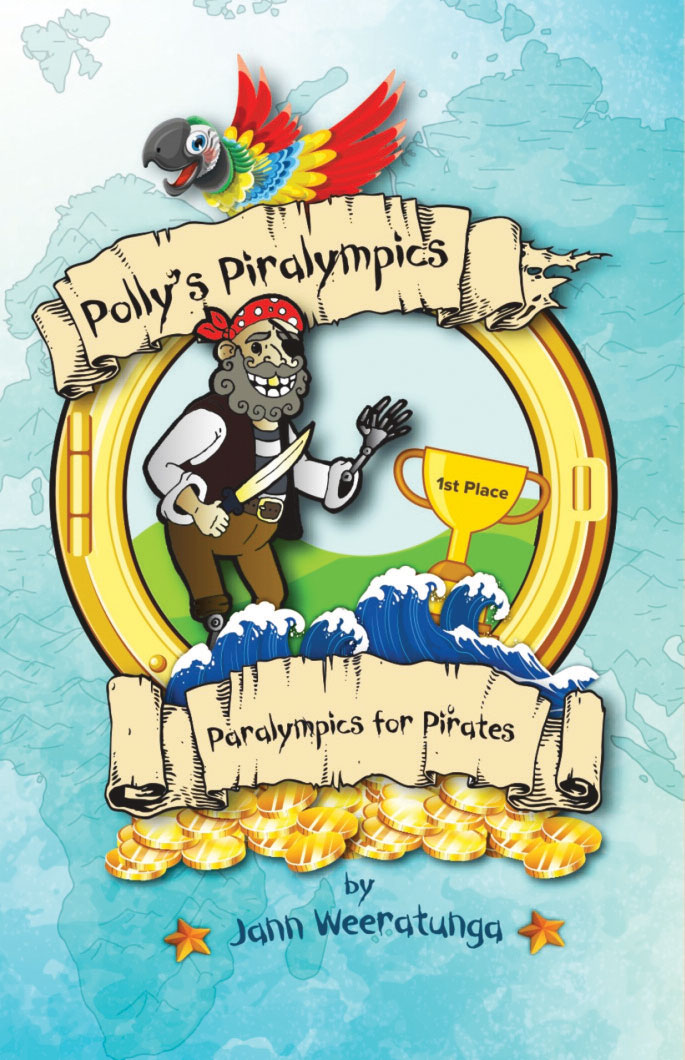
Her journey towards becoming an author, however, began long before Polly sailed into the world of children’s fiction.
Earlier in her life, Weeratunga was a Scout Leader in the UK, where volunteering became a way of life. She subsequently spent a decade in Sri Lanka, falling in love not only with a Sri Lankan, but with the country itself.
After her husband died just four years into their marriage, she joined five other women to establish a small school in Senarathwela to teach English to those who wanted to learn. Many of her pupils, subsequently, found employment at the newly opened Victoria Golf Course.
When she returned to Sri Lanka in 2025 and revisited the village and golf course, she found a landscape transformed by new roads, homes, shops and businesses. But the people she had taught remained.
“The village is unrecognisable, with new roads, homes, shops and businesses, but my dear pupils were still there as Caddies, Caddy Master and Golf Pro. I was so proud of them,” she says.
Her connection with Sri Lanka deepened further during one of the country’s darkest moments.
On Boxing Day 2005, while holidaying in the UK with her recently widowed mother, Weeratunga was woken by the words: “Something terrible has happened in Sri Lanka.”
She rushed to the television and witnessed the devastating aftermath of the Indian Ocean tsunami.
That very day, she established a non-profit organisation to raise funds and take relief to Sri Lanka. With support from local McDonald’s franchises, schools in Ferndown, the Mayor of Ferndown, freight companies and her friend Mr Wijekoon, a local Grama Niladhari, she helped rebuild lives in Arugam Bay.
The experience was hands-on and deeply personal. A family’s home had been swept away, and days were spent persuading surfers to help construct a future for her adopted family.
A Montessori was established on the hill, within the Buddhist temple grounds, while evenings were spent crafting, building and working with a small but effective generator.
Meals of rice and curry, prepared by the family’s sisters, using provisions donated from Senarathwela, brought the long days to a close.
When Weeratunga returned to the family, in 2025, she was able to see how far they had come.

Jann Weeratunga
Today, living in South Africa, she continues to draw inspiration from the landscape around her.
“Travelling—it leaves you speechless and then turns you into a storyteller,” she says, echoing the famous words attributed to Ibn Battuta.
And storytelling has become her way of opening conversations with a new generation.
While Polly’s Piralympics remains the flagship of her children’s publishing brand, Weeratunga’s wider collection explores a range of issues that matter to children and parents.
Terry and the Bully gives children practical and empowering ways to stand up for themselves, transforming a difficult subject into a story through which young readers can explore courage and self-confidence.
In Evie Visiting Grandma, children encounter the sensitive experience of visiting a loved one who now lives in a residential home. Rather than avoiding a potentially difficult subject, the story gently opens the door to conversations about ageing, family and change.
Terry the Toucane explores another universal childhood experience—the challenge and beauty of being different. Its central message is simple: being different should never prevent us from developing deep and lasting friendships.
Then there is Captain Bluebird, a resilient and entertaining adventure exploring what happens when Captain Bluebird receives a brand-new ship.
Across the collection, Weeratunga combines entertainment with meaningful life lessons, while her interactive approach gives children an opportunity to become participants rather than passive readers.
They can colour illustrations, draw pictures and respond to pages, making each reading experience personal.
That approach also gives the books an added value for parents and educators. They can become conversation starters—helping adults discuss subjects that children may find difficult to raise directly.
For Weeratunga, this is part of the larger purpose of her work.
Her books seek to fill a gap in children’s literature where diverse characters are not simply included for the sake of inclusion, but are given agency, personality and leadership.
In Polly’s Piralympics, disabled characters are not watching from the sidelines. They are the stars.
They lead.
They compete.
They win.
They champion their own adventures.
And that, ultimately, is the brand Weeratunga is building: children’s stories in which every child can find a place, a voice and perhaps even a little courage to become the hero of their own story.
Representation matters.
For young readers in Sri Lanka, Weeratunga’s books are now available through Sarasavi Bookshop, Vijitha Yapa Bookshop, M. D. Gunasena and Expo Graphics, Battaramulla.

By Zanita Careem
Music, laughter and a generous spirit filled Raflfles Hotel Colombo as Heart to Heart sing along brought together a vibrant gathering for an evening of melody, friendship and giving. The elegant ballroom reverberated with familiar lyrics as guests joined in, sang along and simply let their hair down. Adding to the infections atmosphere was the talented Rajiv and Clan, whose lively performance kept the energy soaring and had the gathering singing to some much loved favourites.
Keeping the evening moving with plenty of wit and warmth was the compere Mirzab Sherifdeen who ensured there was never a dull moment between the music, laughter and spontaneous sing-along moments, Guests were also treated to prizes galore adding an extra element of excitement to an already festive evening. There was cheers as winners stepped forward to collect their prizes, while friends and families aplauded and celebrated every winning moment.
Yet beneath all the sparkle was the meaningful purpose of Heart to Heart Trust Fund, founded by Dr. Rajitha Y de Silva and Dr. Ruwan Ekanayake, bringing people together in support of a cause built on compassion and care.
The dedications and the volunteering was evident throughout the evening with their commitment adding a special warmth to this special event.
Adding to the evening’s indulgence was a sumptous spread of cuisine by the Raffles, Hotel with an enticing selectiom that kept guests happily returning for more. From savoury favourites to tempting desserts, the food complemented the festive mood perfectly.
As the final song faded and the evening drew to a close, there was a quiet sense of gratitude. Behind the music, laughter, prizs and beautiful memories was a cause built as compassion, a cause that has continued to touch lives through the dedication of Dr. Rajitha de Silva and everyone who has stood beside him in the journey of Heart to Heart.
And as guests left Raffles Hotel with the last melodies still lingering in the air the most beautiful note of the evening remained – the sound of hearts earning for hearts. At the very heart of Hearts to Heart is Dr. Rajitha whose compassion has become the soul of the initiative. Dr. Rajitha’s work reminds us that medicine is not only about repairing what is broken. It is about giving people the courage to believe in tomorrow. And perhaps that is the greatest gift he offers. This spirit was beautifully reflected throughout the evening.It was a beautiful evening of music, friendship and generosity, with every contribution going towards a worthy cause- keeping alive a legacy built one one simple but powerful belief that every heart deserves a chance to beat on.
-
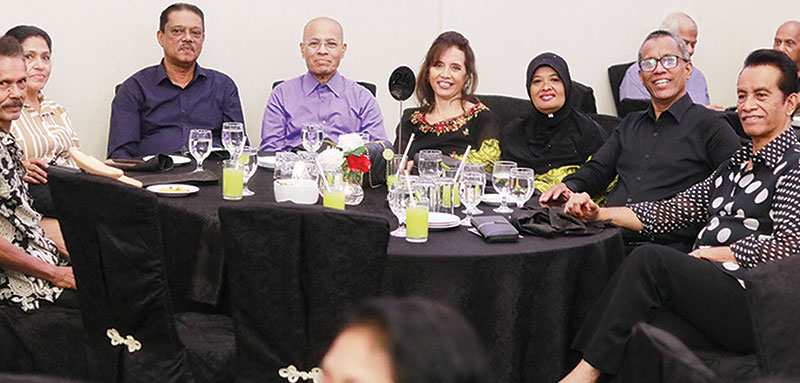
- Ramzi Rahaman with friends and family enjoying an evening of music
-

- Sarath Wimalaratne, Chandra and Bunny Bohoron
-

- Brigadier Bohoron
-

- Shanti Fernando shares a warm and happy moment with volunteers, adding to the camaraderie and cheerful spirit
-
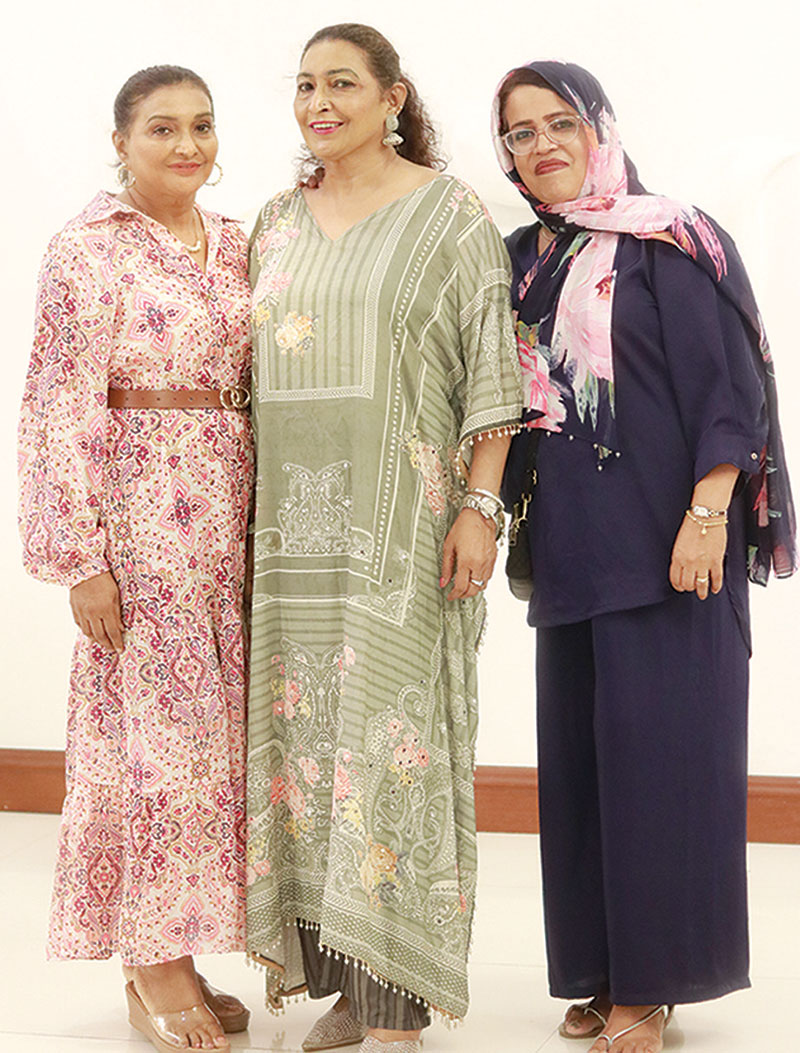
- Shahana, Sherin and Shahareen
-

- Lakshmie with her graceful moves
-

- Onitha Gurugalle with Arujana Ranasinghe
-

- Cardiologist and Senior Consultant Dr. Ruwan Ekanayake
-

- Dr. Rajitha Y de Silva and Dr. Arunie
-
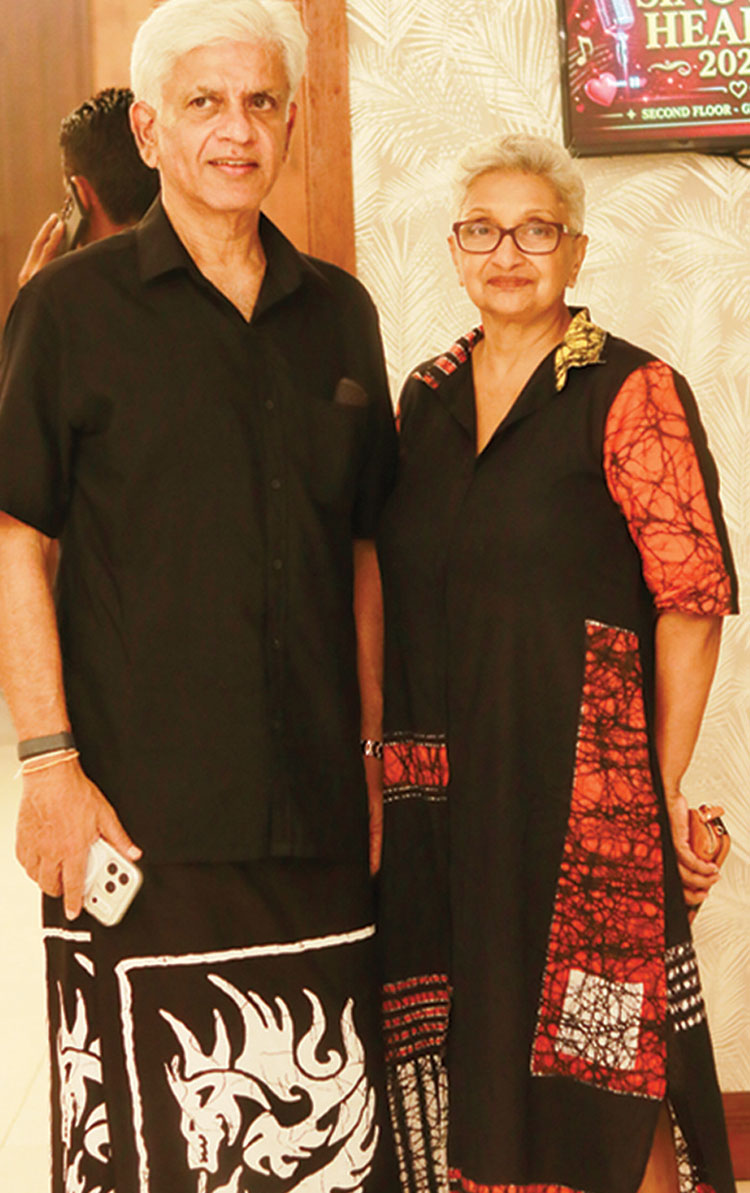
- Former Cricketer with spouse
-

- A guest takes centre stage

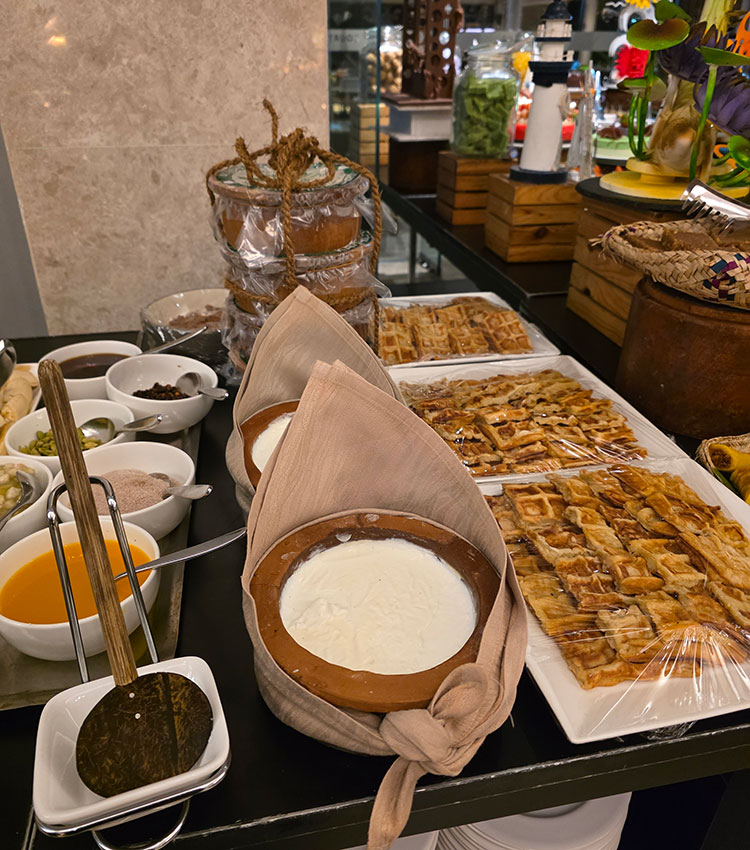
Taste of Ceylon opened its doors at Beira Kitchen, Courtyard by Marriott Colombo, on September 3rd; a festival of Southern, Central, Uva and Northern regional food, brought together on one table.
Four Regions, One Unforgettable Table
Each night, guests moved between four distinct culinary worlds. From the South came the deep, coconut-rich flavours of malu abulthiyal and Negombo pork curry with pineapple, alongside a lively fish polla roti action station. The Central province brought Kandalama lake fish, black octopus curry and carrot kalupol; dishes rooted in the region’s lakes and forests. Uva’s table leaned rustic and warming, with village chicken stew, prawn curry with murunga, and a coconut pittu drawing steady queues. And from the North came bold, unmistakable flavours of Jaffna crab curry, Jaffna mutton curry, and a dosai action station that quickly became one of the evening’s most talked-about corners.
Layered around the four regional stations was a spread that told its own story of Sri Lankan hospitality, from belimal herbal welcome drinks and a bread corner stretching from curry leaves rolls to kurakkan viyana rolls, to a dessert corner where watalappan, wood-apple coconut wandu and king coconut jelly sat alongside a full spread of traditional Sri Lankan sweets like kokis, athirasa and aluwa.
What the guests had to say
The feedback on opening night carried a common thread: guests were struck by just how different each region’s food tasted, side by side, on the same table. What could easily have blurred into “just Sri Lankan food” instead came through as four distinct culinary identities; the fire of the North, the coastal warmth of the South, the earthiness of the Central hills, and the rustic comfort of Uva, each unmistakably its own.
A Word from the team
Reflecting on the festival, the team at Courtyard by Marriott Colombo shared that Taste of Ceylon was designed from the start to be more than a menu. It was meant to be an experience guests could travel through, one region at a time, without leaving Beira Kitchen. Judging by the response over the four nights, that’s exactly how it landed.
There were many rave reviews and as the Taste of Ceylon experience at Beira Lake drew to a close, the flavours, aromas and vibrant spirit of Sri Lanka lingered on.

Fast Attack Craft P 4447 recovered in successful salvage operation

Showers above 100 mm are likely at some places in the Western, Central, Sabaragamuwa, Southern, North-central and North-western provinces

Shafali, Mandhana power India to eighth Asia Cup title

Tharanga wins Ultimate Javelin title

CIABOC member’s appointment: Controversy over Speaker under probe heading selection process

GMOA: Countrywide cadre revision not done since 2015

‘Dates have the highest sugar content to fight Coronavirus’

Sunday Island 27 December – Headlines

#SundayIsland 17th December – Headlines

Sunday Island – 28th March

Sunday Island Headlines – 21 March

Sunday Island – 21st February – Headlines
-

 Sports4 days ago
DDS set to lose Test captaincy
-

 News7 days ago
Thailand shuts door on undesirables from Sri Lanka
-

 News4 days ago
Sri Lanka faces new grid challenge as rooftop solar surges: former CEB GM
-

 Latest News3 days ago
Shafali, Deepti power India into sixth T20 Asia Cup final
-
 Business7 days ago
CEB successor company breaks into top three in competitive BESS tender
-

 Opinion6 days ago
Navigating Sri Lanka’s Israeli Dilemma
-

 Latest News3 days ago
Sri Lanka thwart Fatima Sana challenge to secure Asia Cup final spot
-
 Features5 days ago
Lost for 90 years: Rare Goby resurfaces in Jaffna