
Opinion
Reimagining International Relations from a Global South Perspective

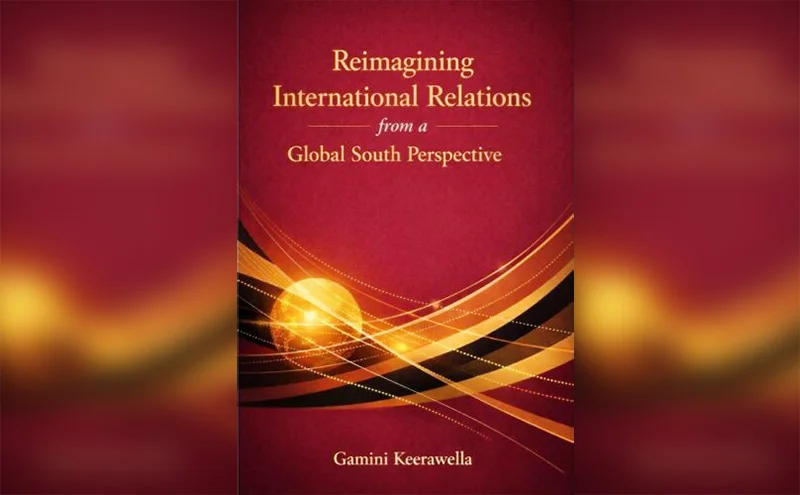
I wish to congratulate Prof. Keerawella, for having undertaken this mammoth task of seeking to capture, from ‘a global south perspective’, the multiple facets of scholarship of International Relations. He has, as always, been meticulous in his research, and also lucid in conveying to the reader, complex ideas and their interconnections, in an uncomplicated way. I am not in the habit of encouraging taking shortcuts, particularly with my students around – but if pressed, here is a book, with references to every major scholar in the 7 areas identified, in 440 pages, at a modest price.
We are honoured that the Prime Minister graced this occasion, and thankful for her inspiring words. She has left much food for thought – which I am hopeful our students will consider engaging with, as they proceed with their presentations and dissertations.
This is the 7th book, in fact the 3rd authored or co-authored by Prof. Keerawella, published under the auspices of the BCIS, over the past couple of years. It is a reflection of BCIS’s continuing commitment to bring into the public domain, quality academic literature that benefits both scholars and Sri Lankan students who pass through these halls and beyond. I want to commend President Kumaratunga, for through the BCIS, continuing to support the publication of such texts, at a time individually doing so is prohibitive and also more costly to the buyer, and the Bandaranaike Memorial National Foundation (BMNF) for making this possible.
Turning to the volume launched today (24 Feb), in ‘Reimagining International Relations from a Global South Perspective’, at the outset, Prof. Keerawella makes clear that a Global South perspective is not simply a matter of geographical focus; it is an epistemic stance that seeks to recover marginalised voices, experiences, and knowledge that have long been silenced or subordinated in mainstream discourse. He goes on to emphasise that, the choice of the phrase “a Global South Perspective” is deliberate. It signals an awareness that there is no single, homogeneous standpoint from which the Global South speaks’. To speak of a perspective, then, is to situate this volume’s argument within that broader, evolving mosaic—to offer one possible articulation among many, without claiming representational authority over them. Prof. Keerawella emphasises, it is an invitation to dialogue, not a declaration of orthodoxy.
As is customary by a reviewer, I intend to take up Prof. Keerawella’s ‘invitation to dialogue’ and commencsation in the latter part of this presentation, but first let me outline the valuable insights contained in this Book, as an appetiser.
The first chapter on IR Theory, points out – in each of the ‘isms’, ingredients as it were, that could contribute to a better understanding of the ‘Global South’. Here he highlights Raúl Prebisch and Andre Gunder Frank’s ‘dependency theory’, Neta Crawford’s ‘normative constructivism’, Sanjay Seth’s ‘Decolonial Critique’ and Amitav Acharya’s concept of ‘Global IR’ as having advanced a reformist, yet transformative agenda for the discipline. He observes that, “Collectively, their respective projects of rethinking, decolonizing, and globalizing International Relations illuminate how the Global South can contribute to the field not merely as a repository of empirical cases, but as a source of conceptual reflection and theoretical innovation”.
The second chapter which examines the transformation of International Security Studies, by foregrounding the lived insecurities of the Global South—ranging from poverty and structural violence to environmental vulnerability and social fragility, demonstrates why concepts such as human security gained salience as corrective and complementary frameworks, concerning the global south.
The third chapter pays analytical attention to the dynamics of regionalism with special focus on South Asia and the experience of the SAARC. It calls for reimagining regional cooperation in South Asia beyond rigid institutional templates, advocating for inclusive, flexible, and people-centered modalities rooted in the specific political and social realities of the Global South.
The fourth chapter addresses international organisations and international regimes as central pillars of contemporary global governance, with particular attention to their implications for the Global South. The chapter reveals how Global South states have simultaneously been constrained by inherited governance structures and mobilized collective strategies to contest inequities and assert greater voice.
The fifth chapter which focuses on Foreign Policy Analysis (FPA), situates it within a rapidly evolving global environment shaped by globalisation, technological transformation, and the Fourth Industrial Revolution, paying particular attention to the strategic choices made by Global South states.
The sixth chapter traces the long historical arc of diplomatic practice, demonstrating how modes of representation, negotiation, and cooperation have evolved in response to changing political, social, and technological contexts. From a Global South perspective, the chapter underscores both the opportunities and constraints of particularly science diplomacy.
In the final chapter, Prof. Keerawella discusses the notion of national self-determination.
He underscores its contradictions in theory, and its praxis in the post-Cold War context, tracing the ways in which self-determination has been invoked and contested in modern international relations.
Besides joining a very small league of international scholars (some already referred to) who have dared to challenge Western theoretical approaches in the study of IR and sub-fields and emphasised the need for an alternative ‘Global South’ reading, Prof. Keerawella becomes the first Sri Lankan to do so in any considered manner. His volume is also rare, in that in general, few Sri Lankans have sought to engage with and contribute to the theoretical literature of International Relations and Foreign Policy. His book has the additional advantage of being released at a time ‘International Relations’ – as we have been taught it and understood it, is under severe strain to explain contemporary developments in a conceptual and theoretical manner, and there is a serious vacuum to be filled, not just in understanding, but in order to change the currentpredicament.
While the book reaffirms the ‘global south’ as a certain collective sentiment, assembling many of the conceptual building blocks and empirical insights necessary for its articulation, what it leaves to us is the task of synthesising these elements into a coherent and operational set of principles that can foster a unified front amongst the Global South, despite the vast diversity of the actors and states involved.
While I have no disagreement with Prof. Keerawella’s starting premise and end goal of the desirability of having ‘a Global South Perspective’ in the areas under study, however, as an observer and practitioner of international relations for most of my professional life since 1980
– 9 years as a journalist, 33 years as a diplomat, and post-retirement, and over 4 years from the vantage point of running IR and Strategic Studies focused institutions, while also teaching, and engaging in my own research, I do encounter some difficulty, and lament that operationally little has or is being done, to evolve a strategy that addresses the shortcomings so carefully pointed out in Prof. Keerawella’s book.
Looking back, I do not see a single cohesive ‘Global South’ consistently in play. Rather, I see a multitude of ‘Global Souths’ –depending on the issue, competing opportunistically and often working at cross purposes, and all eventually getting played out by the continuing structural heft of the ‘Global North’.
This is no fault of Prof. Keerawella, or of the rich ingredients he brings together in this volume. Rather, it reflects the political reality that the‘Global South’ recipe has not yet been fully translated into an appetising dish.
I am no chef, and time does not permit me to elaborate from the different vantagespoints
I have experienced it from – but I do believe there is a compelling case that could be made for action, which needs serious reflection and attention.
To put it another way, without making value judgements on the rights and wrongs of the respective action, I wish to pose two sets of questions, confining myself to events of the past 4 years or so;
First, what did the ‘Global South’ do in the cases of Ukraine since 2022, of Gaza since 2023, of Sudan since 2023, on actions in the South-China Sea in recent times, following the imposition of ‘Reciprocal Tariffs’ throughout 2025, or in the case of Venezuela last month?
* Did they speak together?
* Did they vote together?
* Did they fight together?
Similarly, second, what will the ‘Global South’ do, God forbid, if there is to be a conflict on Iran, Cuba, the Panama Canal, Morocco-Algeria, DRC-Rwanda, or Taiwan, tomorrow?
* Will they speak together?
* Will they vote together?
* Will they fight together?
If I were to play devil’s advocate, I would be tempted to ask: if these coalitions neither speak, vote, nor act together, what kind of analytical and normative work can the category ‘Global South’ realistically achieve? Rather than assuming a unity that does not yet exist, how might we need to refine it?
To this end, I wish to posit, that the category of ‘Global South’ could be analytically more useful, if, as Max Weber suggested, it be used as an ‘ideal type’ – that might not be realized, but must be sought to be approximated.’Global South’ functions best as a Max Weber-inspired ‘ideal type’: an abstract model used not as a description of an existing state, but as a heuristic tool to clarify the degree to which specific regions approximate or diverge from its core characteristics.
Such an approximation cannot merely be imagined; it has at least to be attempted in practice.
What I am suggesting is not utopian. Historically, there is precedent that has been realized by the Non-Aligned group of countries – which by no means perfect, but was effective in its heyday duringthe 1960s, 1970s, and early 1980s. Unfortunately, rather than being reformed and modified at the end of the Cold War, it has been tossed away.
Admittedly, those were different times, but for purposes of encouraging the dialogue and debateProf. Keerawella wanted us to have stemming from his book, and in order to draw inspiration, let me suggest 4 factors that made Non-Alignment work as an operational strategy, while it did;
* There was a clearer ‘Framework of Operation’ – the Non-Aligned MOVEMENT, which incidentally in this year we commemorate the 50th anniversary of the hosting of the 5th Summit in Sri Lanka in 1976 at this very venue the BMICH.
* There was also a clear ‘Other’ – the cold War driven Western alliance on the one hand, and the Warsaw pact countries, which had competing ideologies–and which broadly Non-Aligned countries preferred not to emulate in toto.
* There was further an alternate Politico-Economic and Legally grounded Agenda – which saw expression through the UN Special Session on Disarmament, an operationally stronger UNCTAD, and a international legal regimethe UN Law of the Sea (UNCLOS), inwhich NAM countries played crucial roles.
* There was also ‘a like-minded collective leadership’ – which, spare a few, more often than not, dared to demonstrate objectivity between the West and the East – and resisted being unquestioning followers. Though they might not have been loved by the ‘West’, or for that matter by the ‘East’, but they were broadly respected by both.
While newer formations such as the G77, the BRICS, the SCO, alongside regional groupings such as the RCEP, the ASEAN, the AU, the GCC, and BIMSTEC have sought to fill this space, they remain, at best, partial substitutes, lacking the normative coherence and political solidarity that characterized the early NAM efforts that resulted in effective collective action demands.
It is ironic, that at a time when the ‘Global North’ is in disarray, and some its own constituents have made bold to say that this is not a “transition” but a “rupture” of the US-led rules-based international order, that there is no cohesive ‘Global South’ alternative.
The real question before the ‘Global South’ today should be, as to what conditions and mechanism could lead us to position ourselves better, to consolidate such a collective, and most importantly whether there is the political will to do so?
If not, we must at least be honest about current limits – that many states with even some capacity, are compelled to hedge, while those without meaningful leverage remain largely ‘bystanders’ in the global order.
However, if we recognize that this situation is not tenable and that we wish to serve a higher cause, we should do something about it and try to create ‘sufficient conditions’ that could more actively and tangibly approximate ‘a Global South’- which can ‘bracket’ its differences, find unity in what is most important, and avoid the temptation of flirting for temporary gain or glory.
This is the thought I wish to leave you with today in the hope that, as envisaged by Prof. Keerawella, this volume will not be the last word on ‘a Global South perspective’, but a starting point for precisely the kind of critical, self-reflective conversation that can turn it into a more grounded, plural, and effective practical programme and call to action.
Speech delivered by
by Ambassador (Retd.)
Ravinatha Aryasinha,
former Foreign Secretary and Executive Director, Regional Centre for Strategic Studies (RCSS), at the launch of
Prof. Gamini Keerawella’s book ‘Reimagining International Relations from a Global South Perspective’,
at the Bandaranaike Centre for International Studies (BCIS), Colombo on 24 February 2026)



By Prof. Amarasiri de Silva
The current period can be characterised by Sri Lanka reaching a historical crossroad which determines whether the island nation will continue following the logic of an inward-oriented mind or adapt to the realities of the globally connected world. Throughout the millennia, Sri Lankan psychology has been conditioned by the island nature of its geography. The ocean around the nation has served as a protective factor and as a boundary at the same time. In the language of Sinhala people, the phenomenon is known as lin medi manasikathwaya and implies narrowing of horizons, restriction of ambitions, and the need to focus on oneself. This mentality is not characteristic of the culture only; it also affects economic thinking, political behaviour, education, and social relations. In the epoch of global trends, the nation must abandon this approach and start thinking in a bigger way.
Inwardness is characteristic of many islands. However, Sri Lanka’s situation is quite unique as the island has had centuries of contacts with other countries. For millennia, travellers, monks, scientists, merchants, and others travelled from Sri Lanka to India, China, Southeast Asia, the Middle East, and Europe. Our ports were centres of economic activity and exchange; our ancient kingdoms absorbed knowledge, technologies, and culture from foreign countries. Therefore, the island was never isolated but functioned as a meeting place of civilisations. However, for some reason, in modern times, Sri Lanka started developing an inward orientation despite having centuries of experience. There are several reasons for the phenomenon: legacies of colonial past, post-independence nationalism, rhetoric of political parties, economic dependencies, and cycles. At some point, the ocean ceased serving as a bridge.
Inward in several areas
This inwardness can be observed in several areas. It takes various forms: a conviction that Sri Lanka is too small to succeed in the global competition, fears of external influences, a tendency to compare ourselves only to nearby countries, and a failure to adopt global approaches. In politics, the island’s inwardness can be revealed in rhetoric which dismisses global trends as unimportant or even threatening. In economics, the mentality can manifest itself in focusing on internal issues instead of considering global opportunities. In education, students study mainly about the history of their own country instead of global trends. In cultural matters, openness can be confused with dilution. To move forward, Sri Lanka needs to realize that global thinking is not a luxury but a necessity.
It is quite easy to notice the effect of inwardness on the economic life of Sri Lanka. For decades, the country was characterised by limited export diversification, dependence on remittances, vulnerability to external shocks, and financial constraints. All these problems do not only affect the economy but are caused by the mentality. In general, Sri Lankan entrepreneurs have a small market mentality: they design products for domestic markets, set standards based on domestic criteria, and never consider globalisation. To change the situation, the country must adopt a global economic imagination which would encourage the development of export-oriented entrepreneurship, integration into global value chains, partnership with global companies, and promotion of globally competitive industries (information technology, tourism, agriculture, renewable energy).
Abandoning island mentality
Small countries all over the world managed to transform their economy by abandoning the logic of island mentality. Singapore, Estonia, and Vietnam are examples of such transformation: they have made investments in education, technology, and global cooperation; they have encouraged their citizens to be a part of the global labour market. Sri Lanka can do the same but only if it starts thinking differently. One of the most underused resources of the transformation can be the country’s diaspora. Millions of Sri Lankans living outside the island can be helpful: they have global knowledge, networks, and capital. Instead of being seen as sources of remittances, the diaspora can be a strategic partner in the process of national development. Global imagination requires Sri Lankans to see themselves not only as inhabitants of the island but also as participants of global processes of innovation and research. To harness the potential, there should be special policies to encourage investment of diaspora into the nation, facilitate knowledge transfer, and develop the trust between the diaspora and the state.
Inwardness is a problem in politics as well. The political imagination has a great impact on the fate of the nation: when politicians think narrowly, the country follows the example; when they think globally, the country starts expanding its horizons. In general, Sri Lankan politics is characterised by a narrow focus on local problems: political leaders speak about village-level concerns and try to satisfy voters’ demands in the shortest time possible. Of course, local problems matter but they cannot be the only focus of national politics. Climate change, geopolitics, technological disruptions, and migrations have a significant influence on Sri Lanka. Therefore, to have a global political imagination, it is necessary to understand global systems, predict risks, position the country within global power dynamics, develop diplomatic skills, and learn from models of global governance which emphasise transparency and accountability.
Diplomacy as a powerful tool
Diplomacy is one of the most powerful tools at the disposal of small countries. Sri Lanka’s geographical position is one of the biggest blessings of the country as the island located at the intersection of major sea routes has huge geopolitical value. Global thinking requires the nation to utilize its potential through proper diplomacy instead of isolation or fear. Through diplomacy, Sri Lanka should attract investments, create alliances, enhance its security, increase exports, and promote cultural contacts. Countries which master diplomacy (like Qatar, Norway, and Singapore) can achieve much more in the world of politics than they actually should. However, this can be achieved only by the politicians who have global awareness, understand different economic models, technology trends, and best practices in the global context. Parliamentary debates should be conducted considering global statistics, not only local stories; policy proposals must be compared to global models. It makes a difference.
Education is the key
Education is the key factor which determines the nation’s imagination. If our education system is inward-looking, society will be the same. The curriculum of Sri Lanka must change: global history, global economics, global citizenship, foreign languages, and digital literacy should be included. Students must be prepared for global career, not only for working in Sri Lanka. Sri Lankan universities must become global centres of research and innovations; this can be achieved through international universities, international faculties, international research projects, global accreditations, and encouragement of studying abroad and returning with new ideas. Furthermore, education must foster critical thinking. Inwardness is often connected with refusal from questioning, debates, and creativity.
Culture is also one of the areas where global thinking is needed. Culture does not stay the same; it develops through contacts, exchange, and adaptation. The rich culture of Sri Lanka (Buddhist heritage, Hindu traditions, Islamic influences, colonial legacy) shows that openness is a feature of our civilization. Global thinking requires cultural self-confidence: it means that Sri Lankans have confidence in traditions, arts, and values which allow the country to stand confidently in front of the world. Global thinking allows Sri Lankans to engage with global cultures without fear of losing something. Creative industries of Sri Lanka (film, music, literature, fashion) have huge global potential; to achieve it, it is necessary to cooperate globally, to promote the arts of Sri Lanka internationally, to support creative entrepreneurs, to use digital media for communicating with global audience. Tourism is also cultural diplomacy: every tourist is an ambassador of Sri Lanka. Global thinking requires improvement of tourism infrastructure, sustainable tourism, and promotion of the island’s cultural diversity.
Importance of technology
Technology is the tool of global transformation. Sri Lanka should embrace digital innovations in order to remain competitive in the global economy. A globally-connected nation requires high-speed internet access, digital payments systems, e-government, cyber security, and regulations friendly to technology. Innovation ecosystem requires startups, research labs, technology incubators, networks of venture capitals, and partnerships between universities and business. Artificial intelligence, automation, and robotics will revolutionize industries, employment, and governance. Therefore, Sri Lanka should invest in education in AI, data science, automation-ready industries, and frameworks of ethical AI.
Society must develop towards a global imagination as well. A globally connected society is inclusive, tolerant, and forward-thinking. Inwardness encourages division on ethnic, religious, regional lines. Global imagination encourages unity as it shows that diversity is strength. Sri Lankans should perceive mobility (travelling, migrating, working in other countries) as opportunities for development. In addition, global imagination requires recognising that learning about the world helps to improve the nation. Media plays an important role in forming imagination. Sri Lankan media should cover global news, provide international perspective, conduct critical analysis, and avoid isolation and sensationalism.
Overcoming inwardness
Overcoming of inwardness will take a lot of time and effort; nevertheless, there are steps to take. Leaders should act according to global imagination. Organisations should adopt global standards and practices. Citizens should acquire global awareness through studying global news, learning foreign languages, traveling whenever possible, interacting with global ideas and embracing diversity. The nation requires a national vision in which Sri Lanka is seen as a globally connected, innovative, and resilient nation. The vision should be conveyed consistently, clearly, and confidently.
The future of Sri Lanka depends on imagination of the nation. If the nation is going to be confined to its island mentality, it will continue struggling with economic stagnation, political fragmentation, and social division. However, in case Sri Lanka decides to open and start thinking in a global way boldly, strategically, and confidently, the country will be able to unlock its tremendous potential. Global thinking does not destroy the identity of Sri Lankans but makes it stronger. It allows the nation to interact with the world on its own terms. It turns the small size of the nation into an advantage. Geographical location is a strategic asset. It makes citizens globally-competitive and gives them ability to contribute to the nation as well. The sea around the country should be used as a bridge, not as a boundary. The world is close to us. The future of the nation depends on imagination; let us think globally, act wisely, and imagine boldly.
By Chula Goonasekera
For the LEADS Forum (admin@srilankaleads.com)
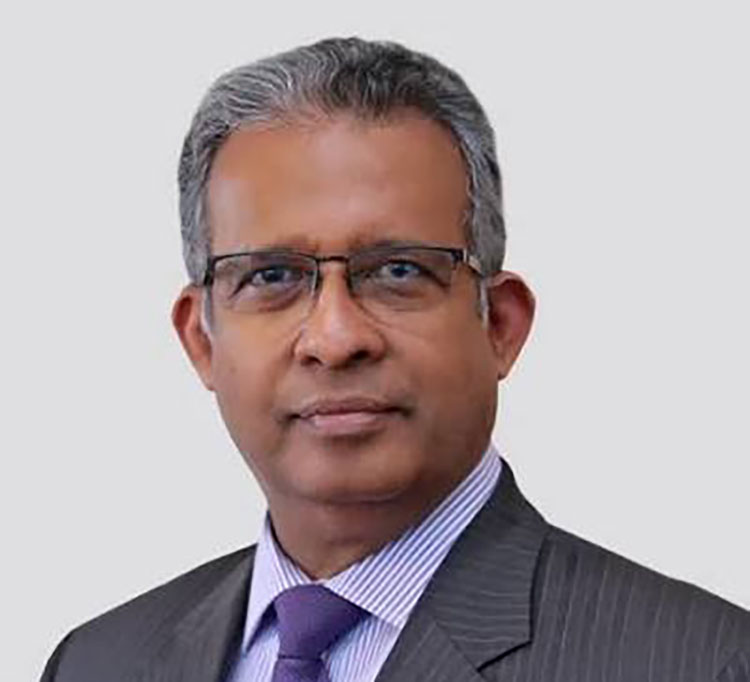
Sri Lanka’s future prosperity will depend on how effectively it positions itself within an increasingly complex global environment. At a recent LEADS Forum discussion (https://youtu.be/Bbr3e_qU1Fw), veteran diplomat Prasad Kariyawasam, former Secretary to the Ministry of Foreign Affairs, High Commissioner to India, Ambassador to the United States, Ambassador /Permanent Representative to the UN in New York and Geneva —outlined the strategic choices Sri Lanka must make to secure long term stability and economic advancement. Kariyawasam offered a rare blend of historical perspective, diplomatic experience and practical guidance.
His central message was clear: Sri Lanka must exercise strategic agency—engaging all major partners while safeguarding its national interests.
Foreign Policy as an Extension of National Aspirations
Foreign policy, Kariyawasam emphasised, is inseparable from domestic priorities. As your text notes, “foreign relations often reflect the medium- and long-term aspirations of a country’s people and its leadership.” Governments must therefore craft external relations that reflect the public’s economic and social expectations, avoiding short-term political impulses that undermine long-term national interests.
For a small nation, foreign policy cannot be symbolic or personality driven. It must be purposeful, pragmatic and directed towards the security and prosperity of the people.
A History of Global Connectivity
Sri Lanka’s history demonstrates that the island has never been isolated. From ancient ties with India and Southeast Asia to Arab, Persian and Chinese maritime networks, the island prospered when connected to the wider world. We must realise that “geography creates opportunity, but geography alone does not create prosperity.” Institutions, infrastructure and policy determine whether geographic advantage becomes economic success.
Colombo’s emergence as a cosmopolitan trading hub and Galle’s role as a resupply station for Indian Ocean shipping in colonial times , illustrate how deeply Sri Lanka has been embedded in global commerce for centuries.
Lessons from Asia’s High Performers
Kariyawasam highlighted the experiences of Japan, South Korea, Taiwan, Singapore and Vietnam. Their paths differ, but their success rests on common foundations:
• investment in human capital and infrastructure
• merit based institutions
• integration into global markets
• attraction of investment and technology
• export oriented industries
• strategic engagements with both China and Western economies
The lesson for Sri Lanka is not imitation but continuous adaptation and constructive integration with the global economy.
India: Sri Lanka’s Closest Major Partner
India’s transformation into a global economic power presents Sri Lanka with both opportunity and responsibility. India is already Sri Lanka’s largest source of tourists and a major investor. Kariyawasam states, “The larger question is how effectively Sri Lanka can participate in and benefit from India’s growth.”
A partnership should encompass modern, more open pathways for trade, investment, logistics, energy, technology, digital services, education and professional mobility—And asymmetry between the two economies must be handled with maturity and foresight, seeking special and differential treatment .
China and Other Global Partners
China remains a significant economic partner. Sri Lanka must avoid viewing this relationship through a zero sum lens. The goal should be productive and transparent engagement, ensuring better terms of trade and meaningful technology transfer.
Equally Important relations must be nurtured with the United States, European Union, United Kingdom, Japan, Australia, ASEAN and the Gulf.
All these relationships can be vibrant partnerships that does not lead towards , dependency but mutually beneficial pragmatic arrangements .
A Fragmenting International System
Global geopolitics is becoming more volatile. Trade tensions, wars, sanctions, supply chain disruptions, climate change and technological competition increasingly shape national security. We must realise, “foreign policy cannot be separated from economic policy.”
Sri Lanka’s recent economic crisis demonstrated the importance of international confidence, access to finance and resilient supply chains. Energy security, food security, cybersecurity and digital infrastructure are now core elements of national strategy.
Strategic Agency: The Guiding Principle
Sri Lanka must avoid becoming an arena for great power competition. Strategic agency means making decisions based on national interest, expanding Sri Lanka’s choices, not restricting them.
India is essential. China is important. The United States, Europe, Japan, Australia, ASEAN and the Gulf are important. The objective is a web of partnerships that strengthens resilience and autonomy.
Sri Lanka’s Strategic Assets
1. Location: Sri Lanka’s geography is a long standing advantage. Ports such as Colombo, Hambantota, Trincomalee and Galle can become specialised hubs—if connected to logistics, manufacturing, services and exports.
2. Digital Connectivity: Submarine cables, data centres, cloud services and cybersecurity are now as important as physical geography. Sri Lanka can turn its location into both a maritime and digital advantage.
3. Tourism and Natural Heritage: The focus should shift from tourist numbers to value creation—wellness, heritage, ecotourism, cruise tourism, education and MICE tourism.
4. Human Resources and Demographics: High literacy is no longer enough. Skills in technology, engineering, AI, logistics and advanced manufacturing are essential, especially with an ageing population.
5. Migrant Workforce: Migrant workers are a strategic asset, not merely a source of remittances. Bilateral labour agreements, skills recognition and diaspora engagement should be central to foreign policy.
Requirements for Sustained Prosperity
Sri Lanka’s future depends on:
• peace and security
• access to international markets
• productive investment
• a skilled, productive workforce
• modernised agriculture
• higher value tourism
• demographic preparedness
• climate resilience
• strong, predictable institutions
Please note that “foreign policy can open doors. Domestic institutions determine whether we can walk through them.”
The Role of the State
Sri Lanka does not need a larger state—only a more capable one. Policy continuity, professional institutions, predictable regulation and reduced corruption are essential. Geography does not change; long-term national interests do not change. Intentional relationships built over decades should not be reinvented with each election cycle.
Building Trust Internationally
Trust is a strategic asset. Sri Lanka must be known as a country that honours commitments and maintains predictable policies. This is vital not only for diplomacy but also for investment and long term partnerships.
Avoiding Zero Sum Geopolitics
Sri Lanka does not need to choose between India and China, or between Asia and the West. The task is to identify what each relationship can contribute to national development while protecting sovereignty and freedom of decision making.
Sri Lanka’s geography is an inheritance, but prosperity is not guaranteed. The world is changing rapidly—great-power competition, technological disruption, and climate vulnerability demand a foreign policy that is pragmatic, adaptive, and anchored in national interest.
Sri Lanka must build partnerships without dependencies, maintain strategic agency without isolation, and integrate with the global economy while strengthening domestic capacity.
“We cannot change where Sri Lanka is. We can, however, determine what Sri Lanka becomes because of where it is”

by Gomi Senadhira
Sri Lanka’s former ambassador to the United States Mahinda Samarasinghe is back in Sri Lanka lobbying for speedier finalisation of a new tariff deal with the United States. According to news reports, delivering the keynote address at the Sri Lanka Institute of Directors’ Annual Meeting last week, he stated, “I have recommended very strongly to the government that we need to conclude the agreement so that we can lock in the very favourable tariff rate that Sri Lanka has got up to now“.
I do not understand why the former ambassador is urging the government to expedite the finalisation of a new tariff deal or what is “the very favourable tariff rate” he refers to in his speech. However, given the ongoing terrible tariff turbulence in the United States and the fragile economic situation in Sri Lanka, I believe, this is not the right time to rush into finalising any trade agreement with the United States. I am also of the opinion that at this juncture Sri Lanka should maintain strategic patience and explore all available options.
Lessons from the countries that rushed for trade deals
To better comprehend this, let’s look at experiences of the countries that rushed to conclude tariff deals with the United States after President Donald Trump declared his “reciprocal tariffs” under the International Emergency Economic Powers Act (IEEPA) in April 2025. As Samarasinghe stated in his keynote, “The bottom line on all these negotiations was that every country that finally agreed to sign the agreement had to give either complete duty-free access for American exports into those markets, or near complete duty-free access.” In exchange for these tariff concessions and other market access commitments these countries managed to get the newly introduced country specific “reciprocal tariffs” reduced.
However, in February 2026, the Supreme Court of the United States (SCOTUS) struck down these “reciprocal tariffs” under the IEEPA. With that, the market access gains these countries received in exchange for complete duty-free access for American exports into their markets evaporated under U.S. domestic law. By moving too fast to conclude bilateral tariff agreements with the United States these countries are now bound to strict obligations whereas the benefits they bargained from the U.S. administration are not worth the paper those were written on.
Sri Lanka’s experience
In April 2025, President Trump declared his “reciprocal tariffs” and labelled Sri Lanka as the worst offender, imposing one of the highest additional duties at 44%. Since then, Ambassador Samarasinghe and other negotiators have managed to negotiate this down to 20%. I do not know what the deal was through which Sri Lanka managed to reduce the 44% tariff to 20% or what we gave in return for this “concession.” However, what we received in return has absolutely no value after the decision by the SCOTUS.
Current state of US tariffs
After the decision by SCOTUS, the U.S. administration introduced a temporary 10% additional tariff on all countries for 150 days. At the end of that period, this 10% tariff was replaced by a new “forced labor tariff ” of 10% to 12.5% on all trading partners under Section 301 of U.S. trade law. Twenty-five U.S. states and several small businesses have already filed lawsuits against these tariffs in U.S. courts. This new “forced labour tariff ” on Sri Lanka was first fixed at 12.5%. Later, after President Anura Kumara Dissanayake issued a gazette notice prohibiting the importation of goods produced using forced labour, it was reduced to 10%. That means Sri Lanka has already made a substantial commitment to receive this “tariff concession,” and I presume our negotiators understand the implications of this commitment.
Make haste slowly
After President Trump imposed 44% “reciprocal tariffs” on Sri Lanka, through an article published in The Island on 25th April 2026 (), I urged the government to engage immediately with the US administration on these tariffs. However, I also emphasised that the best way to move forward was to make haste slowly.
Two millennia ago, Augustus Caesar, the first emperor of Rome, frequently used the phrase, “make haste slowly”, because he detested rashness and haste in his military commanders. It was the recurring guiding maxim that he emphasised throughout his 40-year imperial rule. After 2000 years, this classical oxymoron remains a definitive golden rule for professional trade negotiators. More importantly it is the exact blueprint required when navigating turbulence in trade negotiations with the Trump administration.
The endgame – The most dangerous moment in trade negotiation
Samarasinghe has also stated the agreement is 90% complete. Any experienced trade negotiator should know that the final 10% contains high-stakes provisions and is the most dangerous moment in a trade negotiation. A single misplaced comma or ambiguous product description in a tariff schedule can cost millions through unintended loopholes. Rushing this last stretch to secure a deal can permanently expose Sri Lanka to sudden shifts in American trade policy, heavy compliance costs, or strict enforcement under Section 301 regarding supply-chain labour standards. Hence, this is the time for strategic patience.
(The writer can be reached at senadhiragomi@gmail.com)

Rain threat looms over lopsided India vs Afghanistan quarter-final

Out, not-out, out: England secure bizarre run-out in Oval victory

Strait of Hormuz tensions linger as Iran and US move further from a deal

Showers will occur in the Western, Eastern, Uva and Sabaragamuwa provinces and in Galle, Matara, Kandy, Nuwara-Eliya, Polonnaruwa and Mullativu districts

Sajith rejects Jt. Opp. protest sabotage claim; SJB TU chief demands remedial action

Police remove Thileepan statue in Jaffna

‘Dates have the highest sugar content to fight Coronavirus’

Sunday Island 27 December – Headlines

#SundayIsland 17th December – Headlines

Sunday Island – 28th March

Sunday Island Headlines – 21 March

Sunday Island – 21st February – Headlines
-
 News5 days ago
Mastermind Naufer Moulavi among 15 found guilty
-
 Midweek Review5 days ago
Thileepan’s fast unto death: An authentic narrative that many missed
-
 News6 days ago
Protest against setting up of cement factory in highly populated area near BIA
-

 Editorial6 days ago
Trouble beginning in earnest
-
 Latest News4 days ago
Showers above 100 mm are likely at some places in the Western, Sabaragamuwa, Central and North-western provinces and in Galle and Matara Districts
-
Editorial5 days ago
Big Bad Bills
-
 News6 days ago
Police may seek clarification from US
-
 News6 days ago
Govt. confident of 2/3 majority despite NPP split speculation