
Features
Rehashing the failures of the Left

By Uditha Devapriya

In Sri Lanka, March conjures visions of big matches, cycle parades, and elitist tamashas in Colombo. This March, we will be seeing an outpouring of opposition, defiance, resistance. The outpouring is in the form of anger at the powers that be and their enforcement of austerity at any price. The elite of course see austerity as a prelude to stability, and conflate the two: hence the tendentious sermonising about the necessity of the reforms they are implementing now. Protesters and demonstrators, on the other hand, are demanding greater equity and fairness: they are not against these reforms, but against what they see as unfair taxes and tariff hikes. There is clearly a disconnect here.
The Sri Lankan State has always resorted to force to assert its will. This is what a State does, anywhere. Yet for all its flaws and excesses, the Gotabaya Rajapaksa regime thought twice about resorting to the kind of force that we are seeing today. That government was caught off-guard and plunged straight into a crisis for which neither it nor the country at large was ready. Against such a backdrop, the Rajapaksa regime did not know how to respond to an unprecedented groundswell of popular hatred.
As Lakshman Gunasekara has clearly, and aptly, observed, the protests showed not so much a seething discontent with the regime as a pivotal shift in the government’s constituencies, in particular the Southern peasantry and Sinhala middle-classes. In other words, the regime’s biggest supporters were turning against their man. The absence, in their eyes, of an alternative leadership in the Opposition meant that these classes had only one option, that of popular revolt.
The government’s seeming inability to mobilise itself in the face of these protests had to do with the fact that protesters came under one roof – in Galle Face – with one aim in mind, namely deposing the President. There may have been differences, and as the days and months progressed, as the President appointed his former arch-rival as his Prime Minister, these differences did come to light. But by and large, the President did not budge or blink. He remained where he was and this enabled protesters to proceed with their campaign to remove him. In doing this they were willing to overlook petty political differences. It is an open secret that Sri Lanka’s middle-classes have a phobia against socialist politics. And yet, with their aim of toppling a reviled President, they allowed left-wing elements, particularly the FSP-allied IUSF, into the protests, expressing solidarity with them.
Colombo’s liberal commentariat welcomed this. For them, it was something to be praised, encouraged. Yet underlying it was a fatal contradiction. The protesters were all united, yes, but only insofar as their goal of getting rid of Gotabaya Rajapaksa remained unachieved or unrealised. The IUSF managed to parade itself, understandably, as heroes of the day: when they walked to Colombo, nearly everyone at Galle Face got up and cheered them. Yet not long ago, when the police and army were deployed to baton-charge, tear-gas, and imprison them, the middle-classes valorising them today took to social media to excoriate them. The immiseration of this class transformed their outlook. They had once looked up to the army, nationalist politicians, and fellow travellers. Now they were looking up to student protesters and their fellow travellers. There was something astonishing about this.
Whether the Left’s aims in, and for, these protests were right or wrong is another debate altogether. I am concerned here with a much narrower perspective: that of political survival. From that vantage point, it’s clear that the Left failed to establish itself at the centre of the protests when they could have. Gotagogama had been patronised if not funded by moneyed interests: it would be ridiculous to suggest otherwise. These moneyed interests – including not just wealthy expatriates but also business elites hard done by the Gotabaya Rajapaksa administration’s economic policies – were admittedly invested in the popular uprising. But they were not willing to go beyond that moment. This much should have been clear to the Left when, after Rajapaksa’s appointment of Ranil Wickremesinghe, a section of the protests moved out or sounded caution on the movement. Even at such a juncture, when it was clear the momentum of the protests would be lost, neither the IUSF nor the Left parties linked to it or associated with it did much to ensure their continuity.
There is an argument currently going around, peddled mainly by the Left, but also the liberal intelligentsia, that last year’s aragalaya transcended ethno-racial distinctions, that it had the trappings of a truly “Sri Lankan” movement. But this is telling only half the story. The silence of northern civil society, even in the face of growing unrest in Colombo and the rest of the country, revealed differences between those same ethno-racial groups that left and liberal commentators contended the aragalaya had brought together at Galle Face Green. And it wasn’t just ethno-religious distinctions. The aragalaya, typical for any leaderless movement, played host to an array of individuals and classes, some of whom may have envisioned the protests as a platform for tolerance, but many of whom were not above using chauvinist rhetoric to amplify their appeal. The homophobic slurs I was privy to at Gotagogama, on the day before Gotabaya Rajapaksa’s resignation, showed that much.
Again, there is nothing really to critique in this. Liberals may beg to differ, but a popular uprising mobilises collectives and classes from across a wide spectrum. Given the lack of a definitive leadership in them, such uprisings typically make use of populist rhetoric to push itself forward. The fact is that in the context of the aragalaya at Gotagogama, this rhetoric was directed exclusively at, and against, Gotabaya Rajapaksa. The Left was unable to use that rhetoric to their advantage because it was directed at a person and did not cover, still less address, the systemic dimensions of the crisis. There is a simple reason for this. By April 2022 a consensus had built up, peddled by Colombo’s economic establishment, that the roots of the crisis lay in an overstretched public sector and welfare system, and that this had entrenched political elites. The establishment was able to perpetuate this narrative so well that when the walls came crashing down on Gotabaya Rajapaksa in July, it swiftly turned the tables on socialist outfits that had until then enjoyed much support.
Supporters of the present government – or specifically, the present President – have frequently noted that it was the protests which enabled him to come to power. This is a line touted by the New Left, particularly the JVP-NPP, as well. As an affirmation or a critique of the status quo, it is only half-correct: the aragalaya demanded a system change, but did not quite specify what, or who, they wanted. Yet it demanded an overhaul of the status quo. By definition, this included Ranil Wickremesinghe. When Rajapaksa took him in as his Prime Minister, he may or may not have known that his days were numbered. On the other hand, Wickemesinghe may or may not have known that his time was coming. In that context, as a yet docile Premier, Wickremesinghe made use of the movement to project himself as a voice of sanity, a progressive political force.
What could the Left have done? It’s hard to say. What was undeniably clear then was that Rajapaksa would go: it was a question of when, not if. But what came after? I know a few JVP-NPP supporters who allege that the FSP stole the thunder or the moment, made use of its lack of representation in parliament, and started clamouring for a people’s parliament outside the democratic system. The JVP-NPP did not heed such calls at first. But faced with immense pressure, so the JVP-NPP’s supporters critical of the FSP tell me, they joined the call to walk to parliament after July 13. The result was that it became much easier for anti-Left elements in the aragalaya – and there were very many of them, prime among them the social media stars – who cautioned against these outfits and who successfully depicted the JVP-NPP and FSP as a monolithic movement. This only empowered Ranil Wickremesinghe to resort to the “Against Anarchy” line his regime has been touting ever since.
Will the Left learn from these mistakes? I think they should. And I think they eventually will. Yet the old problems remain. The recent spate of protests is directed at one thing: unfair taxation. The economic right today is busy depicting this struggle as contradictory to the aims of the very left-wing, socialist groups organising it: these groups, so the argument goes, are against higher taxation of the sort that socialist parties elsewhere are promoting. It is unclear what answers the Left has to such questions. Yet in the absence of clear, definitive answers to them, it will continue to run the risk of marginalisation – not by the State, but more insidiously by right-wing interest groups which have always opposed them, and which have, historically, preferred to side with the State against them.
The writer is an international relations analyst, researcher, and columnist who can be reached at udakdev1@gmail.com.

Foreign Relations are all about “Control” particularly in the context of Relations between Major Powers such as the USA, China and India and small sovereign States such as Sri Lanka. While in the case of such relations, benefits to both parties are inevitable, the need to do so is invariably driven by the national interests of the Major Powers because their interests far outweigh those of small States. This mismatch of interests is what calls for “Control” of relations by Major Powers
The advice to Sri Lanka by Foreign Relations experts thus far has been to balance challenges arising from such Relations, not realising that the compulsions driven by the interests of Major Powers are such that balancing by itself does not have the needed capabilities to overcome the consequences arising from Major Power Rivalries; a fact evidenced by the recent Middle East war.
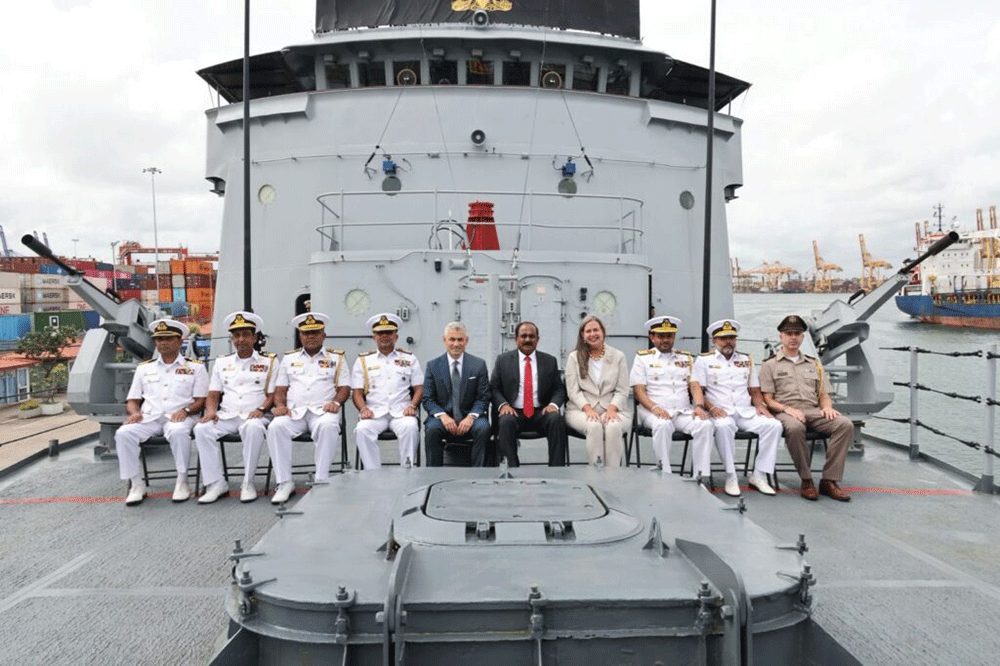
For instance, the need for the USA to strengthen the capabilities of the Sri Lankan Navy is driven by the strategic location of Sri Lanka since it is the gateway to the Indo-Pacific. Notwithstanding such motivations, it cannot be denied that the infrastructure provided to Sri Lanka’s Navy was handy to meet internal challenges as it was during the final stages of the Armed Conflict to destroy arsenals of the LTTE out at sea and the capacity to meet both external and internal threats to and within Sri Lanka.
Similarly, one of China’s primary interests is its Belt and Road Initiative. Towards this end, China has established a solid foot print in Sri Lanka by building and owning solid infrastructure projects for 99 years and more, if it is in China’s interest. However, although benefits from such projects cannot be denied, the open question is whether their scale was established to suit China’s interests or sought by Sri Lanka to suit Sri Lanka’s interests. For instance, the offer to build a 200,000 barrels a day Refinery by Sinopec of China has more to do with serving China’s interests, in view of the decision by the Sri Lankan Government to expand the Refinery at Sapugaskanda to 100,000 barrels a day.
In the case of India, the issues are more complex arising from Sri Lanka’s proximity to India, the cultural and historical heritage shared by both and the presence of the Tamil community in both countries. Consequently, India is extremely conscious of the need to keep a sharp eye and “Control” developments taking place in Sri Lanka in respect of Sri Lanka’s relations with Major Powers. This concern is driven by the notion that the territorial security of India is dependent on Sri Lanka’s Relations with Major Powers; a concern that arises from India’s past territorial history where the territory of India was transformed from a motley group of Princely States into one unified sub-continent and then partitioned into two Nation States under the British Raj. Consequently, the present territory of India has been in existence only since its independence from Colonial Rule in 1947. Hence, the fear of history repeating itself is driven by internal compulsions and by external interventions.
US – SRI LANKA RELATIONS
Against the background of Geopolitical interests presented above, Sri Lanka adopted the Policy of Neutrality in 2019 and this Government continues to exercise and live by its Internationally recognised principles, as it did when Sri Lanka denied landing rights to US Aircraft during the Middle East conflict. Sri Lanka’s Foreign Minister stated that Sri Lanka was “always neutral” when he met the US Assistant Secretary of State for South and Central Asian Affairs to convey Sri Lanka’s appreciation for the assistance rendered to procure fuel during the Middle East crisis and for the maritime vessels and aircraft gifted to Sri Lanka (Daily News, June 23, 2026).
In the meantime, The Island has reported that the “US declares SLN its Indo-Pacific Partner” (June 25, 2026). A statement issued by the US Embassy in Colombo quotes the Assistant Secretary of State as having stated: “Today, we announced the delivery of US satellite communication technology to the Sri Lankan Navy, our Indo-Pacific partner: This secure, real-time connection—representing a transformational upgrade for the Sri Lankan Navy-– will be available aboard their entire fleet of offshore patrol vessels…” (Ibid).
There is no doubt whatsoever that these assets would collectively boost the capabilities of the SL Navy to “strengthen maritime domain awareness, improve operational coordination, support emergency response, help interdict vessels engaged in illicit trafficking etc.” (Ibid). However, the unilateral declaration by US that the SL Navy is a “Indo-Pacific Partner” of the US has NO validity unless such a declaration has the approval of the SL Government. Furthermore, such an approval by the SL Government would compromise its Policy of Neutrality to which the country has pledged.
Therefore, the declaration should be accompanied with a caveat, that being, that the partnership should NOT extend to the entirety of the Indo-Pacific but be limited to Sri Lanka’s Exclusive Economic Zone (EEC). It is only then that the SL Government is Internationally entitled to exercise its rights as a Neutral State, namely, to protect its territory under the UN Law of the Sea. Furthermore, considering the extent of Sri Lanka’s EEC in relation to the extent of the Indian Ocean, the Partnership would be proportionate.
CHINA – SRI LANKA RELATIONS
China’s interest is to consolidate its interests in its Belt and Road Initiative. Towards this end it has attempted to exercise “Control” over Sri Lanka by offering infrastructure projects of a scale that benefits China rather than Sri Lanka as evidenced by the example of the offer by Sinopec Refinery cited above. This example demonstrate that Sri Lanka should be faulted for accepting projects offered without question and when questioned, based on local evaluations of scale to meet Sri Lankan needs as in the case of the existing Refinery at Sapugaskanda, the scale of projects become significantly less. The lesson to be learnt from this experience is that no project offered should be accepted without question in respect of its suitability to Sri Lanka in all respects, if Sri Lanka is not to become a victim of self-inflicted debt traps.
INDIA –SRI LANKA RELATIONS
How India “Controls” Sri Lanka is by making Sri Lanka politically and economically vulnerable and dependent on India, not only through physical connectivity, but also by being a handmaiden in internal political arrangements where power is devolved to Provinces that are a threat to Sri Lanka’s territorial integrity (13th Amendment) and also by focusing development that benefit the Tamil community in Sri Lanka. The end result is to keep relations between communities in Sri Lanka on the “boil”, much against the interests of Sri Lanka to function as a united Nation State.
The proposal to connect Sri Lanka with India with under-water pipelines to transfer petroleum products from the Middle East and Power Grids would make Sri Lanka vulnerable and dependent on India as Germany was with Natural Gas from Russia when Nord-Stream I and II were sabotaged. Similarly, the road access through a Land Bridge connecting India and Sri Lanka would legalize access between the two countries that today takes place illegally because of the disparity in wages and livelihoods.
Despite such possible outcomes, there is a concerted effort by individuals and a body of NGOs who are of the opinion that it is in the best interests of Sri Lanka for Sri Lanka to hitch its wagons to the rising star of India. Others are grateful to India as the first responder to Sri Lanka at times of need, mindless of the weekly destruction of Sri Lanka’s marine resources etc. caused by thousands of fishing boats from India resorting to illegal fishing practices whose value over the years are beyond assessment.
CONCLUSIION
The reason for the recent conflict in the Middle East is all about “Control” of Nation States by Major Powers in pursuit of their Geopolitical interests. The need to “Control” Sri Lanka by the US is because of Sri Lanka’s location to the Indo-Pacific and by China because Sri Lanka is a vital link to its Belt and Road Initiative. On the other hand, Relations with India are influenced and guided by India’s obsession with the sustainability of its territorial integrity because that is what makes India a Major Power. The survival of Sri Lanka in such a complex background depends on how astutely Sri Lanka protects its Policy of Neutrality.
By Neville Ladduwahetty
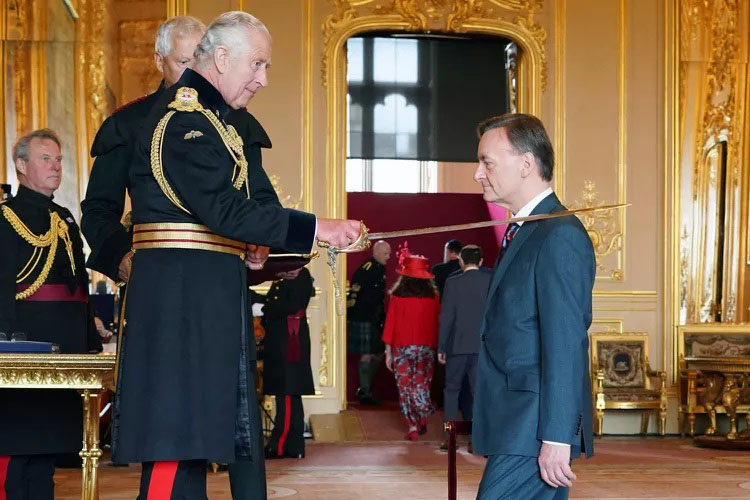
The word “Sir” is classically and linguistically associated with Great Britain and His Majesty’s English Language. As an esteemed prefix, it generally refers to a Knight, but very strictly speaking, that is perhaps a rather narrow and restricted synonym. While a Knight of the British Empire is the most common type of knight people encounter today, Great Britain actually has several different orders of knighthood, as well as an ancient rank that does not belong to any such order at all.
When someone is dubbed a knight in Britain and referred to as “Sir” X, Y or Z, they generally fall into one of three categories. The first is a Knight Bachelor, undoubtedly the oldest rank. This is the most common form of knighthood awarded for public service, arts, or science. In that context, one should think of Sir Elton John, Sir Paul McCartney, or Sir Ian McKellen. It is not a part of an explicit “Order”, like that of the British Empire. It is the oldest mechanical form of knighthood, dating back to the 13th century under King Henry III. The recipients are simply styled as Sir, followed by the first name, such as Sir Ian, without any post-nominal letters like KBE or OBE attached to the end of their name.
The second is a Knight Commander of the Most Excellent Order of the British Empire (KBE). This is a specific group, established relatively recently in 1917 by King George V, to fill a gap for rewarding civilian and military effort during World War I. To qualify to be called “Sir” within this specific order, a man must be appointed as a Knight Commander (KBE) or a Knight Grand Cross (GBE).
The third is a group of Chivalric Orders, the so-called Elite and Ancient Orders. Several highly exclusive, ancient orders of knighthood sit much higher in precedence than the Order of the British Empire. These include the Most Noble Order of the Garter, the pinnacle of British honours founded in 1348, and scrupulously limited to the Monarch, the Prince of Wales, and only 24 other companion members. Then there is the Most Ancient and Most Noble Order of the Thistle, the highest chivalric honour in Scotland. The last of this group is the Most Honourable Order of the Bath; typically awarded to high-ranking military officers and senior civil servants.
The Summary Rule of this entire scenario is that every Knight of the British Empire (KBE) is a British Knight, but not every British Knight is a Knight of the British Empire. If you see a modern British knight who does not have military or diplomatic ties, odds are high that they are actually a Knight Bachelor.
With reference to the title of this presentation, now for the flip side of this, as we see things in our region of the globe. In Great Britain, it is the standard form of address to refer to a Knight as Sir John, Sir Ian etc. However, in Sri Lanka, as well as in the Indian sub-continent, very often people use the word “Sir” as a suffix or a postfix to honour someone and frequently use “X Sir”; the name followed by the word “Sir” as a suffix or postfix.
It is a fascinating linguistic oddity, and Sri Lanka is definitely not alone in this, and most definitely, we are second to none in that outlook. While using “Sir” as a suffix or postfix (e. g., De Silva Sir, Nihal Sir) completely cartwheels over the standard British etiquette, where “Sir” must strictly prefix a first name. This charming practice of using it as a suffix is actually widespread across South Asia and parts of Southeast Asia. It is a classic example of dialectal crossbreeding, where local grammatical structures and cultural norms go to the extent of rewriting even the rules of the standard English as a language.
In a very broad sense, this phenomenon is very definitely seen in the Indian Subcontinent (E.g. Sri Lanka, India, Bangladesh, Nepal, Bhutan and Pakistan). This is arguably where the “Name + Sir” phenomenon is largest and perhaps even the strongest. Across Sri Lanka, India and Bangladesh, you will constantly hear people refer to superiors, teachers, or public figures as Karu Sir, Vijay Sir, Sachin Sir, Shahrukh Sir, or Ahmad Sir, etc.
Then there is the Indian “Ji” Factor: In Indian languages like Hindi or Punjabi, it is a strict cultural taboo to call an elder or a superior by their bare name. People naturally append the respectful suffix “Ji” (e. g., Gandhi-ji, Sharma-ji). It is then no surprise at all that when switching to English, the Indian mind seamlessly swaps the local suffix Ji for the English honorific Sir, thereby turning Vijay-ji into Vijay Sir.
In Hong Kong, a very specific variation of this exists within the police force and civil service. Influenced by decades of British administration, mixed with Cantonese naming customs, junior officers and the public address superiors by their surname followed by “Sir”, such as “Wong-Sir” or “Chan-Sir“. There is even a universal colloquial generic term, “Ah-Sir“, used commonly to address male police officers or teachers.
In the Philippines, while the syntax is slightly different, the sheer density of “Sir/Madam, Ma’am” usage matches that of Sri Lanka. Filipinos deeply value hierarchical courtesy. While they might say “Sir Jason“, it is incredibly common to use “Sir” almost like a pronoun or a mid-sentence suffix punctuation mark when addressing superiors, bosses, or clients, to ensure that respect is suitably maintained conscientiously.
The mismatch between British English and South/Southeast Asian English comes down to how different native cultures view status and intimacy. In South Asia, especially in Sri Lanka, there is the Linguistic Tradition of the suffix, where an extension in the nation’s own language is inserted into a word to enhance its status. In languages like Sinhala (-thuma / –mahathmaya), in Tamil (-ayyah / –avargal), and in Hindi (-ji), respect is always attached to the end of a name. It simply means that forcefully bringing a sleek word that implies social deference to the front, like Sir John, feels syntactically peculiar or even inappropriate to a native speaker of these local languages.
The “First Name Dilemma” is another type of rather quaint occurrence. In the West, calling your boss simply “John” is seen as a gesture that is egalitarian, free and open. In South Asia, calling an elder or superior by their first name feels somewhat jarringly rude. Conversely, using just “Mr Perera” can also feel too cold, official and even distant. “Perera Sir” or “Silva Sir” strikes the perfect culturally mitigatory concession, as it maintains a warm, personal connection by using the surname while also overtly and safely conveying a layer of professional public respect by adding the word “Sir” as a suffix or a postfix.
Yet for all that, it is worth noting that fundamentally, all languages are symbolic expressions of human thought and human intelligence. Whether expressed as spoken, written or sign language, all dialects are means of human communication. The type of words like “Sir” that we use in the English Language and the real context in which they are used indicate our thoughts in our human intellect. When they are used appropriately, they reflect our commitment to uninhibited respect and even admiration. While the British people and even their Monarch might feel quite a bit confused to hear someone called “Perera Sir”, right across Sri Lanka and its neighbouring nations. Yet for all that, it is simply the most natural and fusion technique to bridge and integrate traditional deference and admiration with modern expressive English.
by Dr B. J. C. Perera
Specialist Consultant Paediatrician and Honorary Senior Fellow,
Postgraduate Institute of Medicine, University of Colombo, Sri Lanka.
An independent freelance correspondent.

Tales of Mystery and Suspense – 8
The Murder Room gets its title from a room of that name in a museum dedicated to Victorian memorabilia, including famous murders, which are featured in that room. But the first murder in the story occurs outside, when one of the trustees, who had been against renewing the lease of the building – which would have meant the museum having to close – is set on fire when he comes to the museum late one evening to pick up the car in which he went away for weekends. This was a regular habit, and the murderer had obviously lain in wait, with a can of petrol, and set him on fire.
James
I took several books with me when I went to England earlier this year, but as usual I read hardly any of them, finding enough and more of interest in the shelves of those I stayed with. My first stop was at New College, where, as on several previous occasions I stayed in what is known as the Bishop’s Room, on the topmost storey of the Warden’s Lodgings. Sadly, I shall not stay there again, for my friend who has been Warden there for a decade now, Miles Young, retires this year.
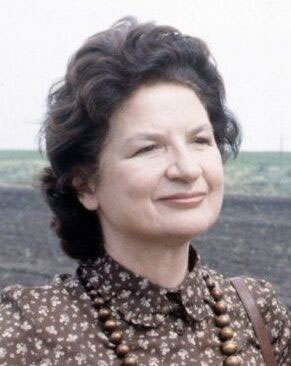
The bookshelves there have much of interest though on the last couple of occasions I have concentrated on the detective stories, which Miles says are not his, but came with the house. The second I read this time was by the generally workmanlike P. D. James, whose Adam Dalgliesh is in the long line of whimsical but efficient detectives that has Hercule Poirot at its head. Though I had not been impressed by the one novel I read, featuring James’ female detective, Dalgliesh, I liked it, and this novel confirmed my affection.
The Murder Room
gets its title from a room of that name in a museum dedicated to Victorian memorabilia, including famous murders, which are featured in that room. But the first murder in the story occurs outside, when one of the trustees, who had been against renewing the lease of the building – which would have meant the museum having to close – is set on fire when he comes to the museum late one evening to pick up the car in which he went away for weekends. This was a regular habit, and the murderer had obviously lain in wait, with a can of petrol, and set him on fire.
The other two trustees, his brother and his sister, obviously benefited from his death, for they promptly renewed the lease. The employees of the museum also clearly benefited, for they had all found some sort of refuge here. These included the caretaker/cleaner, who lived in a cottage on the premises, a manager who was unpaid but used the place for his research, the receptionist, who also looked after the flat at the museum which was used by the sister, and two volunteers plus a gardener’s boy.
The caretaker, Tally, came across the fire before discovery had been intended, for an evening class everyone knew she went to on Fridays had been cancelled. On her way in she was knocked off her bicycle by a speeding car, the driver of which stopped to make sure she was safe, before speeding off again. She manages then to summon everyone else, including Dalgliesh, who had visited the museum for the first time a few days earlier, brought by a friend who relished its strange attractions.
The museum has to be closed for a few days while investigations are carried out, but in the course of them the friend brings some transatlantic visitors, and when they are in the Murder Room a chest (in which a body had been supposed to have been hidden in Victorian times) is opened, and a body found there. That murder, the autopsy indicated, had taken place around the time of the first murder.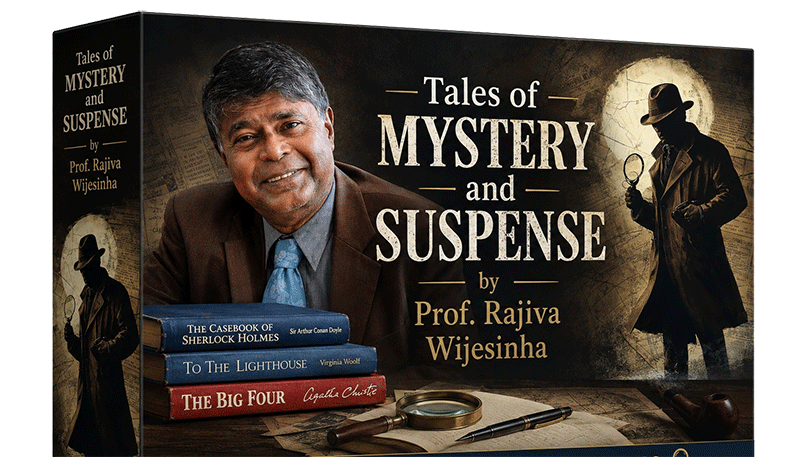
The body was that of a girl who had attended a finishing school part-owned by the Dupayne sister. When Tally, by chance, sees the man who had knocked her down, and identifies him as a Lord who was known for his philanthropy, Dalgliesh realises that there are wheels within wheels here. The Lord confesses that he belonged to a group that met for promiscuous sex in the flat, and that he had planned to meet the girl there but she had not turned up.
Lord Martlesham, when the girl failed to appear, thought he should get away after the fire broke out. It was then that he had bumped into Tally, and his stopping to make sure she was all right indicated that he could not have been the murderer. Dalgliesh then deduced that the murderer had seen the girl at the window of the murder room, from which she must have seen the preparations for the murder. That was why she too had been killed.
Dalgliesh then has a fair idea of who the murderer was, but in waiting for proof, he leaves room for yet another murder to happen. For Tally, who had been mulling over something said on the night of the murder, asking about the petrol that caused the fire, realized that she had not mentioned petrol herself. This happened on her way back to her cottage, and not having a phone herself she goes into the museum to call, and then gets back to her cottage and locks herself in.
But then she hears her cat howling and goes out to find him strung up. She cuts him down, but when she goes back to the cottage the murderer is waiting and knocks her down. That happens in the section called The Third Victim, but this is in fact a boy on a motorbike knocked down by the speeding car of the escaping murderer. So Dalgliesh is able to effect an arrest when he turns up as summoned, and fortunately is in time to resuscitate Tally and send her to hospital.
The reason for the murder and the identity of its perpetrator are then fairly straightforward, though the background to the second murder introduces an element of loose living that contrasts with the Victorian age, or at least the image it projected – undercut though that is by the murders highlighted in the Murder Room with their sexual overtones.
And there is another louche element in the adventures of the gardener’s boy, who lives with a Major who is homosexual, though he declares, truthfully it seems, that he was not attracted at all to the boy but had given him shelter because of his vulnerability. He is generally charming, but capable of rages, in one of which he knocked down the major, though he was forgiven. He had taken shelter with Tally, who was fond of him but decided she preferred to live alone, which was why she had sent him away the day before she was attacked.
The murdered brother was a psychiatrist, and it turns out that the mysterious weekends he spent away from his London home were spent at country inns, where he took long walks to clear his mind of the demons his practice kept bringing into it. His profession also contributed to his death, in addition to his standing in the way of the museum continuing to exist, for one of his patients, connected to the murderer, had set fire to herself.
Solid plotting, with all the loose ends tied up, of incidents and the bizarre cast of characters.

Anguished families left to identify Venezuela quake victims at makeshift morgue

Ukrainian suspect hunted by police after Monaco bomb attack was ‘disguised as a man’

Showers in the Western, Sabaragamuwa and North-western provinces and in Galle, Matara, Kandy, Nuwara-Eliya, Anuradhapura and Mannar districts.

Colombo Law Society objects to judges’ retirement age move

Freedom 250: US Embassy celebrates America’s 250th Independence Day through magic of American cinema

CA dismisses application filed by Yoshitha seeking to quash conspiracy charge in money laundering case

‘Dates have the highest sugar content to fight Coronavirus’

Sunday Island 27 December – Headlines

#SundayIsland 17th December – Headlines

Sunday Island – 28th March

Sunday Island Headlines – 21 March

Sunday Island – 21st February – Headlines
-
 News5 days ago
LAWASIA warns against ad hoc initiative to increase judges’ retirement ages
-
 News4 days ago
Chamuditha to seek removal of injunction on Youtube programme
-
 News7 days ago
Another 1,132 Sri Lankan Personnel to be deployed for United Nations Peacekeeping Missions
-
 Features4 days ago
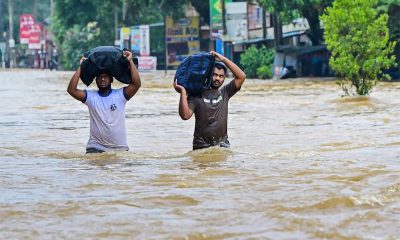
Climate action to bring South Asia together
-

 Features6 days ago
People’s Bank expands digital banking network with 125th cheque deposit kiosk
-
 News1 day ago
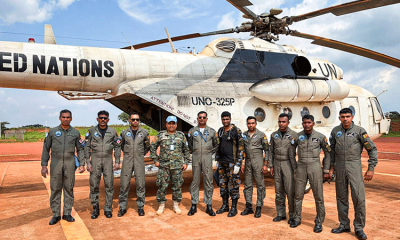
SLAF conducts successful rescue mission under UN command in Central African Republic
-
 News4 days ago
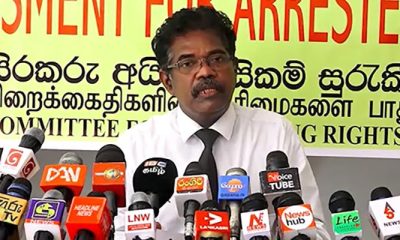
CPRP alleges another death in custody, seeks protection for witness
-
 Midweek Review3 days ago
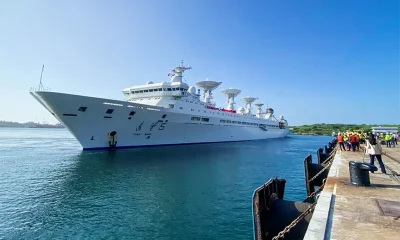
H’tota port’s strategic status remains focal point of geopolitical scrutiny