
Opinion
Rehabilitating the Lion of Lanka


Don David Hewavitharne, who later became the famous Anagarika Dharmapala, was born in Colombo, Ceylon (now Sri Lanka) on September 17, 1864. David Hewavitarne was at the beginning of Sri Lanka’s difficult transformation from a British monarchical colony to an independent sovereign republic in 1972. When the American theosophist, retired military officer, lawyer and journalist Henry Steel Olcott arrived in Colombo in May 1880, David was hardly sixteen (so would have been included among today’s youngest Gen Z’eers in the impossible event of his having been born 161 years later than he actually was, but would have been miles ahead of most of them in his awareness of the necessity of positive social change and reform in accordance with the country’s national genius). Steel Olcott catalysed the work of the native pioneers of the Buddhist revivalist movement like the prominent Buddhist prelate Mirisse Revata and scholar monk Hikkaduwe Siri Sumangala. In the contemporary environment of imperial subjugation and suppression, their exertions would have achieved nothing much without the American’s involvement. The English proficient young David assisted Olcott as his translator.
At this time of fast receding Dharmapala memories, I was moved to write this tribute to the great patriot, social reformer, and Buddhist missionary, by a casual insulting remark that a deputy minister of the current JVP/NPP government (a Colombo district MP) made about this revered national hero, during a recent YouTube chat program: the viciously ignorant minister belonging to the Millennial Generation (in his forties) said that Dharmapala made protesting noises against the well-to-do of the time because he envied them their comfortable lifestyle!
For the information of interested young Sri Lankans who may not know (for no fault of theirs) about Anagarika Dharmapala’s background, I’d like to quote the following paragraph from the brief biography of Anagarika Dharmapala ‘FLAME IN DARKNESS’ (Triratna Grantha Mala, 1980) compiled by Ven. Sangharakshita, an Englishman, who edited the ‘Maha Bodhi’ journal of the Maha Bodhi Society of India founded by Anagarika Dharmapala, for fourteen years (presumably in 1940s and ‘50s):
‘Among the few well-to-do families which, through all vicissitudes stood firmly and fearlessly on the side of their ancestral faith, was the Hewavitarne family of Matara in South Ceylon. Hewavitarne Dingiri Appuhamy, the first member of this family with whom we are concerned, belonged to the large and respected goigama or cultivator class. He had two sons, both of whom exhibited the same devotion to the Dharma as their father. One of them became a bhikshu known as Hittatiye Atthadassi Thera and occupied the incumbency of Hittatiya Rajamaha Vihara. His teacher, Mirisse Revata Thera, was fourth in pupillary succession from the Sangharaia Saranankara, the greatest name in eighteenth century Ceylon Buddhism. The other son, Don Carolis Hewavitarne migrated to Colombo, established there a furniture manufacturing business in the Pettah area, and married the daughter of a Colombo businessman, Andris Perera Dharmagunawardene, who had donated a piece of land at Maligakanda, erected on it the first Pirivena of Buddhist monastic college in Ceylon, and brought a monk from the remote village of Hikkaduwa to be its principal. Since then, the names of Vidyodaya Pirivena and Hikkaduwa Siri Sumangala Maha Nayaka Thera, have passed, inseparably united, into the history of world Buddhism. Through the halls of this great institution of Buddhist learning, unrivalled through the length and breadth of Ceylon, have passed monks from Burma, Siam, India, Japan and China, and the memory of the great Buddhist scholar, mathematician and expert in comparative religion who for so many decades guided its destinies is revered wherever the Dharma taught in the Pali Scriptures is known.’
According to Ven. Sangharakshita, the young Don Carolis Hewavitarne and his wife Mallika desired a son, for different reasons, though. Mudliyar Hewavitarne wanted a son to inherit and continue his furniture business, but his wife equally seriously wished for a son who would become a bhikshu to advance the cause of Buddhism. They were overjoyed when David was born on the night of September 17, 1864, in the Pettah district of Colombo, where ‘the national religion and culture had fallen to the lowest pitch of degeneration, there came, as though to strike the evil at its very heart, the birth of Dharmapala like a vivid flash of lightning from a black and stormy sky.’
David grew up in a devoutly religious environment at home. ‘Without that early religious training’, writes Ven. Sangharakshita, ‘young David Hewavitarne might have grown up to wear top hat and trousers, speaking English to his family and Sinhalese to the servants, like thousands of his contemporaries, and Dharmapala, the Lion of Lanka, might never have been born, – and the greatness of the difference which such a calamity would have made to India, Buddhism, and the world, it is now impossible for us to gauge. It should never be forgotten that the piety of the old Sinhala type was the plinth and foundation of Dharmapal’s whole character.’
There were no Buddhist places of worship in Colombo at the time of David Hewavitarne’s birth. Devout Buddhists had to go to the Kelaniya Viharaya ten miles north of the city on full-moon poya days for their religious observances; the only other viharaya was at Ratmalana, seven miles south of Colombo, where the learned Buddhist monk Walane Nahimi (Chief Monk) lived. Neither were there any schools for the education of Buddhist children; there were only a few schools even for the secular education of the Sinhala speaking children; Buddhists’ attempts to establish schools for their children were discouraged on various pretexts. This is mentioned in Anagarika’s short autobiography in English MY LIFE STORY (edited and completed from the author’s diaries and other writings by Lakshman Jayawardane, Media Advisor, Maha Bodhi Society of Sri Lanka, in 2013). The deplorable situation of the Buddhist Sinhalese in the capital city of their native homeland from time time immemorial was indicative of the almost total sweeping away of the traditional Sinhalese Buddhist culture of the country by the successive tsunamis of Portuguese, Dutch and British invasions. Fortunately, today, this is not more than a bitter memory in our national consciousness, which, however, will remain indelible for a long time to come.
Let bygones be bygones, some people may murmur. True, generally we must. But certain past injustices in the form of racial and religious discrimination that we suffered under foreign occupation are worth remembering for properly appreciating the freedoms we Sri Lankans of diverse ethnicities, religions, and cultures enjoy today based on the principle of equality in this common homeland of ours; recalling the sordid iniquities we were subjected to by foreign intruders, and the commemoration of the visionary leaders who made emancipation from them a reality, are as cogently necessary for preventing new forms of barbarism from destroying our freedom and wellbeing again.
Under the earlier Dutch rulers, Buddhists had been compelled to declare themselves as Christians. The British enforced the same law for 70 years until they were compelled to abrogate it in 1884. Henry Steel Olcott mentioned above had it repealed by making representations to the Secretary of State for the Colonies in London on behalf of the Buddhists of Ceylon (Sri Lanka). Children born of Buddhist parents in Colombo at that time had to be taken to a Christian church for the minister there to record the names of the parents, and the dates of birth of the babies who were given Christian names by him. In territories under European occupation including Colombo most Sinhalese were given an English Christian name and a Portuguese surname if they were Catholic ‘converts’ or an English Christian name and a Sinhalese surname if they were ‘converted’ to Anglicanism. The majority of the Sinhalese in these areas were ashamed or afraid to own themselves to be Buddhists. Only those in the interior villages were relatively free to observe the religion of their forefathers without hindrance. Even there they were not free from the attacks of thousands of catechists who went about disparaging and disgracing the Buddhist faith for twenty rupees a month. Buddhist boys and girls were peremptorily taught Bible tracts and subliminally influenced to turn against their own religion.
In these bleak circumstances, the members of the Sangha also degenerated spiritually and intellectually. But there were a few notable exceptions who were devout, disciplined, and learned and who somehow managed to keep the dimly flickering flame of the Buddha Dhamma alive. It was some of these bhikkhus who did much to save the day for the Buddhists. In 1873, in response to hostile Christian activism against Buddhists in the form of proselytizing activities through the school system and the publication and distribution of books and pamphlets in the vernaculars among the non-Christians, one of these monks, Ven. Mohottiwatte/Migettuwatte Gunananda Thera, challenged the Christians to defend their faith at a debate. This challenge was accepted by the Christian clergy. The debate took place as arranged by mutual consent. It concluded with a decisive victory to the Buddhist monk. The debate received wide coverage in the press, and it was news of this that attracted here theosophists Colonel Olcott and Madame Blavatsky who were instrumental in initiating a long overdue re-awakening of Buddhist education in the country. The young David Hewavitarne was a lad of 15 when they arrived in Colombo in 1880, and he accompanied them as their translator on their travels across the island.
The imperialists made every attempt to teach the children to be ashamed of and disown their own race, religion, language, culture, and the colour of their skin. In the case of Don David Hewavitharne, he had to be admitted to the Pettah Roman Catholic School (also known as St. Mary’s School), where he remained from age 6 to 10 years. The reason for this was that around 1870 the government closed all Buddhist Temple schools in the country because children attending these places of instruction were found by a government-appointed commission “to be too loyal to the traditions of old Ceylon” (which most probably meant that they were difficult to convert). After 1870, therefore, Sinhalese Buddhist children were denied an opportunity to receive any religious instruction in a school unless they got it at home. Chances of their getting any secular education were also few, because the government said that they had not enough money to establish schools for Sinhalese children.
Meanwhile the Christian missionaries opened their schools throughout the island. Their real motives were candidly revealed later to David by Warden Miller of S. Thomas’ College in Colombo which he attended after receiving his primary education in the Roman Catholic school mentioned above, when he told him: “We don’t come to teach you English, but we come to Ceylon to convert you”. His parents, meanwhile, saw to it that he had a normal Buddhist training at home, as already pointed out . Even as a child he knew that he owed no allegiance to the Christian religion. When the Catholic Bishop Hilarian Sillani visited the school, the young David was asked to kneel to kiss the ring on the clergyman’s finger as the other children were required to do; but he refused to obey that customary ritual.
Buddhist parents in Colombo at that time had no choice but to be content with either a government or a missionary school for their children. David’s parents chose the second for him. It was as a result of this that he was admitted, at age six, to the Pettah Roman Catholic School (St Mary’s School). At this school he became a favourite with the padres (fathers) because of his good behaviour and his studious disposition. He used to take flowers from his father’s garden to the school to decorate the altars there on feast days and he also took part in the church services. The padres treated the Buddhist children kindly, but they also constantly ridiculed and insulted the Buddhist religion which was their proud heritage, saying such things as “Look at your mud image. You are worshipping clay”. Some impressionable young boys, thus humiliated, got converted to Christianity, but David never turned away from the Buddhist training he had had at home.
After leaving St Mary’s School at ten, he passed through a number of other schools, first in a Sinhalese medium school learning Sinhalese and then in St Benedict’s Institute, submitting himself to further instruction in Christianity. In 1879, when he was 15, he found admission to ‘S. Thomas’ Collegiate’ (as he calls it), where he remained until 1883. It was during this time that David Hewavitharne came in touch with Buddhist bhikkhus (there were not many in Colombo then) and eventually with theosophists Colonel Olcott and Madame Blavatsky.
David Hewavitharne had to leave S. Thomas’ College in 1883, even before passing the London Matriculation examination because his father didn’t want his son to go to a Christian school after the Catholic riots of March 1883: Some fanatical Catholics attacked a peaceful Buddhist procession that was passing St. Lucia’s Church in Kotahena. Ven. Migettuwatte Thera who had taken part in the Panadura Debate was living at a temple in Kotahena at that time, but this had no connection with the incident.
Anagarika Dharmapala began his career of selfless service to his people and religion in these circumstances. He was not a Buddhist fanatic or a Sinhalese racist, but a patriot who bravely stood up to defend his people and their religion from religious fanatics and foreign racists. The Temperance Movement he initiated around the turn of the last century later metamorphosed into an eventually successful national agitation for independence drawing into its ranks many patriots that his example had inspired.
By Rohana R. Wasala

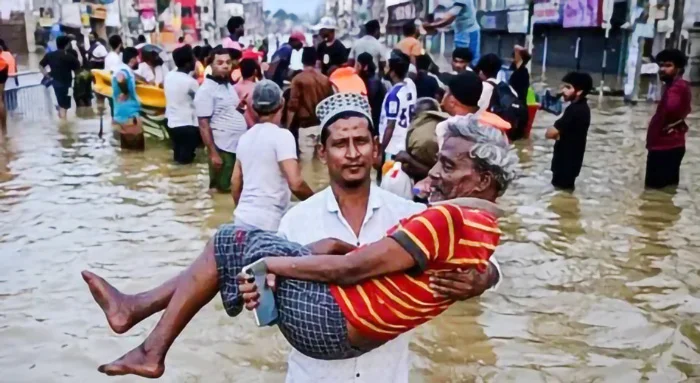
The Tsunami of 2004 struck our coasts, but the recent Cyclone Ditwah has delivered an unprecedented blow, devastating and traumatising the entire country. President Anura Kumara Dissanayake rightly called it the “largest and most challenging natural disaster” in Sri Lanka’s history.
The toll is staggering: Over 600 people were confirmed dead, with hundreds still missing. More than 2 million citizens – nearly one in ten people—have been affected. 41,000 to 86,000 houses are damaged or completely destroyed. The damage is widespread, with 22 of the island’s 25 districts declared disaster-affected areas. A provisional economic damage estimate reaching up to USD 7 billion—a figure that instantly consumes about 7% of our national GDP. This was not merely a natural disaster; it was a crisis amplified by systemic failure, culminating in a catastrophe that now demands a radical, long-term policy response.
Unlike the Tsunami, the destruction to our vital inland infrastructure—roads, bridges, railway lines, and power networks—has been colossal, crippling the nation’s ability to recover. Over 25,000 members of the tri-forces have been mobilised, and the nation rightly hails their courageous and relentless efforts in rescue and relief. They should now be graduated from ‘Rana Viruvo’ to RUN VIRUVO considering the efforts they are still putting into the relief operations in this unprecedented calamity. But the scale of the rebuilding effort requires a permanently sustained unified national mechanism, perhaps learning from their rich experiences.
Why did devastation reach this cataclysmic level?
Unlike a sudden earthquake/Tsunami, a cyclone’s path is largely traceable. Yet, the “post-mortem” on Ditwah reveals a horrifying truth: the storm’s devastation was amplified by our own institutional failures.
The India Meteorological Department (IMD) which runs the Regional Specialised Meteorological Centre (RMSC) monitors the oceans in this region and issues alerts for cyclones. It serves all the regional countries — Bangladesh, Maldives, Myanmar, Oman, Pakistan, Sri Lanka and Thailand. The RMSC first predicted the formation of a depression as early as November 13 and issued an alert over the possibility of a cyclone forming on November 20. From November 23 onwards, IMD/RMSC had been routinely sharing frequent weather updates with Sri Lanka.
Robust models from the India Meteorological Department and the RMSC provided ample warnings of the depression and subsequent cyclonic intensification. Some of these predictions by the RMC and even the BBC forecasted rainfall over 300- 400 mm which could go up to even half a meter per day. True to their forecasts, Matale tragically received unprecedented rainfall of around 520 mm, triggering fatal landslides. Ditwah’s impact was worsened by its unusually slow movement over the island which sustained heavy rainfall over several days.
The Governance Gap
The critical breakdown occurred between the scientific prediction and the state’s executive arm. Warnings, if not taken seriously or acted upon, become meaningless data points. The core issue is a fragmented disaster management system that lacks the “unified command structure” required for real-time data sharing and rapid deployment. As one analyst noted, the disaster delivered a hard lesson: we entered one of our worst natural disasters in decades without a functioning national strategy and with a severe deficit in “adaptive capacity.
Scientific forecasts were not translated into an appropriate, urgent disaster preparedness program by the Sri Lankan state apparatus. Public reports indicate that national preparedness was woefully short of what was needed. The warnings failed to translate into a coherent, proactive response into an appropriate disaster preparedness action program on the island. This failure points directly to long-standing institutional deficits.
The Strategic Imperative: Dedicated Workforce for a $7B Recovery
President Anura Kumara Dissanayake rightly emphasised that restoring public life requires a unified operational mechanism that goes beyond normal state administration. To tackle this immense task, the Government has established a ‘Rebuilding Sri Lanka Fund’ to finance the medium- and long-term recovery, including essential infrastructure and public health issues.
This newly established ‘Rebuilding Sri Lanka Fund’ addresses the financial cost, but it does not solve the fundamental manpower crisis which is a key bottleneck in retarding the progress of this formidable undertaking. Rebuilding 247 kilometers of impacted roads, restoring two-thirds of unusable railway lines, clearing hundreds of landslides, and repairing crucial irrigation systems demands a sustained, disciplined, and massive workforce that normal state administration simply cannot provide. Furthermore, with the changing climate, events of this nature and magnitude may be more frequent in the future.
As such, there is a moral call to a strategic imperative. The immediate, ad-hoc spontaneous public volunteerism is commendable, but the scale of the task ahead requires a permanent, non-partisan national investment in human resources. The time for piecemeal recovery programs is over. Ditwah has forced the issue of structural accountability and national capacity onto the policy agenda.
A Call for Mandatory National Service
One of the most responsible paths forward is to utilise this crisis to institutionalise a robust National Service System, transforming a generation of youth into a standing army for climate resilience and nation-building. To fail to do so would be to guarantee that the next storm will bring an even higher price.
Sri Lanka cannot afford to be unprepared again. The solution is to immediately mobilise and, for the long term, institutionalise the patriotic energy of our youth into a robust, structured National Service System. This service should be more than just disaster relief; it is a long-term investment that will:
i) Build the Nation: Provide a rapid-response labour force for future disasters, infrastructure projects, and conservation efforts.
ii) Forge Character: Instill essential skills like discipline, leadership, accountability, and responsibility in our youth, thereby contributing to lower rates of substance abuse and crime.
iii) Strengthen Unity: Promote social cohesion and reinforce national identity by having youth from all backgrounds work together for a common cause.
The legal framework for such a move already exists. The Mobilisation and Supplementary Forces Act, No. 40 of 1985, already gives the government the powers to issue a National Service Order to enlist people in a National Armed Reserve. This mechanism can be adapted to establish a non-military, civilian-focused service.
Sri Lanka already has a government supported National Volunteer Service affiliated to her Social Services Department. It coordinates volunteers, develops management systems, and works with partners like the UN volunteers. This service can be improved and upgraded to tackle challenges in natural and/or human induced disasters which are going to be more frequent with greater intensity, at times.
In the immediate term, the large number of existing volunteers dispersed all over the island need to be engaged as understudy groups, working directly alongside the armed forces and government departments in the recovery process which is already happening in a number of instances.
Ditwah is our wake-up call for longer-term strategic planning and policy reforms. Alongside reacting to catastrophes in a piecemeal manner in the short-term, we must systematically start building a resilient nation with a vision for the future. Investing in a structured, mandatory Civilian National Service is the only way to safeguard our future against the inevitable challenges of climate change and to truly rebuild Sri Lanka.
Globally over 60 countries have national service portfolios mostly of military nature. Both Germany and France have recently reintroduced their national services to meet their own specific needs. In the US, the National Community Service centers around the Corporation for National and Community Service (CNCS), a federal agency that runs programs like AmeriCorps and Senior Corps, mobilising millions of Americans in service to address needs in education, disaster relief, environment, and more, fostering civic duty and offering educational awards for service.
Incorporate National Service into Educational Reforms
We must mobilize our youthful energy into a national service portfolio unique to our own needs giving due recognition to our history, geography and culture. As a long-term investment, this should be initiated while children are still in school, preparing them mentally and physically to contribute to nation-building.
A well-designed National Volunteer Community Service would instill discipline and foster essential skills like leadership, responsibility, and mutual respect, while contributing at the same time to national development. We can tailor this service to tackle our unique challenges in public safety, disaster relief, and environment conservation.
Existing school programmes like scouting and cadeting can be innovatively transformed to lay a sound foundation for this life-changing National Service for all schoolchildren. According to the initial estimates of UNICEF, over 275,000 children are among the 1.4 million people affected both physically and mentally who need careful rehabilitation.
The current educational reforms are an ideal platform to impart crucial values in patriotism and introduce essential skills like time management, discipline, and accountability. This system could not only build successful individuals but also help decrease social issues like substance abuse and crime among youth.
In the immediate future, to meet the demands of the recovery effort now, currently available volunteers should be engaged as understudy groups, working alongside the armed forces and government departments involved in the rebuilding process. The long-term investment in a Mandatory National Service, on the other hand, will strengthen our national identity and contribute to the “unified operational mechanism” the President has called for.
The author can be contacted at nimsavg@gmail.com
by Emeritus Professor
Nimal Gunatilleke

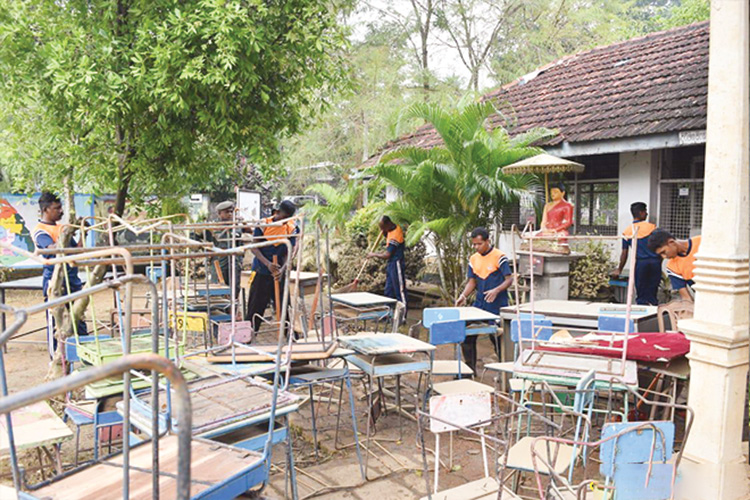
A call to transform schools from shelters of safety into sanctuaries of solidarity
Sri Lanka has faced one of the most devastating natural disasters in its post-independence history. Cyclone Ditwah, with its torrential rains, landslides, flash floods, and widespread displacement, has left an imprint on the nation that will be remembered for decades. While rescue teams continue to work tirelessly and communities rush to rebuild shattered homes and infrastructure, the nation’s disaster assessment is evolving by the day. Funds from government channels, private donations, and the Sri Lankan diaspora are being mobilised and monitored with care. Humanitarian assistance—from the tri-forces and police to religious institutions and village communities—has surged with extraordinary compassion, but as in every disaster, the challenge ahead is not only about restoring physical structures; it is also about restoring the social and emotional fabric of our people for a sustainable future.
Schools on the Frontline of Recovery
The Ministry of Education is now faced with a difficult but essential question: When and how should schools reopen? The complexity of the problem is daunting. Hundreds of schools are either partially submerged, structurally damaged, or being used as temporary shelters, bridges and access roads have collapsed, and teachers and students in highly affected districts have lost family members, homes, and belongings. And yet, not all regions have suffered to the same degree. Some schools remain fully functional, while others will require weeks of rehabilitation.
The country has navigated a similar challenge before. In 2005, following the tsunami that hit mainly the coastal areas of the island, the education system faced a monumental recovery phase, requiring temporary learning spaces, psychosocial support units, and curriculum adjustments. During the COVID-19 pandemic, schools reopened in staggered phases with special protocols. International schools and private educational institutions, with greater autonomy, are likely to restart their academic calendar earlier. Regardless of whether a school belongs to the national, provincial, Pirivena, or international sector, however, education must restart sooner rather than later. The reopening of schools is not merely an administrative decision; it is a symbolic and structural step toward national healing and a restorative future for the country.
Disasters Do Not Discriminate — Neither Should Education
Just like the tsunami of 2004, the major floods of 2016, the landslides of Aranayake (2016), Meeriyabedda (2014), and Badulla (2022), and the Covid-19 pandemic (2021), the cyclone Ditwah has once again exposed the fragile but deeply profound truth that natural phenomena do not recognize distinctions created by humans. Floodwaters do not differentiate between provinces, school systems, or social classes; landslides do not check national exam results before destroying a home; and suffering does not pause to ask whether a child is from a rural Mahaweli village or an elite urban suburb.
In this context, educational institutions have a responsibility that goes far beyond exams and syllabi. This aligns profoundly with an often-cited principle of Jesuit education articulated in 2000 by Fr. Peter-Hans Kolvenbach, S.J., the former Superior General of the Society of Jesus:
Tomorrow’s whole person cannot be whole without an educated awareness of society and culture, with which to contribute socially, generously, in the real world. Tomorrow’s “whole person” must have, in brief, a well-educated solidarity… learned through “contact” rather than “concepts.” When the heart is touched by direct experience, the mind may be challenged to change. Personal involvement with innocent suffering, with the injustice others suffer, is the catalyst for solidarity which then gives rise to intellectual inquiry and moral reflection.”
In this sense, schools must guide children to process what they have witnessed—directly or indirectly—and transform these experiences into moral resilience, empathy, environmental consciousness, and collective responsibility. In doing so, one should bear in mind that every child in Sri Lanka has experienced Cyclone Ditwah in some way:
Children Who Faced the Disaster Directly:
Some children lived through the cyclone in the most harrowing ways—watching floodwaters creep into their homes, escaping rising torrents, or fleeing as landslides tore through familiar ground. Their memories are filled with the sound of rushing water, collapsing earth, and the frantic efforts of parents and neighbours, losing their family members, and trying to keep everyone safe.
Children Who Supported Frontline Families:
Others experienced the crisis through the lens of responsibility. They watched fathers, mothers, siblings, or relatives join rescue teams, distribute supplies, or help evacuate neighbours. These children carried a different kind of fear—waiting in silence, praying that their loved ones would return safely from dangerous missions.
Children Who Witnessed the Disaster Through Media:
Many encountered the cyclone from within their homes or shelters, glued to phones, televisions, and social media feeds. They saw images of villages underwater, families stranded on rooftops, frantic cries for help, boats battling fierce currents, and choppers airlifting stranded people. Even from a distance, these scenes left deep emotional imprints.
Children Who Internalised the Atmosphere of Fear:
Some were not exposed directly to images or destruction, but absorbed the tension in their households—whispered conversations, worried faces, disrupted routines, and sleepless nights. Their experience was shaped by the emotional climate around them: the uncertainty, the stress, and the unspoken fear shared by the adults they depend on.
Children Who Got Involved in Relief Efforts:
Across Sri Lanka, countless children became active participants in relief efforts—some spontaneously, others through families, schools, churches, temples, mosques, and youth groups. Individually, they helped neighbors carry belongings, comfort younger children who were frightened, fetch water and dry rations, and assist the elderly in evacuation centers. Within families, many helped prepare meals for displaced people, sorted clothing donations, packed dry-food parcels, and joined parents in visiting affected households. Through organizations, such as temples, churches, mosques, charity foundations, school associations, clubs, scout groups, Girl Guides, Sunday school units, youth groups, and student unions, children coordinated collection drives, raised funds, gathered books and uniforms for those who are affected, and volunteered at distribution points. These acts, small and large, are beacons of the nation’s hope, revealing that even a crisis as destructive as Cyclone Ditwah, Sri Lankan children were not only making meaning of suffering, but also cultivating compassion, solidarity, and shared responsibility.
In one way or another, Sri Lanka’s children have been touched by the experience. Their hearts are stirred. Their minds are open. While not all trauma comes from direct contact, indirect exposure can be equally jarring, especially for younger children; their psychological, emotional, and social well-being must be handled with sensitivity and foresight. This moment, therefore, is an educational opportunity of rare depth—if we have the courage and creativity to embrace it.
A National Post-Cyclone Reflection Period (NPCRP)?
Once schools reopen, no child should simply return to the classroom as if nothing happened. A top-down insistence on “catching up” academically without addressing emotional wounds will only store up psychological problems for the future. Instead, schools should designate an initial period for reflection, storytelling, sharing, healing, and meaning-making. Hence, a mandatory National Post-Cyclone Reflection Period (NPCRP) is not merely a “feel-good” recommendation. It draws from post-tsunami educational reforms both in Sri Lanka (2004) and in Japan (2011), WHO frameworks for psychosocial healing in schools, UNICEF guidelines on post-disaster learning environments, and our own cultural traditions of collective mourning and remembrance in Sri Lanka. In Sri Lanka, villages often come together after a death for almsgivings, month-mind ceremonies, etc. Our religions—Buddhism, Christianity, Islam, and Hinduism—each emphasize compassion, reflective mourning, and community healing. Why should schools not embody these cultural strengths after a catastrophe that has impacted an entire nation?
(To be concluded)
(Dr. Rashmi M. Fernando, S.J., is a Jesuit priest, educator, and special assistant to the provost at Loyola Marymount University, Los Angeles, California, USA.).
by Dr. Rashmi M. Fernando, S.J.
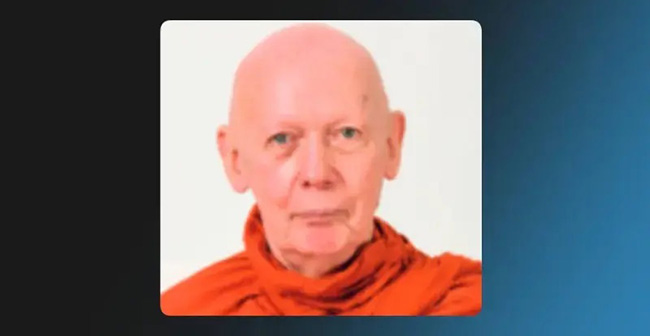
Danish Monk Who Revolutionised Digital Buddhism and World’s Buddhist Media
The Buddhist community in Sri Lanka and around the world is mourning the passing of Venerable Mettavihari Denmarke, the Danish-born monk whose pioneering work transformed the modern dissemination of Theravada Buddhism. He passed away peacefully in Denmark recently, after battling with cancer.
Born Jacub Jacobson, a Christian and a successful businessman in Denmark for more than 18 years, he was drawn to the timeless truth of the Four Noble Truths and the serenity of the Noble Eightfold Path. This spiritual awakening led him to the Buddhist Order, where he was ordained under Ven. Agga Maha Panditha Madihe Pannaseeha Maha Nayake Thera, receiving the name Bhikkhu Mettavihari.
A Life Rooted in Sri Lanka
Venerable Mettavihari first arrived in Sri Lanka in 1969 and immediately felt a deep connection to the island and its people. Inspired by the purity of the Dhamma, he made Sri Lanka his permanent home. In 1988, both he and his wife entered the Buddhist Order – he as a monk and she as a nun dedicating themselves wholeheartedly to the Sasana.
Remembered for Compassion and Humility
I was fortunate to associate with him for over 10 years on several projects. His kindness towards all living beings and his sincere practice of the Dhamma were exemplary even for monks.
I recall one occasion when he attended a full-day workshop on neuroscience and Buddhism simply to encourage me. He stayed throughout, offering blessings and support. That day the devotees responsible for bringing Dana were late, yet he asked only for a piece of bread, as he was committed to maintaining the Vinaya discipline of eating before noon.
He was often seen walking barefoot on alms rounds gentle, humble, and entirely detached from worldly comforts.
His studio was always open to me, welcoming any noble work and encouraging efforts to help people lead meaningful, wholesome lives.
He was a strict Vinaya practitioner, a monk of exceptional discipline, simplicity, integrity, compassion, loving-kindness, and empathy that were beyond imagination.
A Pioneer of Digital Buddhism
Before his ordination, Venerable Mettavihari worked in the IT field in Denmark. He used this expertise to usher Buddhism into the digital age.
Through metta.lk, he created one of the world’s earliest online Buddhist databases, digitising the Tripitaka and making it available in three languages. He also provided email services to temples and ensured that Dhammapada verses accompanied each message quietly spreading the Dhamma across the globe.
Founder of Dharmavahini – Sri Lanka’s First Buddhist TV Channel
He founded Dharmavahini, Sri Lanka’s first Buddhist television channel, run by a small team of volunteers with minimal resources. More than a broadcaster, Dharmavahini was his effort to restore forgotten values in Sri Lankan society.
Today, it remains a landmark contribution to Buddhist media.
Educational Reformer – Founder of Learn TV
After witnessing the educational challenges faced by rural children following the 2004 tsunami, Venerable Mettavihari launched Learn TV, a 24-hour educational channel developed with the Ministry of Education.
This enabled thousands of students, especially those without tuition or teachers, to receive continuous, curriculum-based lessons from home.
A Monk Who Became Sri Lankan at Heart
Fluent in Sinhala and immersed in Sri Lankan culture, he often referred to himself simply as “a Sri Lankan.” During a conversation with friends, he humorously admitted that speaking Danish had become difficult, “because I am now a Sri Lankan.”
Noble Life and a Lasting Legacy
Most Venerable Mettavihari (aged 80)
With boundless compassion and humility, he uplifted countless lives through education, media, technology, and the Dhamma.
His legacy includes:
- Digitising the Tripitaka and pioneering online Buddhist resources
- Establishing Dharmavahini, Sri Lanka’s first Buddhist TV channel
- Launching Learn TV to uplift rural education
- Advancing global Buddhist communication through IT
- Strengthening moral values in Sri Lankan society
He was also an ardent supporter of the Light of Asia Foundation since its inception. He supported and guided the production of the Siddhartha movie, the establishment of the Sakya Kingdom, the International Film Festival, and, just a few months ago, he participated in the first production of a short video series on the Sutta which is currently under production and expected to be launched soon.
His life stands as a rare example of innovation, devotion, and deep spiritual conviction.
Venerable Mettavihari passed away mindfully at his home in Denmark.
His passing is a profound loss not only for Sri Lanka, but for the world.
May this noble monk attain the supreme bliss of Nibbana
Lalith de Silva
Former President, Vidyalankara Maha Pirivena Trustee, Light of Asia Foundation

Cabinet approves recruitment of 2,284 to government service

Cabinet green light to obtain a grant from the Asia Pacific Disaster Response Fund for post – disaster relief and rehabilitation activities
Cabinet approves establishment of two 50 MW wind power stations in Mullikulum, Mannar region
Cabinet approves the purchase of vehicles to improve the primary health care system across the island
Cabinet approves the transfer of the constructions and land reserved for the Kiinniya University to the Ministry of Foreign Affairs, Foreign Employment, and Tourism

More than 30 dead after Myanmar military air strike hits hospital

‘Dates have the highest sugar content to fight Coronavirus’

Sunday Island 27 December – Headlines

#SundayIsland 17th December – Headlines

Sunday Island – 28th March

Sunday Island Headlines – 21 March

Sunday Island – 21st February – Headlines
-

 News4 days ago
Over 35,000 drug offenders nabbed in 36 days
-
 Features2 days ago
Finally, Mahinda Yapa sets the record straight
-
 Business6 days ago
LOLC Finance Factoring powers business growth
-
 News3 days ago
Cyclone Ditwah leaves Sri Lanka’s biodiversity in ruins: Top scientist warns of unseen ecological disaster
-

 News6 days ago
CPC delegation meets JVP for talks on disaster response
-
 News6 days ago
A 6th Year Accolade: The Eternal Opulence of My Fair Lady
-

 News4 days ago
Rising water level in Malwathu Oya triggers alert in Thanthirimale
-
 Features5 days ago
The Catastrophic Impact of Tropical Cyclone Ditwah on Sri Lanka: