
News
Reflections on a Remarkable Legacy

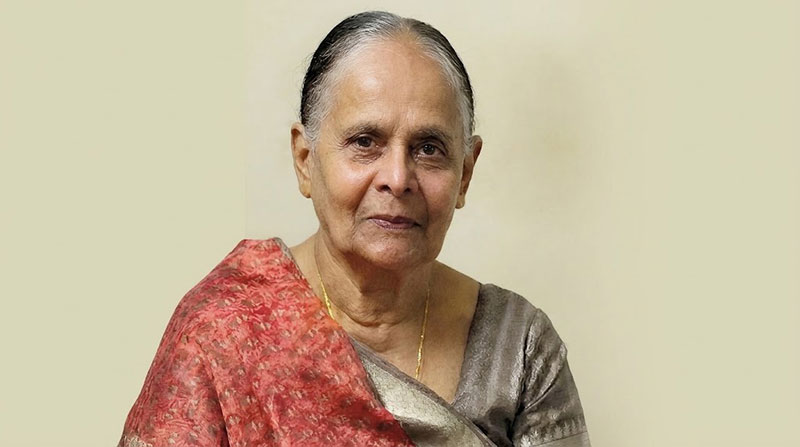
95th Birth Anniversary of Mrs. B.M Alagoda
More than spoken words, it is a deeper psychological resonance that binds individuals across a lifetime. Mrs. Alagoda, fondly addressed as Kumari embodied remarkable qualities that she nurtured with humility, using them to educate diverse communities about health and to uplift their well-being. Her 95th birth anniversary, falling on August 29 is not merely a passing moment, but a meaningful occasion to honour a distinguished pioneer in public health education from the latter part of the past century. She was also the first lady to be appointed Health Educator within the Ministry of Health.
My first encounter with Mrs. Alagoda was when she participated in the professional development programme in Health Education at the NIHS (then known as the Institute of Hygiene) in 1969. I had the rare opportunity to observe the training sessions which spanned three months.
The programme was coordinated by Mr. Siri Dangalla, a recognized health educator of the time, along with his colleagues. Late Dr. C. H. Piyaratne contributed his extensive knowledge and experience in health education, having recently completed his PhD programme in Michigan, USA. Dr. Piyaratne later went on to serve as Regional Advisor in Health Education at SEARO WHO.
Subsequently Mrs Alagoda joined the cadre of Health Educators within the MOH system, adding to the relatively small number of professionals in this field at the time. She provided valuable expertise to field level staff playing a leading role in the formulation of health education programmes at various levels. In addition, she was prominently involved in health exhibitions, school health education programmes, and community group formation, playing a dynamic role in the Hindagala multi disciplinary project for three years and latterly in the Peradeniya University Medical Faculty initiated Girandurukotte Health Development Project where she became a respected researcher.
Mrs Alagoda’s retirement philosophy is characterized by optimism and a desire for continuity. Her approach to a second career was driven by making the best of her expertise, engaging in enjoyable activities, and building upon her exciting career.
Post-retirement, she joined the Kandy District Water Supply and Sanitation Project funded by FINNIDA, serving as a Health Educator during the period 1987-1994.
She built a working life that brought joy both to herself and to others. People saw her not merely as a professional, but as a person of warmth and humanity. A teacher par excellence, she lived by the principle: “When you learn, teach, and when you get, give” (Maya Angelou).
She firmly believed that every meaningful life is founded on one essential principle—love: love for oneself, for one’s family, and for all living beings. In this, she stood as a true embodiment of love and affection.
Happiness, she observed, arises when the heart is peaceful and content, and when we learn to appreciate what we already have. Being with others, she believed, can be powerful—almost magical. Above all, she found her greatest happiness in the happiness of her children.
Mrs Alagoda asserts that a healthy mind and a positive attitude are fundamental to a long life. While health changes are inevitable with age, she emphasizes that it is how one manages these changes that truly matters. She highlights altruism as a key factor in longevity—an encouraging insight for many older individuals who have devoted much of their lives to serving others.
She maintained deep and meaningful connections with family, friends, and the wider community, thereby cultivating a strong sense of belonging and mutual support. Such emotional resilience helps mitigate stress and promotes mental well-being, all of which contribute to an extended lifespan, she notes.
Mrs Alagoda also cites inspiring examples of individuals who have aged gracefully and realistically, embracing each stage of later life with dignity and purpose. Spirituality, appreciation, and gratitude remained strong pillars in her life, consistently guiding her altruistic pursuits and forming an integral part of her daily routine over the years.
Mrs Alagoda leaves behind a remarkable legacy of service and inspiration, marked by unwavering commitment, self-confidence, and immense inner strength that radiated through every aspect of her life. She often remarked that she possessed no extraordinary talents, but rather an enduring curiosity—one that fuelled her achievements and lifelong contributions. She firmly believed that knowledge deepens through experience, especially as one advances in age. With a spirit of optimism, she observed that while people often dwell on loss, they sometimes fail to embrace the wisdom that only ageing can bring.
These sentiments resonate deeply with the reflections of Henry Wadsworth Longfellow (1807–1882), who eloquently captured the relationship between ageing and wisdom:
“For age is no less opportunity than youth itself, though in another dress;
And as the evening twilight fades away,
The sky is filled with stars, invisible by day.”
This verse highlights that age is not a barrier to growth and development. Just as twilight reveals a different kind of beauty and perspective, later life offers a valuable period for reflection, renewal, and even new forms of achievement. Longfellow’s words challenge the common perception that ageing is synonymous with decline. Instead, they encourage us to view it as a time of continued opportunity, discovery, and meaning.
In essence, life continues to offer rich experiences and insights at every stage, reminding us that ageing should be embraced as a journey of ongoing growth and fulfillment.
I extend my sincere gratitude to Mrs Alagoda’s daughter, Sandhya Ginige, who lives in the same suburb as us in Brisbane, for her invaluable support in providing information for this tribute. She describes her mother as possessing “absolute softness, simplicity, and modesty.”
For Mrs Alagoda, in her senior years in Kandy, well-cared for by her doctor sons and surrounded by loved ones, I wish abundant health and vitality, enduring joy, and a renewed sense of purpose.
“Only a life lived for others is a life worthwhile”
(Albert Einstein)
K. Seneviratne Brisbane


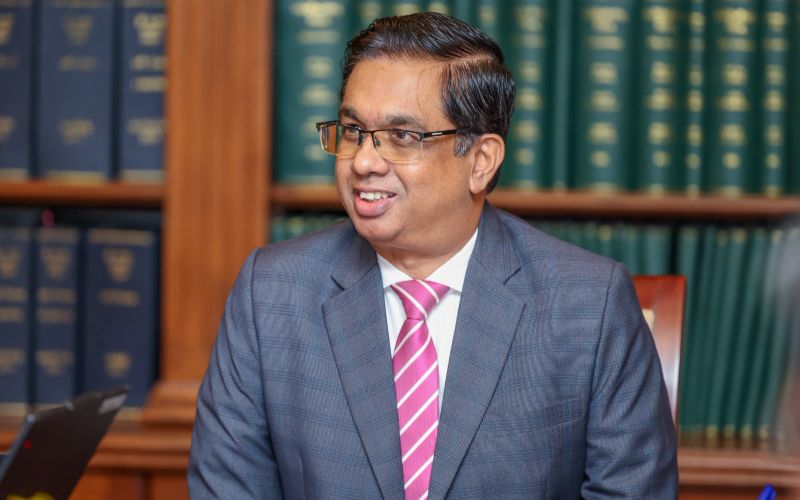
A progress review meeting on reforms and modernisation initiatives at Sri Lanka’s key state revenue-collecting institutions was held on Thursday (15) at the Presidential Secretariat, chaired by Secretary to the President Dr Nandika Sanath Kumanayake, with the participation of representatives of the International Monetary Fund (IMF) and officials of the Revenue Administration, Reform and Modernisation Bureau (RARMB) of the Presidential Secretariat.
At the meeting, the IMF representatives commended the revenue collection efficiency of the Department of Inland Revenue, Sri Lanka Customs and the Department of Excise, the country’s three leading state revenue-collecting institutions. Extensive discussions were also held on the progress of the reform and modernisation programmes being implemented at these institutions.
Secretary to the President Dr Nandika Sanath Kumanayake outlined the progress achieved by the three institutions to date and the reforms planned for implementation in the future.
The IMF representatives also highlighted the importance of strengthening risk management, developing human resources and ensuring the efficient operation of computer systems at the respective institutions.
Senior Additional Secretary to the President Seevali Arukgoda also attended the meeting. The IMF was represented by Cindy Negus, Senior Economist in Revenue Administration for the Asia and Pacific, Europe, Middle East and Central Asia regions; Alison Lister, Revenue Administration Adviser; and Gregory Toppin, Resident Revenue Adviser in Sri Lanka. A group of senior officials from the Revenue Administration, Reform and Modernisation Bureau of the Presidential Secretariat also participated.
(President’s Media Division)

By Anuradha Hiripitiyage
Electricity tariffs should be reduced by between 3 and 5 percent instead of being increased by 2.88 percent in the fourth quarter, as proposed by the National System Operator (NSO), Electricity Consumers’ Association Secretary Sanjeewa Dhammika said.
Addressing a media briefing in Maradagahamula, Divulapitiya, Gampaha, yesterday (16), Dhammika said a proper assessment of electricity generation costs, including the contribution of hydropower, could justify a reduction in tariffs.
He said the NSO had sought approval from the Public Utilities Commission of Sri Lanka (PUCSL) for a 2.88 percent tariff increase, which was expected to generate an additional Rs. 4,438 million.
However, the Commission had indicated that an increase of only 1.46 percent was warranted, amounting to Rs. 2,245 million, he said, adding that even this increase was unnecessary.
Dhammika alleged that the proposed revision sought to pass on to electricity consumers the financial burden arising from the non-arrival of five coal shipments and failed tenders.
“The Government had said that the burden of coal-related losses would not be passed on to the public. It is therefore unjust to make consumers bear these costs,” he said.
He pointed out that the PUCSL had forecast that hydropower would account for 32.34 percent of total electricity generation in the coming quarter, while the cost of such generation would represent only 3.45 percent of the overall cost of electricity production.
Consumers should benefit from the lower cost of hydropower generation rather than bear the burden of more expensive thermal power generation, he said.
Dhammika also questioned the inclusion of Rs. 669 million in capacity charges that had not been approved by the PUCSL, as well as a further Rs. 1,069 million to repay loans relating to incomplete projects.
Including such charges in the proposed tariff revision was unjustifiable, he said.
The PUCSL has given the public until October 30 to submit their views on the proposed tariff revision.
Dhammika said the possibility of increased hydropower generation in the coming weeks, as reservoir levels rise, should also be taken into account when determining electricity tariffs.
He maintained that tariffs could be reduced by 3 to 5 percent if hydropower generation was properly assessed and coal-related losses and unapproved charges were excluded from the calculations.
He further claimed that electricity tariffs could be reduced by as much as 10 percent through the promotion of renewable energy and the effective use of solar power and battery storage systems.
The Electricity Consumers’ Association urged the Government to withdraw the proposed tariff increase, insisting that consumers should not be made to bear costs arising from coal supply problems and other disputed charges.

By S.K. Samaranayake
Most Ven. Warakagoda Sri Gnanaratana Mahanayake Thera of the Asgiri Chapter has called for the immediate release of Ven. Galagodaaththe Gnanasara Thera, who is currently serving a prison sentence, following a court ruling.
The Asgiri Mahanayake made the appeal when a delegation of senior prison officials, including Assistant Commissioner of Prisons and Director of Operations Senaka Pallegedara, called on him on the 16th.
During the meeting, the prelate warned that the continued incarceration of Ven. Gnanasara Thera could lead to a volatile situation and cause public agitation.
Responding to the appeal, the prison officials informed the Mahanayake Thera that the authority to order the release of Ven. Gnanasara Thera did not rest with the Prisons Department but with the President.
Other senior prison officials, including Rajeev Srimal Silva, Sampath Warnakulasooriya and Mangala Welivita, were also present at the meeting.

Review of progress in reforms and modernisation of key state revenue-collecting institutions

Rose Bowl expanded to include Australia vs New Zealand T20Is

Trump claims US Navy blockade stops Iranian ships in Hormuz

Showers above 75 mm are likely at some places in the Western, Sabaragamuwa, Central and North-central provinces and in Trincomalee and Mullaitivu districts

Cut power bills by 3-5%, don’t hike them, consumers demand

Asgiri Mahanayake calls for immediate release of Gnanasara Thera

‘Dates have the highest sugar content to fight Coronavirus’

Sunday Island 27 December – Headlines

#SundayIsland 17th December – Headlines

Sunday Island – 28th March

Sunday Island Headlines – 21 March

Sunday Island – 21st February – Headlines
-

 News6 days ago
Sri Lanka escalates anti-graft drive with Shiranthi’s jailing
-

 Latest News5 days ago
Farhan and Sadaqat help Pakistan seal series in style
-
 News6 days ago
Iranian ships stranded, Lanka fears US sanctions
-

 Latest News4 days ago
Nissanka’s return headlines Sri Lanka’s Test squad against Pakistan
-
 Features5 days ago
Intake 16: 45 years of duty and honour
-
 News5 days ago
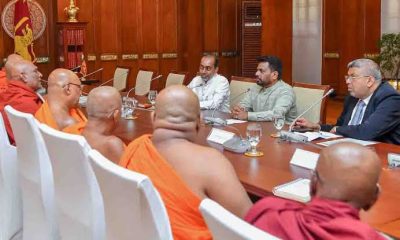
Malwathu Chapter issues statement on talks with President over Gnanasara Thera’s robes
-
 News6 days ago
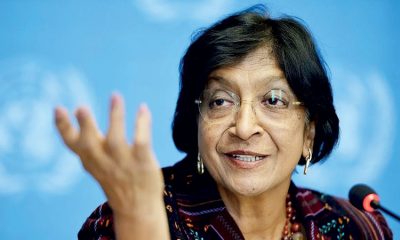
Navi Pillay’s Lankan affairs in focus as she wins 2026 Nobel Peace Prize
-
 News5 days ago
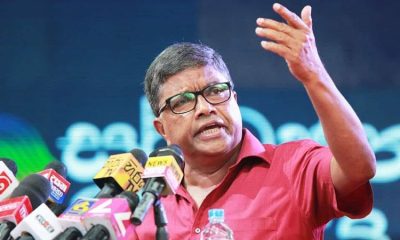
CP alleges NPP has taken the blame for illegal US sanctions on Iranian vessels