
Features
Reducing big power rivalries should be top priority in 2025

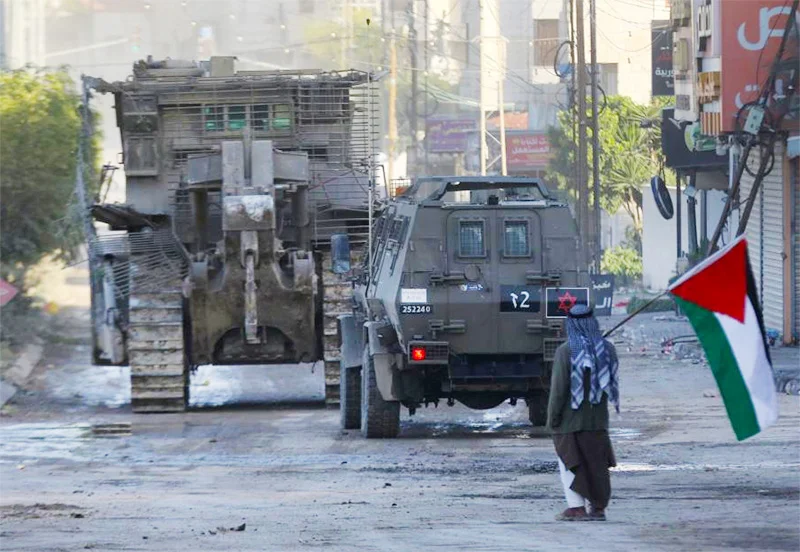
 At present big power tensions are working out mainly at the level of rhetoric but if the international community fails to reduce these antagonisms substantially, going forward, there is every possibility of rhetoric giving way to ground-level military confrontations. Of course, it will be in no-one’s interest if the latter development occurs.
There is a tendency on the part of publics and polities to view the international community and the UN system as synonymous but this is a somewhat limited perspective. Among more reflective sections, the phrase, ‘international community’, while meaning mainly the UN system, also refers to all those parties that have a stake in the world’s wellbeing and are actively promoting it, such as peace campaigners and people-centred organizations. Accordingly, international peace-building in the substantive sense refers to a globe-wide collective effort.
However, world peace-building devolves on mainly the UN and one of the most discouraging features of our times is the seeming impotence of the UN in the face of increasing big power tensions. Accordingly, rendering the UN effective and result-oriented becomes a task for all sections that value peace. Reforming and broad-basing the UN is integral to the latter process and should receive equal weightage.
Unfortunately, among those actors that are tending to disregard the UN and its authority are quite a few of the world’s foremost powers and their supporters. But ‘the hour is late’, and unless all sections of the world community give the UN the position and esteem due to it, it would be only a matter of time before the current threatening rhetoric mouthed by some major states translates into actual military confrontations. Thus, increasing the effectiveness of the UN becomes a foremost challenge of our times.
Given the seeming helplessness of the UN and increasing global cleavages along military, political and economic lines, it could be said that the current international political situation has many things in common with the international power rivalries at the beginning of the 20th century which degenerated into World War 1. Then as well as now, dangerous and emotional rhetoric among the foremost powers was rampant before a ‘tragedy of miscalculations’ by the rival power blocs gave way to a devastating war.
The contemporary world could very well be nearing such a World War 1-type flashpoint unless rationality prevails among the major powers and value-based politics are made to replace realpolitik. The big powers could begin by curbing their threatening rhetoric.
Right now, the Ukraine remains one of the most dangerous war zones and could do with stepped-down inter-power rhetoric. Russia, for example, has warned the US and NATO of a ‘decisive response’, including ‘military-technical counter-measures’, if the latter players continue to ‘make new missile threats’ against Russia.
The Ukraine situation calls for renewed peace efforts and the US could lead from the front, if it is serious about a political solution, in initiating a dialogue among all the relevant sections to de-escalate the wasting conflict in the East European country, whose sovereignty needs to be respected by Russia.
But misconceptions are abounding among the relevant external powers. Powerful sections in Russia are seeing the continuous arming of the Ukraine with lethal, sophisticated weaponry by the West, as in some way posing a threat to it and its perceived spheres of influence. It will be in the interests of Russia and the West to iron out their differences on this score at the negotiating table. Apparently, the term ‘sovereignty’ itself needs to be discussed by the sides and a common understanding on it arrived at. There is, apparently, a need to get back to basics.
However, as matters stand, it ought to be plain to see that a country’s territorial integrity could in no way be violated by another, for whatever reason. Meanwhile, the US and NATO would do well to take cognizance of the grave dangers growing out of the present international situation and seriously explore the possibility of cutting down on the supply of exceptionally lethal weaponry to the Ukraine. This could lead to a more constructive dialogue between the US and Russia on the Ukraine question.
It needs to be factored in that the patience of Russia’s rulers could shrink and that such a mindset could lead to the perpetration of blunders that could bring about a full-scale regional war. Hopefully, ‘Jaw, Jaw, Jaw’ would indeed be seen as preferable to ‘War, War, War’.
The next theatre of war that needs urgent defusing is the Middle East. Here’s one war zone that reflects most glaringly the world’s current power cleavages that could take the Middle East close to a full-blown regional war. Once again, states’ rhetoric is not making the peace maker’s task any easier.
Recently, for instance, China and Iran said, among other things, that the ‘Middle East is not a battleground for the big powers’. There is no denying this but the observation applies with equal importance to the rest of the world’s war and conflict zones as well.
Ideally, the major powers of the East and West need to disentangle themselves from these theatres of wasting conflict. The US, for example, cannot afford to forget this truth considering that its most recent military interventions in the South have proved disastrous and counter-productive for it.
Besides, the US needs to bring increasing pressure on Israel to step-back from the path of war and bloodshed and enter into a dialogue with the Palestinian side. As a first step, the US could reduce the fire-power of Israel, which is playing a major role in perpetuating the Middle East conflict.
Replacing the dangerous rhetoric of war by more conciliatory pronouncements by both major parties to the Middle East blood-letting, could have the effect of paving the way for a peace-oriented opinion climate in the Middle East.
Meanwhile, major powers of the South, such as China, could give peace a chance in the Middle East by impressing upon Iran and other major regional actors, the importance of getting on to a more reconciliatory policy path.
Right now, while it is true that Israel is showing every sign of persisting in its war effort, disregarding reason in the process, pro-war and divisive pronouncements by its adversaries are in no way proving helpful either. It ought to be plain to see by all concerned that increasingly the language of peace and reconciliation needs to replace the rhetoric of war and butchery.



It has become fashionable to criticise the US for its recent conduct toward Iran. This is not an attempt to defend or rationalise the US’s actions. Rather, it seeks to inject perspective into an increasingly a historical debate. What is often missing is institutional memory: An understanding of how the present international order was constructed and the conditions under which it emerged.
The “rules-based order” was forged in the aftermath of two catastrophic wars. Earlier efforts had faltered. Woodrow Wilson’s proposal for a League of Nations after World War I was rejected by the US Senate. Yet, it introduced a lasting premise: International order could be consciously designed, not left solely to shifting power balances. That premise returned after World War II. The Dumbarton Oaks process laid the groundwork for the UN, while Bretton Woods established the global financial architecture.
These frameworks shaped modern norms of security, finance, trade, and governance. The US played the central role in this design, providing leadership even as it engaged selectively- remaining outside certain frameworks while shaping others. This underscored a central reality: Power and principle have always coexisted uneasily within it.
This order most be understood against the destruction that preceded it. Industrial warfare, aerial bombardment, and weapons capable of unprecedented devastation reshaped both the ethics and limits of conflict. The post-war system emerged from this trauma, anchored in a fragile consensus of “never again”, even as authority remained concentrated among five powers.
The rise of China, the re-emergence of India, and the growing assertiveness of Russia and regional powers are reshaping the global balance. Technological disruption and renewed competition over energy and resources are transforming the nature of power. In this environment, some American strategists argue that the US risks strategic drift Iran, in this view, becomes more than a regional issue; it serves as a platform for signalling resolve – not only to Tehran, but to Beijing and beyond. Actions taken in one theatre are intended to shape perceptions of credibility across multiple fronts.
Recent actions suggest that while the US retains unmatched military reach, it has exercised a level of restraint. The avoidance of escalation into the most extreme forms of warfare indicates that certain thresholds in great-power conflict remain intact. If current trends persist-where power increasingly substitutes for principle — this won’t remain a uniquely American dilemma.
Other major powers may face similar choices. As capabilities expand, the temptation to act outside established norms may grow. What begins as a context-specific deviation can harden into accepted practice. This is the paradox of great power transition: What begins as an exception risk becoming a precedent The question now is whether existing systems are capable of renewal. Ad hoc frameworks may stabilise the present, but risk orphaning the future. Without a broader framework, they risk managing disorder rather than designing order. The Dumbarton Oaks process was a structured diplomatic effort shaped by competing visions and compromise. A contemporary equivalent would be more complex, reflecting a more diffuse distribution of power and lower levels of trust Such an effort must include the US, China, India, the EU, Russia, and other key powers.
India could serve as a credible convenor capable of bridging divides. Its position -engaged with multiple powers yet not formally aligned – gives it a degree of convening legitimacy. Nalanda-the world’s first university – offers an appropriate symbolic setting for such dialogue, evoking knowledge exchange across civilisations rather than competition among them.
Milinda Moragoda is a former cabinet minister and diplomat from Sri Lanka and founder of the Pathfinder Foundation, a strategic affairs think tank could be contacted atemail@milinda.org. This article was published in Hindustan Times on 2026.04.19)
By Milinda Moragoda

The combination of father and daughter, Shafi and Jana, as a duo, turned out to be a very rewarding experience, indeed, and now they have advanced to Section 8 – a high-energy, funk-driven, jazz-oriented live band, blending pop, rock, funk, country, and jazz.
Guitar wizard Shafi is a highly accomplished lead guitarist with extensive international experience, having performed across Germany, Australia, the Maldives, Canada, and multiple global destinations.

Shafi: Guitar wizard, at the helm of Section 8

Jana: Dynamic and captivating lead vocalist
He is best known as a lead guitarist of Wildfire, one of Sri Lanka’s most recognised bands, while Jana is a dynamic and captivating lead vocalist with over a decade of professional performing experience.
Jana’s musical journey started early, through choir, laying the foundation for her strong vocal control and confident stage presence.
Having also performed with various local bands, and collaborated with seasoned musicians, Jana has developed a versatile style that blends energy, emotion, and audience connection.
The father and daughter combination performed in the Maldives for two years and then returned home and formed Section 8, combining international stage experience with a sharp understanding of what it takes to move a crowd.
In fact, Shafi and Jana performed together, as a duo, for over seven years, including long-term overseas contracts, building a strong musical partnership and a deep understanding of international audiences and live entertainment standards.
Section 8 is relatively new to the scene – just two years old – but the outfit has already built a strong reputation, performing at private events, weddings, bars, and concerts.
The band is known for its adaptability, professionalism, and engaging stage presence, and consistently delivers a premium live entertainment experience, focused on energy, groove, and audience connection.
Section 8 is also a popular name across Sri Lanka’s live music circuit, regularly performing at venues such as Gatz, Jazzabel, Honey Beach, and The Main Sports Bar, as well as across the southern coast, including Hikkaduwa, Ahangama, Mirissa, and Galle.
What’s more, they performed two consecutive years at Petti Mirissa for their New Year’s gala, captivating international audiences present with high-energy performance, specially designed for large-scale celebrations.
With a strong following among international visitors, the band has become a standout act within the tourist entertainment scene, as well.
Their performances are tailored to diverse audiences, blending international hits with dance-driven sets, while also incorporating strong jazz influences that add depth, musicianship, and versatility to their sound.
The rest of the members of Section 8 are also extremely talented and experienced musicians:
Suresh – Drummer, with over 20 years of international experience.
Dimantha – Keyboardist, with global exposure across multiple countries.
Dilhara – Bassist and multi-instrumentalist, also a composer and producer, with technical expertise.

Rajiv Sebastian could be classified as an innovative performer.
Yes, he certainly has plenty of surprises up his sleeves and that’s what makes him extremely popular with his fans.
Rajiv & The Clan are now 35 years in the showbiz scene and Rajiv says he has plans to celebrate this special occasion … in a unique way!
According to Rajiv, the memories of Clarence, Neville, Baig, Rukmani, Wally and many more, in its original flavour, will be relived on 14th July.
“We will be celebrating our anniversary at the Grand Maitland (in front of the SSC playground) on 14th July, at 7.00pm, and you will feel the inspiration of an amazing night you’ve never seen before,” says Rajiv, adding that all the performers will be dressed up in the beautiful sixties attire, and use musical instruments never seen before.
In fact, Rajiv left for London, last week, and is scheduled to perform at four different venues, and at each venue his outfit is going to be different, he says, with the sarong being very much a part of the scene.

Tilak ends Mumbai Indian’s losing streak with 45-ball century

Showers or thundershowers will occur at most places of the island after 1.00 pm

Rs 13 bn NDB fraud: Int’l forensic audit ordered

Easter Sunday commemorations

Former Minister Gamage under CIABOC probe over recruiting 134 persons from Galle district

Coal scam: SJB says NAO report obstacle to NPP bid to suppress the truth

‘Dates have the highest sugar content to fight Coronavirus’

Sunday Island 27 December – Headlines

#SundayIsland 17th December – Headlines

Sunday Island – 28th March

Sunday Island Headlines – 21 March

Sunday Island – 21st February – Headlines
-

 News6 days ago
PNS TAIMUR & ASLAT set sail from Colombo
-

 Business3 days ago
Harnessing nature’s wisdom: Experts highlight “Resist–Align” path to resilience
-

 News3 days ago
Gratiaen Trust announces longlist for the 33rd Annual Gratiaen Prize
-

 News2 days ago
From Nuwara Eliya to Dubai: Isha Holdings markets Agri products abroad
-
 News3 days ago
Heroin haul transported on 50-million-rupee contract
-

 Latest News5 days ago
Singapore Zoo’s first Sri Lankan leopard cubs make their public debut
-
 News1 day ago
Church calls for Deputy Defence Minister’s removal, establishment of Independent Prosecutor’s Office
-

 News2 days ago
‘Agents of the devil’ seeking to block Easter probe, Cardinal warns