
News
Red Cross offers Peradeniya undergrads hands on experience re-charging ground water

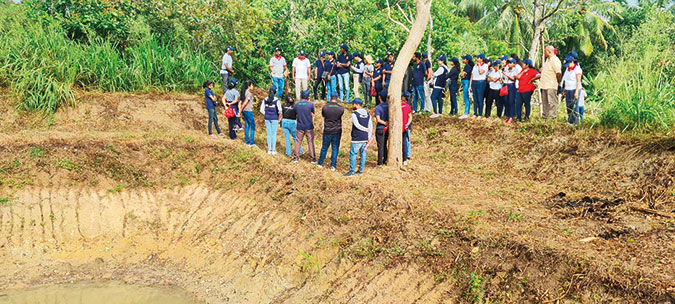
SLRCS hosts a Knowledge and Experience Sharing Field Visit for the Agriculture Students of UoP in response to the Ground Water Recharging for Disaster Preparedness ProjectSri Lanka Red Cross Society (SLRCS), Sri Lanka’s largest humanitarian organisation, hosted a two-day residential programme for undergraduates from the Faculty of Agriculture, University of Peradeniya (UoP) in Galgamuwa, SLRC said in a news release las week.
“The residential workshop was a knowledge and experience sharing field visit organised as part of the International Federation of Red Cross and Red Crescent Societies (IFRC) and International Committee of Red Cross (ICRC), Empress Shoken Fund-funded Ground Water Recharging for Disaster Preparedness Project, which is being executed by the Kurunegala Branch of SLRCS,” it said.
“The programme commenced at the SLRCS Kurunegala Branch’s training hall with an introduction to the organisation, Climate Change Adaptation (CCA), Disaster Risk Reduction (DRR), and the Ground Water Recharging for Disaster Preparedness Project.
“In the initial discussion, the students were separated into three groups: agriculture engineering, soil and agriculture, and social science aspects. The students were instructed to gather information and uncover results with a preference for their chosen groups, and to submit their findings at the end of the residential workshop.
“On their field trip in Galgamuwa, the students spoke with village personnel and beneficiaries, while SLRCS resource personnel accompanied them to raise awareness about groundwater recharging linked to CCA and DRR. The students enjoyed, while learning far more than they could have imagined.
“As discussed at the initial stage, the students presented their findings with great enthusiasm at the Irrigation Training Institute (ITI) in Galgamuwa, using PowerPoint presentations, videos, and discussions. The students’ communication and analytical skills based on their findings were greatly appreciated by the resource personnel and staff of SLRCS.
“The Ground Water Recharging for Disaster Preparedness Project is developing 65 homesteads in the Ihala Palukadewa region, with 42 of them now running extremely effectively. These home gardens could be used to assess the success and feasibility of the project’s groundwater recharge technologies.
“The project’s positive influence on people’s mindsets, as well as the rise in soil moisture level owing to groundwater recharge, is strongly represented in these existing homesteads. The project’s indirect advantage is that it will help to alleviate the present economic crisis and food shortages.”
Branch Executive Officer of the Kurunegala Branch of the Sri Lanka Red Cross Society, Sarath Wickramasinghe said: “It was a pleasure to work on the project with the Faculty of Agriculture at the UoP. My team has worked relentlessly via the project for a better environment for the people. One of the key goals of the project is to raise awareness and capacity, and being able to interact with students is confirmation that the project’s execution is in good hands, since they represent the future of this specific industry. We are excited to continue working together to help Sri Lankan communities thrive in the future”.
The release explained that one of the primary goals of the Ground Water Recharging for Disaster Preparedness Project is to raise awareness and capability. To accomplish this goal, the initiative has recommended conducting awareness-raising and training programmes for key stakeholders.
These programmes were created to promote both knowledge and views about the necessity of ground water recharge. The target stakeholders were grouped into three categories: community, school, and university. Programmes were held for each level, using appropriate resource personnel and methodologies.
“After visiting these locations, we realised the need for ground water recharge in villages. We were given the opportunity to visit these locations and see for ourselves the effects of such a project and its success in people’s lives as a result of the SLRCS’s knowledge and experience sharing programme. Not only in the long term, but also in the near future. We are appreciative of the opportunity and hope SLRCS continues success with similar programmes in the future”, added the Final Year Undergraduate, Faculty of Agriculture, UoP, Sunimali Attanayake.
“Percolation pits, Percolation Trenches, Lock and Spills, and Percolation Wells are four techniques utilised in the groundwater recharging project to enhance groundwater levels using rainwater. The National Water Supply Drainage Board (NWSDB) recommends these approaches, apart from that, the Agriculture Instructor in charge of the region was informed about all of the construction, and the Department of Agriculture provided direction through them.
“The digging and trenching were finished first, followed by the installation of gutters and pipes. The project is anticipated to recharge the groundwater from these constructions, allowing for the development of home gardens and water catchment areas. As a result, the type of groundwater charging unit received by each beneficiary is governed by the location, size, and land use,: the release said.

News
Renewed Lanka’s Easter Bombing probe puts NTJ’s South India radicalisation network back under lens
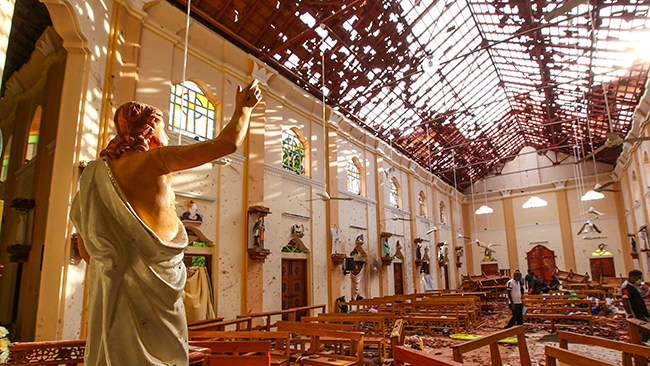
New Delhi (IANS):The arrest of Sri Lanka’s former Intelligence chief, Retired Major-General Suresh Sallay is a turning point in the investigations into the 2019 Easter Sunday bombings that killed 279 people.
The move was a bold one taken by President Anura Kumara Dissanayake who won the presidency in 2024.
He had promised that all persons involved in the attack would be brought to justice.
Sallay was made State Intelligence Service (SIS) chief in 2019 after Gotabaya Rajapaksa became President.
The allegation against Sallay was that he had permitted the attack to take place with the intention of influencing that year’s presidential election, which was eventually won by Rajapaksa.
Sallay had become a prominent figure in Sri Lanka and was widely credited with dismantling the LTTE. His arrest has led to a political storm and many state that it could revive tensions relating to the LTTE.
Ali Sabry, former Sri Lankan Minister for Foreign Affairs said that the developments are deeply troubling.
An Indian official said that the developments in Sri Lanka are being monitored closely.
On the question whether the LTTE issue would come back into the picture following the arrest of Sallay, the officer said that attempts are being made, but it would be very tough.
There have been several cases that the National Investigation Agency (NIA) has been probing concerning the revival of the LTTE.
The ISI, too, has tried its hand in ensuring the revival of the LTTE, but has not been successful so far.
To prevent the revival of the LTTE, both India and Sri Lanka have been working very closely.
Another official explained that the current ties with Sri Lanka have gone from ideological to an investment-led partnership.
Prime Minister Narendra Modi and President Dissanayake share a pragmatic relationship and this has gone a long way in ensuring cooperation on all fields including security, the official explained.
While some in Sri Lanka do not subscribe to Dissanayake’s decision on Sallay, the fact is that the Easter Bombing case has to be probed from every possible angle.
An Intelligence Bureau official says that a major concern today are the activities of the National Thowheeth Jama’ath (NTJ) and Jamathei Millathu Ibrahim (JMI), the two outfits responsible for this attack.
The NTJ in particular has a vast presence in South India and has managed to radicalise a large number of youth in Tamil Nadu and Kerala.
The mastermind of the attack, Mohammad Zahran Hashim was a frequent visitor to Tamil Nadu. He was also responsible for the radicalisation of Jamesha Mubeen who carried out an unsuccessful attempt to bomb a temple in Coimbatore in 2022.
The Indian agencies have been actively pursuing the role played by Hashim. A probe by the NIA in the South India radicalisation case revealed that the entire plot was being run by Hashim from Sri Lanka.
At least 50 of the 100 radicalisation videos seized by the agency were discourses by Hashim, who had close links with the Islamic State.
Officials say that Sallay could provide details to investigators about the module that Hashim ran.
This would come in handy for the Indian agencies who are probing cases directly linked to the NTJ in South India.
Hashim, who was the ring leader for the suicide bombers during the Easter Bombing had spent a considerable amount of time in India.
The Indian agencies would want to learn if any of the locals that Hashim interacted with had any idea about the Easter Bombings.
While in India, Hashim had focussed his radicalisation programmes mainly at Mallapuram, Coimbatore, Nagapattinam, Kanyakumari, Ramnathpuram, Vellore, Trichy and Thirunelveli, the NIA probe found.
Pallay has for now denied any links to the Easter Bombings.
Indian officials say that they do not want to comment on Pallay and his alleged links.However, it is important that the bombings are probed thoroughly since the activities of the NTJ have a direct bearing on India, particularly the southern states, the official also added.
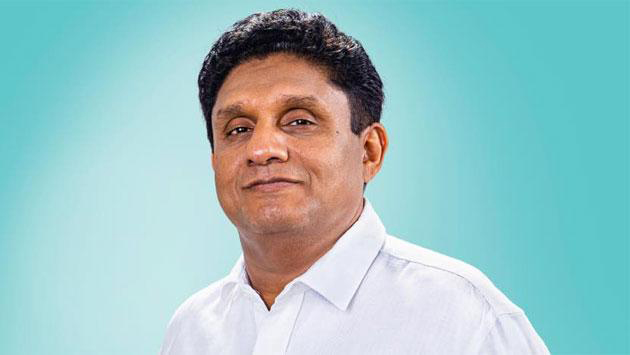
Opposition and SJB Leader Sajith Premadasa on Friday stressed that relief efforts for communities affected by Cyclone Ditwah must not be derailed by internal disputes, as several trade unions announced plans to withdraw from disaster relief duties.
Taking to ‘X’, Premadasa called on the Government to prioritise coordination and ensure uninterrupted assistance to families still awaiting aid.
“The Government must work closely with officers on the ground to ensure coordination and uninterrupted support. When families are still waiting, how can we allow for this confusion?” he questioned, emphasising that relief measures should not be delayed under any circumstances.
His remarks follow the decision by several trade unions representing Government officers engaged in disaster relief operations to launch trade union action beginning from Friday (27 February).
The unions announced their withdrawal from relief-related duties, citing unresolved issues affecting officers involved in post-disaster operations.
According to the unions, more than 93 days have elapsed since the widespread destruction caused by Cyclone Ditwah. During this period, disaster relief officers and Grama Niladharis have worked continuously, day and night, acting as key coordinators between the Government and affected communities. However, they claim that authorities have failed to adequately address longstanding concerns relating to officers engaged in relief work.
Meanwhile, Secretary to the President Nandika Sanath Kumanayake yesterday underscored the need to expedite relief and recovery initiatives.
Chairing a progress review meeting of the National Council for Disaster Management, he called for strengthened coordination among State institutions responsible for disaster response, noting that effective inter-agency collaboration is critical to delivering timely assistance to affected communities.
Efforts to accelerate recovery and maintain continuity in relief operations are ongoing.

Allegations surrounding the importation of substandard coal intensified yesterday, with civil society representatives and Opposition MPs lodging complaints with the CID and the Commission to Investigate Allegations of Bribery or Corruption, calling for comprehensive investigations into the procurement process and alleged financial losses to the State.
A group of civil organisation representatives submitted a complaint to the CID on Friday (27 February), requesting a probe into what they described as irregularities in the coal procurement process and the resulting loss to the country.
Addressing the media, Ananda Palitha, Convenor of the Samagi Joint Trade Union Alliance affiliated with the SJB, alleged that tender procedures had not been followed properly and claimed that emergency purchases had facilitated corruption.
“The tenders are not called on time. The same company that was previously blacklisted after attempting to bring in substandard rice is now
being awarded the coal tender. They have been given time until July to get registered. The corruption is already confirmed. It is very clear with these emergency purchases,” he charged.
Palitha also expressed confidence that the current President would not interfere with investigations into the coal imports, drawing a comparison to the legal action instituted against former Minister Keheliya Rambukwella over the substandard medicine import controversy during the previous administration.
Meanwhile, a group of SJB parliamentarians filed a separate complaint with the Bribery Commission on Thursday (26 February) over the same issue. MPs Mujibur Rahman, Chaminda Wijesiri, Sujith Sanjaya Perera and Kavinda Jayawardena met Commission officials to formally submit their complaint.
Speaking to the media afterwards, MP Mujibur Rahman alleged that the company concerned had violated two key contractual conditions — by supplying substandard coal and by failing to deliver shipments within the stipulated timeframe.
He contended that either of these violations would be sufficient grounds to cancel the agreement, but claimed the Government was attempting to justify the transaction by asserting that no fraud had occurred.
“By now it has been revealed that this transaction is corrupt,” he said, adding that the Bribery Commission, which had previously conducted extensive investigations into allegations against the former Government, should similarly take action to recover what he claimed was Rs. 7,000 million in public funds lost due to the deal.Investigations into the matter are ongoing.

Can West Indies make up for bowling gulf in virtual quarter-final against India?

Flights cancelled as travel warnings issued after strikes on Iran

Trump says Iran’s Supreme Leader Ayatollah Ali Khamenei is dead after US-Israeli strikes

South Africa put spotless record on the line in all-African clash

Fair weather will prevail over most parts of the island

Renewed Lanka’s Easter Bombing probe puts NTJ’s South India radicalisation network back under lens

‘Dates have the highest sugar content to fight Coronavirus’

Sunday Island 27 December – Headlines

#SundayIsland 17th December – Headlines

Sunday Island – 28th March

Sunday Island Headlines – 21 March

Sunday Island – 21st February – Headlines
-

 Features6 days ago
LOVEABLE BUT LETHAL: When four-legged stars remind us of a silent killer
-

 Business6 days ago
Bathiya & Santhush make a strategic bet on Colombo
-
 Business6 days ago
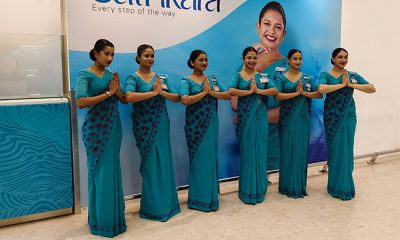
Seeing is believing – the silent scale behind SriLankan’s ground operation
-
 Latest News7 days ago
India, South Africa meet in the final before the final
-

 Features6 days ago
Protection of Occupants Bill: Good, Bad and Ugly
-

 News6 days ago
Prime Minister Attends the 40th Anniversary of the Sri Lanka Nippon Educational and Cultural Centre
-

 Business6 days ago
Huawei unveils Top 10 Smart PV & ESS Trends for 2026
-

 News6 days ago
Coal ash surge at N’cholai power plant raises fresh environmental concerns