
News
Reconstructing past deep-water circulations of Indian Ocean


Global overturning circulation — the equatorward transport of cold, deep waters and the poleward transport of warm, near-surface waters — controls ocean heat distribution and atmospheric carbon dioxide levels, thus playing a critical role in global climate, says a report published by The Hindu yesterday.
It said: Studies have indicated that tectonically driven changes in the ocean gateways such as the closure of the Central American Seaway, a body of water that once separated North America from South America, since the late Miocene period, had a dramatic impact on the circulation.
It is thought that tectonic changes might have led to the formation of two separate water bodies — northern component water in the North Atlantic and Antarctic Bottom Water (AABW) in the Southern Ocean. Consequently, it is also hypothesised that there would have been large-scale changes in the Deep Water Circulation (DWC) in the oceans across the world, thus impacting global climate through ocean-atmosphere carbon dioxide and heat exchanges.
But these formulations have remained untested due to lack of adequate data. Some records that are available are from near the deep-water formation regions mostly from the Pacific and the Atlantic Oceans. Hence, they might not necessarily reflect the impact and change in deep water circulation.
Now, the Indian Ocean does not have any major deep-water formations of its own. It acts only as a host for NCW and AABW. Further, the northern parts of the Indian Ocean are located at one of the terminal ends of the GOC, far away from the deep-water formation regions and oceanic seaways. These specific features could make the northern Indian Ocean an ideal basin to do this.
Few studies have been carried out in the Indian Ocean to reconstruct past deep water circulations based on iron-manganese crust records and authigenic neodymium isotope composition of sediment cores. But iron-manganese crusts are situated at deeper depths and are bathed only by AABW, making it suitable only for the reconstruction of the history of AABW, and authigenic neodymium isotope records are available only from the Bay of Bengal region. But they too cannot help as the Himalayan rivers that empty into the Bay also bring in substantial amounts of Neodymium particulates.
A new study by a team of researchers from the Goa-based National Centre for Polar and Ocean Research and the School of Earth, Ocean and Atmospheric Sciences in Goa University has now sorted out the issue.
The scientists have generated an authigenic neodymium isotope record from the Arabian Sea and reconstructed the DWC record of the Indian Ocean for the period from 11.3 million years ago (Miocene era) to 1.98 million years ago (Pleistocene era).
“The record shows a clear shift from the Pacific water dominated deep circulation system before about nine million years ago, to the onset of a modern-like deep water circulation system in the Indian Ocean comprising of Antarctic bottom water and northern component water during the Miocene-Pliocene transition (about six million years ago). Our finding suggests a widespread impact of the late Miocene Central American Seaway closure on the evolution of ocean deep water circulation and validates the so-called Panama Closure Hypothesis,” says Dr. Waliur Rahaman from the National Centre for Polar and Ocean Research (NCPOR) and one of the corresponding authors.
The two months long expedition was carried out on-board drilling vessel R/V JOIDES Resolution from March 31 to May 31, 2015.
Commenting on the findings, Dr. Sambuddha Misra, Associate Professor, Centre for Earth Sciences, Indian Institute of Science, who was not part of the research work, says the study is highly significant since it provides unequivocal evidence in support of the theory that the closing of the gap between North and South America had led to the evolution of the modern form of GOC. The work is also commendable as it involved extremely difficult measurements, he adds.


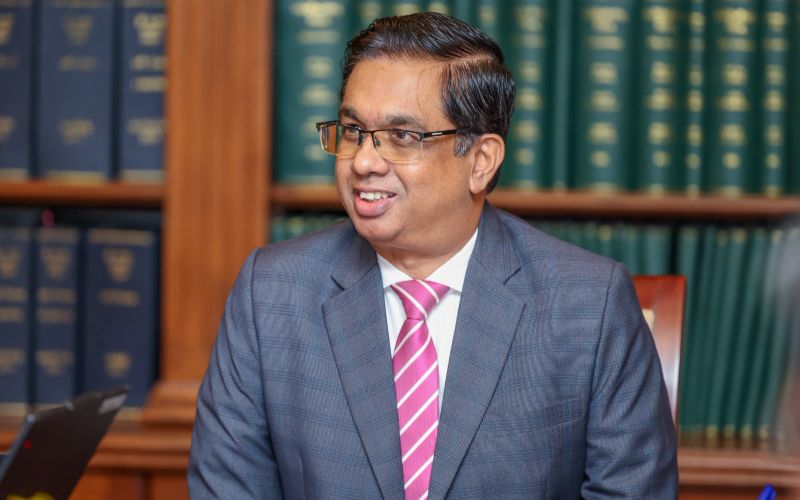
A progress review meeting on reforms and modernisation initiatives at Sri Lanka’s key state revenue-collecting institutions was held on Thursday (15) at the Presidential Secretariat, chaired by Secretary to the President Dr Nandika Sanath Kumanayake, with the participation of representatives of the International Monetary Fund (IMF) and officials of the Revenue Administration, Reform and Modernisation Bureau (RARMB) of the Presidential Secretariat.
At the meeting, the IMF representatives commended the revenue collection efficiency of the Department of Inland Revenue, Sri Lanka Customs and the Department of Excise, the country’s three leading state revenue-collecting institutions. Extensive discussions were also held on the progress of the reform and modernisation programmes being implemented at these institutions.
Secretary to the President Dr Nandika Sanath Kumanayake outlined the progress achieved by the three institutions to date and the reforms planned for implementation in the future.
The IMF representatives also highlighted the importance of strengthening risk management, developing human resources and ensuring the efficient operation of computer systems at the respective institutions.
Senior Additional Secretary to the President Seevali Arukgoda also attended the meeting. The IMF was represented by Cindy Negus, Senior Economist in Revenue Administration for the Asia and Pacific, Europe, Middle East and Central Asia regions; Alison Lister, Revenue Administration Adviser; and Gregory Toppin, Resident Revenue Adviser in Sri Lanka. A group of senior officials from the Revenue Administration, Reform and Modernisation Bureau of the Presidential Secretariat also participated.
(President’s Media Division)

By Anuradha Hiripitiyage
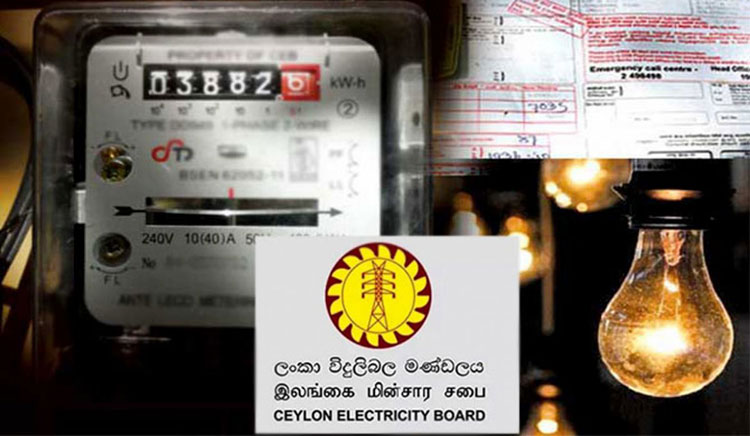
Electricity tariffs should be reduced by between 3 and 5 percent instead of being increased by 2.88 percent in the fourth quarter, as proposed by the National System Operator (NSO), Electricity Consumers’ Association Secretary Sanjeewa Dhammika said.
Addressing a media briefing in Maradagahamula, Divulapitiya, Gampaha, yesterday (16), Dhammika said a proper assessment of electricity generation costs, including the contribution of hydropower, could justify a reduction in tariffs.
He said the NSO had sought approval from the Public Utilities Commission of Sri Lanka (PUCSL) for a 2.88 percent tariff increase, which was expected to generate an additional Rs. 4,438 million.
However, the Commission had indicated that an increase of only 1.46 percent was warranted, amounting to Rs. 2,245 million, he said, adding that even this increase was unnecessary.
Dhammika alleged that the proposed revision sought to pass on to electricity consumers the financial burden arising from the non-arrival of five coal shipments and failed tenders.
“The Government had said that the burden of coal-related losses would not be passed on to the public. It is therefore unjust to make consumers bear these costs,” he said.
He pointed out that the PUCSL had forecast that hydropower would account for 32.34 percent of total electricity generation in the coming quarter, while the cost of such generation would represent only 3.45 percent of the overall cost of electricity production.
Consumers should benefit from the lower cost of hydropower generation rather than bear the burden of more expensive thermal power generation, he said.
Dhammika also questioned the inclusion of Rs. 669 million in capacity charges that had not been approved by the PUCSL, as well as a further Rs. 1,069 million to repay loans relating to incomplete projects.
Including such charges in the proposed tariff revision was unjustifiable, he said.
The PUCSL has given the public until October 30 to submit their views on the proposed tariff revision.
Dhammika said the possibility of increased hydropower generation in the coming weeks, as reservoir levels rise, should also be taken into account when determining electricity tariffs.
He maintained that tariffs could be reduced by 3 to 5 percent if hydropower generation was properly assessed and coal-related losses and unapproved charges were excluded from the calculations.
He further claimed that electricity tariffs could be reduced by as much as 10 percent through the promotion of renewable energy and the effective use of solar power and battery storage systems.
The Electricity Consumers’ Association urged the Government to withdraw the proposed tariff increase, insisting that consumers should not be made to bear costs arising from coal supply problems and other disputed charges.

By S.K. Samaranayake
Most Ven. Warakagoda Sri Gnanaratana Mahanayake Thera of the Asgiri Chapter has called for the immediate release of Ven. Galagodaaththe Gnanasara Thera, who is currently serving a prison sentence, following a court ruling.
The Asgiri Mahanayake made the appeal when a delegation of senior prison officials, including Assistant Commissioner of Prisons and Director of Operations Senaka Pallegedara, called on him on the 16th.
During the meeting, the prelate warned that the continued incarceration of Ven. Gnanasara Thera could lead to a volatile situation and cause public agitation.
Responding to the appeal, the prison officials informed the Mahanayake Thera that the authority to order the release of Ven. Gnanasara Thera did not rest with the Prisons Department but with the President.
Other senior prison officials, including Rajeev Srimal Silva, Sampath Warnakulasooriya and Mangala Welivita, were also present at the meeting.

Review of progress in reforms and modernisation of key state revenue-collecting institutions

Rose Bowl expanded to include Australia vs New Zealand T20Is

Trump claims US Navy blockade stops Iranian ships in Hormuz

Showers above 75 mm are likely at some places in the Western, Sabaragamuwa, Central and North-central provinces and in Trincomalee and Mullaitivu districts

Cut power bills by 3-5%, don’t hike them, consumers demand

Asgiri Mahanayake calls for immediate release of Gnanasara Thera

‘Dates have the highest sugar content to fight Coronavirus’

Sunday Island 27 December – Headlines

#SundayIsland 17th December – Headlines

Sunday Island – 28th March

Sunday Island Headlines – 21 March

Sunday Island – 21st February – Headlines
-

 News6 days ago
Sri Lanka escalates anti-graft drive with Shiranthi’s jailing
-

 News6 days ago
Iranian ships stranded, Lanka fears US sanctions
-

 Latest News5 days ago
Farhan and Sadaqat help Pakistan seal series in style
-

 Latest News4 days ago
Nissanka’s return headlines Sri Lanka’s Test squad against Pakistan
-

 Features5 days ago
Intake 16: 45 years of duty and honour
-
 News5 days ago
Malwathu Chapter issues statement on talks with President over Gnanasara Thera’s robes
-
 News6 days ago
Navi Pillay’s Lankan affairs in focus as she wins 2026 Nobel Peace Prize
-
 News5 days ago
CP alleges NPP has taken the blame for illegal US sanctions on Iranian vessels