
Latest News
Rawalpindi takes centre stage as Pakistan, Sri Lanka and Zimbabwe scramble for World Cup spark


Two-and-a-half months out from the Men’s T20 World Cup, it’s time to get serious. There are squads that need finalising, strategies that need trialing, and players that need tuning into the rhythm and tempo of T20 cricket.
For Pakistan, this tri-series series is a chance to build on some T20 advances this year. They have won 17 T20Is to the 12 they’ve lost in 2025. That run includes making it to the final of the Asia Cup, and beating South Africa 2-1 in their most-recent T20I series. Under the leadership of Salman Agha, the batting has had a little more purpose, even if it is the bowling that has tended to win Pakistan games.
In that series against South Africa, for example, the bowlers had restricted the visitors to feeble scores twice. Still, the chases were largely smooth, and Pakistan’s two victories were comfortable. The generally-preferred strategy seems to be to put the opposition in, and try to blow them away cheaply.
Sri Lanka, meanwhile, have not been having an especially good time in this format either. Longstanding firepower issues in the batting order persist, although this is less apparent when Pathum Nissanka fires at the top of the order. They are also trying to figure out their combinations – frequently seeming either a bowler or batter short against top opposition.
Dasun Shanaka being named acting captain of the side after Charith Asalanka was withdrawn due to illness suggests the selectors want him locked in, in the lower order, at least until the end of the World Cup. And Wanindu Hasaranga’s decent batting form will also help add some depth, provided Hasaranga recovers from the injury that kept him out of the third ODI. Ahead of a home World Cup, Sri Lanka are desperate to find a working formula.
Zimbabwe haven’t had quite so hot a year. But at least, unlike for the 2024 World Cup, they have bossed the Africa qualifier, and earned themselves a spot in the big show. And it was in that qualifier – played entirely in Harare – that they made their most impressive run of 2025, picking up five successive victories, including in the final against Namibia, who have also qualified for the World Cup.
Pakistan and Sri Lanka will likely pose a much sterner challenge than the lower-ranked teams Zimbabwe played in Harare, though, and they are just coming off a 3-0 loss to Afghanistan. They have, however, also beaten Sri Lanka in a T20I recently; Sri Lanka lost the second T20I in a three-match series in Zimbabwe in September.
Although the tri-series between Pakistan, Zimbabwe and Sri Lanka was originally scheduled to move to Lahore after two matches in Rawalpindi, security concerns following last week’s bombing in Islamabad has prompted a change. The tournament will be played entirely in Rawalpindi now.
Is Babar Azam back? There have been recent signs he is returning to a fuller version of himself, particularly when, on Friday, he struck his first international ton since 2023 even if that was in ODIs. Having been dropped from the T20I side for most of this year, Babar also struck a match-winning 68 off 47 balls against South Africa in Lahore less than three weeks ago. If he can have a successful tri-series, Pakistan will feel a much more menacing unit.
Sri Lanka may already be over-reliant on Pathum Nissanka, their most improved white-ball batter of the past three years, and owner of a T20I hundred (against India no less), in September. His first week in Pakistan could have gone better. Nissanka got three starts in the ODIs, but could not even breach 30. On what are expected to be flatter tracks in Rawalpindi, he will likely come good at some point. Sri Lanka’s batting feels like a transformed unit on the days in which Nissanka scores heavily.
Zimabwe’s run through the T20 World Cup qualifier had partly been fuelled by the form of their opening batters, and Brian Bennett in particular. Bennett crashed 314 runs at a strike rate of 181.50, making three fifties and a hundred in the space of five innings. At age 22, he has never played in Pakistan, but perhaps the greater challenge will be to counter attacks which will now, given his recent success, have spent much more time analysing his game, and devising plans against him.
As we’re heading into winter, expect cold nights in Rawalpindi, where evening temperatures are forecast to drop into the low teens at times. This generally means fielding errors. The surface is expected to be batting friendly, though there is frequently something for the seamers there.
Pakistan made a late change to their squad, releasing Hasan Nawaz and bringing Fakhar Zaman, who was in excellent ODI form, in.
Pakistan: Salman Ali Agha (capt), Abdul Samad, Abrar Ahmed, Babar Azam, Faheem Ashraf, Fakhar Zaman, Mohammad Nawaz, Mohammad Wasim Jnr, Mohammad Salman Mirza, Naseem Shah, Sahibzada Farhan (wk), Saim Ayub, Shaheen Shah Afridi, Usman Khan (wk), Usman Tariq
Sri Lanka are sweating on the fitness of Hasaranga after he sustained a minor hamstring strain in the second ODI against Pakistan, while captain Charith Asalanka and Asitha Fernando are returning home due to illness. Top-order batter Pavan Rathnayake has now been brought into the T20I squad. Rathnayake made his international debut in the third ODI of the Pakistan tour.
Sri Lanka: Dasun Shanaka (capt.), Pathum Nissanka, Kusal Mendis, Kusal Perera, Kamil Mishara, Kamindu Mendis, Pavan Rathnayake, Bhanuka Rajapaksa, Janith Liyanage, Wanindu Hasaranaga, Maheesh Theekshana, Dushan Hemantha, Dushmantha Chameera, Nuwan Thushara, Eshan Malinga
Zimbabwe’s one change to the squad that played Afghanistan at home is to add a seamer. The new man is helpfully named Newman Nyamhuri, who’s a 19-year-old left-arm quick. He’s yet to play an international, and is in the squad because one of their senior bowlers, Blessing Muzarabani, is ruled out with a back injury.
Zimbabwe: Sikandar Raza (capt), Brian Bennett, Ryan Burl, Graeme Cremer, Bradley Evans, Clive Madande, Tinotenda Maposa, Wellington Masakadza, Tadiwanashe Marumani, Tony Munyonga, Tashinga Musekiwa, Dion Myers, Richard Ngarava, Newman Nyamhuri, Brendan Taylor

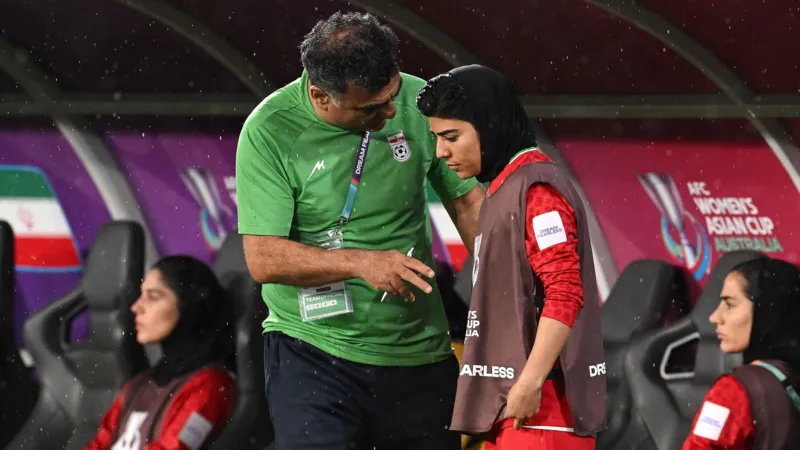
Three more members of the Iranian women’s football delegation – who were given humanitarian visas to stay in Australia – have changed their mind and will return home.
The trio have been named by human rights activists in the Iranian diaspora as Zahra Soltan Meshkehkar, Mona Hamoudi, and Zahra Sarbali.
Concerns grew for the Iranian team after they were silent for the country’s anthem in their opening Asian Cup match against South Korea on 2 March – which led to them being branded “war traitors” in Iran.
Confirming the decisions, Australia’s home affairs minister said his government had done everything it could to ensure the women were given the chance to have a safe future in the country.
“Australians should be proud that it was in our country that these women experienced a nation presenting them with genuine choices and interacted with authorities seeking to help them,” Tony Burke said in a statement.
“While the Australian government can ensure that opportunities are provided and communicated, we cannot remove the context in which the players are making these incredibly difficult decisions.”
Iran’s sports ministry also earlier confirmed the news, first reported by the Islamic Revolutionary Guard Corps-linked Tasnim News Agency, in a statement.
“The national spirit and patriotism of the Iranian women’s national football team defeated the enemy’s plans against this team,” the statement says, also accusing Australia’s government of “playing in Trump’s field”.
Tasnim said the three were on their way to Kuala Lumpur in Malaysia to join the rest of the squad and were “returning to the warm embrace of their families and homeland after withdrawing their asylum application in Australia”.
It said they had resisted “psychological warfare, extensive propaganda and seductive offers”.
It means that, of the seven who initially said they wanted to stay in Australia, only three now remain as defectors. One of the players made the same decision to return to Iran on Wednesday.
Hamoudi and Sarbali were among the original five who refused, after giving minders the slip at the team’s hotel on the Gold Coast, south of Brisbane, last Monday and being taken to a safe house by Australian Federal Police.
Zahra Soltan Meshkehkar, a member of the team’s technical staff, was one of two more women from the group to seek asylum the next day. The other – Mohaddeseh Zolfi – changed her mind hours after being given the right to stay. She is understood to have already rejoined the team.
There was concern in Australia that members of the team and their families might face repercussions in Iran after the players refused to sing the national anthem.
One conservative commentator on Iranian state media accused them of being “wartime traitors” and called for a harsh punishment.
The team did sing the anthem in their last two games before they were eliminated on Sunday, leading critics to believe they had been told to sing by government officials accompanying them during the tournament.
The remaining Iranian players left Australia on Tuesday night local time – two days after they were knocked out of the Asian Cup.
[BBC]
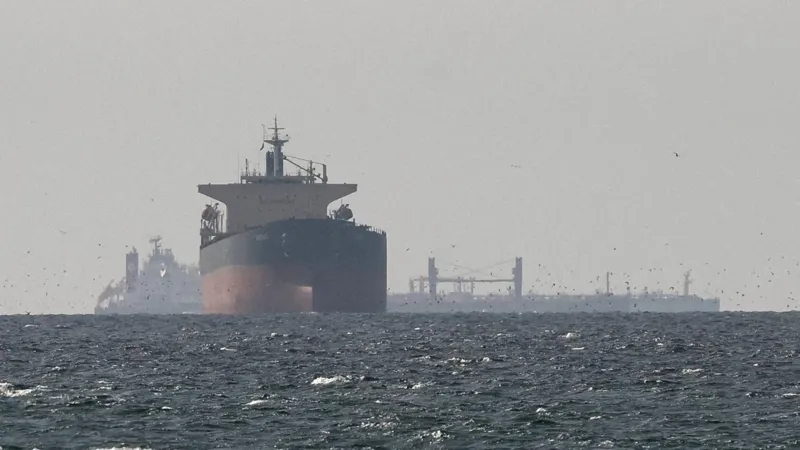
Donald Trump has urged the UK and other nations to send warships to the Strait of Hormuz to help secure the key shipping route out of the Middle East.
The US president said he hoped China, France, Japan and South Korea would also send ships to the passage, where a number of tankers are said to have been attacked since the US and Israel mounted their war against Iran a fortnight ago.
Responding to Trump’s comments, the UK Ministry of Defence said it was discussing “a range of options to ensure the security of shipping in the region” with allies.
Tehran has said it will keep blocking the strait – the world’s busiest oil shipping channel through which about 20% of world oil supplies usually pass.
Its effective closure, as well as strikes on shipping and energy infrastructure since the war started, has led to huge rise in global oil prices.
Trump wrote on his Truth Social platform on Saturday that “many countries” would be sending warships in conjunction with the US to help keep the strait “open and safe”.
He claimed “100% of Iran’s military capability” had already been destroyed, but that Tehran could still “send a drone or two, drop a mine, or deliver a close-range missile somewhere along, or in, this waterway”.
“Hopefully China, France, Japan, South Korea, the UK, and others, that are affected by this artificial constraint will send ships to the area so that the Hormuz Strait will no longer be a threat by a nation that has been totally decapitated.”
He added: “In the meantime, the United States will be bombing the hell out of the shoreline, and continually shooting Iranian Boats and Ships out of the water. One way or the other, we will soon get the Hormuz Strait OPEN, SAFE, and FREE!”
Trump repeated his appeal in a post later on Saturday – extending it to all “the Countries of the World that receive Oil through the Hormuz Strait” – and said the US would provide “a lot” of support to those who participated.
The president has separately threatened to target Iran’s vital oil infrastructure on Kharg Island if its leadership were to “interfere” with ships seeking to pass through the Strait of Hormuz.
He said the US had ‘obliterated” military targets on the small island off Iran’s coast on Friday, calling it “one of the most powerful bombing raids in the history of the Middle East”.
Iran’s military said oil and energy infrastructure belonging to firms working with the US would “immediately be destroyed” should the island’s oil infrastructure be attacked.
Tehran has been stepping up such attacks on energy targets in the Gulf, which have become a key element of its response to US and Israeli strikes. It warned on Thursday that any tanker bound for the US, Israel or its partners was a legitimate target.
The UK Maritime Trade Operations (UKMTO) said in its latest update on 12 March that 16 ships were reported to have been attacked in and around the strait since the war began on 28 February.
Currently, not even the US Navy is escorting tankers through the narrow shipping lane.

Trump’s message came a week after he said the US did not need the UK to send aircraft carriers to the region and accused Prime Minister Sir Keir Starmer of seeking to ‘join wars after we’ve already won”.
He also told the BBC’s US partner CBS that he “couldn’t care less” whether allies could do more to assist with the war, adding: “It’s a little bit late to be sending ships, right? A little bit late.”
He had already criticised Sir Keir for not joining the initial strikes on Iran and refusing at first to allow the US to use UK bases for its joint offensive with Israel – calling him ‘no Winston Churchill”.
The prime minister later approved “defensive” US action on Iranian missile sites from RAF Fairford in Gloucestershire and Diego Garcia in the Indian Ocean, saying Iran’s response had become a threat to Britain.
The UK’s first and only warship set to be present in the region – the Type 45 destroyer HMS Dragon – departed for Cyprus on Tuesday, where it will bolster RAF Akrotiri after it was hit by drone strikes.
The Royal Navy used to keep minesweepers based in Bahrain, but no longer has that capability after it withdrew HMS Middleton.
Ministers have insisted the UK built up an RAF presence in the region before the conflict, with the aim of protecting British military personnel.
[BBC]

Salman Ali Agha said that he would have done things ‘differently”, after Mehidy Hasan Miraz ran him out in controversial circumstances in the second ODI in Dhaka.
Agha, who made 64 from 62 balls, had been backing up at the non-striker’s end when Mohammad Rizwan drove the ball back towards him. He was still out of his ground as Mehidy swooped round behind him in an attempt to gather, and Agha had appeared ready to pass the ball back to the bowler before Mehidy reached down to grab it first and throw down the stumps.
Agha reacted furiously to the dismissal, throwing his gloves and helmet down in disgust at the decision. However, he later came to the post-match press conference, ahead of captain Shaheen Shah Afridi and player of the match Maaz Sadaqat, to clear the air.
“I think sportsman spirit has to be there,” Agha said. “What he [Mehidy] has done is in the law. I think if he thinks it’s right, it’s right, but if you ask me my perspective, I would have done differently. I would have gone for sportsman spirit. We haven’t done this [type of thing] previously, we would never do that in the future as well.”
Agha explained that he had been trying to pick up the ball to give to Miraz, thinking it was likely to have been called dead. “Actually, the ball hit on my pad and then my bat,” he said. “So I thought he can’t get me run-out now, because the ball already hit on my pad and my bat.
“I was just trying to give him the ball back. I was not looking for the run or anything like that, but he already decided [to make the run-out].”
Agha however regretted his angry reaction. “It was just heat-of-the-moment kind of stuff,” he said. “If you ask me what would I have done, I would have done things differently. But it was everything, whatever happened after that, it was in the moment.”
He was also involved in a robust exchange with Bangladesh wicketkeeper Litton Das, though he didn’t divulge many of the details.
“I can’t remember what I was saying and I can’t remember what he was saying,” he said. “I’m sure I wasn’t saying nice things, and I’m sure he wasn’t saying nice stuff as well. But it was just heat of the moment, so we are fine.
Asked if he had patched things up with Mehidy, Agha said: “I haven’t yet, but don’t worry, I’ll find him.”
Pakistan won the match by 128 runs via the DLS method.
[Cricinfo]

‘Gruesome’ war bets fuel calls for crackdown on prediction markets

Three more Iran football team members change minds over asylum

Trump urges UK and other nations to send warships to Strait of Hormuz

Addressing the drug issue in the country must be treated as a national priority – PM

Showers will occur at several places in the Western, Sabaragamuwa, Central, North-western and Uva provinces and in Galle, Matara, Mannar and Anuradhapura districts after 2.00 pm.

Lanka discovers largest groundwater source

‘Dates have the highest sugar content to fight Coronavirus’

Sunday Island 27 December – Headlines

#SundayIsland 17th December – Headlines

Sunday Island – 28th March

Sunday Island Headlines – 21 March

Sunday Island – 21st February – Headlines
-

 News6 days ago
Repatriation of Iranian naval personnel Sri Lanka’s call: Washington
-
 Features6 days ago
Winds of Change:Geopolitics at the crossroads of South and Southeast Asia
-

 News5 days ago
Prof. Dunusinghe warns Lanka at serious risk due to ME war
-

 Sports4 days ago
Royal start favourites in historic Battle of the Blues
-

 Sports3 days ago
The 147th Royal–Thomian and 175 Years of the School by the Sea
-

 News3 days ago
Historic address by BASL President at the Supreme Court of India
-

 Business4 days ago
BOI launches ‘Invest in Sri Lanka’ forum
-

 News4 days ago
CEBEU warns of operational disruptions amid uncertainty over CEB restructuring