
Life style
Ravages of the Rangoon


On November 1, 1871, Australia-bound steamer, SS Rangoon having set sail from the Galle Harbour, hit a shoal of deadly rocks known as Kada Rocks and ran aground. 150 years later since she went down to rest on the seabed, we recapture her last moments and share the accounts of some of the best Sri Lankan divers who had been captivated by her wreck site of scenic beauty, almost losing the sense of time
By Randima Attygalle
For almost one week Peninsular and Oriental Steam Navigating Company owned steamer SS Rangoon was anchored at the Galle Harbor waiting for the arrival of the SS Travencore from China. The crew and the passengers of the Australian-bound SS Rangoon were restless waiting for the SS Travencore which was carrying mail for Australian colonies. Captain Skottowe who was at the helm of the steamer too was impatient to call it a day completing his final voyage before retirement. Three days had gone by with still no Travencore anywhere in sight. The irritated local agent for the shipping line finally gave the nod for the Rangoon to sail. However, Captain Skottowe was instructed by the agent that if at all he were to sight the Travencore, the much awaited mail from China was to be transferred from it. It was November 1, 1871. Around 6 pm, finally the Rangoon left the shores of the island. Although the Travencore never reached on time, even after the Rangoon set sail, several small boats which had arrived at the Galle Harbor soon after the Rangoon had left, sped up to the vessel to transfer mail from the British-occupied Ceylon to Australia.
 The steamer was now more than 2kmfrom a shoal of deadly rocks known as the Kada Rocks and a strong north-westerly current was active. In Ghosts of the Deep- Diving the shipwrecks of Sri Lanka, author Dharshana Jayawardena- techdiver and an underwater photographer documents: ‘Although marked with a beacon, they (the Kada Rocks) lurked just a few kilometres southeast of the Galle Fort, invisible to the Rangoon in the dark. It did not take long for the unpowered ship to drift, broadside towards the rocks and 25 minutes after she had set sail, the Rangoon struck the shoal somewhere aft amidships and almost immediately started taking in water.’
While below the deck of the steamer the crew frantically worked the pumps to drain the holds and stoked the coal into the boilers to keep the engines running despite a rapidly increasing water line, women and children were ordered into life boats. Amidst the chaos of transferring them to boats ‘on deck, lights, rockets and flash guns of various colours were fired to alert authorities ashore and any othervessels close enough to come to assistance.’
Jayawardena, in a dramatic account goes onto describe the mayhem: ‘However, the Travencore threw another proverbial wrench into the works. Harbor authorities who saw the lights assumed and not without some relief that the Rangoon had finally made contact with the Travencore to exchange mail!’. Seeing the distress signals, SS Berenice and the SS Sydenham came to rescue the passengers off the Rangoon. Two more vessels- SS Arrow and the SS Hercules also joined in the rescue mission. ‘The rising water levels finally put the boilers out and the engines choked to a complete stop’, writes Jayawardena. Mercifully, all passengers and the crew were
saved, but there was no chance of the SS Rangoon being towed. While the captain and the crew kept vigil, a fleet of canoes from the nearby villages raced up to the sinking vessel to plunder whatever valuables on board. While many of them were collecting anything of value that was floating around, a few more daring ones wasted no time going below decks in search of more riches.
search of more riches. ‘With startling, crackling and snapping noises her stern suddenly plunged into the sea. The stem at the bow rose towards the stars, while billows of vapour caused by escaping air, gushed out of the Rangoon like its last breath. As everyone gazed in horror, she steadily sank into the depths of the ocean and disappeared from sight. All that remained of her were the top of the three masts,’ Jayawardena’s account says. In a twist of fate, while all 58 passengers and 149 crew escaped, the only casualties were the plunderers who boarded the vessel in search of loot. Only 13 of the 700 mailbags were saved. For more than a century, the SS Rangoon lay in deep slumber in the depths of the ocean undisturbed until the divers and fishermen stumbled upon the wreck in 1986. Lying at a depth of 30m right in front of the outer Galle Harbour the wreck of the Rangoon is a scenic dive site, says Jayawardena who first dived to it in 2006, exactly 20 years after the wreck was first discovered. Among the first few divers to have explored the wreck within weeks of its discovery, was Dr. Malik Fernando, a founder member of the Sri Lanka Sub-Aqua Club and also a member of the team who helped setup the Maritime Archaeology Unit here in the early 90s.
In an account detailing his first dive to the wreck of the Rangoon and the recovery of several artefacts, Dr. Fernando says that the ship’s bell had been recovered enabling the confirmation that it was the wreck of the Rangoon, however, the bell had disappeared soon after. Soon the news of ‘a large quantity of ceramicware spilling out of a hole in the side’ reached them. These were being ‘avidly collected by local divers intent on earning a fast buck by feeding the antique shops.’ Rising early on March 16, 1986 for the dive, Dr. Fernando recollects seeing Halley’s Comet in the south-eastern sky ‘at an elevation of 45 degrees, a good omen as it turned out to be.’ Describing the first part of the wreck that came into his view ‘like the palp of an enormous squid’, the diver documents that the ‘hull of the ship itself was upright on the sand’. The enormous hole in the side of the hull at the starboard quarter was ‘spilling masses of chinaware on to the sand.’ A few years later in a follow up dive in 1988, Dr Fernando observed that the ‘ship appeared to have been flattened’. Underwater blasting of wrecks in the area in search of non-ferrous metals and blast fishing targeting the shoals which thrive in wreck sites are attributed to this sad state of affairs.
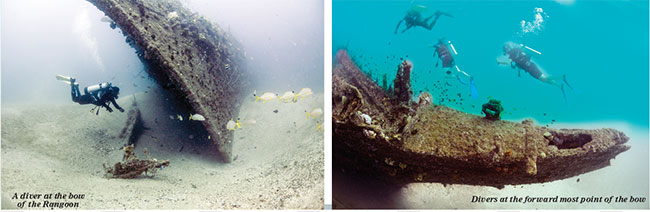
“Although the wreck of the Rangoon is quite deteriorated, it’s a spectacular dive site making a diver forego the sense of time,” says Jayawardena. The stem at the bow reminds one of an ancient Viking ship he says although the Rangoon was far from it. “It was 60 m long with a tonnage of 1,800.” The sheer beauty of the marine life replete with soldier fish, glass fish, rabbit fish, grey snappers and bluefin trevally often distract a diver from focusing on the wreck says Jaywardena who had dived there several times. Sri Lanka can be termed the ‘shipwreck capital of South Asia’ says the explorer. “With over 100 shipwrecks dotting its coast, and many of them providing a great wreck diving experience, Sri Lanka leads the scene even surpassing the wreck diving experiences offered by countries such as the Maldives, India, Thailand, Malaysia and Indonesia. In this context, the SS Rangoon is valuable to the country historically as well as from a tourism revenue generation point of view,” observes Jayawardena.

The Rangoon is among the eight shipwrecks found in Galle which could be accessed for recreational diving and is also the oldest ‘visible’ wreck among them, says Rasika Muthucumarana, Maritime Archaeologist from the Maritime Archaeology Unit of the Central Cultural Fund in Galle. “Most of the older shipwrecks dating back to the Dutch period are buried and are not visible to the recreational diver and they are only of archaeological importance. The Rangoon on the other hand is an important wreck for it has not only a recreational value but also a historical and a tourism value. It is also very rich in marine life.”

Lying on a clear, sandy bottom, the Rangoon is also considered an ‘ideal wreck’ because most of its components are still clearly identifiable says the Marine Archaeologist. “Her bow, anchor, stern, propeller and the mast are still visible.” Sadly, however, a good proportion of Rangoon’s bow was damaged last year when a ship was anchored on it, says Muthucumarana who calls for better awareness among the law implementing agencies about these shipwrecks which are not only an integral part of marine archaeology but also a vital tourism-generating source.
Pic credit: Rasika
Muthucumarana, Dr Malik
Fernando, Ghosts of the
Deep- Diving the shipwrecks of
Sri Lanka


By Ifham Nizam
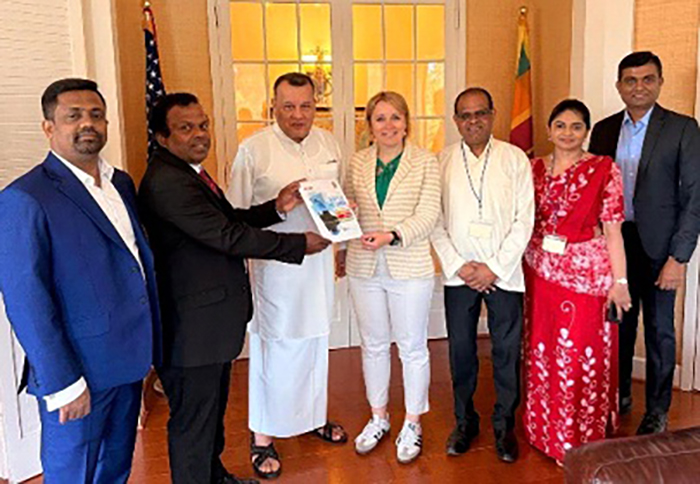
The sixth edition of the “Beauty of Sri Lanka” Photography Exhibition is set to unfold across North America this April, transforming the power of visual storytelling into a compelling platform for cultural diplomacy, environmental advocacy and nation branding.
Organised by the America Sri Lanka Photographic Art Society in collaboration with key diplomatic and institutional partners, including the Embassy of Sri Lanka in Washington, D.C., the Permanent Mission of Sri Lanka to the United Nations, the Consulate General of Sri Lanka in Los Angeles and Toronto, and the Sri Lanka Tourism Promotion Bureau, the exhibition will run from April 22 to May 4 across Los Angeles, Toronto, New York and Washington, D.C.
Held in conjunction with Earth Day, the exhibition continues to evolve as a globally recognised initiative that brings together art, conservation and international engagement. What began as a photography showcase has now matured into a dynamic soft-power platform that tells Sri Lanka’s story to the world—through its landscapes, biodiversity, and deeply rooted cultural heritage.

Photographers from Sri Lanka at Nigara State Park
The 2026 tour will feature prestigious venues that reflect its growing international stature. These include the iconic Church of Scientology Celebrity Centre International, Metro Hall in Toronto—marking the exhibition’s debut in Canada—the Permanent Mission in New York, and the Sri Lankan Embassy in Washington, D.C., as part of the widely celebrated Passport D.C. event. Each venue represents not only a geographic expansion but also a widening of the exhibition’s global audience and influence.

Exhibition
At its heart, “Beauty of Sri Lanka” is a vivid narrative of a nation’s natural and cultural wealth. From the mist-covered central highlands and pristine coastal belts to dense rainforests teeming with endemic wildlife, the exhibition captures Sri Lanka’s ecological richness through the lenses of talented photographers. These images serve as both an invitation to explore and a reminder of the urgent need to protect fragile ecosystems.
This year’s programme takes a significant step further by integrating real-world environmental action. The “ReTree Los Angeles” initiative, launched in line with Earth Day, focuses on tree planting, urban restoration and community engagement. It also includes a children’s painting competition aimed at fostering environmental awareness among the younger generation. Organisers believe that nurturing creativity at an early age can instil a lifelong commitment to conservation.
Adding a scientific dimension to the event, Dr. Sarath Gunapala will deliver the keynote address on “The Journey of Infrared Photography,” exploring how advanced imaging techniques can reveal unseen dimensions of the natural world. His participation highlights the exhibition’s interdisciplinary approach, where art meets science to deepen understanding and appreciation.
The exhibition will also feature a vibrant cultural segment designed to immerse international audiences in Sri Lanka’s living traditions. A carefully curated lineup of performances—including the sacred Wes Pooja, the dramatic Naga Raksha mask dance, the rhythmic Thelme ritual dance and the light-hearted Salu Paliya—will bring to life the island’s folklore, rituals and performing arts heritage. These performances are expected to add colour, rhythm and emotional depth to the visual experience offered by the photographic displays.
ASPAS President Suria Perera emphasised that the exhibition is more than a display of images. “It is a celebration of Sri Lanka’s identity—its natural beauty, its cultural vibrancy, and its responsibility to future generations,” she said. “Through photography and community engagement, we aim to inspire a deeper connection between people and the environment.”
Over the years, the exhibition has drawn a diverse audience, including diplomats, policymakers, conservationists, art collectors and members of the Sri Lankan diaspora. Its ability to connect these varied groups underscores its role as a bridge between cultures, fostering dialogue and mutual understanding while strengthening Sri Lanka’s global presence.
The continued support of diplomatic missions, cultural institutions and tourism authorities has been instrumental in elevating the exhibition’s profile. Their collaboration reinforces the role of art as a powerful tool in shaping perceptions, building partnerships and promoting sustainable tourism.
As the 2026 edition prepares to open its doors, “Beauty of Sri Lanka” stands as a testament to the island nation’s enduring appeal and its commitment to conservation. It is not merely an exhibition, but a movement—one that celebrates beauty, inspires responsibility and connects Sri Lanka to the world through the universal language of art.
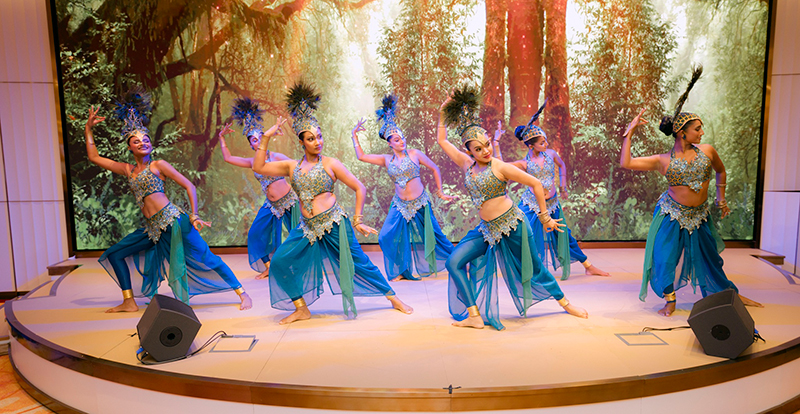
This holiday season, City of Dreams Sri Lanka invites guests to step into the heart of a truly Sri Lankan celebration with Signature Avurudu—a four-day cultural experience taking place.
Blending time-honoured traditions with contemporary flair, the festivities promise to capture the spirit of the Aluth Avurudda (Sinhala and Tamil New Year) in all its colour, rhythm, and warmth. From the moment guests arrive, they will be welcomed into a space transformed with festive décor, echoing the charm of a village celebrations brought to life in the city.
At the centre of the celebration is the Pahan Pujava, a symbolic lamp lighting ceremony led by the management, setting a tone of unity, prosperity, and new beginnings. This meaningful ritual reflects the essence of the New Year—a time to pause, reflect, and step into the new year with hope and positivity.
Throughout the four days, guests can experience the rich cultural heritage of Sri Lanka through a series of traditional performances. The rhythmic beats of raban and drums, alongside vibrant dance acts, will fill the air, creating an atmosphere that is both nostalgic and celebratory. Adding to the experience are elegantly dressed Sri Lankan hostesses, offering a warm, authentic welcome that embodies the island’s renowned hospitality.
No Avurudu celebration is complete without its flavours, and City of Dreams Sri Lanka delivers a feast to remember. Guests can indulge in an array of traditional sweets and savouries, alongside curated Avurudu-themed buffets and creative beverages inspired by local ingredients. Passing canapés and festive treats ensure there is something to enjoy at every turn—whether you’re reminiscing over childhood favourites or discovering new twists on beloved classics.
Designed as a celebration for all, Signature Avurudu brings together families, friends, and visitors from around the world to share in the joy of the season. It is a reminder that Avurudu is more than a festival—it is a feeling of togetherness, renewal, and shared happiness.
This April, celebrate the sights, sounds, and tastes of Avurudu at City of Dreams Sri Lanka—where tradition meets modern celebration, and every moment feels like home.

Students of S. Thomas’ College recently demonstrated commendable performance at two international sailing events held in India: the inaugural Indian Sailing Regatta and the 4th North-East Regatta. Both events featured participation from foreign teams, including Sri Lanka, Taiwan, Malaysia, Russia, Great Britain, South Korea, Singapore, and India.
The inaugural Indian Sailing League (ISL), held at Umiam Lake, Shillong, India, marked a significant milestone in the sport and was prominently featured in The Times of India. The ISL is a first-of-its-kind franchise-based sailing league, bringing together 14 teams, 182 sailors, and 58 international participants from eight countries.
The ISL follows a concept similar to the Cricket Indian Premier League, where top sailors are “bid” and selected into franchise teams representing different regions. The competition introduced an innovative team-based format in which the best sailor from each team in each category competed, combining multiple race formats such as fleet racing, team racing, marathon races, and rig-and-race challenges. This pioneering structure, widely regarded as a first in global sailing history, has significantly enhanced the spectator appeal and competitive depth of the sport, while promoting youth, women, and high-performance sailing on a single platform.
At the first Indian Sailing Regatta, in the Boys’ Optimist category, Haren Wickramatillake secured 3rd place and was also awarded a special medal for his courage during the rig and race event. Dhiren Perera achieved 3rd place in the rig and race event alongside his team member.
At the 4th North-East Regatta, performances continued to be noteworthy. In the Main Optimist Boys category, Haren Wickramatillake was placed 6th, while Shem Fernando secured 19th place out of 32 participants. In the Junior Green Fleet Optimist Boys category, Anuruth Tennakoon achieved 2nd place and Dhiren Perera was placed 4th out of 10 participants. In the ILCA 4 Boys category, Akaine Ubayasiri was placed 11th out of 22 participants.
These achievements highlight the high level of skill, determination, and sportsmanship demonstrated by the young sailors, while also reflecting Sri Lanka’s strong presence in an emerging and globally significant sailing platform.
Upcoming international sailing events, featuring students of S. Thomas’ College, include the Asian Beach Games 2026, to be held in China ,in April 2026, and the International Optimist Dinghy Association (IODA) competition, scheduled to take place at Port City, in Sri Lanka, in December 2026. These events will provide valuable international exposure and further opportunities for the young college sailors to compete at a high level.

Salt and Patidar power RCB past Mumbai Indians

Prasidh, Buttler set up comfortable win for Gujarat Titans

Heat Index at Caution level’ in the Northern, North-central, North-western, Western and Southern provinces and in Trincomalee district.

Showers above 75 mm are likely at some places in the Western, Sabaragamuwa, Central, Southern and North-western provinces.

Sun directly overhead Pesalai, Mankulam and Nedunkerny about 12:11 noon

PNS TAIMUR & ASLAT arrive in Colombo

‘Dates have the highest sugar content to fight Coronavirus’

Sunday Island 27 December – Headlines

#SundayIsland 17th December – Headlines

Sunday Island – 28th March

Sunday Island Headlines – 21 March

Sunday Island – 21st February – Headlines
-

 News2 days ago
CEB orders temporary shutdown of large rooftop solar systems
-

 News7 days ago
Lankan-origin actress Subashini found dead in India
-

 News5 days ago
AG: Coal procurement full of irregularities
-

 Business4 days ago
Israeli attack on Lebanon triggers local stock market volatility
-

 Business5 days ago
Hayleys Mobility introduces Premium OMODA C9 PHEV
-

 News7 days ago
UN Regional Director launches SL’s first Country Gender Equality Profile during official visit
-

 News7 days ago
Dialog Launches ‘GanuDenu QR’, Making Cashless Transfers Free for All with eZ Cash and Dialog Finance
-

 Business4 days ago
HNB Assurance marks 25 years with strategic transformation to ‘HNB Life’