
Sports
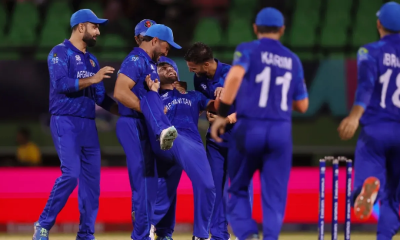
Rashid Khan appointed Afghanistan T20I captain


Rashid Khan has been named captain of the Afghanistan T20I team, replacing Mohammad Nabi who stepped down following Afghanistan’s campaign in the ICC T20 World Cup 2022 in Australia.Mirwais Ashraf, chairman of the Afghanistan cricket board, proposed Rashid to take over the role, with the legspinner having earlier led the country in seven T20Is in 2019. Rashid had also led Afghanistan in seven ODIs in 2018-19 and two Tests in 2019.
In Rashid’s previous captaincy stint, Afghanistan won four out of the seven matches under his leadership, including two victories against the West Indies in Lucknow. Rashid’s latest captaincy stint will begin in February 2023 when Afghanistan tour UAE to play three T20Is against the hosts.
“Rashid Khan is a massive name in Afghanistan Cricket. He has colossal experience of playing the format around the world which will help him take the team to a new level in the format,” said Ashraf.
“Rashid Khan has the experience of leading Afghanistan in all three formats before and we are happy to have him as our skipper for the T20I format again. I am sure he will come out on top and will bring more glories to the nation,” he said.
Speaking about his appointment, Rashid, the third highest wicket-taker in T20Is, said: “Captaincy is a huge responsibility. I have the experience of leading my country before, there is a great bunch of guys with whom I have a good understanding and feel pretty comfortable. We will try to stick together, will work hard to put things on the right track and bring pride and joy to our country and nation.”







[Cricbuzz]

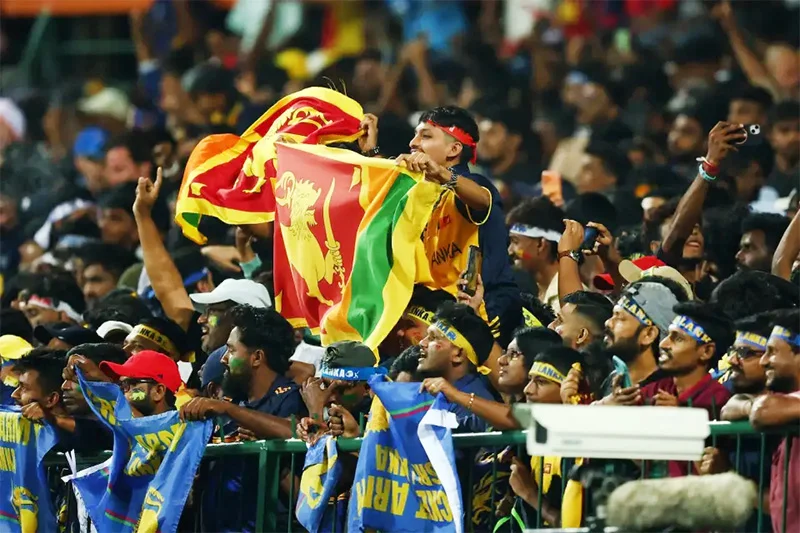
Sri Lanka became the first side from Group ‘B’ to punch their ticket to the Super Eight stage of the T20 World Cup, getting the job done with a game to spare and ticking the qualification box in clinical fashion. While they still have Zimbabwe to contend with in their final league outing today, the bigger fish to fry awaits on Sunday, a heavyweight rematch against England at Pallekele.
Earlier this month, England handed Sri Lanka a humbling 3-0 whitewash in a bilateral series at the same venue. Sri Lanka’s batting unit, in particular, was found wanting as England’s spinners kept them on a tight leash. But batting coach Vikram Rathour is not losing sleep over that setback, insisting the scoreline flattered the visitors.
“We have had three good games. I don’t think there were any issues as such during the England series with batting. We had some good games and not so good games. I wasn’t concerned about the results during that series. It was all about getting the process right,” said Rathour, who is contracted with Sri Lanka until the end of the World Cup.
Rathour, part of India’s backroom staff when they lifted the T20 World Cup in the Caribbean in 2024, knows a thing or two about peaking at the business end of a tournament. He stressed that dwelling on past scars would be counter-productive.
“We need to play to our strengths. We need to focus on the game and not think too much about the past or the future,” he explained.
Before they lock horns with England, however, Sri Lanka must first negotiate Zimbabwe, the tournament’s dark horses who have already sent Australia packing and gatecrashed the second round. The African side have punched above their weight, breathing fire with the new ball and showing steel with the bat.
 “Zimbabwe have played really well so far. They have a decent bowling unit. We need to play to our potential. If we can stick to our plans and execute them well, that will be good for us,” Rathour said.
Sri Lanka’s resurgence has been underpinned by a batting unit beginning to hum in unison. Opener Pathum Nissanka has become the cynosure of all eyes after his majestic hundred against Australia, the first century of this tournament, a knock that blended timing, temperament and a touch of audacity.
“It was almost the perfect batting knock. Pathum played one of the best T20 innings you will ever see. Kusal Mendis has been very consistent with three half-centuries in three games. Pavan Rathnayake has been good against spinners, using his feet well. We have played to our potential and we need to be consistent in doing that.”
Conditions, though, will once again demand adaptability. Colombo’s R. Premadasa Stadium is a different kettle of fish to the truer surfaces of Pallekele, where Sri Lanka outplayed Australia. At RPS, the ball grips, stops and asks awkward questions, a venue where flat-track bullies often come unstuck.
“I read a great line where someone had said that these are not tough conditions but these are different conditions. We have enough skill in the side to adapt to these conditions,” Rathour noted.
by Rex Clementine
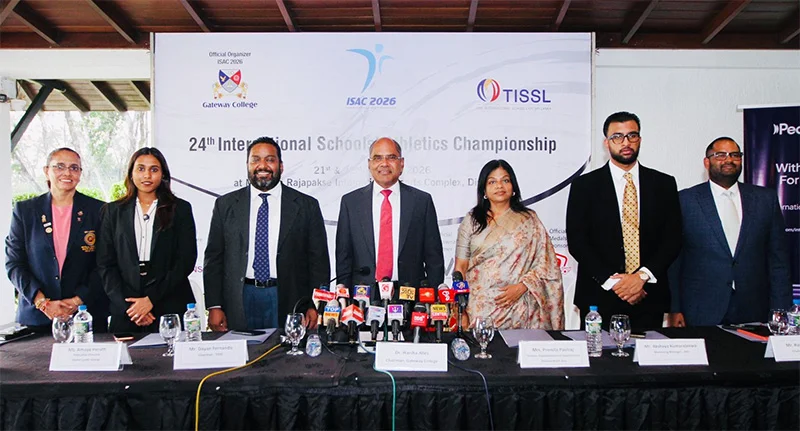
Gateway College, a pioneer in international school education in Sri Lanka, is set to host the prestigious International Schools’ Athletics Championship (ISAC 2026) at the Mahinda Rajapaksa International Stadium Diyagama over the weekend.
First held in 2001, ISAC has evolved into the flagship sporting event on the international schools’ calendar, showcasing the athletic excellence of students from 22 leading international schools across the country.
Founded by the late R. I. T. Alles, ISAC has played a pivotal role in advancing competitive sport among international schools, leaving behind an enduring legacy that has contributed significantly to the development of athletics in Sri Lanka.
The championship is expected to attract approximately 1,554 athletes and 300 technical officials, representing the participating schools. With an anticipated audience exceeding 15,000 students, parents and alumni, ISAC 2026 promises to be a vibrant celebration of athleticism, sportsmanship and camaraderie.
Commenting on the event’s national significance Ramantha Alles, Director of Gateway Group, stated, “ISAC has become an important platform for nurturing talented athletes and showcasing junior athletes of international repute. The standard of athletics among international schools has steadily progressed, with several athletes advancing to national and international levels, contributing to high-quality competition.”
Expressing his appreciation for their generous support, Dr. Harsha Alles, Chairman of the Gateway Group, stated, “It is heartening to see Pearson Edexcel as the Principal Sponsor, actively contributing to the holistic development of pupils, Home Lands as the Platinum Sponsor, extending its support to schools and Education and AVI as the Sportswear Partner, playing a valuable role in promoting sportswear and strengthening school sport.”
The event is further supported by Sense Rehabilitation and Sports Hospital as the Official Healthcare Partner, The Papare.com as the Official Broadcasting Partner, Yeti as the Official Hydration Partner and Dinemore Go as the Official Medal Sponsor.
ISAC 2026 will be conducted in accordance with TISSL rules and regulations and the International Athletics Federation Competition Rules. All athletes will compete using a common identity card issued by TISSL, the association representing member international schools.
Participating TISSL member schools for ISAC 2026 include: Asian International School, Belvoir College International, The British School in Colombo, Burhani Serendib School, Colombo International School, Colombo. Colombo International School, Kandy, Elizabeth Moir School, Gateway College, Colombo, Gateway College, Kandy, Horizon College International, Ilma International Girls School, Leeds International School, Panadura, Lyceum International School, Nugegoda, Lyceum International School, Panadura, Lyceum International School, Ratnapura, Lyceum International School, Wattala, OKI International School, Royal Institute, Stafford International School, St. Nicholas International School, Wycherley International School, Colombo, Wycherley International School, Gampaha.

South Korea’s ex-president jailed for life for masterminding an insurrection

Old and new at the SSC, just like Pakistan

Peru appoints Jose Maria Balcazar as president, ninth leader in a decade

Ambassador of Switzerland to Sri Lanka pays courtesy call on PM

Suspected carbon-monoxide leak kills at least 30 miners in Nigeria, witnesses say

Eight skiers found dead after California avalanche

‘Dates have the highest sugar content to fight Coronavirus’

Sunday Island 27 December – Headlines

#SundayIsland 17th December – Headlines

Sunday Island – 28th March

Sunday Island Headlines – 21 March

Sunday Island – 21st February – Headlines
-

 Life style4 days ago
Marriot new GM Suranga
-

 Business3 days ago
Ministry of Brands to launch Sri Lanka’s first off-price retail destination
-

 Features4 days ago
Monks’ march, in America and Sri Lanka
-

 Features4 days ago
The Rise of Takaichi
-

 Features4 days ago
Wetlands of Sri Lanka:
-

 News4 days ago
Thailand to recruit 10,000 Lankans under new labour pact
-

 News4 days ago
Massive Sangha confab to address alleged injustices against monks
-

 News2 days ago
IMF MD here