
News
Rape tops crime charts as domestic violence soars in 2024

Rape remains the most frequently reported crime in Sri Lanka with 2,252 cases of sexual harassment and close to 130,000 cases of domestic violence in 2024 alone; a significant increase from the pre-pandemic years. However, unreported crimes still far outnumber those that are reported, as many survivors of Sexual and Gender-Based Violence (SGBV) fear victim blaming, inadequate support, or insensitive handling of their cases by law enforcement, which leads to a culture of silence surrounding these crimes.
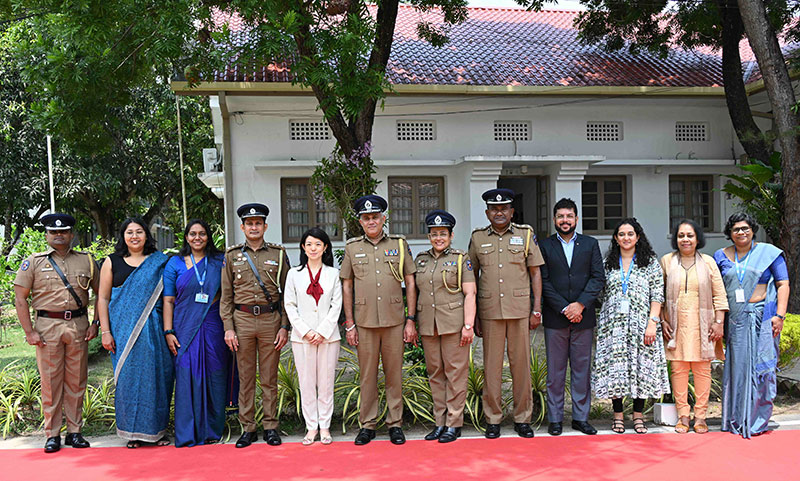
In this vein, and to address the growing necessity for capacity building and training of law enforcement officers to handle and report these cases, a Letter of Agreement (LOA) was signed recently with the United Nations Development Programme (UNDP) in Sri Lanka and the National Police Academy, towards capacitating the officers of the Bureau for the Prevention of Abuse of Women and Children of the Sri Lanka Police as a step in Sri Lanka’s journey to becoming a society that is safe for women and girls. This milestone is a part of the ongoing project titled ‘Ensuring Justice for Victim-survivors of SGBV in Sri Lanka’ with the generous support of the Government of Canada and implemented in collaboration with the United Nations Population Fund (UNFPA) and the Government of Sri Lanka.
The LOA was signed by the Executive Director of the National Police Academy (NPA), Deputy Inspector General Jaliya Senaratne, and the Resident Representative of UNDP in Sri Lanka, Ms. Azusa Kubota. The Deputy Inspector General in charge of BPACW, Renuka Jayasundara, Representatives from the Canadian High Commission and Officers of the National Police Academy and the Bureau for the Prevention of Abuse of Women and Children, were also in attendance at the signing.
Commenting on this partnership, DIG Jaliya Senaratne, Executive Director of the National Police Academy (NPA) stated, “The need for specialised training in the investigation of crimes against women and children cannot be overstated. These cases require not only technical expertise but also a deep sense of empathy, sensitivity, and an unwavering commitment to justice. The officers of the Children and Women Bureau of the Sri Lanka Police bear a tremendous responsibility in handling some of the most complex and sensitive cases, often involving vulnerable individuals who rely on them for protection and redress.”
Police officers are often the first responders to cases of SGBV. Their actions in the immediate aftermath of an incident can profoundly affect the survivor’s safety, dignity, and ability to seek justice. Specialised training on handling sexual and gender-based violence, victim protection, trauma-informed practices, and gender-sensitive investigation techniques and avenues aims to build the technical capacities of law enforcement officers. These capacity-building training courses will be anchored under the formal statutory body, tasked with providing advanced training and education on policing, law enforcement and related subjects to officers.
Speaking at the ceremony, Head of the Bureau for the Prevention of Abuse of Women and Children, DIG Renuka Jayasundara stated that while much has been done in terms of strengthening the Bureau in terms of recruitment and infrastructure, the crucial missing component has been the training and sensitisation of the officers of the Bureau, which will now be fulfilled through this series of training.
Highlighting UNDPs leadership of the initiative, Azusa Kubota, Resident Representative, UNDP Sri Lanka, stated, “Police officers are often the first responders to cases of SGBV. Their actions, in the immediate aftermath of an incident, can profoundly affect the survivor’s safety, dignity, and ability to seek justice. I, therefore, look forward to a fruitful partnership and assure our utmost support to ensure that the Bureau for the Prevention of Abuse of Women and Children are capacitated in a manner that benefits the most vulnerable of our society. The work of this Bureau is not just about law enforcement—it’s about building a safer, more equitable society for women and children across Sri Lanka.”
The curriculum will be developed by academics, police personnel attached to the academy and subject experts on SGBV and will cover key topics of prevention, investigation, and prosecution. The courses will include theoretical and practical aspects, including personal skills, investigation, and leading evidence. Following the development of the curriculum by the relevant resource persons, a Training of Trainers will be held for the police officials attached to the National Police Academy in order to equip them to effectively undertake this training for the relevant officers of the Bureau.
While introductory and intermediate-level training will be given for new recruits and mid-level officers of the Bureau, the NPA will also launch a 16-week Diploma for Officers in Charge (OICs) which will subsequently be built into the National Police Academy Curriculum. Police officers completing the Diploma training will be bonded to the BPACW through a five-year fixed-term agreement, as specialised SGBV skills remain within the unit and prevent loss of expertise due to routine transfers.


Proposed education reforms have drawn sharp criticism from education professionals, teacher unions and student organisations, who warned on Thursday that the changes risk undermining child safety, widening inequality and imposing unaffordable costs on parents.
Addressing a press conference in Colombo, Dr Ayomi Irugalbandara of the Faculty of Education at the Open University of Sri Lanka said the proposed reforms appeared to be largely modelled on foreign education systems without adequate consideration of local realities.
She took particular issue with proposals to integrate social media use into the school curriculum, noting that several developed countries have moved in the opposite direction by preventing children under the age of 15 from accessing social media platforms.
“Most of these modules are not appropriate for this country,” Dr Irugalbandara said. “We warn parents that these reforms place children at risk.”
Concerns were also raised over digital content linked to the revised curriculum. Inter-University Students’ Federation Convener Madushan Chandrajith said the Grade Six Information and Communication Technology (ICT) module included QR codes that directed students to a controversial YouTube channel.
“Who will take responsibility for children accessing such content?” he asked, calling for clear accountability mechanisms for material linked through digital platforms used in schools.
Secretary of the Workers’ Struggle Centre, Duminda Nagamuwa, criticised the government’s approach to the reform process, comparing it to the fertiliser policy introduced under former President Gotabaya Rajapaksa. He alleged that the authorities were pushing ahead with education reforms despite opposition from academics, teachers and other stakeholders.
Nagamuwa also highlighted the economic burden on families, noting that Sri Lanka’s poverty rate had increased from 12.5 percent to 25 percent. He questioned how parents were expected to afford smartphones or tablet computers required for students to access QR code-linked educational content.
“The government is asking parents to bear costs they simply cannot afford,” he said.
Ceylon Teachers’ Union General Secretary Joseph Stalin said schools had already begun collecting money from parents in anticipation of the reforms, including funds to purchase smart boards.

Opposition and SJB Leader Sajith Premadasa on Friday told Parliament that the Buddhism textbook contained a “serious error,” citing the use of the Ashoka Chakra instead of the Dharmachakra.
He said the Dharmachakra depicted in the book differs from the one featured in the state symbol and called on the Education Minister to correct the mistake.
Responding, Education Minister and Prime Minister Harini Amarasuriya said the Dharmachakra used in the textbook had been approved by the Ministry of Buddhist Affairs. She added that the advisory board on Buddhism had also endorsed it.
The Premier further noted that during her recent visit, Mahanayake Theras confirmed that the Dharmachakra in the textbook was the officially approved version.
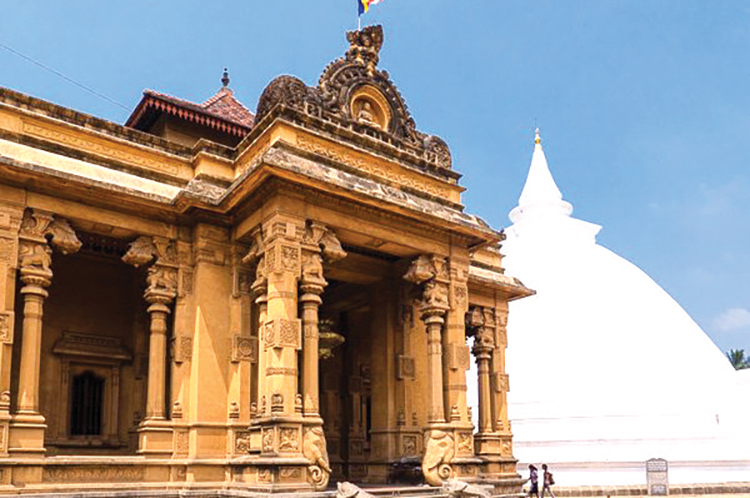
The Annual Kelaniya Duruthu Perahera at the historic Kelaniya Raja Maha Viharaya lit up the streets once again, concluding on Saturday night after three days of colourful pageantry.
First held in 1927 thanks to the vision of philanthropist Don Walter Wijewardene, son of Helena Wijewardene Lamathani of Sedawatte, the Kelaniya Duruthu Maha Perahera has grown into one of Sri Lanka’s most elaborate and grand low-country Buddhist pageants.
The Perahera commemorates the sacred visit of the Buddha to Kelaniya, the most revered temple in Sri Lanka’s Western Province. Celebrated annually during Duruthu Poya in January, the event showcases a fusion of historic, cultural, and religious traditions.
This year, under the guidance of Chief incumbent Venerable Professor Mahinda Sangarakkitta Nayaka Thera and Dayaka Sabha President Dr. Saman Weerasinghe, the festivities began with the ceremonial handover of the Sacred Relic Casket by Chancellor of Kelaniya University, Agra Maha Panditha Ven. Professor Kollupitiya Mahinda Sangharakkita Nayake Thera, to Chief Basnayake Nilame Dhammika Attygalle.
The sacred relic procession was followed by three Devale Peraheras dedicated to God Vibishana, God Kataragama, and God Vishnu, captivating devotees and tourists alike with traditional drumming, vibrant costumes, and ceremonial elephants.
The Perahera festivities also featured Pahalamaluwe Perahera on 8th January, Sacred City Perahera on 9th January, and the Grand Duruthu Maha Perahera on 10th January, with all events commencing at 8:00 pm. Special enclosures were arranged to accommodate foreign tourists, providing an immersive view of Sri Lanka’s rich cultural heritage.
As lanterns faded into the night sky and devotees paid homage, the Kelaniya Duruthu Perahera once again reaffirmed its place as a cornerstone of Sri Lanka’s cultural and religious calendar.

Rescuers race to find dozens missing in deadly Philippines landfill collapse

Trump seeks $100bn for Venezuela oil, but Exxon boss says country ‘uninvestable’

US military strikes Islamic State group targets in Syria, officials say

Gardner and Wareham lead Giants to opening-game victory

Experts: NPP education reforms unsuitable for SL

Sajith: Ashoka Chakra replaces Dharmachakra in Buddhism textbook

‘Dates have the highest sugar content to fight Coronavirus’

Sunday Island 27 December – Headlines

#SundayIsland 17th December – Headlines

Sunday Island – 28th March

Sunday Island Headlines – 21 March

Sunday Island – 21st February – Headlines
-

 News5 days ago
Interception of SL fishing craft by Seychelles: Trawler owners demand international investigation
-
 News5 days ago
Broad support emerges for Faiszer’s sweeping proposals on long- delayed divorce and personal law reforms
-

 Opinion2 days ago
The minstrel monk and Rafiki, the old mandrill in The Lion King – II
-

 Features2 days ago
The Venezuela Model:The new ugly and dangerous world order
-

 Latest News1 day ago
Rain washes out 2nd T20I in Dambulla
-
 Business1 day ago
Sevalanka Foundation and The Coca-Cola Foundation support flood-affected communities in Biyagama, Sri Lanka
-

 News4 days ago
Prez seeks Harsha’s help to address CC’s concerns over appointment of AG
-
 News6 days ago
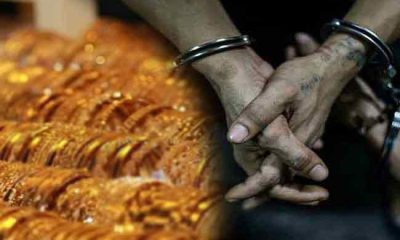
Private airline crew member nabbed with contraband gold