
News
Ranil wins by majority of 52 votes, garnering 134 votes as against 82 polled by Dullas


JVP’s Anura a distant third with just three votes
By Saman Indrajith
Ranil Wickremesinghe was yesterday elected the eighth Executive President by a majority of 52 MPs in Parliament. He received 134 votes, while other two candidates, Dullas Alahapperuma and Anura Kumara Dissanayake, received 82 and three votes, respectively.
As per the provisions of the Presidential Elections (special provisions) Act No 2 of 1978, at a secret vote in the House, the MPs voted to elect a succeeding President to fill in the post left vacant after the premature forced resignation of Gotabaya Rajapaksa last week.
Voting started at 10.23 am and ended at 11.44 am. Before voting began, Secretary General of Parliament, Dhammika Dasanayake, who acted as the Returning Officer during the election, showed the empty ballot box to the members, before sealing it.
Names of each MP were called for voting by the Secretary General, on a basis of the division list.
Speaker Mahinda Yapa Abeywardena commenced the voting process by casting his vote. Acting President Wickremesinghe was the second to cast his vote. Digamadulla SLPP MP D Weerasinghe and SLPP Kurunegala District MP Samanpriya Herath were indisposed but they came to Parliament to vote. Three SLPP MPs, Kanaka Herath, Arundika Fernando and P. Jayasekera had returned from overseas to cast their votes.
The counting of votes commenced around 11.51 am. Speaker Abeywardena announced that the three candidates could monitor the counting of the votes or they could nominate a representative. The Speaker informed no mobile phones would be permitted during the counting.
Accordingly, Acting President Ranil Wickremesinghe nominated MP Harin Fernando while Dullas Alahapperuma nominated MP Dillan Perera and Anura Kumara Dissanayake nominated MP Vijitha Herath to monitor the counting process.
Only 223 MPs out of 225 member-house voted in the election. TNA MPs Selvarasa Kajendran and GG Ponnambalam abstained from voting. At the announcement of the results, Secretary General Dhammika Dasanayake said that four votes were discarded as they were invalid owing to errors.


At present, El Niño conditions have developed and are classified as being at a weak level. Forecasts indicate a 63% probability of a very strong El Niño event developing during the period from November 2026 to January 2027. According to the National Oceanic and Atmospheric Administration (NOAA), there is approximately a one-third probability that El Niño will remain below a very strong intensity.
Typical Climatic Conditions Associated with El Niño
Based on analyses of past El Niño events that occurred between 1950 and 2025:
• Rainfall during July and August may be below normal, particularly in the dry zone areas.
• From October onward, rainfall is generally expected to be above normal.
• If a positive Indian Ocean Dipole (IOD) develops, enhanced rainfall conditions may continue until December.
Sectors Requiring Attention
• Appropriate measures should be taken for water resource management during July and August.
• Increased rainfall expected from October onward may lead to floods and landslides, requiring preparedness and close monitoring. The forecasts are important for sectors such as, Agriculture /Water management /Livestock /Health /Energy /Other climate-sensitive sectors
• Attention should be paid to official information issued by the Department of Meteorology.
Actions by the Department of Meteorology
The Department of Meteorology continuously monitors the evolving situation and issues:
• Weekly and monthly seasonal forecasts and Monthly analyses of rainfall data to monitor meteorological drought conditions.
As weather conditions are influenced not only by El Niño but also by other climatic factors, updated forecasts and advisories are regularly shared with relevant stakeholder organizations (Irrigation/ Water Management Committee /Department of Agriculture/National Building Research Institute/Disaster Management Centre (DMC)/Ministry of Health /Sri Lanka Land Development Corporation…etc). The Department also provides technical support to the committee established through a Cabinet decision to address climate-related impacts. The Department’s monthly rainfall outlook for July to September 2026 is attached
Monthly Rainfall Forecasts for July, August and September 2026
Month Rainfall forecast
July 2026
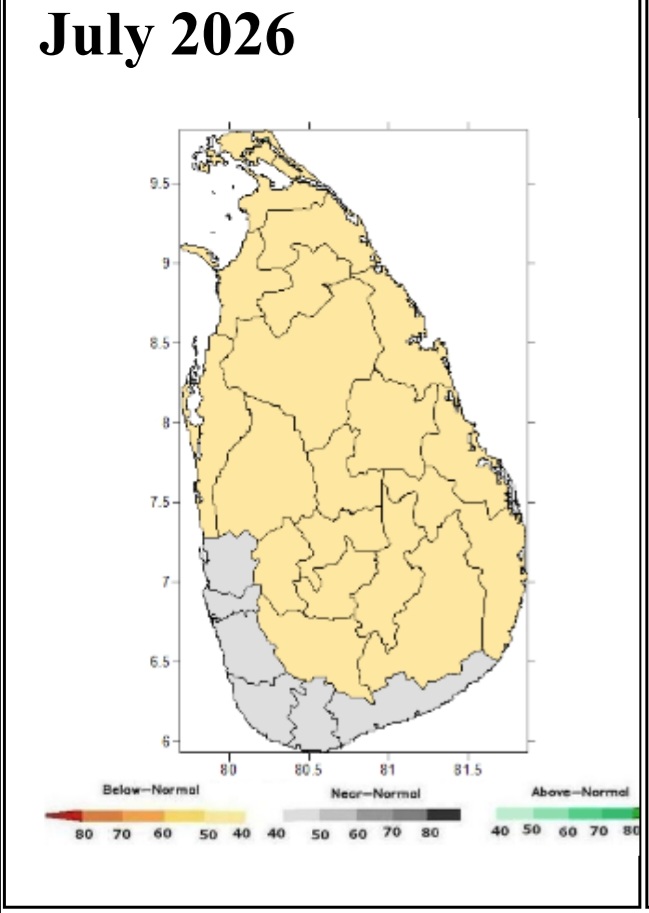
During July 2026, there is a higher probability of having near normal rainfall across most parts of the Western and Southern Provinces. The remainder of the country is expected to experience below normal rainfall.
August 2026
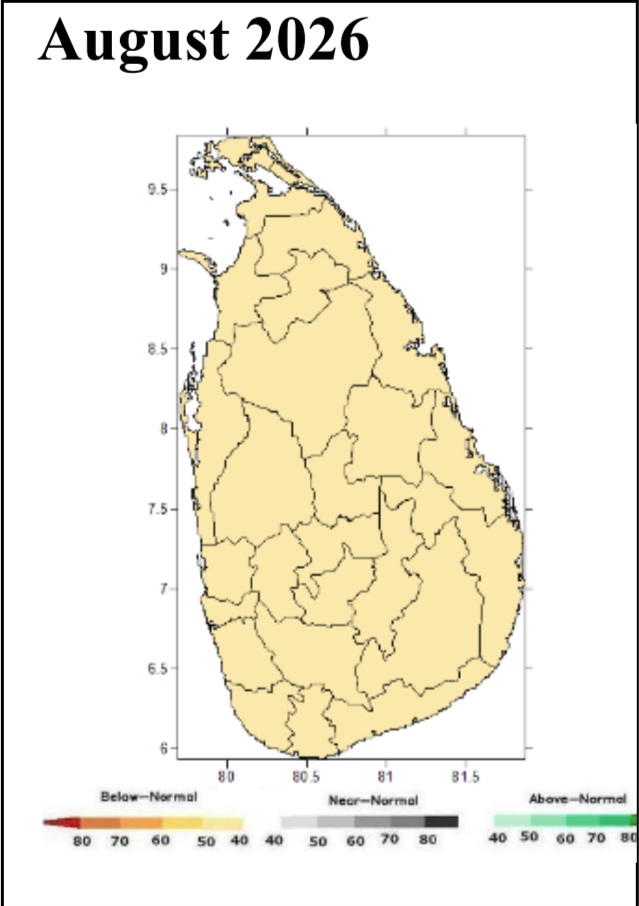
There is a higher probability of having below normal rainfall across most parts of the country during month of August 2026.
September 2026
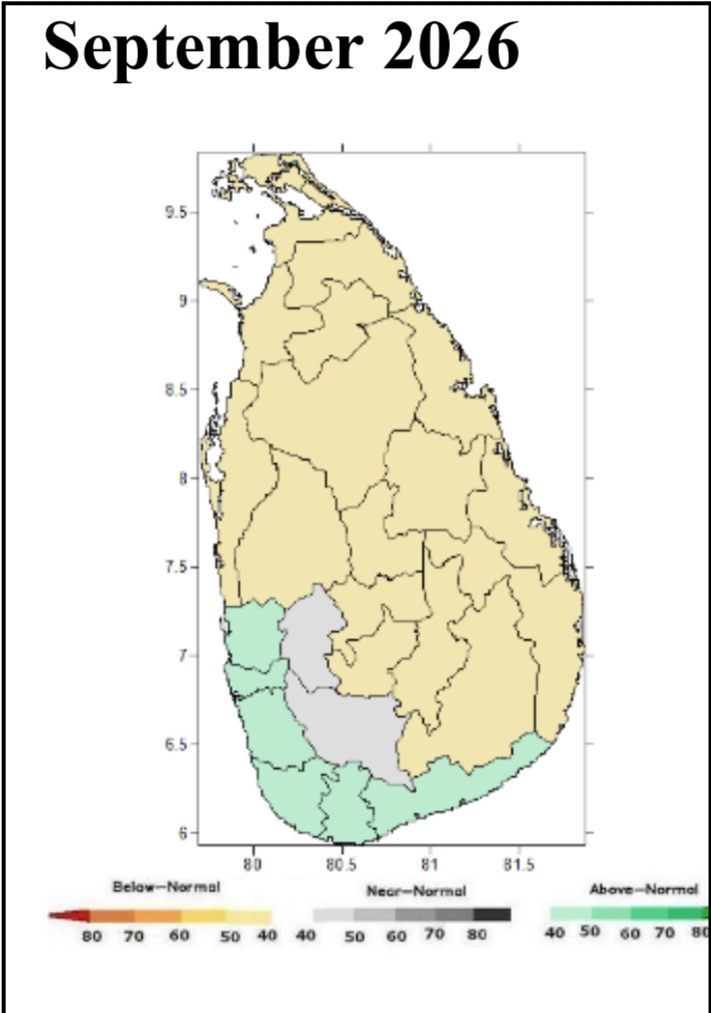
There is a possibility of above-normal rainfall across most parts of the Western and Southern Provinces, while near-normal rainfall is expected in the Sabaragamuwa Province. Below-normal rainfall is likely in the remaining areas during September 2026.
Note: These long-range forecasts may change due to strong day-to-day atmospheric variability associated with the movement of weather systems such as atmospheric disturbances, low-pressure areas, and depressions, as well as intra-seasonal oscillations such as the Madden–Julian Oscillation (MJO). Therefore, in addition to the weekly and monthly forecasts, it is important to pay attention to the Department’s official announcements, weather advisories and warnings, as well as the daily weather forecasts issued by the Department of Meteorology.
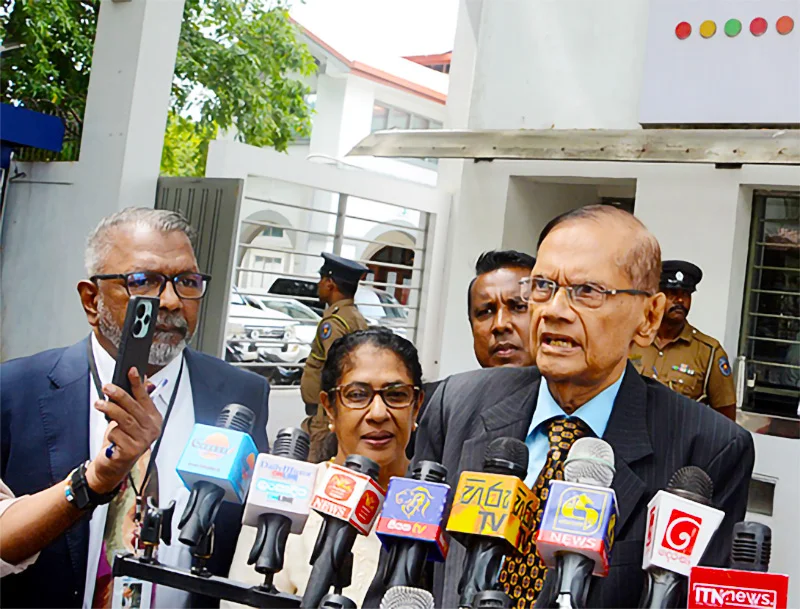
Former External Affairs Minister Prof. G. L. Peiris yesterday (15) briefed the UN Resident Coordinator in Colombo, Marc-André Franche, on President Anura Kumara Dissanayake’s move to extend the retirement ages of the superior court judges and the delay in filling the vacancies in the Supreme Court and the Court of Appeal.
Prof. Peiris, the convenor of the People’s Joint Opposition, led the delegation that included UNP General Secretary and former Minister Thalatha Atukorale, former UPFA National List parliamentarian Suren Raghavan and ex- SLPP MP Premnath C. Dolawatta.
Having met the top official here, Prof. Peiris briefed the media on their decision to bring the developing situation to the notice of the UN.
Referring to the opposition of the legal fraternity to the NPP government’s plan, Prof. Peiris emphasised that the civil society, too, had opposed the politically motivated initiative.
Prof. Peiris said that instead of addressing the burning issues affecting the public, the government was creating new problems.
A week-long crackdown to begin in 11 districts
Hospitals are coming under mounting pressure as the country’s dengue epidemic gathers pace, with nearly 70,000 infections and 48 deaths reported so far this year, prompting health authorities to launch an intensive week-long mosquito control campaign in 11 districts.
The National Dengue Control Unit (NDCU) said 69,951 dengue cases had been reported by July 13, with 14,572 new infections recorded during the first 13 days of July alone. June saw the highest monthly caseload of the year, underlining the rapid spread of the mosquito-borne disease during the southwest monsoon.
Acting Director of the NDCU, Dr. Kapila Kannangara, warned that the hospital system was facing severe congestion due to the unprecedented influx of dengue patients.
“We are seeing an alarming increase in admissions. Hospitals are under tremendous pressure, and public cooperation is essential to bring the outbreak under control,” he said, announcing that a special one-week dengue control programme would be implemented across 11 high-risk districts.
Health authorities have identified 175 Medical Officer of Health (MOH) divisions as high-risk dengue zones. Public Health Inspectors will conduct inspections, eliminate mosquito breeding sites and initiate legal action against those maintaining mosquito-infested premises.
The Western Province continues to account for the largest share of infections, with Gampaha and Colombo among the worst-affected districts. Several hospitals are already operating beyond capacity as the number of admissions continues to climb.
Health officials attributed the surge to intermittent rains, poor waste disposal, stagnant water collections and inadequate community participation in vector control programmes.
The Ministry of Health has appealed to local authorities, schools, workplaces, religious institutions and households to inspect their premises regularly, clear blocked drains and roof gutters, cover water storage containers and remove discarded tyres, cans, bottles and other containers capable of collecting rainwater.
Medical experts urged the public not to ignore symptoms such as persistent fever, severe headache, pain behind the eyes, vomiting, abdominal pain and bleeding manifestations, stressing that early medical treatment is critical in preventing severe dengue and deaths.
Officials emphasised that eliminating mosquito breeding sites remains the single most effective way of controlling dengue, warning that unless communities actively participate, the outbreak could worsen during the ongoing rainy season.
With daily case numbers continuing to rise and hospitals struggling to cope, health authorities said the coming weeks would be crucial in determining whether the country can curb one of its worst dengue outbreaks in recent years.
By Ifham Nizam

Current El Niño Status in Sri Lanka

A few showers may occur in the Western, Sabaragamuwa and North-western provinces and in Kandy, Nuwara-Eliya, Galle and Matara districts.

Argentina face fine for Falklands banner in semi-final win

US launches fresh strikes on Iran as Trump warns Tehran it ‘better behave’

Govt. move to extend retirement ages of top judges: Opp. complains to UN

Dengue surge pushes hospitals to the brink as cases near 70,000

‘Dates have the highest sugar content to fight Coronavirus’

Sunday Island 27 December – Headlines

#SundayIsland 17th December – Headlines

Sunday Island – 28th March

Sunday Island Headlines – 21 March

Sunday Island – 21st February – Headlines
-
 News6 days ago
Herath warns prospective migrant workers not to get fleeced by racketeers
-
 Features4 days ago
Prison riots and politics: NPP’s biggest challenge and Sri Lanka’s biggest opportunity
-

 Editorial5 days ago
What’s the world coming to?
-
 Foreign News6 days ago
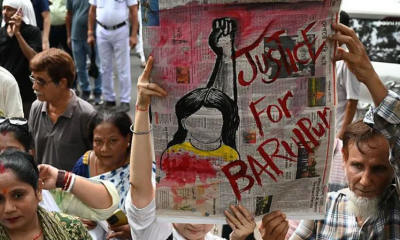
Tensions erupt in Indian state after 11-year-old raped and murdered
-

 Features6 days ago
Devanesan Annan – in Memoriam
-
Editorial6 days ago
Punishment in hellholes
-
 Features1 day ago
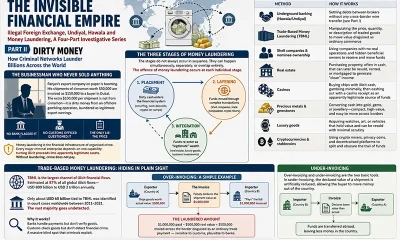
Dirty Money
-

 News7 days ago
Representatives of the Organization of Professional Associations (OPA) of Sri Lanka meet the Prime Minister