
Sports
Rampant Australia stand in South Africa’s path to glory

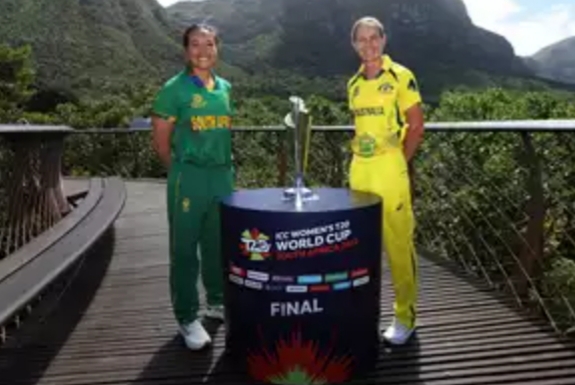
It isn’t often that bits of paper stuck to windows are worth quoting, but these are extraordinary times. “Sold out,” read the signs on the ticket booths at Newlands on Saturday afternoon – more than 24 hours before South Africa will take on Australia in the women’s T20 World Cup final.
Cape Town isn’t a metropolis like Mumbai or London, where there’s a good chance more people than are needed to fill the ground are going about their business in the surrounding streets on any given match day. It also isn’t Melbourne, which although has a population comparable to Cape Town’s also has the MCG, with its exponentially bigger capacity than Newlands, which suffers from the added disadvantage of being hemmed in by concrete neighbours on all sides. Unless you live or work nearby, getting there is difficult.
But Saturday morning produced queues outside Newlands, that snaked many metres down the pavement to the end of the block, of aspirant spectators for today’s showdown. If you know South Africans and their idea of sport worth paying money to watch, especially here in the leafy, genteel heart of the patriarchy, you know they wouldn’t ordinarily spend a weekend morning waiting patiently in the summer sun trying to buy access to a game unless it is to be played by men.
The lines wouldn’t have formed had South Africa not earned an unlikely but deserved victory over England in their semi-final at the same ground on Friday. That made Sune Luus’ team the first senior side from her country, men or women, to reach a World Cup final in any format.
Like making it to Newlands, getting to the decider hasn’t been simple for the South Africans. They shambled to two defeats in their four group games, putting in performances that would have buried them had they played like that in one more match. Mostly, their batters couldn’t match their bowlers. On Friday, bat met ball on something like equal terms and the result was astounding. Having scored a decent 164/4 – comfortably their highest total in their last seven T20Is in which they have batted first – South Africa took all eight England wickets to fall for 100 runs and won by six runs.
Their opponents on Sunday couldn’t have taken a more different route to the final. Australia were on auto-pilot throughout the group stage, where they never looked like losing. Only in their semi were they stretched. They made a serious 172/4, which India came within five runs of overhauling.
The wider narrative tells a similar story. Before Friday, South Africa had known the disappointment of five failed white-ball semifinals. There have been 19 women’s global tournaments and the Aussies have been to the final in 12 of them. Or maybe 13: there was no final in the first two ODI World Cups, in 1973 and 1978, which were decided on points. But England and Australia were the only unbeaten teams going into the last match in 1978. So it is considered a de facto final. Of those 13 tournaments, Australia have won 12. If David versus Goliath needs a reboot to bring it up to speed with an age in which women are taken more seriously in every sphere of life – and the gods know it does – this match fits the template.
The key contest looks likely to be Australia’s batters against South Africa’s pace bowlers, but the way the home side’s batters dealt with England’s crack attack says that theory could be in for a shake-up. Suddenly Tamzin Brits is five runs ahead of Alyssa Healy as the tournament’s highest remaining run-scorer, albeit from one fewer innings. But Ash Gardner is the leading wicket-taker left in the competition and no-one has a better economy rate than Grace Harris.
Only the stupid money would not be on Australia to clinch another title. They have too many threats in too many places, who have delivered accordingly, not to be outright favourites. Thing is, much the same could have been said about England before the semi-final. They encountered a South Africa team who had finally got over themselves well enough to play properly.
A jam-packed Newlands will be willing them to do so one more time with feeling on Sunday. Men might form most of the crowd, as they have in the past. The difference this time is that they won’t only watch a cricket match, or even a cricket match played by women. They will attend history in the making, and they will hope as hard as they dare, from the bottom of their hoary, hairy hearts, that they are on the side of the team who write it.
South Africa Possible XI: Laura Wolvaardt, Tazmin Brits, Marizanne Kapp, Sune Luus (capt), Chloe Tryon, Anneke Bosch, Nadine de Klerk, Sinalo Jafta, Shabnim Ismail, Ayabonga Khaka, Nonkululeko Mlaba
Australia Possible XI: Alyssa Healy, Beth Mooney, Meg Lanning (capt), Ashleigh Gardner, Grace Harris, Ellyse Perry, Tahlia McGrath, Georgia Wareham, Jess Jonassen, Megan Schutt, Darcie Brown



The Cabinet of Ministers approved the resolution furnished by the Minister of Youth Affairs and Sports to establish the proposed National Higher Performance Centre for atletes.

India opener Shafali Verma has received an official reprimand and a demerit point for breaching Level 1 of the ICC Code of Conduct during the second T20I against Zimbabwe on Sunday.
Shafali, an ICC release said, breached Article 2.2 of the ICC Code of Conduct for Players and Player Support Personnel, which relates to “abuse of cricket equipment or clothing, ground equipment or fixtures and fittings during an International Match.”
It was Shafali’s first offence in a 24-month period.
The incident occurred in the 12th over of Zimbabwe’s innings when Shafali threw the ball into the ground in frustration after dropping a chance at mid-off offered by Chipo Mugeri-Tiripano off Sree Charani.
Shafali admitted the offence and accepted the sanction proposed by match referee GS Lakshmi, which meant there was no need for a formal hearing.
Level 1 breaches carry a minimum penalty of an official reprimand, a maximum penalty of 50% of a player’s match fee, and one or two demerit points.
India currently lead the three-match series 2-0 with the third game to be played on Tuesday evening. The T20Is will be followed by three ODIs in Vadodara from October 23.
(Cricinfo)

A total of 146 players will be competing for 27 available slots in the WPL 2027 mini auction on October 28 in Kochi. Of these, England batter Sophia Dunkley and Australia captain Sophie Molineux are the only two players who have listed themselves at the maximum base price of INR 50 lakh.
The auction pool has 119 Indian players, including 22 capped and 97 uncapped players, with 20 slots available for Indian players. The overseas pool has 27 players – 14 capped and 13 uncapped – including six from Associate teams, with seven slots available.
G Kamalini (released by Mumbai Indians), Kiran Navigre (released by U P Warriorz), Heather Graham and Jess Jonassen have registered at the second-highest base price of INR 40 lakh, while a total of 30 players have registered at INR 30 lakh.
Among the notable absentees are West Indies allrounder Deandra Dottin, who was released by UPW, and Australia legspinner Alana King, who was released by Delhi Capitals. Lizelle Lee, who was DC’s highest run-scorer last season, has also not listed herself after being released by the franchise.
What the teams look like going into the auction
Only two English players – Dunkley and Kira Chathli (INR 10 lakh) – have registered for the auction, with several others, including Danni Wyatt-Hodge, Alice Capsey, Dani Gibson, Lauren Filer and Linsey Smith opting to skip the WPL next year.
Cricinfo has learned that England are likely to play three T20Is in Sri Lanka in early February, which will clash with the final week of the WPL. While the ECB is likely to allow players to stay in India to complete the tournament, most players have instead chosen to prioritise their international commitments ahead of the Champions Trophy later that month.
The relatively low salaries on offer at the WPL are also understood to be a factor in many English players deciding not to register, with most internationals earning significantly more to play in the Hundred (up to £190,000 last year) than the highest permitted base price in the WPL of INR 50 lakh (£40,000 approx).
Molineux was part of the Royal Challengers Bengaluru [RCB] title-winning squad in 2024, and had bagged 12 wickets in ten games at an economy rate of 7.31. She was retained by RCB for the 2025 season but a knee injury ruled her out of the season. Dunkley, meanwhile, played for Gujarat Giants [GT] in 2023 before opting not to register for the 2024 season. She went unsold in the 2025 auction.
Among the premier internationals who have listed themselves for INR 30 lakh are Australia allrounder Grace Harris (released by RCB), Sri Lanka captain Chamari Athapaththu, South Africa left-arm spinner Nonkululeko Mlaba and South Africa allrounder Chloe Tryon.
UPW, who released nine players, will go into the auction with the biggest purse of INR 3.75 crore.
[Cricinfo]

Import and Export (Control) Regulations No. 08 of 2026
Draft Bill of the Public Private Partnership Enterprises Act to be gazzetted
Amendment of the Ayurvedha Act No. 31 of 1961

Cabinet nod to amend the Sri Lanka Development Administration Institute Act No. 9 of 1982
Establishment of the National Higher Performance Centre
State patronage for the cremation ceremony of the late deputy prelate (Anu Nayaka Thero) of the Sri Laka Ramangya Maha Nikaya, Gatambe Rajopawanramadhipatha, Siri Chandawimala Wanshalankara, Chandrakeerthi Sri Amarawansha, Sadhdharmawageeshwara, Shasanashobhanna Most Venerable Keppetiyagoda Siriwimalabhidhana Thero

‘Dates have the highest sugar content to fight Coronavirus’

Sunday Island 27 December – Headlines

#SundayIsland 17th December – Headlines

Sunday Island – 28th March

Sunday Island Headlines – 21 March

Sunday Island – 21st February – Headlines
-

 Features3 days ago
Kotahena:A Small Enclave, An Extraordinary Legacy
-

 News7 days ago
Sri Lanka, India caught in US-Iran ship crisis
-

 News4 days ago
Asgiri Mahanayake calls for immediate release of Gnanasara Thera
-

 News3 days ago
Record 1,600 students take Russian Classical Ballet examination in Sri Lanka
-
 News6 days ago
AC President recuses himself from hearing prison attire case pertaining to Gnanasara Thera
-

 News5 days ago
Naval officer testifies Yoshitha received Rs. 5.15 mn in salaries during SLN service
-

 Latest News7 days ago
Heavy showers above 100 mm are likely at some places in the Western, Sabaragamuwa, Southern, Central, and North-western provinces and in Anuradhapura district.
-

 News3 days ago
Karannagoda pushed for £24,536 for Yoshitha’s UK training, Court told