
News
Raigam Tele’es opens

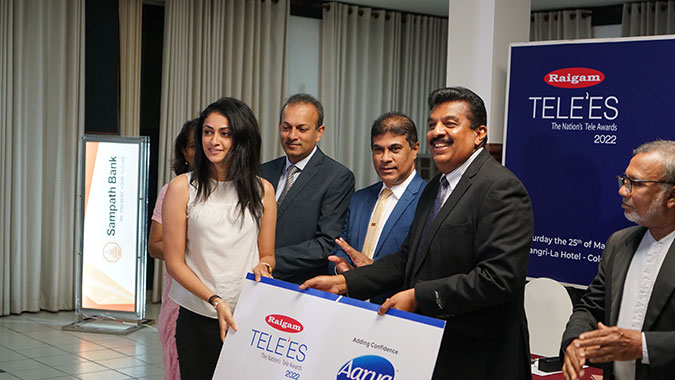
The 19th ‘Raigam Tele’es’, tele-award ceremony to recognize the talent of the television media opened its application process last week at Sri Lanka Foundation in Colombo.
Chairman, Raigam Group of Companies,Dr. Ravi Liyanage said that a wide range of cinema and television festivals are conducted at both domestic and international levels in order to uplift the quality and creativity of relevant products through appreciation of good work done by the artists, producers and institutions, annually. Further these festivals result in setting benchmarks for the industry. Sri Lankans experienced the first ever indigenous film festival, Sarasaviya Cinema Award Ceremony on 9th May 1964 and since then a few more award ceremonies have been introduced by the government as well as non-governmental bodies, of which some are not visible regularly while few other are not in existence today.
In 2005 Raigam Tele’es was launched by the famous local business conglomerate in FMCG industry, the Raigam Group of Companies to fill the gap that had been created in conducting a regular award ceremony for the television industry due to the unstable situation in the country. Today, Raigam Tele’es has become the most prominent television festival in Sri Lanka with the record of conducting such an event consecutively for eighteen years. The highest quality standards maintain in the judging process, innovative presentation and broad coverage through all most all the television channels and social media are the success factors of the festival. Raigam Tele’es has pioneered in introducing many features to the industry including announcement of nominations at a grand function prior to the main event. While the award winners are benefitted with cash awards, all the nominees are benefitted with a valuable insurance cover and testimonials.
Raigam Tele’es holds the record for conducting the festival for seventeen years without any interruption. The latest was conducted as a combined festival for 2020 and 2021 in order to cover up the delayed festival for 2020 due to the COVID Pandemic.
An independent non-commercial body under the name “Raigam Tele’es Secretariat” has been established for conducting the event under the guidance of an eminent panel of artists and academics.
Selection process commences with calling applications for awards by a public announcement and also an invitation to all television channels to participate the festival with prospective entries. All entries for awards must be certified by the respective Channel Head that they were telecast on the channel during the relevant period. Repeat telecasts and programs telecast on paid channels are not eligible for awards.
Applications / Entries for Raigam Tele’es 2022 will be accepted up to 15th January 2023. Those who are expecting to apply for the awards are kindly requested to contact Raigam Tele’es Secretariat on 0707 061602/ 0707 061508 immediately.Application forms can be obtained from respective TV channels, contacting above telephone numbers or visiting the official web site www.raigamtelees.lk
All the entries are carefully scrutinized by a competent and independent panel of judges. The panel of judges chaired by Buddadasa Galappatty comprises Prof. Rohini Paranawithana, Ravindra Guruge, Dr. Hansamala Ritigahapola, Jayanath Gunawardhena, Aruna Gunarathna, Ranga Dassanayake, Saman Wickremarachchi, Chaminda Welagedara and B. H. Abdul Hameed.
Managing Director, Raigam Group of Companies Kishan Theodore, Senior Director, Raigam Group of Companies Ganaka Amarasinghe, Chairman, Panel of Judges Buddhadasa Galappatti , Snr. DGM – Digitalization, Deposit Mobilization & Marketing, Sampath Bank Tharaka Ranwala, CEO, Mobitel Chandika Vitharena and Zonal Manager, Allianz Insurance also addressed the event. Other sponsors of Raigam Tele’es were represented by Sidatha Kodikar (Managing Director, Imaging Entertainment), Miss Nirushi Theodore (Assistant Brand Manager- Aarya, Raigam Group), Nayana Karunarathna (Chairman, Salon Nayana) Deemal Jayasooriya (Design-Factory and Corporate Manager, Stone & String (Pvt) Ltd.)

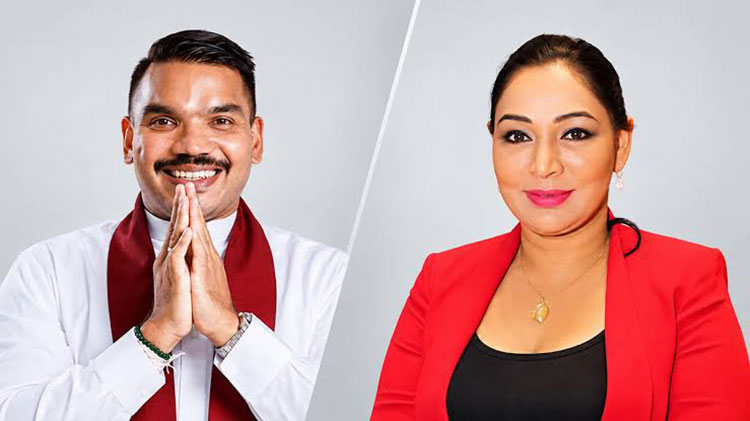
SLPP MP Namal Rajapaksa and former Krrish Group Executive Director and businesswoman Janaki Siriwardena were further remanded until October 23 by the Colombo Chief Magistrate’s Court yesterday in connection with an alleged Rs. 70 million bribery case involving the Krrish Group.
Colombo Chief Magistrate Asanga S. Bodaragama rejected the bail application filed on behalf of Siriwardena.
The Magistrate said the order on Namal Rajapaksa’s bail application was not ready and would be delivered on the next court date.
The Commission to Investigate Allegations of Bribery or Corruption (CIABOC) arrested the two suspects and produced them before court over allegations that a bribe of Rs. 70 million had been solicited and accepted in connection with the affairs of the Krrish Group.

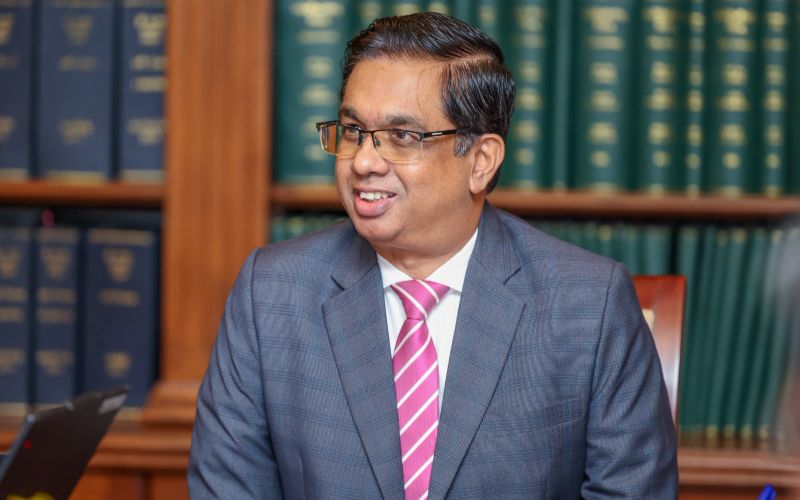
A progress review meeting on reforms and modernisation initiatives at Sri Lanka’s key state revenue-collecting institutions was held on Thursday (15) at the Presidential Secretariat, chaired by Secretary to the President Dr Nandika Sanath Kumanayake, with the participation of representatives of the International Monetary Fund (IMF) and officials of the Revenue Administration, Reform and Modernisation Bureau (RARMB) of the Presidential Secretariat.
At the meeting, the IMF representatives commended the revenue collection efficiency of the Department of Inland Revenue, Sri Lanka Customs and the Department of Excise, the country’s three leading state revenue-collecting institutions. Extensive discussions were also held on the progress of the reform and modernisation programmes being implemented at these institutions.
Secretary to the President Dr Nandika Sanath Kumanayake outlined the progress achieved by the three institutions to date and the reforms planned for implementation in the future.
The IMF representatives also highlighted the importance of strengthening risk management, developing human resources and ensuring the efficient operation of computer systems at the respective institutions.
Senior Additional Secretary to the President Seevali Arukgoda also attended the meeting. The IMF was represented by Cindy Negus, Senior Economist in Revenue Administration for the Asia and Pacific, Europe, Middle East and Central Asia regions; Alison Lister, Revenue Administration Adviser; and Gregory Toppin, Resident Revenue Adviser in Sri Lanka. A group of senior officials from the Revenue Administration, Reform and Modernisation Bureau of the Presidential Secretariat also participated.
(President’s Media Division)
By Anuradha Hiripitiyage
Electricity tariffs should be reduced by between 3 and 5 percent instead of being increased by 2.88 percent in the fourth quarter, as proposed by the National System Operator (NSO), Electricity Consumers’ Association Secretary Sanjeewa Dhammika said.
Addressing a media briefing in Maradagahamula, Divulapitiya, Gampaha, yesterday (16), Dhammika said a proper assessment of electricity generation costs, including the contribution of hydropower, could justify a reduction in tariffs.
He said the NSO had sought approval from the Public Utilities Commission of Sri Lanka (PUCSL) for a 2.88 percent tariff increase, which was expected to generate an additional Rs. 4,438 million.
However, the Commission had indicated that an increase of only 1.46 percent was warranted, amounting to Rs. 2,245 million, he said, adding that even this increase was unnecessary.
Dhammika alleged that the proposed revision sought to pass on to electricity consumers the financial burden arising from the non-arrival of five coal shipments and failed tenders.
“The Government had said that the burden of coal-related losses would not be passed on to the public. It is therefore unjust to make consumers bear these costs,” he said.
He pointed out that the PUCSL had forecast that hydropower would account for 32.34 percent of total electricity generation in the coming quarter, while the cost of such generation would represent only 3.45 percent of the overall cost of electricity production.
Consumers should benefit from the lower cost of hydropower generation rather than bear the burden of more expensive thermal power generation, he said.
Dhammika also questioned the inclusion of Rs. 669 million in capacity charges that had not been approved by the PUCSL, as well as a further Rs. 1,069 million to repay loans relating to incomplete projects.
Including such charges in the proposed tariff revision was unjustifiable, he said.
The PUCSL has given the public until October 30 to submit their views on the proposed tariff revision.
Dhammika said the possibility of increased hydropower generation in the coming weeks, as reservoir levels rise, should also be taken into account when determining electricity tariffs.
He maintained that tariffs could be reduced by 3 to 5 percent if hydropower generation was properly assessed and coal-related losses and unapproved charges were excluded from the calculations.
He further claimed that electricity tariffs could be reduced by as much as 10 percent through the promotion of renewable energy and the effective use of solar power and battery storage systems.
The Electricity Consumers’ Association urged the Government to withdraw the proposed tariff increase, insisting that consumers should not be made to bear costs arising from coal supply problems and other disputed charges.

Namal, Janaki further remanded

Achintha smashes 1,500 metres record at All Island Schools Games

Rare pink diamond goes on display in France 100 years after amateur heist

Nursery owner in China jailed for life after hundreds of children poisoned

Pakistan, Sri Lanka look to find the right mix as World Cup countdown begins

Mumbai Indians and head coach Mahela Jayawardene part ways

‘Dates have the highest sugar content to fight Coronavirus’

Sunday Island 27 December – Headlines

#SundayIsland 17th December – Headlines

Sunday Island – 28th March

Sunday Island Headlines – 21 March

Sunday Island – 21st February – Headlines
-

 News7 days ago
Sri Lanka escalates anti-graft drive with Shiranthi’s jailing
-

 News7 days ago
Iranian ships stranded, Lanka fears US sanctions
-

 Latest News6 days ago
Farhan and Sadaqat help Pakistan seal series in style
-

 Latest News5 days ago
Nissanka’s return headlines Sri Lanka’s Test squad against Pakistan
-

 Features6 days ago
Intake 16: 45 years of duty and honour
-
 News6 days ago
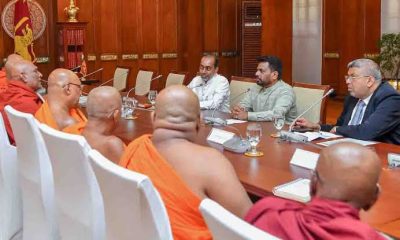
Malwathu Chapter issues statement on talks with President over Gnanasara Thera’s robes
-
 News7 days ago
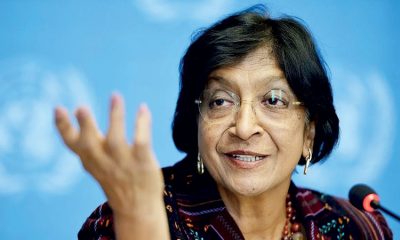
Navi Pillay’s Lankan affairs in focus as she wins 2026 Nobel Peace Prize
-
 News6 days ago
CP alleges NPP has taken the blame for illegal US sanctions on Iranian vessels