
News
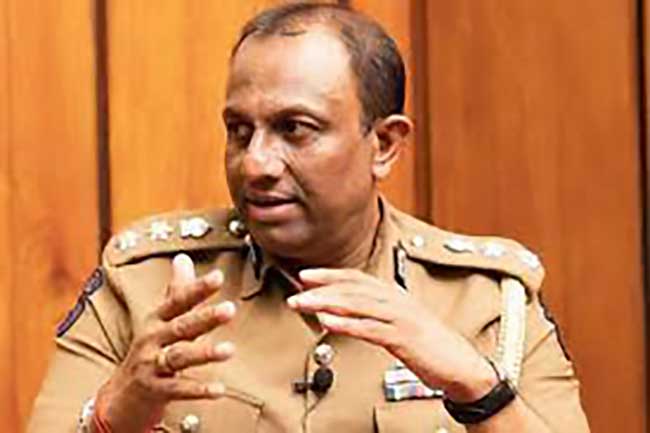
Pyramid schemes galore in rural areas where financial literacy is low– Police spokesman

By Rathindra Kuruwita
Those operating pyramid schemes often target particular geographical locations where the financial literacy of the people is low, police spokesman, SSP Nihal Thalduwa says.He said that the CID had recently busted a pyramid scheme called Sports Chain, through which peolpe had been cheated out of Rs 15 billion, and arrested eight people.
“This scheme was carried out in Anuradhapura, Polonnaruwa and Kurunegala, and then it spread to other areas. We are now investigating several other schemes that have started from Hambantota and they, too, have spread across the country. They start in peripheral areas, and once established, they spread to other parts of the country,” the Police Spokesman said.
SSP Thalduwa added that the schemers had also customised their operations to cater to various target groups.
“The same product is packaged differently for youth and the middle-aged. The schemers have become very shrewd,” he said.
The police spokesman went on to say that the Central Bank and law enforcement authorities have been educating the people about pyramid schemes.However, these are multiplying as internet penetration and the use of smart devices have increased in the past few years, the police spokesman said.
He added that pyramid schemes are nothing new in Sri Lanka. However, in the past, their scale was comparatively small.
“Before the internet, those involved in pyramid schemes had to work harder to find new dupes. They probably had to canvass personally. Now they can use social media and gather people who are gullible,” he said.
According to SSP Thalduwa, some pyramid schemes involve cryptocurrencies. Most people do not understand what cryptocurrencies are, and there are so many of these digital currencies, he said.
“As the name suggests, the number of people at the top of the pyramid is small, and they probably end up making money. But the number of people increases as we go to the bottom, and these people always end up losing money. This also ends up affecting the economy because people become paranoid. For an economy to function, there should be an element of trust. Once this goes, things get bad really fast,” he said.
SSP Thalduwa said that there are a few internationally accepted platforms to buy and sell cryptocurrency. Often, those who manage pyramid schemes based on cryptocurrencies build trust among those who have invested by initially investing in these internationally accepted platforms.
“After a month or so, when some trust is established, these schemers migrate the investors to bogus platforms. Then they convince the investors that they are making about 100,000 rupees a day by trading cryptocurrencies. Recently, we arrested eight people, involved in a scheme called “SPORTS CHAIN.” This is how the Sports Chain schemers operated as well. There are many schemes,” he said.
SSP Thalduwa said the Banking Act bans pyramid schemes, and everyone involved in these schemes is guilty. The Central Bank can investigate these schemes, and if they identify such a scheme, the CBSL can direct the police to take action.
“When we get a complaint from people about suspected pyramid schemes, we ask the Central Bank to look into it and determine if this indeed is a pyramid scheme,” he said.
The police spokesman said that often those who run the pyramid schemes do it from outside the country, and the victims’ money has been taken to other countries.
“Then recovering the money becomes complicated. The government has to spend a lot of time and money on the recovery process,” he said.


Quarantine and Prevention of Diseases Ordinance No. 3 of 1897 is the principle law that regulates the prevention of the spread of communicable diseases and the implementation of quarantine measures.
However, at present, it has been observed that the risk of spreading communicable diseases across borders have significantly increased due to considerable increase in the
international and domestic movement of persons, goods, and services and frequent international travel and trade have led communicable diseases spread rapidly between countries.
Accordingly, although cabinet approval was granted in the 2016 to amend the Quarantine and Prevention of Diseases Ordinance No. 3 of 1897, the relevant amendment bills have not been presented to Parliament.
Therefore, as per the proposal made by the Minister of Health and Mass Media, the Cabinet of Ministers has approved the appointment of a Review Committee to study the amendment bill that has been prepared and propose suitable amendments to meet the current health challenges as well as challenges that may arise in the future, taking into consideration the experience obtained during the epidemic situations that have occurred in the past.
The Cabinet of Ministers granted approval to the proposal submitted by the President to make a donation of United States Dollars One million as humanitarian and economic relief to the government of Nepal
Latest News
Sun directly overhead Kalpitiya, Talawa, Sinharagama, Galkadawala, Nachchaduwa, Padikaramaduwa, Gomarankalla and Verugal about 12.10 noon today (01)


The sun is going to be directly over the latitudes of Sri Lanka from 28th of August to 07th of September due to its apparent southward relative motion.
The nearest places of Sri Lanka over which the sun is overhead today (01) are Kalpitiya, Talawa, Sinharagama, Galkadawala,
Nachchaduwa, Padikaramaduwa, Gomarankalla and Verugal about 12.10 noon.

Amendment of the Quarantine and Prevention of Diseases Ordinance No. 3 of 1897
Cabinet approves donation of USD One Million to the Government of Nepal

Nahida, Marufa help Bangladesh brush aside Indonesia

Showers will occur in the Western, Sabaragamuwa, Southern and Uva provinces and in Kandy and Nuwara-Eliya districts

Sun directly overhead Kalpitiya, Talawa, Sinharagama, Galkadawala, Nachchaduwa, Padikaramaduwa, Gomarankalla and Verugal about 12.10 noon today (01)

SJB asks what Speaker intended to do about allegations against CJ

‘Dates have the highest sugar content to fight Coronavirus’

Sunday Island 27 December – Headlines

#SundayIsland 17th December – Headlines

Sunday Island – 28th March

Sunday Island Headlines – 21 March

Sunday Island – 21st February – Headlines
-

 News5 days ago
Eight politicians in drug kingpin probe
-

 Features3 days ago
“Wrap Me Up in My Blazer”— A Gentlemanly Bradby Reminiscence
-

 Business5 days ago
Sri Lanka opens up: A new season of direct connectivity
-

 Features5 days ago
Redefining ageing in Sri Lanka
-
 Features7 days ago
Insights from Chieftains of Uva: Genealogy of two Kandyan Families – Part II
-

 Latest News5 days ago
Nepal-Tibet floods: What happened, what caused them and who is missing?
-

 Editorial7 days ago
Warning of power cuts: El Niño and corruption
-

 Features7 days ago
Export diversification: Missing the wood for the trees – Part I