
Editorial
Puzzling silence


Monday 14th March, 2022
President Gotabaya Rajapaksa makes surprise visits to various state institutions to keep public employees, especially shirkers among them, on their toes. He has drawn criticism from his political opponents, who claim that he is trying to distract public attention from his government’s pathetic failure, and score brownie points with the people, who are struggling to make ends meet. The President, they say, should address serious issues the country is beset with instead of inspecting government offices. But the state service has become a law unto itself, owing to lack of supervision, and earned notoriety for its callous disregard for people’s grievances. It is also characterised by chronic lethargy, inordinate delays and corruption. Presidential action at issue, therefore, will go down well where the people who despise the public service are concerned. It may be recalled that the late President Ranasinghe Premadasa endeared himself to the public by getting tough with errant public officials.
While President Rajapaksa is busy trying to make state officials pull their socks up and serve the public, the Opposition is raking his brother, Finance Minister Basil Rajapaksa, over the coals for shirking his ministerial responsibilities! Opposition politicians have been tearing into Minister Rajapaksa during the past few days because he has not spoken a single word in Parliament for three months or so. JVP leader Anura Kumara Dissanayake told the House, the other day, that Rajapaksa had remained silent since 10 December 2021! The Opposition has called upon the Speaker to direct the Finance Minister to make a statement in the House on the prevailing economic crisis. But the Speaker has said he has no power to summon ministers or direct them to make statements in the House. The President, as the head of the government and the Cabinet, however, could ask ministers to make statements and field questions in Parliament. He even sacks ministers, doesn’t he? Therefore, he ought to tell Finance Minister Rajapaksa to apprise Parliament of the present economic situation, and measures, if any, being adopted to prevent the economy from collapsing. Shouldn’t he put his own house in order before taking on errant public officials?
Besides, let the President be urged to make surprise visits to Parliament to ensure that the members of his parliamentary group attend House sittings and behave. When he is present in Parliament, the government members act responsibly.
The Opposition is reportedly planning to move a no-confidence motion against Finance Minister Rajapaksa for shirking his parliamentary duties, among other things. The government has enough numbers to scuttle such a move, but the Opposition will have an opportunity to inflict severe damage on the SLPP. Former Minister Wimal Weerawansa has claimed that Finance Minister Rajapaksa is furthering the interests of India and the US by aggravating Sri Lanka’s economic crisis in such a way that Sri Lankans are now left with no alternative but to agree to bailout packages on terms favourable to those two countries. This allegation has gone unchallenged, and if the Finance Minister remains silent thereon any longer, it will provide sufficient grounds for a no-faith motion against him.
Not all Opposition MPs make up a cohort that is literate and numerate, but they cannot be unaware that they do not have enough numbers to ensure the passage of a no-confidence motion against the Finance Minister Rajapaksa. But their intention may be to gain political traction at the expense of the government, which is experiencing an internal dispute. Three rebel ministers have already been stripped of their portfolios, and two of them—Weerawansa and Udaya Gammanpila—are ridiculing the Finance Minister. They will not vote with the government to defeat a no-faith motion against him if they have any sense of shame. The SLFP has also been critical of the Finance Minister, who is allegedly shortchanging the SLPP constituents. The Opposition may be trying to use a no-confidence motion as a wedge to cause a split in the SLPP. Whether it will succeed in their endeavour remains to be seen.



Monday 19th January, 2026
The police did not breathalyse NPP MP Asoka Ranwala following a serious road accident he caused last month and went out of their way to ensure that he would not undergo a blood alcohol test until more than 12 hours had elapsed. But on Friday they swiftly administered a breath test on a driver who happened to ram his vehicle into a car driven by MP Ranwala’s wife on the Kelaniya-Biyagama road, and lost no time in declaring that he was drunk. Such is the selective efficiency of the police. On the same night, the police made a public display of their servility to the NPP government in Tambuttegama, where they removed the flags put up by the SLPP in view of a political event.
Addressing a group of SLPP supporters on Saturday, MP Namal Rajapaksa vowed to stand up to what he described as state terror and defend democracy. If only he had done so while his family was in power!
Last September, the police openly backed a group of JVP activists who stormed an office of the Frontline Socialist Party in Yakkala. They went to the extent of providing security to the place which was forcibly occupied by the JVP cadres. Last Friday, a senior police officer in uniform was seen on television answering a call from someone, returning to the scene and barking orders with renewed vigour. That reminded us of IGP Pujith Jayasundera’s infamous telephone call at a public rally in Ratnapura in 2016; he was captured on camera answering a call from someone he reverentially addressed as sir, and informing the latter that he had instructed the police not to arrest a certain Nilame.
It is only wishful thinking that the rule of law can be restored when the police are made to act like the storm troopers of the ruling party. The deterioration of the Police Department is not of recent origin; it is a result of decades of politicisation under successive governments led by the SLFP, the UNP and their allies. The JVP/NPP also keeps the police under its thumb.
The Rajapaksas and their hangers-on would have the public believe that they are on a crusade to protect democracy. They seem to have a very low opinion of people’s intelligence and memory. Otherwise, they would not have sought to hoodwink the public by playing the victim card and lamenting the decline of the police and other vital state institutions due to politicisation. While in power, they unflinchingly resorted to violence to further their political interests and had the police on a string. They brought the Attorney General’s Department directly under the President and ordered the police not only to harass their political opponents but also to allow their goons to unleash violence to disrupt Opposition protests. When the media questioned the Police Spokesman why club-wielding government thugs were allowed to operate alongside the riot police, he denied the charge, claiming that they were ordinary citizens. When it was pointed out that they had been armed with clubs, he had the chutzpah to claim that they may have been carrying ‘sticks’ to ward off street dogs. In 2014, Hambantota Mayor Eraj Fernando, a staunch Rajapaksa loyalist, armed with a pistol, menacingly pursued a group of UNP-MPs who were visiting the Hambantota Port. The government spokespersons of the day unashamedly insisted that Fernando had been carrying a toy pistol. Besides, that regime used the police and military intelligence as the Oprichniki of Ivan the Terrible. Namal should be happy that the police only pulled down the SLPP’s flags in Thambuttegama on Friday, and there were no incidents of violence.
However, it is undeniable that the police acted in a despicable manner in Thambuttegama on Friday. It was obvious that they did so at the behest of some JVP/NPP politicians who did not want the SLPP to put on a show of strength in the hometown of President Anura Kumara Dissanayake and some ministers. The NPP government, which came to power promising a radical departure from the past political culture is emulating its predecessors and making the police do dirty political work for it.
In Sri Lanka, supermajorities are cursed. When power goes to their heads, politicians take leave of their senses and lay bare their true faces. There is hardly anything that they do not do to retain their hold on power. But it is counterproductive to suppress political dissent, and the governments that do so dig their own political graves; when they lose power, they find that the boot is on the other foot, with the police grovelling before the new rulers.
Unless the JVP/NPP fulfils its promise to replace the current rotten political culture with a new one, it may have the police pulling down its own flags in Thambuttegama and elsewhere under another government, perhaps, sooner than expected.

We have witnessed many false dawns, with self-proclaimed messiahs winning elections purportedly to put the country right and subsequently reneging on their solemn pledges in keeping with the Machiavellian maxim on promises.
One of the key campaign promises of the ruling JVP-led NPP was to restore the rule of law, which had been undermined by successive governments. The public reposed their trust in the NPP, expecting it to honour its promise and straighten up the legal system. But its pledge has gone unfulfilled, and government politicians and their supporters remain above the law, which is enforced strictly only when transgressors happen to be Opposition politicians and their cronies. The police, who even use force against ordinary people and the political rivals of the government over minor transgressions, unashamedly baulk at arresting the NPP politicians who commit serious offences.
No sooner had four Buddhist monks and five others been remanded, on Thursday, for allegedly violating coast conservation laws by putting up a shrine in Trincomalee than it was reported that the Geological Survey and Mines Bureau (GSMB) had sent a strongly worded letter to the Chairman of the Galgamuwa Pradeshiya Sabha (PS) over illegal soil excavation in some forest reserves in the PS area. The GSMB’s letter is a damning indictment of the NPP. It has revealed that a group of ruling party politicians and their supporters obstructed a team of GSMB officials during a raid on an illegal soil excavation site and forcibly secured the release of seven tractors and their drivers taken into custody. The police, who were present on the scene, just looked on. The GSMB has reminded the PS Chairman that its officers are legally empowered to conduct raids in any part of the country to prevent illegal activities.
How would the police have responded if a group of Opposition politicians and their backers had obstructed the GSMB personnel and the police during a raid? They would have been arrested immediately and hauled up before court, and perhaps the police would have held a special media briefing to announce the arrests.
No action has been taken against those who carried out illegal soil excavation in Galgamuwa and obstructed the GSMB officers and the police. One may recall that the police lost no time in arresting Chairman of the Matugama PS Kasun Munasinghe (SJB) recently over a mere allegation that he had obstructed the PS Secretary. There is irrefutable evidence that the NPP politicians and their supporters obstructed the GSMB officers and the police in Galgamuwa. Has the current government adopted the credo of the pigs in Orwell’s Animal Farm and decreed that all politicians are equal but the NPP politicians are more equal than others? Breathalyzers mysteriously disappear from police stations when an NPP MP causes a road accident allegedly under the influence of alcohol, and the CID resorts to dilatory tactics, such as seeking the Attorney General’s opinion unnecessarily, when they are required to arrest government politicians charged with forgery. Police officers who raid cannabis plantations that allegedly belong to NPP politicians or their relatives are arrested and transferred or suspended from service.
Ven. Balangoda Kassapa Thera, one of the four Buddhist monks remanded on Wednesday, reportedly launched a fast on Thursday. Those who are supportive of the shrine project in Trincomalee have demanded to know why the police and the Department of Coast Conservation and Coastal Resource Management have not removed the unauthorised business places, etc., in the coastal buffer zones in Trincomalee and elsewhere.
The police and the Coast Conservation officials owe an explanation. They have steered clear of many unauthorised structures in Trincomalee and other parts of the country. The western coastal buffer zone is dotted with illegal constructions including restaurants and hotels. Political interference and corruption have prevented their demolition. The NPP government has failed to be different from its predecessors which earned notoriety for the selective enforcement of the law.

Saturday 17th January, 2026
The police headquarters has released an AI-generated image of a suspect wanted in connection with a fatal shooting incident in Dehiwala on 09 Jan., 2026, and sought public assistance to arrest him. AI has made the task of creating facial composites much easier. The public no doubt must cooperate with the police and help combat crime, but much more needs to be done to neutralise the dangerous underworld gangs.
Two notorious criminals and a female suspect arrested in Dubai were brought back yesterday. Dubai has become a haven for Sri Lankan criminals, and everything possible must be done to arrest all of them there and repatriate them here to stand trial for their crimes.
There have been several shooting incidents so far this year, and a couple of lives, including that of a teenager, have been lost. Last year saw more than 100 incidents of gun violence, which claimed scores of lives. One can only hope that the police will be able to bring the situation under control this year. Hope is said to spring eternal.
Underworld gangs have amply demonstrated their ability to strike at will anywhere although some of their leaders have been arrested. The police swing into action after shooting incidents and go hell for leather to arrest the shooters; in some cases, they succeed in their endeavour. Crime prevention is apparently not their forte.
Last year, a much-advertised campaign was launched to crush crime syndicates involved in drug dealing, killings and gun running. It yielded some discernible results, but very little is heard of it these days. Has it gone the same way as the past anti-crime operations?
Identikits, manually created or A-generated, could be deceptive in some cases however useful they may be in tracking down criminals on the run. This is a fact investigators should bear in mind lest they should arrest the wrong persons and torture them in the name of interrogating them.
It was alleged last week that the police had put a man to the question simply because he resembled a suspect in an identikit released to the media. The victim has claimed that he went to a police station in Colombo of his own volition after realising that there was a striking similarity between him and the suspect composite in question, only to be beaten mercilessly and asked to make a confession to a crime that he had not committed. The police have denied his claim. A thorough investigation must be conducted into the alleged incident.
Cases of mistaken identity are not rare in Sri Lanka, where the police make arrests hastily and consider suspects guilty until they are proven innocent. They have earned notoriety for acting according to their whims and fancies or at the behest of their political masters in arresting suspects. This is one of the reasons why the conviction rate remains extremely low in this country. It is between 4% and 6%. Some studies have even placed it at 2%.
Meanwhile, the Criminal Investigation Department (CID) must not be made to conduct politically motivated investigations, which prevent it from carrying out its duties and functions efficiently. Its raison d’etre is probing crimes, but successive governments have reduced it to a mere appendage of the party in power. Today, the situation has taken a turn for the worse, with government politicians rushing to the CID at the drop of a hat, demanding investigations. This practice must be brought to and end.

PM departs Sri Lanka to participate in the 56th World Economic Forum Annual Meeting in Davos-Klosters, Switzerland.

Several killed in Kabul blast, Afghan Interior Ministry says

Senegal beat hosts Morocco to win AFCON 2025 after farcical walk-off

At least six killed in Pakistan as fire rips through Karachi shopping mall

Chile declares ‘state of catastrophe’ as deadly wildfires menace cities

At least 21 killed in Spain after crash involving high-speed trains

‘Dates have the highest sugar content to fight Coronavirus’

Sunday Island 27 December – Headlines

#SundayIsland 17th December – Headlines

Sunday Island – 28th March

Sunday Island Headlines – 21 March

Sunday Island – 21st February – Headlines
-

 Editorial2 days ago
Illusory rule of law
-

 News3 days ago
UNDP’s assessment confirms widespread economic fallout from Cyclone Ditwah
-

 Business5 days ago
Koaloo.Fi and Stredge forge strategic partnership to offer businesses sustainable supply chain solutions
-

 Editorial3 days ago
Crime and cops
-

 Features2 days ago
Daydreams on a winter’s day
-

 Editorial4 days ago
The Chakka Clash
-
 Features2 days ago
Surprise move of both the Minister and myself from Agriculture to Education
-
 Features2 days ago
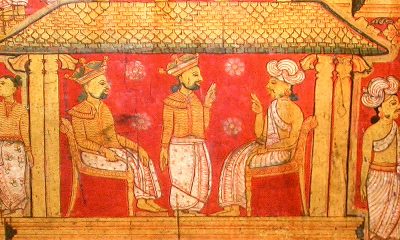
The Story of Furniture in Sri Lanka