
Features
Putin’s invasion of Ukraine eclipses Biden’s first State of the Union Speech


by Vijaya Chandrasoma
The malevolent Russian invasion against Ukraine has had almost exclusive coverage in international, TV and social media. Though the Ukrainians have been fighting fiercely and bravely, it is only a matter of time before Russia’s superior force will subjugate Kiev, Mariupol and other major Ukrainian cities, many of which have already fallen and millions of innocent civilians, men, women and children, suffering intolerable deprivations.
History shows us that the aggression of nations with superior military force against weaker nations, aggression with motives of self-interest cloaked in sanctimonious hypocrisy, will initially meet with success. But in the fullness of time, they will fail, their greed and cruelty exposed to the world. A weaker nation, with its citizens continuing to fight for independence, its leaders willing to die for freedom, will always succeed. Many will die, incredible privations will be endured maybe for decades. But the ultimate rout of the aggressor is inevitable.
Ukraine and its President have shown this fearlessness in extraordinary abundance. In a recent video address to the British Parliament, exhibiting the epitome of defiance, President Zelensky echoed Winston Churchill’s famous speech at that august chamber on the evacuation of Dunkirk during WWII: We shall fight on the beaches …we shall fight in the fields and in the streets…we shall never surrender. He reiterated the determination of the Ukrainian people “to defend their motherland to the end” as the Russian invasion ends its second week of indiscriminate murder and mayhem. An invasion which has already compelled over two million Ukrainians to seek refuge in neighbouring countries like Poland and rendered at least one million more homeless and destitute. Lives and property destroyed in the most brutal invasion in Europe since WWII.
Zelensky’s inspired address was met with a standing ovation from the MPs and the Lords in the Palace of Westminster.
The vast range of financial and import sanctions imposed by the US and the EU against Russia, including personal sanctions against Putin and his billionaire oligarchs, while “they will damage the Russian economy, will not obliterate it”. Unfortunately, it is also likely that these harsh sanctions will make Putin, who cannot afford to lose this war, double down and escalate the violence against Ukraine, with no concern for civilian casualties. Russian targeting of schools, hospitals and churches, war crimes, have become routine. The more desperate Putin gets, the more likely he will threaten the use of chemical, biological, even nuclear weapons. And he may not be bluffing. His erratic behaviour of the past six months, his delusions of grandeur of regaining the glory of the old Soviet Empire, are causing psychiatric suspicions that he is unhinged and losing his mind.
Another real danger is China’s low-profile endorsement of Russian aggression.
If not for the invasion of Ukraine, President Biden’s first State of the Union Speech on Tuesday, March 1, 2022, six days after Russia invaded Ukraine, would have taken centre stage in international media.
For the first time in US history, two women, Vice President Kamala Harris and House Speaker, Nancy Pelosi, second and third in line for the presidency, sat behind the President of the United States during a State of the Union address. A unique and remarkable image of history that has been too long in the making.
Biden spent 12 minutes of the duration of his SOTU address of 61 minutes on the Russian invasion of Ukraine. He reserved his harshest remarks against the aggression of President Putin, and his highest praise for President Zelensky and the heroic determination of the Ukrainian people to fight the aggressor to the death.
Significantly, the Republican section of Congress was not empty, attended as it was by many Republicans, including Mitch McConnell and Kevin McCarthy, minority leaders of the Senate and the House, respectively. The Republican side of the chamber included two radical right QAnon* maniacs, Lauren Boebert and Marjorie Taylor Greene, who, predictably, spent the entire hour of the speech booing and heckling.
The same Taylor Greene who recently slammed the House Committee presently investigating into the January 6 insurrection as being Speaker Pelosi’s “Gazpacho Police”. What the ignorant Congresswoman from Georgia probably meant was “Gestapo Police”. But who can tell? Maybe these Trumpsters feel threatened by the delicious cold tomato Gazpacho soup of Democrats, on the grounds that its red colour is evidence of their espousal of communism. A conspiracy theory no more outlandish than her previous claims that Democrats are “Satanic Pedophile Cannibals” who eat babies, and that the deadly fires in California were caused by Jews (Rothschilds) firing lasers from outer space.
In his address, Biden did not touch on the courageous defiance of 13 Ukrainian soldiers guarding little Snake Island about 50 km. off the southern tip of the Ukrainian mainland on the Black Sea. When warned by a Russian warship that there will be unnecessary deaths unless they surrendered, the response of these brave Ukrainians, which has since gone viral on the Internet, was: “Russian Warship, Go F… Yourselves”.
Initial reports indicated that all 13 soldiers were killed. However, it is now believed that they are alive and well, held as prisoners in Russia, as heroes in Ukraine. Their words, “Russia, Go F… Yourselves” have become the proud Ukrainian rallying war cry.
This defiant response from a completely outnumbered and outgunned army illustrates the courage and patriotism of the Ukrainians. All Ukrainian men and women are now soldiers, being trained for battle. President Zelensky has also joined the army, no trace of bone spurs. He has been photographed on many occasions in military fatigues, talking and eating with Ukrainian soldiers. Perhaps photo ops, but the image of the President of the country, in battle fatigues, mingling with its citizens is pretty inspiring. Much more so than the ridiculous image of a criminal, egomaniacal sociopath holding a Bible upside down outside a church to prove he is a Christian.
Biden continued, “Six days ago, Russia’s Vladimir Putin sought to shake the foundations of the free world. But he badly miscalculated.
“He thought he could roll into Ukraine, and the world would roll over. Instead, he met with a wall of strength he never anticipated or imagined.
“He met the Ukrainian people.
“From President Zelensky to every Ukrainian, their fearlessness, their courage, their determination, literally inspires the world”.
Biden also stressed the need for unity in America, when he said, at the beginning of his address, “Tonight, we meet as Democrats, Republicans and Independents. But most importantly, as Americans. With a duty to one another, to America, to the American people, to the Constitution. And an unwavering resolve that freedom will always triumph over tyranny”.
“Always” is an optimistic word in the current context of today’s American politics, with the Republican Party still under the control of a defeated and disgraced wannabe tyrant, whose peddled lies about a rigged election 16 months ago are still believed, against all evidence, by 60% of his Party. The midterms next November are currently predicted to yield control of both the House and the Senate to the Republicans led by Trump. Control that will enable Republicans to rig future elections not only by voter suppression and gerrymandering, but by changing the rules so that any future president will be elected not by the will of the people but by the manipulation of the state legislatures. Significantly, this process has already begun in Republican controlled battleground state legislatures like Texas and Georgia.
Such corruption of the electoral process, the cornerstone of American democracy, will bring to an end Lincoln’s dream of the Grand Experiment of “government of the people, by the people, for the people”.
With his decision to invade Ukraine, Putin counted on taking advantage of an already polarized America and attempt to cause a rift in NATO. He has failed, at least where NATO is concerned, as that organization has shown complete solidarity under the leadership of President Biden.
As for American unity, fingers crossed, but there seems a little light bringing clarity and sanity at the end of the Trump tunnel, a tiny chink in the Republican armour as the former president’s acts of criminal fraud and treason are slowly but surely being uncovered.
Biden stressed that “our forces are not engaged, and will not engage in conflict with Russian forces in Ukrainian soil…Together with our allies we are providing support to the Ukrainians in their fight for freedom. Military assistance. Financial assistance. Humanitarian assistance”.
“When the history of this era is written, Putin’s war against Ukraine will have left Russia weaker and the rest of the world stronger”.
President Biden then addressed the pandemic and the economy. His handling of these crises has seen his approval rates plummet to the 30%s. Unfairly, considering he inherited a failed economy, the challenges of a global pandemic, and now, an illegal invasion of a sovereign ally in Europe.
“The pandemic has been punishing. And so many families are living paycheck to paycheck, struggling to keep up with the rising costs of food, gas, housing and so much more”. Biden talked about the extensive American Rescue Plan that was implemented last year, saying “few pieces of legislation have done more in a critical moment in our history to lift us out of the crisis”.
“And it worked. It created jobs. Lots of jobs, our economy created over 6.5 million new jobs last year, more jobs created in one year than ever before in the history of America”.
Biden talked about the economy which “grew at a rate of 5.7% last year, the strongest growth in nearly 40 years, the first step in bringing fundamental change to an economy which hasn’t worked for the working people of this nation for too long”.
The President said, “Reagan’s ‘trickle-down’ theory has only led to weaker economic growth, lower wages, bigger deficits and the widest income and wealth gaps between those at the top and everyone else in nearly a century”.
He talked about the urgency of the passing of his signature Build Back Better bill, currently stalled in the Senate. Though the Democrats have a wafer-thin majority in the Senate, the legislation has been delayed not just by the intransigence of the Republicans, but obstruction by two Democratic Senators from Red States, Arizona and West Virginia, who are more concerned about their re-election than the welfare of the country. He urged the Senate to pass this bill, which will cost less than Trump’s tax cut of 2017 to billionaires and corporations, so that he could continue with his efforts towards building a socially and economically just America.
Biden touched on his science-based and successful strategy to combat the virus, his plans of reducing health care costs, child care, gun control, funding the police, border control, and many other social programs, which will become a reality after the Build Back Better plan is implemented. Long-delayed legislation which will provide tremendous assistance to working poor, address climate change and rebuild the nation’s crumbling infrastructure.
He concluded by saying that “the State of the Union, is strong, because you, the American people are strong. We are stronger today than we were a year ago. And we will be stronger a year from now than we are today”.
*QAnon is a political conspiracy theory that later evolved into a political movement. It originated in the American far-right political sphere. QAnon centers on false claims made by an anonymous individual or individuals known as “Q”. Wikipedia


 by Kaushalya Perera
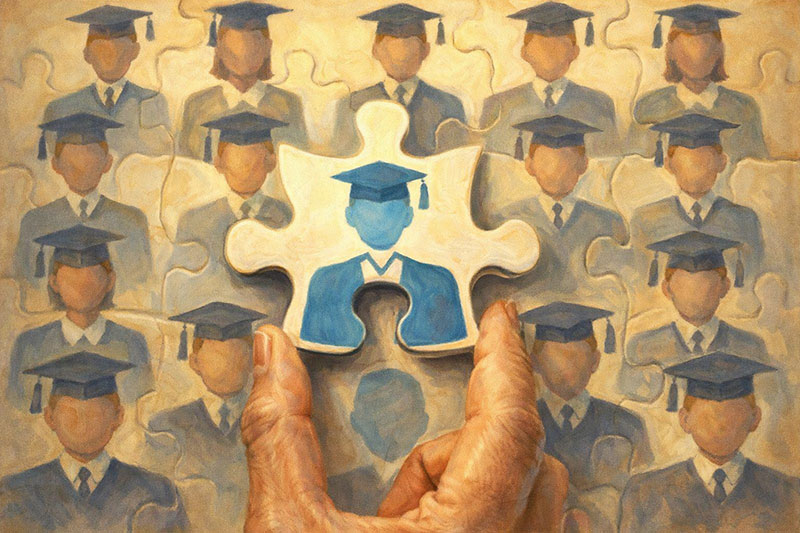
Time has, by and large, stood still in the business of academic staff recruitment to state universities. Qualifications have proliferated and evolved to be more interdisciplinary, but our selection processes and evaluation criteria are unchanged since at least the late 1990s. But before I delve into the problems, I will describe the existing processes and schemes of recruitment. The discussion is limited to UGC-governed state universities (and does not include recruitment to medical and engineering sectors) though the problems may be relevant to other higher education institutions (HEIs).
How recruitment happens currently in SL state universities
Academic ranks in Sri Lankan state universities can be divided into three tiers (subdivisions are not discussed).
* Lecturer (Probationary)
– recruited with a four-year undergraduate degree. A tiny step higher is the Lecturer (Unconfirmed), recruited with a postgraduate degree but no teaching experience.
* A Senior Lecturer can be recruited with certain postgraduate qualifications and some number of years of teaching and research.
* Above this is the professor (of four types), which can be left out of this discussion since only one of those (Chair Professor) is by application.
State universities cannot hire permanent academic staff as and when they wish. Prior to advertising a vacancy, approval to recruit is obtained through a mind-numbing and time-consuming process (months!) ending at the Department of Management Services. The call for applications must list all ranks up to Senior Lecturer. All eligible candidates for Probationary to Senior Lecturer are interviewed, e.g., if a Department wants someone with a doctoral degree, they must still advertise for and interview candidates for all ranks, not only candidates with a doctoral degree. In the evaluation criteria, the first degree is more important than the doctoral degree (more on this strange phenomenon later). All of this is only possible when universities are not under a ‘hiring freeze’, which governments declare regularly and generally lasts several years.
Problem type 1
– Archaic processes and evaluation criteria
Twenty-five years ago, as a probationary lecturer with a first degree, I was a typical hire. We would be recruited, work some years and obtain postgraduate degrees (ideally using the privilege of paid study leave to attend a reputed university in the first world). State universities are primarily undergraduate teaching spaces, and when doctoral degrees were scarce, hiring probationary lecturers may have been a practical solution. The path to a higher degree was through the academic job. Now, due to availability of candidates with postgraduate qualifications and the problems of retaining academics who find foreign postgraduate opportunities, preference for candidates applying with a postgraduate qualification is growing. The evaluation scheme, however, prioritises the first degree over the candidate’s postgraduate education. Were I to apply to a Faculty of Education, despite a PhD on language teaching and research in education, I may not even be interviewed since my undergraduate degree is not in education. The ‘first degree first’ phenomenon shows that universities essentially ignore the intellectual development of a person beyond their early twenties. It also ignores the breadth of disciplines and their overlap with other fields.
This can be helped (not solved) by a simple fix, which can also reduce brain drain: give precedence to the doctoral degree in the required field, regardless of the candidate’s first degree, effected by a UGC circular. The suggestion is not fool-proof. It is a first step, and offered with the understanding that any selection process, however well the evaluation criteria are articulated, will be beset by multiple issues, including that of bias. Like other Sri Lankan institutions, universities, too, have tribal tendencies, surfacing in the form of a preference for one’s own alumni. Nevertheless, there are other problems that are, arguably, more pressing as I discuss next. In relation to the evaluation criteria, a problem is the narrow interpretation of any regulation, e.g., deciding the degree’s suitability based on the title rather than considering courses in the transcript. Despite rhetoric promoting internationalising and inter-disciplinarity, decision-making administrative and academic bodies have very literal expectations of candidates’ qualifications, e.g., a candidate with knowledge of digital literacy should show this through the title of the degree!
Problem type 2 – The mess of badly regulated higher education
A direct consequence of the contemporary expansion of higher education is a large number of applicants with myriad qualifications. The diversity of degree programmes cited makes the responsibility of selecting a suitable candidate for the job a challenging but very important one. After all, the job is for life – it is very difficult to fire a permanent employer in the state sector.
Widely varying undergraduate degree programmes.
At present, Sri Lankan undergraduates bring qualifications (at times more than one) from multiple types of higher education institutions: a degree from a UGC-affiliated state university, a state university external to the UGC, a state institution that is not a university, a foreign university, or a private HEI aka ‘private university’. It could be a degree received by attending on-site, in Sri Lanka or abroad. It could be from a private HEI’s affiliated foreign university or an external degree from a state university or an online only degree from a private HEI that is ‘UGC-approved’ or ‘Ministry of Education approved’, i.e., never studied in a university setting. Needless to say, the diversity (and their differences in quality) are dizzying. Unfortunately, under the evaluation scheme all degrees ‘recognised’ by the UGC are assigned the same marks. The same goes for the candidates’ merits or distinctions, first classes, etc., regardless of how difficult or easy the degree programme may be and even when capabilities, exposure, input, etc are obviously different.
Similar issues are faced when we consider postgraduate qualifications, though to a lesser degree. In my discipline(s), at least, a postgraduate degree obtained on-site from a first-world university is preferable to one from a local university (which usually have weekend or evening classes similar to part-time study) or online from a foreign university. Elitist this may be, but even the best local postgraduate degrees cannot provide the experience and intellectual growth gained by being in a university that gives you access to six million books and teaching and supervision by internationally-recognised scholars. Unfortunately, in the evaluation schemes for recruitment, the worst postgraduate qualification you know of will receive the same marks as one from NUS, Harvard or Leiden.
The problem is clear but what about a solution?
Recruitment to state universities needs to change to meet contemporary needs. We need evaluation criteria that allows us to get rid of the dross as well as a more sophisticated institutional understanding of using them. Recruitment is key if we want our institutions (and our country) to progress. I reiterate here the recommendations proposed in ‘Considerations for Higher Education Reform’ circulated previously by Kuppi Collective:
* Change bond regulations to be more just, in order to retain better qualified academics.
* Update the schemes of recruitment to reflect present-day realities of inter-disciplinary and multi-disciplinary training in order to recruit suitably qualified candidates.
* Ensure recruitment processes are made transparent by university administrations.
Kaushalya Perera is a senior lecturer at the University of Colombo.
(Kuppi is a politics and pedagogy happening on the margins of the lecture hall that parodies, subverts, and simultaneously reaffirms social hierarchies.)
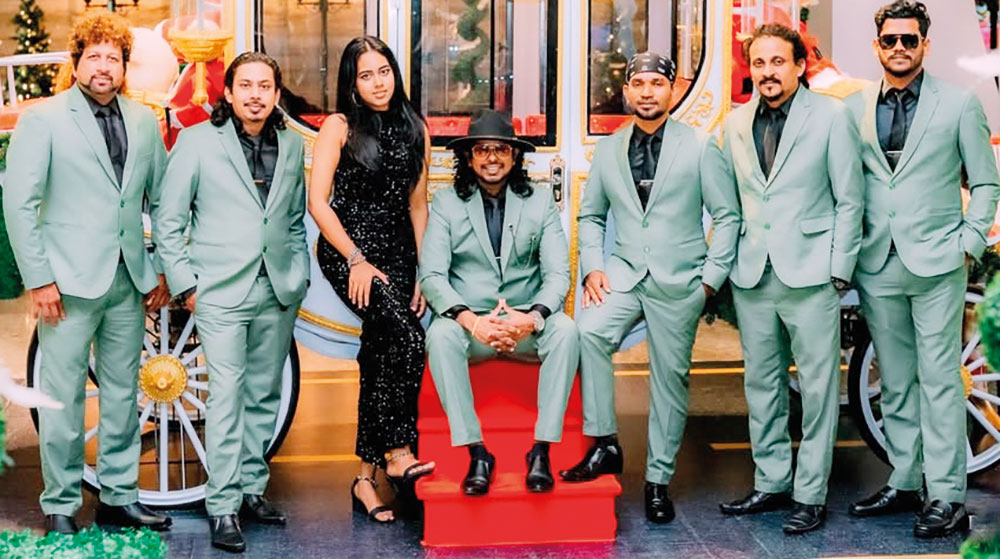
 This week, too, the spotlight is on an outfit that has gained popularity, mainly through social media.
Last week we had MISTER Band in our scene, and on 10th February, Yellow Beatz – both social media favourites.
Talento is a seven-piece band that plays all types of music, from the ‘60s to the modern tracks of today.
The band has reached many heights, since its inception in 2012, and has gained recognition as a leading wedding and dance band in the scene here.
The members that makeup the outfit have a solid musical background, which comes through years of hard work and dedication
Their portfolio of music contains a mix of both western and eastern songs and are carefully selected, they say, to match the requirements of the intended audience, occasion, or event.
Although the baila is a specialty, which is inherent to this group, that originates from Moratuwa, their repertoire is made up of a vast collection of love, classic, oldies and modern-day hits.
The musicians, who make up Talento, are:
Prabuddha Geetharuchi:

Geilee Fonseka: Dynamic and charismatic vocalist
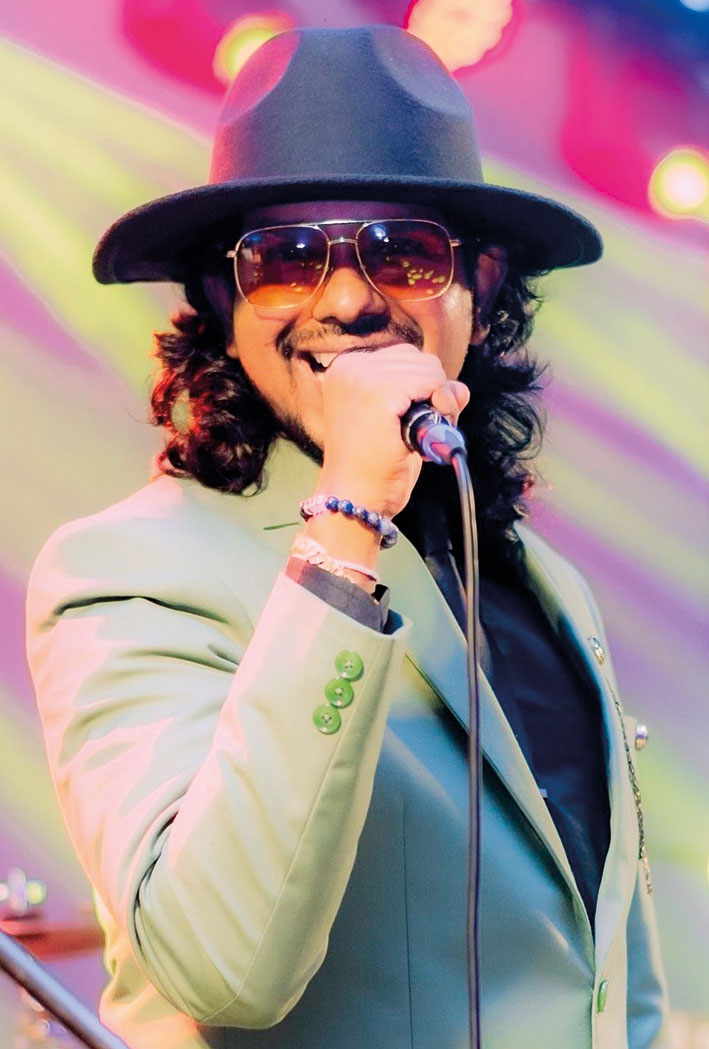
Prabuddha Geetharuchi: The main man behind the band Talento
(Vocalist/ Frontman). He is an avid music enthusiast and was mentored by a lot of famous musicians, and trainers, since he was a child. Growing up with them influenced him to take on western songs, as well as other music styles. A Peterite, he is the main man behind the band Talento and is a versatile singer/entertainer who never fails to get the crowd going.
Geilee Fonseka (Vocals):
A dynamic and charismatic vocalist whose vibrant stage presence, and powerful voice, bring a fresh spark to every performance. Young, energetic, and musically refined, she is an artiste who effortlessly blends passion with precision – captivating audiences from the very first note. Blessed with an immense vocal range, Geilee is a truly versatile singer, confidently delivering Western and Eastern music across multiple languages and genres.
Chandana Perera (Drummer):
His expertise and exceptional skills have earned him recognition as one of the finest acoustic drummers in Sri Lanka. With over 40 tours under his belt, Chandana has demonstrated his dedication and passion for music, embodying the essential role of a drummer as the heartbeat of any band.
Harsha Soysa:
(Bassist/Vocalist). He a chorister of the western choir of St. Sebastian’s College, Moratuwa, who began his musical education under famous voice trainers, as well as bass guitar trainers in Sri Lanka. He has also performed at events overseas. He acts as the second singer of the band
Udara Jayakody:
(Keyboardist). He is also a qualified pianist, adding technical flavour to Talento’s music. His singing and harmonising skills are an extra asset to the band. From his childhood he has been a part of a number of orchestras as a pianist. He has also previously performed with several famous western bands.
Aruna Madushanka:
(Saxophonist). His proficiciency in playing various instruments, including the saxophone, soprano saxophone, and western flute, showcases his versatility as a musician, and his musical repertoire is further enhanced by his remarkable singing ability.
Prashan Pramuditha:
(Lead guitar). He has the ability to play different styles, both oriental and western music, and he also creates unique tones and patterns with the guitar..
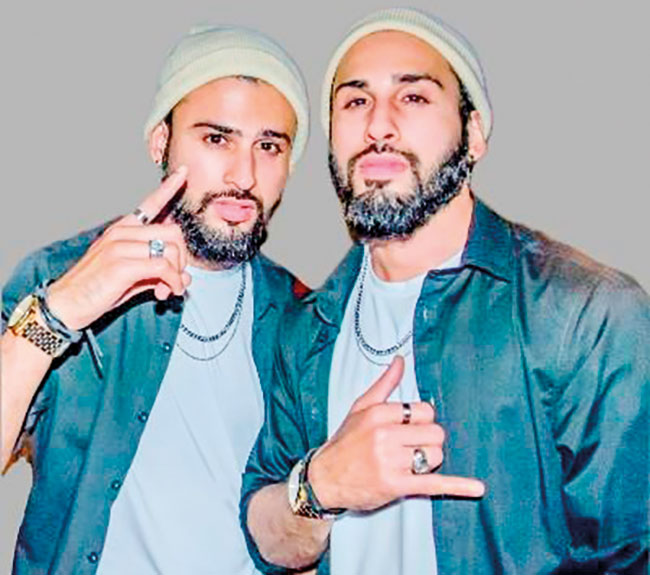
The JJ Twins, the Sri Lankan musical duo, performing in the Maldives, and known for blending R&B, Hip Hop, and Sri Lankan rhythms, thereby creating a unique sound, have come out with a brand-new single ‘Me Mawathe.’
In fact, it’s a very special milestone for the twin brothers, Julian and Jason Prins, as ‘Me Mawathe’ is their first ever Sinhala song!
‘Me Mawathe’ showcases a fresh new sound, while staying true to the signature harmony and emotion that their fans love.
This heartfelt track captures the beauty of love, journey, and connection, brought to life through powerful vocals and captivating melodies.
It marks an exciting new chapter for the JJ Twins as they expand their musical journey and connect with audiences in a whole new way.
Their recent album, ‘CONCLUDED,’ explores themes of love, heartbreak, and healing, and include hits like ‘Can’t Get You Off My Mind’ and ‘You Left Me Here to Die’ which showcase their emotional intensity.
Readers could stay connected and follow JJ Twins on social media for exclusive updates, behind-the-scenes moments, and upcoming releases:
Instagram: http://instagram.com/jjtwinsofficial
TikTok: http://tiktok.com/@jjtwinsmusic
Facebook: http://facebook.com/jjtwinssingers
YouTube: http://youtube.com/jjtwins

Attorney At Law S K Sangakkara pasess away

SriLankan Airlines Update on Middle East Operations

Trump says Iran war projected to last 4 to 5 weeks, could go ‘far longer’

Qatar downs two Iranian fighter jets as conflict widens

Jammu and Kashmir’s long road to India cricketing glory

Rembrandt painting worth millions rediscovered after 65 years

‘Dates have the highest sugar content to fight Coronavirus’

Sunday Island 27 December – Headlines

#SundayIsland 17th December – Headlines

Sunday Island – 28th March

Sunday Island Headlines – 21 March

Sunday Island – 21st February – Headlines
-
 Opinion4 days ago
Jamming and re-setting the world: What is the role of Donald Trump?
-
 Features4 days ago
An innocent bystander or a passive onlooker?
-

 Features5 days ago
Ratmalana Airport: The Truth, The Whole Truth, And Nothing But The Truth
-
 Features6 days ago
Building on Sand: The Indian market trap
-
 Opinion6 days ago
Future must be won
-

 Business6 days ago
Dialog partners with Xiaomi to introduce Redmi Note 15 5G Series in Sri Lanka
-
 Business5 days ago
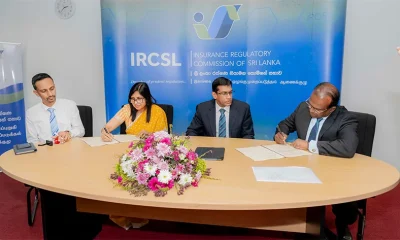
IRCSL transforms Sri Lanka’s insurance industry with first-ever Centralized Insurance Data Repository
-

 Opinion1 day ago
Sri Lanka – world’s worst facilities for cricket fans