
Business
Purchase of 60 per cent of Pan Asia Power shares peps stock market

By Hiran H.Senewiratne
CSE activities were positive throughout yesterday due to a major transaction or crossing that occurred in Pan Asia Power Plc. This boosted CSE operations and served as an impetus to investors to invest in valued stocks, market analysts said.
Pan Asia Power divested 60 percent of its stakes held by three major shareholders which were purchased by a top businessman of the country, analysts said.
It is said that 385.5 million Pan Asia Power shares crossed to the tune of Rs. 1.60 billion. Main sellers were Jinadasa Brothers (sold 26 percent shares), Emerald Fund (20 percent) and Senthivel Holdings (14 percent). Each share was sold at Rs. 4.30.
Pan Asia Power is one of Sri Lanka’s leading suppliers of clean, renewable energy to the country’s national energy grid. Established with support from the Board of Investments in 2002, PAP has been in the forefront of a pioneering effort to transform the island’s energy generation mix onto a path of affordable, sustainable, and reliable energy for all Sri Lankans through the efficient operation of its three mini-hydro power plants. Our combined expertise has enabled PAP to surge ahead in the hydro-power sector and today we stand ever closer to our stated target of 30 MW of generation capacity by 2022, PAP sources were quoted saying.
Amid those developments both CSE indices were positive. All Share Price Index went up by 48.4 points and S and P SL20 rose by 25.12 points. Turnover stood at Rs. 3.45 billion with four crossings, including the Pan Asia Power transaction. Other three crossings were reported in HNB, which crossed 2.26 million shares to the tune of Rs 297.8 million, its shares traded at Rs 131.75, TJ Lanka 800,000 shares crossed for Rs. 31.6 million, its shares traded at Rs. 39.40 and HNB (Non Voting) 227,000 shares crossed for Rs 24.9 million and its shares fetched Rs. 110.
In the retail market top five companies that mainly contributed to the turnover were Expolanka Rs. 270.5 million (5.4 million shares traded), LOLC Rs. 129.5 million (316,000 shares traded), Hayleys Fabrics . 97.3 million (4.8 million shares traded) and JKH Rs. 75.1 million (553,000 shares traded). During the day the market was positive and major contributors for the All Share Price Index were Commercial Leasing, six points, LOLC six points and Expolanka five points.
Therefore, share prices appreciated overall. Commercial Leasing shares appreciated by 10 percent or 70 cent to Rs. 7.80, LOLC shares appreciated by 1.2 percent of Rs. 5 to Rs. 410 and Expolanka shares increased by 2.4 percent or Rs. 1.20 to Rs. 51. During the day 446.9 million share volumes changed hands in 17163 transactions.




Domestic macrofinancial conditions strengthened further in 2025, supporting continued credit expansion, although external vulnerabilities remained a concern. Credit growth accelerated markedly, with total credit extended by banks and Finance Companies (FCs) rising by end-2025. The financial sector’s exposure shifted further toward the private sector, driven by strong private sector credit growth, while exposure to the public sector contracted reflecting ongoing fiscal consolidation.
Despite the decline, government-related exposure remains sizeable. Financial intermediation improved, as reflected by the continued rise in the banking sector’s credit-to-deposits ratio. However, the credit-to-GDP gap widened further into the positive territory of the credit cycle, underscoring the importance of maintaining vigilance over the potential build-up of systemic risk within the financial sector. Global uncertainties, including geopolitical conflict in the Middle East, volatility in commodity prices, and adverse weather conditions, could pose downside risks to credit quality of the financial sector. Against this backdrop, sustained fiscal consolidation and the strengthening of external sector buffers will remain essential to safeguarding macrofinancial stability.
Credit growth in the banking sector accelerated significantly by end-2025, supported by accommodative monetary policy, improved macroeconomic conditions, and strong credit demand. Gross loans and receivables expanded by 21.4% year-on-year, a substantial increase compared to the 4.1% growth recorded at end-2024. This expansion was broad-based, driven by multiple economic sectors including financial services, trade, consumption, lending to overseas entities, construction, and manufacturing. A notable development was the sharp rise in outstanding credit to the financial services sector, which grew by 148.0% year-on-year, reflecting increased funding requirements of the FCs sector amid heightened credit demand. Alongside this expansion, the quality of loan portfolios improved, with the stage 3 loans ratio declining to 9.7% at end-2025 from 12.3% at end-2024, marking the first return to single digits since the second quarter of 2022.
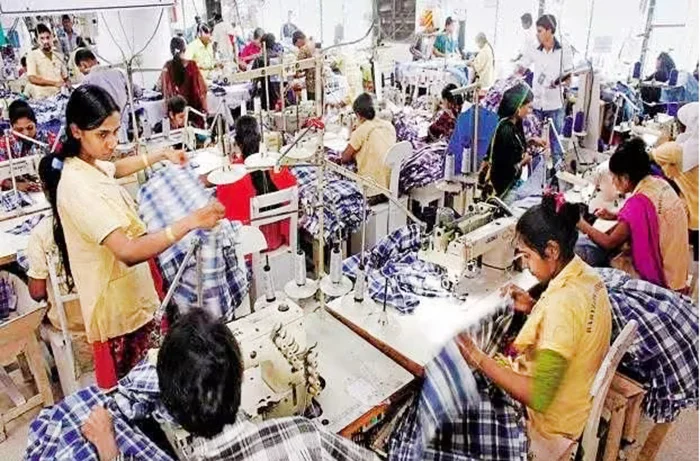
Sri Lanka’s small and medium enterprise (SME) sector, already grappling with post-crisis fragility, is facing a fresh wave of uncertainty as escalating tensions linked to a US-led conflict involving Iran begin to ripple through the global economy.
Industry analysts warn that the fallout—primarily driven by rising global oil prices, supply chain disruptions, and currency pressures—could severely strain the backbone of Sri Lanka’s domestic economy.
Energy sector experts say the most immediate impact is being felt through fuel price volatility. With Sri Lanka heavily dependent on imported petroleum, any disruption in Middle Eastern oil flows has a direct bearing on local costs.
“Even a marginal increase in global crude prices translates into a significant burden for Sri Lanka,” an energy sector analyst said. “For SMEs, this is critical because energy and transport costs form a large share of their operating expenses.”
Small-scale manufacturers, transport operators, and food producers are among the hardest hit. Rising diesel and petrol prices have already pushed up distribution costs, while electricity tariffs are expected to come under pressure if the crisis persists.
Economists also point to the risk of renewed instability in the power sector. Higher fuel costs could increase generation expenses, potentially leading to tariff hikes or supply constraints—both of which disproportionately affect smaller businesses.
“SMEs do not have the financial buffers that larger corporates possess,” an economist noted. “Any disruption in power supply or sudden increase in tariffs directly erodes their profitability.”
Meanwhile, inflationary pressures are beginning to dampen consumer demand. As the cost of living rises, households are cutting back on discretionary spending—dealing a blow to retailers, small restaurants, and service providers.
“Demand contraction is a silent killer for SMEs,” a market analyst explained. “When consumers tighten their belts, it is the small businesses that feel it first and most severely.”
Compounding the situation are disruptions in global shipping and logistics. Heightened tensions in key maritime routes have led to increased freight charges and delays, affecting import-dependent industries.
Construction-related SMEs and small manufacturers reliant on imported raw materials are particularly vulnerable, with many reporting rising input costs and uncertain delivery timelines.
At the same time, pressure on the Sri Lankan rupee is adding to the strain. Global uncertainty has strengthened the US dollar, making imports more expensive and increasing the cost of servicing foreign currency-denominated loans.
“Currency depreciation is a double blow,” an economic policy expert said. “It raises input costs while also tightening liquidity conditions for businesses.”
Tourism, another critical sector supporting thousands of SMEs, is also at risk. Any escalation in Middle Eastern tensions tends to undermine global travel confidence, potentially slowing arrivals to Sri Lanka.
By Ifham Nizam

The Federation Internationale de [Automobile (FIA), the global governing body for motor sport and the federation for mobility organisations worldwide, together with FIA Region II (Asia-Pacific) and the Automobile Association Philippines (AAP), hosted road safety leaders from across Asia-Pacific in Manila the second seminar of the FIA Safe Mobility 4 All & 4 Life programme.
According to the World Health Organization, road traffic injuries remain a major challenge across Asia-Pacific, with the South-East Asia and Western Pacific regions accounting for more than half of global road traffic fatalities,’ highlighting the urgent need for coordinated action.
Developed by the FIA, in collaboration with the United Nations Institute for Training and Research (UNITAR) and with the support of the FIA Foundation, the FIA Safe Mobility 4 All and 4 Life programme aims to support local authorities and organisations with training, mentorship, and evidence-based actions to improve road safety for all users.
Delivered through a mix of in-person seminars, online learning and mentorship, this FIA University initiative brings FIA Member Clubs and government authorities together to build capacity, learn side by side, and develop practical road safety projects that drive meaningful change with guidance from international experts.
Sessions explored how youth engagement, urban development and innovation support the Sustainable Development Goals and the Decade of Action for Road Safety, while encouraging participants to apply data-driven strategies and share knowledge and expertise across the FIA network.
Delegates from 16 FIA Region II (Asia-Pacific) Member Clubs and government representatives from across 15 countries in the region took part in the seminar, including Australia, Bangladesh, Cambodia, India, Indonesia, Japan, Kyrgyzstan, Mongolia, Nepal, the Philippines, Singapore, Sri Lanka, Thailand, Uzbekistan and Vietnam.
Devapriya Hettiarachchi, Secretary, Automobile Association of Ceylon invited K Chandrakumara, Deputy Director /General (IRSTM), Road Development Authority (RDA) to take part in the programme, highlighting the strengthened partnership between the Club and the Philippine government to launch initiatives aimed at saving lives on the road.

King Charles praises ‘living bridge’ with Nigeria at glitzy banquet

Our objective is to ensure that the Commission to Investigate Allegations of Bribery or Corruption operates as an independent institution, free from any external influence – PM

Showers above 50 mm can be expected at some places in the Central, Sabaragamuwa and Uva provinces and in Ampara district.

Oil nears $110 a barrel after gas field strike

Iran’s intelligence minister Esmail Khatib killed in air strike

Heat Index at ‘Caution Level’ in the Western, Sabaragamuwa, North-central, Southern and North-western provinces and in Monaragala, Mannar, Vavuniya and Mullaitivu districts

‘Dates have the highest sugar content to fight Coronavirus’

Sunday Island 27 December – Headlines

#SundayIsland 17th December – Headlines

Sunday Island – 28th March

Sunday Island Headlines – 21 March

Sunday Island – 21st February – Headlines
-

 Business3 days ago
Browns EV launches fast-charging BAW E7 Pro at Rs. 5.8 million
-

 Life style4 days ago
From culture to empowerment: Indonesia’s vision for Sri Lanka
-

 News1 day ago
CIABOC questions Ex-President GR on house for CJ’s maid
-

 Opinion6 days ago
M. D. Banda: Memories of Appachchi – II
-
 Business5 days ago
Sri Lanka Institute of Information Technology raises the bar for academic excellence
-

 Latest News4 days ago
QR code system will be implemented for fuel with effect from 06.00 a.m. today (15th)
-

 News2 days ago
Australian HC debunks misleading travel risk claims for Sri Lanka
-

 News5 days ago
Crypto loopholes funnel Lankan funds abroad