
Opinion
Pseudo-histories of Tamils and Sinhalese


Who is the Sun King, Raavana or Prabhakaran?
By Chandre Dharmawardana
Tamil Nationalists are making their myths, extending their history to ancient times and claiming they were in Sri Lanka (and even in Africa, Babylon and Egypt) since the beginning of time, and that the Tamil language is the source of the ancient Sumarian language. Wigneswaran, the ex-Chief Minister of the Northern province, has captured the limelight by repeating these unsubstantiated fairy tales. He loves the publicity garnered from all this.
Some Sinhalese nationalist groups are also undermining well-established history and reviving old stories (specifically, the Raavana story) by giving them a huge new dimension. This is driven by popular media and the search for a sense of grandeur. The “Sinhalei” is said to be the center of all civilizations, with a history claimed to be going back to even 30,000 years BCE (i.e., some 275 centuries before the Buddha!). The Hela people are claimed to have developed a highly advanced civilization complete with airplanes, nuclear energy etc. The more modest Ravana supporters put Raavana’s reign to some 4000 years BCE and not 30,000 BCE!
All this started with people like Raepiyel Tennakoon, Areesen Ahubudu and the “Hela Havula” people initially led by Kumaratunga Munidasa. He even attacked the great poet Thotagamuwe Rahula as a plagiarist and a cheat. The Hela Havula people were against the presence of Sanskrit and other “foreign” words in Sinhala, and wished to write only in pure Hela language. In the ensuing literary debates of the 1920s and 1930s, scholars like Sir Baron Jayatilleke, W. F. Gunawardena, Enulasiri Dharmawardhana, and writers like Martin Wickemasinghe and others wrote against Kumaratunga. A book on those literary debates (written in the early 1960s) appeared posthumously, a decade ago:. See Godage Publishers, 2010 Kukavi Vaada Satya Prakashanee, by Enulasiri Dharmawardhana.
But the Hela Havula program was a low key linguistic effort, compared to what we have today. Their “plot” has been hijacked from them and highly amplified by modern media savvy operators. A monk who is a SJP graduate, Ven. Manewa Wimelaratne is said to have an 8th century “pus-kola potha” (Ola Leaf book) that he allegedly refuses to show to anyone! The Ola leaf book is supposed to give details of another ancient text (presumably more ancient than the Deepawamsa etc.) called the “Vargapoornikaava” that nobody had heard of up till now. It is claimed to delineate the story of the Hela Vargaya (Hela genealogy)). The monk has written many books in Sinhala ( I have not read his books) and they are supposed to give intricate details of the royal lineage and deeds of Hela kings and queens since very ancient times. The monk is said to have studied linguistics at the SJP university.
All Indo-Aryan languages (including Pali, Sanskrit) are claimed to be derived from Sinhalese by the Raavana cult. Not surprisingly, there are also a number of kindred Buddhist monks who have identified the Buddha’s birth place to be in Sri Lanka itself. A remarkable literature has been woven, with the standard Buddhist history rejected as an anti-national conspiracy to hide the truth. They claim that the various places mentioned in the life of the Buddha are all locations in Sri Lanka.
Tele Drama programmes, plays, novels and forth-coming films are minting money using the Ravana story. One novel is said to tell a gripping story of the US forces coming to destroy a Raavana Fortress up in the mountains, and how Gotabaya Rajapaksa and his forces saved it in the nick of time, or something like that. Gotabaya Rajapaksa had already become a mythical figure of the Raavana movement, even before he came forward to seek votes.
It is amazing that the “political observers of the left, of the right, and the weekly columnists of the well-funded NGOs that conduct ‘opinion polls”, failed to take account of the political dimension of the Raavana narrative. It is a narrative pushed forward, even by English newspapers like the Daily Mirror in weekly columns. If Colombo’s political “scientists” follow what ignites the Sinhala media rather than long-dead European writers with failed political programs, then they would have known who is widely regarded as the “Avathar” of Raavana today!
Indian tourists also have their own version of the Raavana Myth and they travel to Sri Lanka to visit places related to Raavana and Sita. Place names like “Sheetha Ella” (Cold water fall) have been conveniently changed to “Sita Ella” (Sita’s waterfall). The Tourist Board is also supporting the Raavana myth and neglects the traditional Buddhist heritage. Important politicians, and some of the nationalist “Chintanaya” people, also like to identify themselves with this surge in popularity of Raavana, said to be of the “Soorya Wansha”. This has become the new royal lineage of Lanka. Some of the people of Kelaniya ‘Sarasaviya’, who brought out various types of political “Chinthanaya” that rejected rational scientific methodology, are also said to support the Raavana belief system. Their spiritual kin in the “Hela Suvaya Vedakama” (which rejects western medicine) wishes to establish a Sinhala medical system based on the revelations of Natha Deviyo and Vibhishana.
The Raavana cults are very popular with such groups, and a statue of the King Raavana has been erected circa 2014 in Kelaniya. Wigneswaran, during his five years as the Chief Minister, also constructed a statue of King Sankili sitting on a horse, to put some reality to his “Jaffna Kingdom” claims and fill the archeological emptiness of the Sankilli rule. Why didn’t the Chief Minister position King Sangkilli on a caparisoned Elephant and follow the South Indian tradition? In Indian iconography, kings ride in chariots pulled by horses. It is alleged that Wigneswaran was moved by statues of Western Monarchs on horseback!
Exhibitions and big Tamashas to commemorate Ravana have been held in Colombo. Ravana has been the subject of an exhibition of paintings titled ‘Indumini Ravana’ held about a decade ago in Colombo. The Devram Vihara monk, Ven. Kolonnuwe Sumangala (ex Member of Parliament) conducts an annual procession called the ‘Maha Raavana Perahera’. Gotabaya Rajapaksa came to its inauguration procession in 2013.
The armed forces are often identified as a “Ravana Balaya”.
One of my old students from Vidyodaya University from the 1970s era who lived in Canada had become a complete convert to the Ravana story. He began to send me letters attacking “The traitor Mahanama”, and asking me to read various Ravana books, and write articles in support of the nonsense, until we cut off communication. Labeling individuals opposed to the programme as traitors is something that the ITAK, and later the LTTE, also did. The LTTE also decided that the traitors should be executed!
Some government ministry has even given “research funds’ ‘ to carry out excavations to do “archaeological research” on the Raavana civilization hidden or destroyed by the Mahavihara monks, already in the 6th century. Claims that Indian sages like Pulasthi knew how to build rockets that could go to the Moon is being pushed by the Hindutva enthusiasts of Prime Minister Modi in India. They think that modern science is not needed, and they only have to find what the Rishi’s said, and re-implement them, to recover the past glory of Bharatha. In Sri Lanka we have people who say that modern Science is actually “Patta Pal Boru” (a well fabricated lie).
Meanwhile, Wigneswaran is pushing the Dravidasthan Myth (i.e. Greater Eelam that extends all the way from Tamil controlled electorates in North America through UK, EU, Tamil Nadu and to at least Malaysia). This surpasses the Hindutva myths of Modi and remains only second to China’s Belt Road Initiative. The Sri Lankan Raavana myth has captured the imagination of the Sinhalese far more effectively than the Dravidasthan-Eelamist myth of the TransNational Government of Tamil Eelam (TGTE) and the Eelam myth which had its peak under Prabhakaran. Wigneswaran is merely one of the leading Jaffna representatives of the TGTE.
Kmalika Pieris has written about Ramayana and Sri Lanka, where some complementary material relevant to this topic may be found:http://www.lankaweb.com/news/items/2019/06/04/ramayana-and-sri-lanka-part-3/


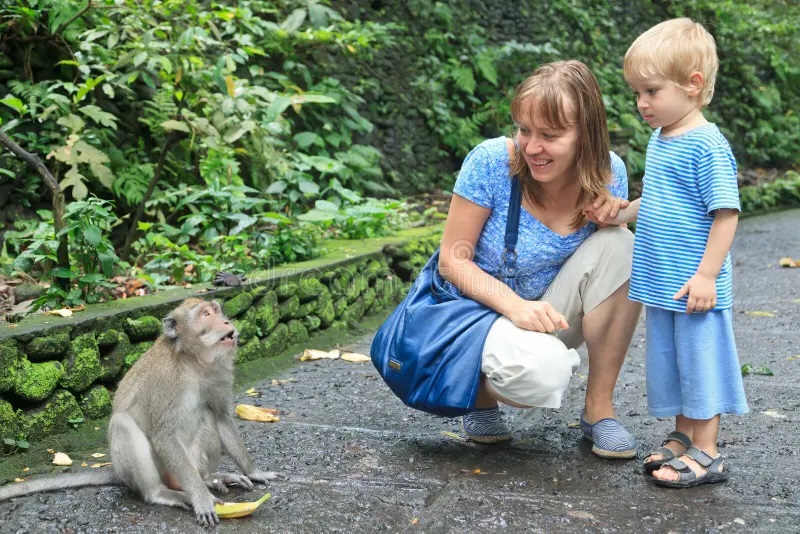
Being wildlife enthusiasts and bird watchers we took a river “safari” during a recent family trip to Bentota. We were dismayed to see that it seems to be the standard practice to feed the monkeys, I think they were the purple faced langurs, that were encountered on the river banks. Each boat that passed by stopped with boxed fruit, coconut and other odds and ends to feed them.
We managed to stop our guy from doing so but faced derision and laughter that we shouldn’t be afraid of monkeys. We tried to explain to him that this is a plague affecting Sri Lanka; elephants being fed on road sides and even in national parks, monkeys being fed from hotel balconies and apparently during river boat rides, birds being fed on hotel terraces etc.
This was met with further mockery and amused dismissal. An effort to make them understand that this was their livelihood that they were destroying it in this manner sailed over their heads. They even have a picture of a baby crocodile on the shoulders of a tourist on their billboard.
We need to consider the following:
Educate such tour operators about the importance of not interfering with the environment and the behaviour of wild animals.
Include education and training in the hotel school, and in schools in tourist resort towns about their duty and responsibility to the environment and the ecosystem on which we all depend.
If it is not already the case such operators should have licenses that should be revoked and fined if found to be engaging in such destructive acts.
Tamara Nanayakkara
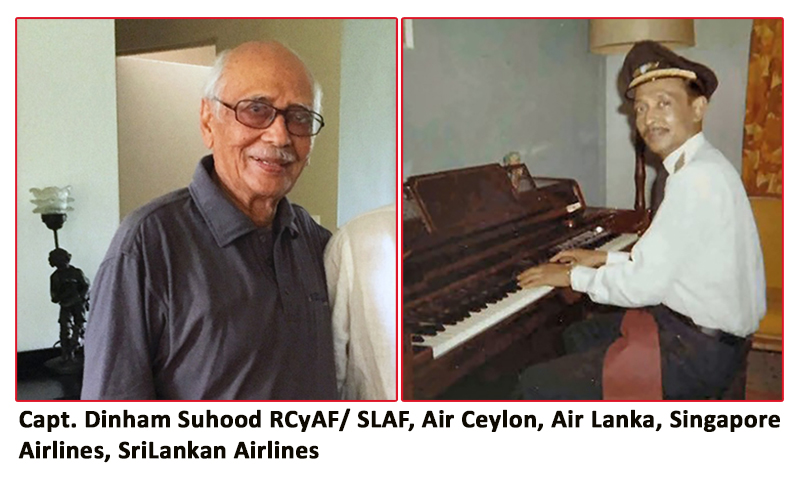
A few days ago, we heard the sad news of the passing on of Capt. Dinham Suhood. Born in 1929, he was the last surviving Air Ceylon Captain from the ‘old guard’.
He studied at St Joseph’s College, Colombo 10. He had his flying training in 1949 in Sydney, Australia and then joined Air Ceylon in late 1957. There he flew the DC3 (Dakota), HS748 (Avro), Nord 262 and the HS 121 (Trident).
I remember how he lent his large collection of ‘Airfix’ plastic aircraft models built to scale at S. Thomas’ College, exhibitions. That really inspired us schoolboys.
In 1971 he flew for a Singaporean Millionaire, a BAC One-Eleven and then later joined Air Siam where he flew Boeing B707 and the B747 before retiring and migrating to Australia in 1975.
Some of my captains had flown with him as First Officers. He was reputed to have been a true professional and always helpful to his colleagues.
He was an accomplished pianist and good dancer.
He passed on a few days short of his 97th birthday, after a brief illness.
May his soul rest in peace!
To fly west my friend is a test we must all take for a final check
Capt. Gihan A Fernando
RCyAF/ SLAF, Air Ceylon, Air Lanka, Singapore Airlines, SriLankan Airlines
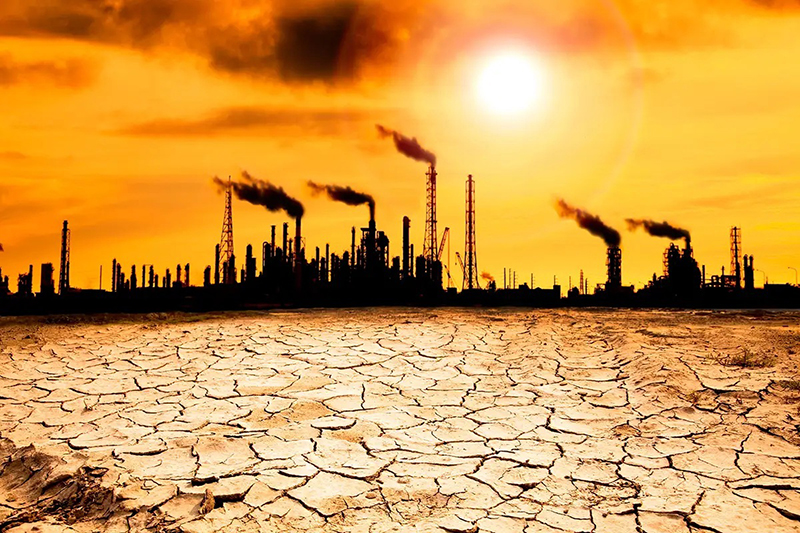
The cause of global warming, they claim, is due to ever increasing levels of CO2. This is a by-product of burning fossil fuels like oil and gas, and of course coal. Environmentalists and other ‘green’ activists are worried about rising world atmospheric levels of CO2. Now they want to stop the whole world from burning fossil fuels, especially people who use cars powered by petrol and diesel oil, because burning petrol and oil are a major source of CO2 pollution. They are bringing forward the fateful day when oil and gas are scarce and can no longer be found and we have no choice but to travel by electricity-driven cars – or go by foot. They say we must save energy now, by walking and save the planet’s atmosphere.
THE DEMON COAL
But it is coal, above all, that is hated most by the ‘green’ lobby. It is coal that is first on their list for targeting above all the other fossil fuels. The eminently logical reason is that coal is the dirtiest polluter of all. In addition to adding CO2 to the atmosphere, it pollutes the air we breathe with fine particles of ash and poisonous chemicals which also make us ill. And some claim that coal-fired power stations produce more harmful radiation than an atomic reactor.
STOP THE COAL!
Halting the use of coal for generating electricity is a priority for them. It is an action high on the Green party list.
However, no-one talks of what we can use to fill the energy gap left by coal. Some experts publicly claim that unfortunately, energy from wind or solar panels, will not be enough and cannot satisfy our demand for instant power at all times of the day or night at a reasonable price.
THE ALTERNATIVES
It seems to be a taboo to talk about energy from nuclear power, but this is misguided. Going nuclear offers tried and tested alternatives to coal. The West has got generating energy from uranium down to a fine art, but it does involve some potentially dangerous problems, which are overcome by powerful engineering designs which then must be operated safely. But an additional factor when using URANIUM is that it produces long term radioactive waste. Relocating and storage of this waste is expensive and is a big problem.
Russia in November 2020, very kindly offered to help us with this continuous generating problem by offering standard Uranium modules for generating power. They offered to handle all aspects of the fuel cycle and its disposal. In hindsight this would have been an unbelievable bargain. It can be assumed that we could have also used Russian expertise in solving the power distribution flows throughout the grid.
THORIUM
But thankfully we are blessed with a second nuclear choice – that of the mildly radioactive THORIUM, a much cheaper and safer solution to our energy needs.
News last month (January 2026) told us of how China has built a container ship that can run on Thorium for ten years without refuelling. They must have solved the corrosion problem of the main fluoride mixing container walls. China has rare earths and can use AI computers to solve their metallurgical problems – fast!
Nevertheless, Russia can equally offer Sri Lanka Thorium- powered generating stations. Here the benefits are even more obviously evident. Thorium can be a quite cheap source of energy using locally mined material plus, so importantly, the radioactive waste remains dangerous for only a few hundred years, unlike uranium waste.
Because they are relatively small, only the size of a semi-detached house, such thorium generating stations can be located near the point of use, reducing the need for UNSIGHTLY towers and power grid distribution lines.
The design and supply of standard Thorium reactor machines may be more expensive but can be obtained from Russia itself, or China – our friends in our time of need.
Priyantha Hettige

India vs Pakistan match is a godsend for T20 World Cup hosts Sri Lanka

Imran Khan to be moved to hospital amid rising health concerns

Fairly heavy showers are likely at some places in the Rathnapura, Kalutara, Galle and Matara districts

India vs Pakistan is finally here. Over to cricket now

“We Are Building a Stable, Transparent and Resilient Sri Lanka Ready for Sustainable Investment Partnerships” – PM

US military kills 3 in latest attack on boat in the Caribbean

‘Dates have the highest sugar content to fight Coronavirus’

Sunday Island 27 December – Headlines

#SundayIsland 17th December – Headlines

Sunday Island – 28th March

Sunday Island Headlines – 21 March

Sunday Island – 21st February – Headlines
-
 Business4 days ago
Autodoc 360 relocates to reinforce commitment to premium auto care
-
 Midweek Review4 days ago
A question of national pride
-
 Opinion3 days ago
Will computers ever be intelligent?
-
 Midweek Review4 days ago
Theatre and Anthropocentrism in the age of Climate Emergency
-

 Editorial6 days ago
The JRJ syndrome
-
 Features7 hours ago
The Rise of Takaichi
-
 Opinion4 days ago
The Walk for Peace in America a Sri Lankan initiative: A startling truth hidden by govt.
-
 Opinion5 days ago
Beyond 4–5% recovery: Why Sri Lanka needs a real growth strategy