
Foreign News
Protests spread across Iran for third day after currency hits record low

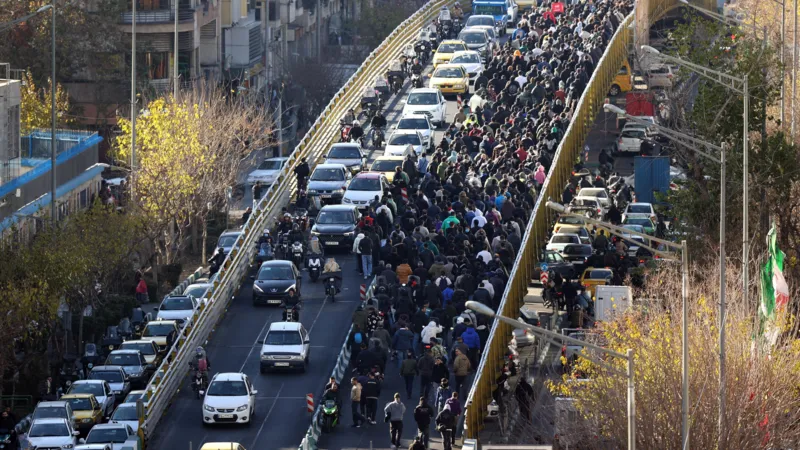
Protests and strikes in Iran over inflation and currency devaluation have spread from the capital, Tehran, to several other cities on a third day of unrest.
The protests began on Sunday after shopkeepers in Tehran’s Grand Bazaar staged a strike when the Iranian rial hit a record low against the US dollar on the open market.
Since then, videos verified by BBC Persian have shown demonstrations in the cities of Karaj, Hamedan, Qeshm, Malard, Isfahan, Kermanshah, Shiraz and Yazd. Police were also seen using tear gas in an attempt to disperse demonstrators.
The Iranian government said it “recognises the protests” and would listen “with patience, even if it is confronted with harsh voices”.
President Masoud Pezeshkian wrote on X late on Monday that he had instructed the interior minister to hold talks with what he described as “representatives” of the protesters so that measures could be taken “to resolve the problems and act responsibly”.
He also accepted the resignation of Iran’s central bank governor, Mohammadreza Farzin, and named former economy and finance minister Abdolnasser Hemmati to replace him.
University students have also joined the protests, chanting anti-government slogans including “Death to the dictator” – a reference to the Supreme Leader, Ayatollah Ali Khamenei, who holds ultimate power in Iran.
Some protesters were also heard chanting slogans in support of the son of the late Shah Mohammad Reza Pahlavi, who was overthrown in the 1979 Islamic Revolution, including “Long live the Shah”.
In response, Reza Pahlavi, who lives in exile in the United States, wrote on X: “I am with you. Victory is ours because our cause is just and because we are united.”
“As long as this regime remains in power, the country’s economic situation will continue to deteriorate,” he added.
The US state department’s Persian-language account on X also expressed support for the protests.
It said the US “praises their courage” and stands with those seeking “dignity and a better future” after years of failed policies and economic mismanagement.
Iran was reportedly high on the agenda of a meeting between US President Donald Trump and Israeli Prime Minister Benjamin Netanyahu in Florida on Monday,
At a joint news conference afterwards, Trump declined to say whether he supported regime change in Iran, but said: “They’ve got a lot of problems: tremendous inflation, their economy is bust, their economy is no good, and I know people aren’t so happy.”
The president also said he might back another round of Israeli air strikes on Iran if the country rebuilt its ballistic missile or nuclear programmes.
During a 12-day war between Israel and Iran in June, the US carried out air strikes on key Iranian uranium enrichment sites. Iran insists its nuclear programme is entirely peaceful.
President Pezeshkian vowed on Tuesday that Iran’s response to “any oppressive act of aggression” would be “severe and regret-inducing”.
Iran’s supreme leader has repeatedly said that Israel’s government hoped mass protests would erupt in Iran during the war and topple the regime.
“They wanted to create sedition on the streets… But people were absolutely not influenced by what the enemy wanted,” Khamenei said in September.
[BBC]

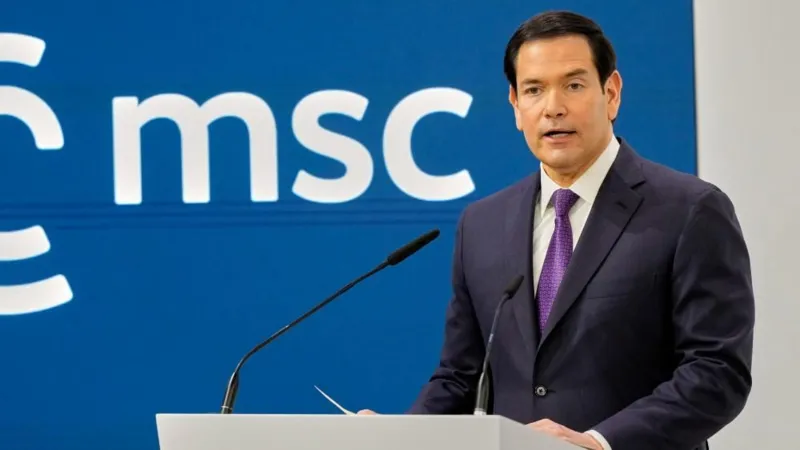
Marco Rubio has assured European leaders the US does not plan to abandon the transatlantic alliance, saying its destiny “will always be intertwined” with the continent’s.
The US secretary of state told the Munich Security Conference: “We do not seek to separate, but to revitalise an old friendship and renew the greatest civilisation in human history.”
He criticised European immigration, trade and climate policies, but the overall tenor of the closely-watched speech was markedly different to Vice President JD Vance’s at the same event last year, during which he scolded continental leaders.
European Commission President Ursula von der Leyen said she was “very much reassured” by Rubio’s remarks.
Rubio, the Trump administration’s most senior diplomat, said it was “neither our goal nor our wish” to end the transatlantic partnership, adding: “For us Americans, our home may be in the Western Hemisphere, but we will always be a child of Europe.
“And I am here today to leave it clear that America is charting the path for a new century of prosperity, and that once again we want to do it together with you, our cherished allies and our oldest friends.”
However, he repeated several criticisms repeatedly levelled at Europe by the Trump administration, including describing immigration policies as a threat to civilisation, and saying a “climate cult” had taken over economic policy.
On trade, he said Europe and the US had “made mistakes together” by adopting a “dogmatic vision of free and unfettered trade”.
He repeated familiar calls from the US for Europe to invest more in defence, saying: “We want allies who can defend themselves so that no adversary will ever be tempted to test our collective strength.”
In response, von der Leyen said: “Rubio is a good friend, a strong ally. And this was, for me, very reassuring to listen to him.”
She continued: “We want a strong Europe. And this is, I think, the message of today.”
Elsewhere in his half-hour address, Rubio said the system of international co-operation “must be rebuilt” and singled out the UN for particular criticism, saying it had “played virtually no role” in resolving the Gaza and Ukraine conflicts.
He also said the organisation was “powerless to constrain the nuclear programme” of Tehran.
In recent weeks, US President Donald Trump has threatened strikes on Iran if a deal to curb its nuclear programme can be reached, as negotiations between the two intensify.
A second round of talks will be hosted by Oman in Geneva next week, the Swiss foreign ministry said on Saturday.
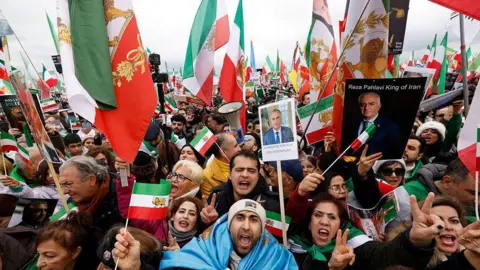
Outside the conference, an estimated 200,000 protesters held a rally against the Iranian government, local police report.
The demonstrators denounced the country’s leadership, following the government crackdown on January’s protests in which thousands of people were killed.
Rubio also said the US did not know whether the “Russians are serious about ending the war” in Ukraine, before adding: “But we’re going to continue to test it.”
Ukraine’s President Volodymyr Zelensky told the conference later on Saturday that no one in Ukraine believed his Russian counterpart Vladimir Putin would leave the country alone, describing the Russian leader as a “slave to war”.
Zelensky has come under pressure from the White House to hold presidential elections, which have been suspended while the country is under martial law.
Asked about a Financial Times report that his administration was planning for elections as soon as May, Zelensky said it was “something new to me” and repeated that “nobody supports elections during the war”.
He said that Ukraine would need “two months of ceasefire” and “security infrastructure” to safely conduct elections.
[BBC]
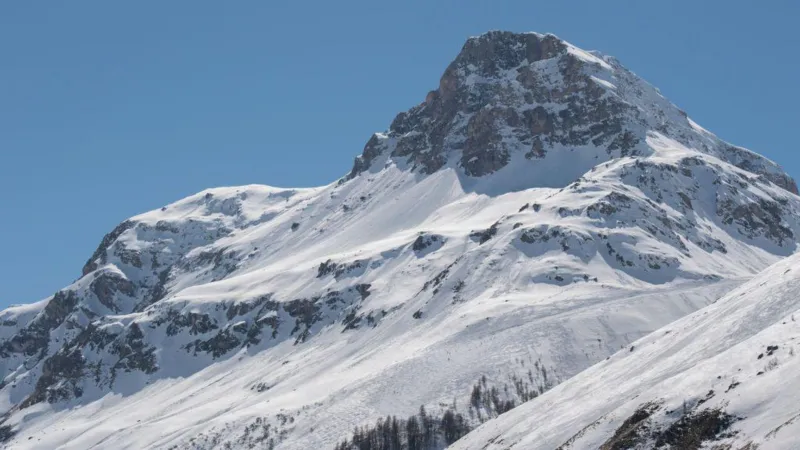
Two Britons and one French person have died in an avalanche in the French Alps on Friday.
The British pair were part of a group of five people skiing off-piste with an instructor in the Manchet valley, near Val d’Isère, a spokeswoman for the resort told the BBC.
The French national was skiing alone when the avalanche struck at 11:30 local time (10:30 GMT), Albertville prosecutor Benoit Bachelet said in a statement announcing the deaths.
Another British person has minor injuries, he added.
A spokesperson for the Foreign Office told the BBC they are aware of the death of the two British men and they are “in contact with the local authorities and stand ready to offer consular assistance”.
A manslaughter investigation has now been launched by the Albertville public prosecutor’s office and will be carried out by CRS Alpes mountain rescue police.
The ski instructor, who was unharmed, tested negative after taking alcohol and drug tests, according to Bachelet.
Val d’Isère already experienced avalanches this winter, with one person dying in the resort of Tignes nearby last month.
France’s national weather service had issued a red alert for avalanche risk across the Savoie region on Thursday, which was then lifted on Friday. But the risk level remained high across the Alps with “very unstable snow cover”.
The avalanche comes in the wake of Storm Nils, which passed through France the day before, leaving between 60cm and 100cm of snow, the weather service said.
There have been a number of fatal avalanches in the region in recent weeks, including the death of a British man off-piste skiing at the La Plagne resort in January.
“We have had some very complicated, very unstable snow since the beginning of the season,” Luc Nicolino, slopes manager at La Plagne, told AFP.
“It’s a kind of mille-feuille with many hidden, fragile layers.”
[BBC]
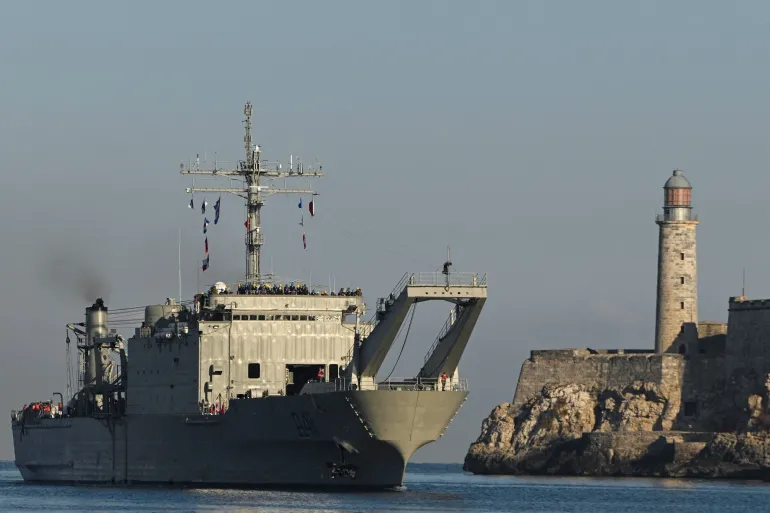
Two Mexican ships bearing humanitarian aid have docked in the harbour of Cuba’s capital Havana, as the United States continues its efforts to cut the island off from outside fuel supplies.
On Thursday, pedestrians on Havana’s seawall watched as the ships, one of which was the Papaloapan, unloaded white pallets on shore.
Mexican President Claudia Sheinbaum addressed the delivery in her morning news conference, promising that more help was on the way.
“We are sending different forms of help, different forms of support,” Sheinbaum said. “Today, the ships arrive. When they return, we are going to send more support of a different type.”
She also described her country’s role as “opening the doors for dialogue to develop” between Cuba and the US, but she insisted that maintaining Cuba’s sovereignty would be paramount among her priorities.
Since January, the administration of US President Donald Trump has sought to cut off the oil supplies that power Cuba’s energy grid and other critical infrastructure.
The campaign is part of a long-running series of sanctions imposed by the US on the Caribbean island nation, stretching back to the Cold War.
But the latest effort, under Trump, has experts at the United Nations warning of an imminent humanitarian “collapse” in Cuba, as oil supplies dwindle.
The oil embargo began on January 3, when Trump authorised a US military operation to attack Venezuela and abduct its then-leader, President Nicolas Maduro, and his wife Cilia Flores.
[Aljazeera]

Fairly heavy showers are likely at some places in the Rathnapura, Kalutara, Galle and Matara districts

India vs Pakistan is finally here. Over to cricket now

“We Are Building a Stable, Transparent and Resilient Sri Lanka Ready for Sustainable Investment Partnerships” – PM

US military kills 3 in latest attack on boat in the Caribbean

Prez AKD congratulates BNP’s Tarique Rahman on B’desh election win

Massive Sangha confab to address alleged injustices against monks

‘Dates have the highest sugar content to fight Coronavirus’

Sunday Island 27 December – Headlines

#SundayIsland 17th December – Headlines

Sunday Island – 28th March

Sunday Island Headlines – 21 March

Sunday Island – 21st February – Headlines
-

 Business4 days ago
Autodoc 360 relocates to reinforce commitment to premium auto care
-
 Midweek Review4 days ago
A question of national pride
-

 Opinion3 days ago
Will computers ever be intelligent?
-
 Midweek Review4 days ago
Theatre and Anthropocentrism in the age of Climate Emergency
-

 Editorial6 days ago
The JRJ syndrome
-

 Opinion4 days ago
The Walk for Peace in America a Sri Lankan initiative: A startling truth hidden by govt.
-
 Foreign News6 days ago
Portugal elects Socialist Party’s Seguro as president in landslide
-
 Foreign News7 days ago
Washington Post chief executive steps down after mass lay-offs