
News
Protests in China are not rare – but the current unrest is significant

By Teresa Wright
Professor of Political Science,
California State University,
Long Beach
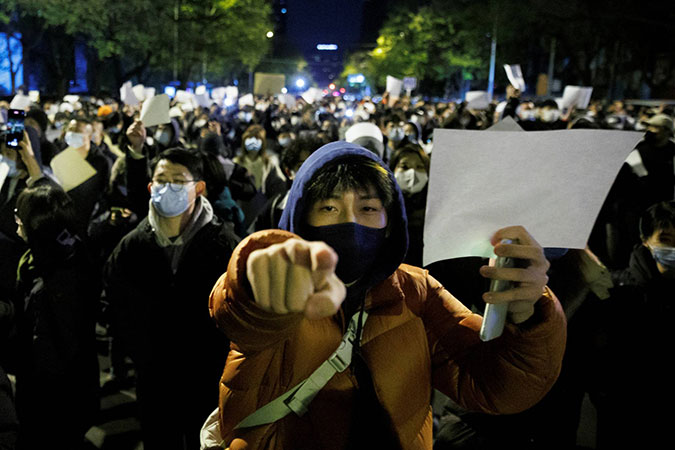
Street protests across China have evoked memories of the Tiananmen Square demonstrations that were brutally quashed in 1989. Indeed, foreign media have suggested the current unrest sweeping cities across China is unlike anything seen in the country since that time.The implication is that protest in China is a rarity. Meanwhile, the Nov. 30, 2022, death of Jiang Zemin – the leader brought in after the bloody crackdown on 1989 – gives further reason to reflect on how China has changed since the Tiananmen Square massacre, and how Communist party leaders might react to unrest now.
But how uncommon are these recent public actions? And how do they compare with the massive weekslong demonstrations of 1989?
Having written extensively on protest in China, I can attest that protests in China are not at all uncommon – but that doesn’t make what is happening now any less significant. Alongside similarities between the current street actions and more typical protests of recent years, there are also parallels between the demonstrations today and those in 1989. Yet differences in China’s international status and domestic leadership reduce the chances for liberal democratic transformation now.
The current protests are ostensibly about the Chinese government’s strict “zero COVID” policies. They were triggered by a deadly fire in the northwestern city of Urumqi on Nov. 24, with some residents blaming lockdown rules for hampering rescue efforts. Unrest has since spread to multiple cities, including Beijing and Shanghai.
The specifics are unique to the pandemic. But in many respects, what we are seeing is not new or unusual – protests, in general, are not rare in China.In fact, from 1990 through the present, popular protests have been more frequent and widespread in China than they were in the years leading up to the Tiananmen Square-centered demonstrations.
According to Chinese government statistics, the yearly count of domestic “mass incidents” or “public order disturbances” – euphemisms used to refer to everything from organized crime to street protests – rose from 5,000 to 10,000 in the early 1990s to 60,000 to 100,000 by the early 2000s.
Despite the lack of official numbers since 2006 – which ceased to be published after that year – verbal statements by Chinese officials and research by scholars and nongovernment organizations estimate the number of yearly protests to have remained in the high tens-of-thousands.This is not to say the recent multi-city protests are unsurprising or insignificant. To the contrary, the current media spotlight is, I believe, well-deserved.
Nearly all the thousands of protests appearing every year in the post-Tiananmen Square period have been localized and focused on specific material issues. They occur, for example, when villagers feel they are unfairly compensated for land acquisitions, when private sector workers are not paid, or when residents suffer from environmental degradation caused by waste incinerators.In contrast, the anti-lockdown protests have emerged in numerous cities – reporting by CNN suggests there have been at least 23 demonstrations in 17 cities. They are also all focused on the same issue: COVID-19 restrictions. Moreover, they are targeted at central Party leaders and official government policy.
For the closest parallels in terms of size of protest, one has to go back to the late 1990s and early 2000s.From 1998 to 2002, tens of thousands of state-owned enterprise workers in at least 10 Chinese provinces demonstrated against layoffs and enforced early retirements. And in 1999, roughly 10,000 members of the now-banned spiritual movement Falun Gong amassed in central Beijing to protest their suppression and demand legal recognition.
But these protests were directed at issues that specifically affected only these groups and did not critique China’s top political leaders or system as a whole.The only post-1989 examples of overt collective political dissent – that is, public action calling for fundamental change to the mainland’s Chinese Communist Party-led political system – have been exceedingly small and transpired off the streets. In 1998, activists formed the China Democracy Party, declaring it a new political party to usher in liberal democratic multi-party governance. Though the party persisted openly for roughly six months, establishing a national committee and branches in 24 provinces and cities, its leaders ultimately were arrested and the party driven underground.
A decade later, a group of intellectuals led by writer Liu Xiaobo posted online a manifesto called “Charter 08” advocating for liberal democratic political reform. Liu, who later received the Nobel Peace Prize, was jailed as a result. He remained in prison until his death, from untreated cancer, in 2017.
And while the massive and sustained protests in Hong Kong over the past decade exemplify political dissent, protesters’ demands have remained confined to political reform in the Hong Kong Special Administrative Region of the People’s Republic of China.So how much do the current anti-lockdown protests resemble the demonstrations that shook the regime in the spring of 1989?
Both have involved urban residents from various walks of life, including university students and blue-collar workers.
And in each case, the demands of protesters have been mixed. They include specific material complaints: In 1989, it was the impacts of inflation; in 2022, it is the effects of lockdowns and incessant PCR testing.But they also include broader calls for political liberalization, such as freedom of expression.
Indeed in some ways, the protesters of 2022 are being more pointed in their political demands. Those on the streets of at least two major cities have called on President Xi Jinping and the Chinese Communist Party to step down. Demonstrators in 1989 refrained from such system-threatening rhetoric.
That reflects the changing political realities of China then and now. In early 1989, Party leadership clearly was split, with more reform-oriented leaders such as Zhao Ziyang perceived as sharing the activists’ vision for change. As such, demonstrators saw a way of achieving their aims within the communist system and without a wholesale change in leadership.
The contrast with today is stark: Xi has a firm grip on the party. Even if Xi were to miraculously step down, there is no clear opposition leader or faction to replace him. And if the party were to fall, the resultant political void is more likely to bring chaos than orderly political transformation.
Yet if the Chinese Communist Party is a different entity now than it was in 1989, its response to unrest shares some traits. Central authorities in 1989 blamed the protests on foreign “black hands” seeking to destabilize China. The same accusations have been raised in online posts now.
In fact, the government response to recent protests follows a pattern that has played out time and again in post-1989 protests. There is little to no official media coverage of the protests or acknowledgment by central Chinese Communist Party leaders. At the same time, local authorities attempt to identify and punish protest leaders while treating regular participants as well-intended and non-threatening. Central criticism – and possible sanction – of local officials portrayed as violating national policies follows. Meanwhile, there are moves to at least partially address protester grievances.It is a messy and inefficient way to respond to public concerns – but it has become the norm since 1989. (The Conversation)


SLPP MP Namal Rajapaksa and former Krrish Group Executive Director and businesswoman Janaki Siriwardena were further remanded until October 23 by the Colombo Chief Magistrate’s Court yesterday in connection with an alleged Rs. 70 million bribery case involving the Krrish Group.
Colombo Chief Magistrate Asanga S. Bodaragama rejected the bail application filed on behalf of Siriwardena.
The Magistrate said the order on Namal Rajapaksa’s bail application was not ready and would be delivered on the next court date.
The Commission to Investigate Allegations of Bribery or Corruption (CIABOC) arrested the two suspects and produced them before court over allegations that a bribe of Rs. 70 million had been solicited and accepted in connection with the affairs of the Krrish Group.

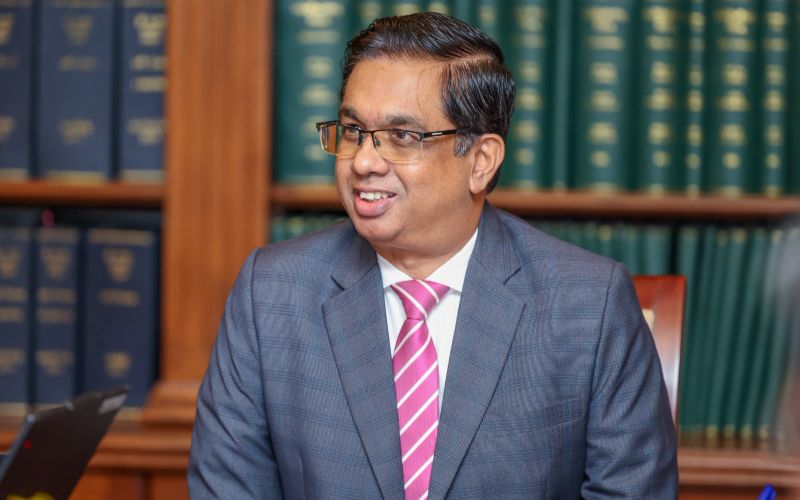
A progress review meeting on reforms and modernisation initiatives at Sri Lanka’s key state revenue-collecting institutions was held on Thursday (15) at the Presidential Secretariat, chaired by Secretary to the President Dr Nandika Sanath Kumanayake, with the participation of representatives of the International Monetary Fund (IMF) and officials of the Revenue Administration, Reform and Modernisation Bureau (RARMB) of the Presidential Secretariat.
At the meeting, the IMF representatives commended the revenue collection efficiency of the Department of Inland Revenue, Sri Lanka Customs and the Department of Excise, the country’s three leading state revenue-collecting institutions. Extensive discussions were also held on the progress of the reform and modernisation programmes being implemented at these institutions.
Secretary to the President Dr Nandika Sanath Kumanayake outlined the progress achieved by the three institutions to date and the reforms planned for implementation in the future.
The IMF representatives also highlighted the importance of strengthening risk management, developing human resources and ensuring the efficient operation of computer systems at the respective institutions.
Senior Additional Secretary to the President Seevali Arukgoda also attended the meeting. The IMF was represented by Cindy Negus, Senior Economist in Revenue Administration for the Asia and Pacific, Europe, Middle East and Central Asia regions; Alison Lister, Revenue Administration Adviser; and Gregory Toppin, Resident Revenue Adviser in Sri Lanka. A group of senior officials from the Revenue Administration, Reform and Modernisation Bureau of the Presidential Secretariat also participated.
(President’s Media Division)
By Anuradha Hiripitiyage
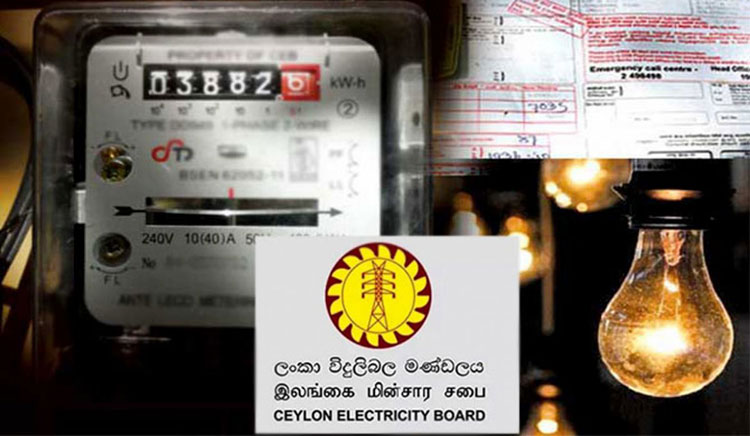
Electricity tariffs should be reduced by between 3 and 5 percent instead of being increased by 2.88 percent in the fourth quarter, as proposed by the National System Operator (NSO), Electricity Consumers’ Association Secretary Sanjeewa Dhammika said.
Addressing a media briefing in Maradagahamula, Divulapitiya, Gampaha, yesterday (16), Dhammika said a proper assessment of electricity generation costs, including the contribution of hydropower, could justify a reduction in tariffs.
He said the NSO had sought approval from the Public Utilities Commission of Sri Lanka (PUCSL) for a 2.88 percent tariff increase, which was expected to generate an additional Rs. 4,438 million.
However, the Commission had indicated that an increase of only 1.46 percent was warranted, amounting to Rs. 2,245 million, he said, adding that even this increase was unnecessary.
Dhammika alleged that the proposed revision sought to pass on to electricity consumers the financial burden arising from the non-arrival of five coal shipments and failed tenders.
“The Government had said that the burden of coal-related losses would not be passed on to the public. It is therefore unjust to make consumers bear these costs,” he said.
He pointed out that the PUCSL had forecast that hydropower would account for 32.34 percent of total electricity generation in the coming quarter, while the cost of such generation would represent only 3.45 percent of the overall cost of electricity production.
Consumers should benefit from the lower cost of hydropower generation rather than bear the burden of more expensive thermal power generation, he said.
Dhammika also questioned the inclusion of Rs. 669 million in capacity charges that had not been approved by the PUCSL, as well as a further Rs. 1,069 million to repay loans relating to incomplete projects.
Including such charges in the proposed tariff revision was unjustifiable, he said.
The PUCSL has given the public until October 30 to submit their views on the proposed tariff revision.
Dhammika said the possibility of increased hydropower generation in the coming weeks, as reservoir levels rise, should also be taken into account when determining electricity tariffs.
He maintained that tariffs could be reduced by 3 to 5 percent if hydropower generation was properly assessed and coal-related losses and unapproved charges were excluded from the calculations.
He further claimed that electricity tariffs could be reduced by as much as 10 percent through the promotion of renewable energy and the effective use of solar power and battery storage systems.
The Electricity Consumers’ Association urged the Government to withdraw the proposed tariff increase, insisting that consumers should not be made to bear costs arising from coal supply problems and other disputed charges.

Namal, Janaki further remanded

Achintha smashes 1,500 metres record at All Island Schools Games

Rare pink diamond goes on display in France 100 years after amateur heist

Nursery owner in China jailed for life after hundreds of children poisoned

Pakistan, Sri Lanka look to find the right mix as World Cup countdown begins

Mumbai Indians and head coach Mahela Jayawardene part ways

‘Dates have the highest sugar content to fight Coronavirus’

Sunday Island 27 December – Headlines

#SundayIsland 17th December – Headlines

Sunday Island – 28th March

Sunday Island Headlines – 21 March

Sunday Island – 21st February – Headlines
-

 News7 days ago
Sri Lanka escalates anti-graft drive with Shiranthi’s jailing
-

 News7 days ago
Iranian ships stranded, Lanka fears US sanctions
-

 Latest News6 days ago
Farhan and Sadaqat help Pakistan seal series in style
-

 Latest News5 days ago
Nissanka’s return headlines Sri Lanka’s Test squad against Pakistan
-

 Features6 days ago
Intake 16: 45 years of duty and honour
-
 News6 days ago
Malwathu Chapter issues statement on talks with President over Gnanasara Thera’s robes
-
 News7 days ago
Navi Pillay’s Lankan affairs in focus as she wins 2026 Nobel Peace Prize
-
 News6 days ago
CP alleges NPP has taken the blame for illegal US sanctions on Iranian vessels