
Opinion
Protesters and those who plan to suppress them in Sri Lanka

By Ananda P. Dasanayake
The government of Sri Lanka published its proposed Anti-Terrorism Act (ATA) on 17 March 2023. If adopted, it would replace the old Prevention of Terrorism Act (PTA) of 1971. The PTA was invoked mainly to deal with the Liberation Tamil Tigers of Eelam (LTTE) terrorism in northern Sri Lanka. After the war was over, the government came under pressure from sections of the international community, including the United Nations Human Rights Council (UNHRC), to repeal the PTA and replace it with a new law that conforms to international standards in countering terrorism.
The word terrorism came into the Sri Lankan political vocabulary in 1971 when I was a teenager. A group of educated, yet rebellious youth led an insurrection in 1971 against the corrupt rulers and the declining living conditions of the poor. Then the government used emergency laws to curb the uprising. This group is also alleged to have led the 1988-89 violent acts. The PTA Bill of 1971 was used to curb that.
The new ATA bill purports to do away with the provisions of the PTA that were considered in violation of international human rights law. Instead, the new Bill places the power to make detention orders in the hands of a Deputy Inspector General of Police, a power which under the PTA was held by the Minister of Defence. Critics including the Tamil National Alliance (TNA) have already raised objections to the provisions of ATA. The danger of the new bill is that any ordinary citizen, living in Sri Lanka or abroad, who criticises any element of the government under the freedom of expression right can now be considered a terrorist by the new and very loose definition of terrorism in the ATA. Under this definition, any citizen who is politically conscious or active can be labeled as a terrorist and arrested by the rulers. The proposed Anti-Terrorism Act would empower the authorities to systematically violate fundamental human rights, Human Rights Watch said. “The proposed counterterrorism law would permit the Sri Lankan government to continue to use draconian measures to silence peaceful critics and target minorities,” said Meenakshi Ganguly, South Asia director at Human Rights Watch. “The government’s crackdown on dissent and misuse of existing counterterrorism laws to arbitrarily detain protesters highlights the obvious risk of abuse.”
In an interview given to the BBC, Justice Minister Wijeyadasa Rajapakse, who drafted the bill, claimed that the new bill was developed after studying counter-terrorism laws of the countries such as the United States, India, the United Kingdom, and Germany. The International Conference of Jurists (ICJ), however, says that the newly proposed anti-terrorism legislation, if adopted as currently formulated, will give rise to a panoply of human rights violations, as much as the PTA was open to misuse. The Minister’s defence of the bill seems to be based on the provision that the magistrates can intervene if there are any wrong accusations. This claim is ridiculous given that Sri Lanka has no independent judiciary or transparent law and order as most judges and law enforcement officials are in the pockets of powerful politicians.
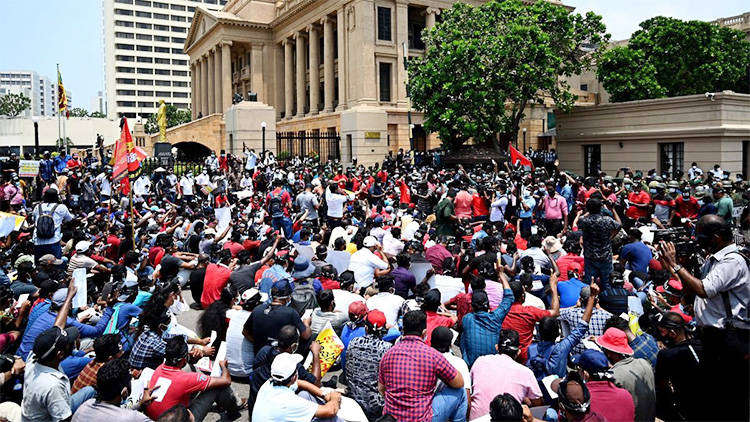
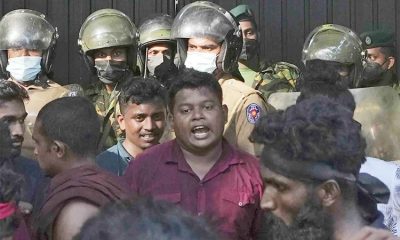
The ATT has some new features as well. It contains what the rulers learned from the recent people’s uprising (known as Aragalaya in Sri Lanka) that led to the ouster of the then President Gotabaya Rajapakse. Aragalaya took place when the Sri Lankan civilians took to the streets in droves in March 2022, semi-organised, to protest the corrupt rulers and their devastating policies. The government brutally attacked them together with the journalists and banned all social media, and unconstitutionally imposed a 72-hour curfew and emergency law. The US Ambassador to Sri Lanka, Julie Chung tweeted that Sri Lankans have a right to protest peacefully. Under the ATA, the president has the power to label the internet and new technology-based campaigns, social media, and democratic activism that were crucial during the Aragalaya as terrorist activities. The new act refers to the presidential powers in 42 places compared to just 11 places in the PTA.
Despite all these concerns, the public, both urban and rural, have no real understanding of what the ATA entails. They are of the opinion that the ATA applies only to the ‘terrorists’ in a traditional sense such as those who bomb places, etc., and not to them. But under the ATA, anyone can now be considered a terrorist except the rulers of the country. If you call a corrupt politician corrupt, you will be considered a terrorist. Some ministers have openly threatened the protestors by saying that they have enough water in the Beira Lake (a place that played a significant role during the Aragalaya), and enough tear gas canisters bought using the borrowed money. These threats need to be highlighted and publicly debated. The current discussion on the subject is limited to a few news conferences by the opponents, a few news articles based on expert reviews, and some international dissent.
While President Biden and Vice President Harris trot the world emphasising the importance of global democracy, the corrupt Sri Lankan rulers who are emboldened by the recent IMF loan they secured are trying to kill democracy in Sri Lanka for sure. The US ambassador to Sri Lanka should express her concerns about the danger of the proposed act just like the European Commission and Human Rights Watch have already done. The USA could easily influence the Sri Lankan government as they depend on the IMF.
Prof. Ananda P. Dasanayake is a Public Voices Fellow of The Op-Ed Project in partnership with New York University.









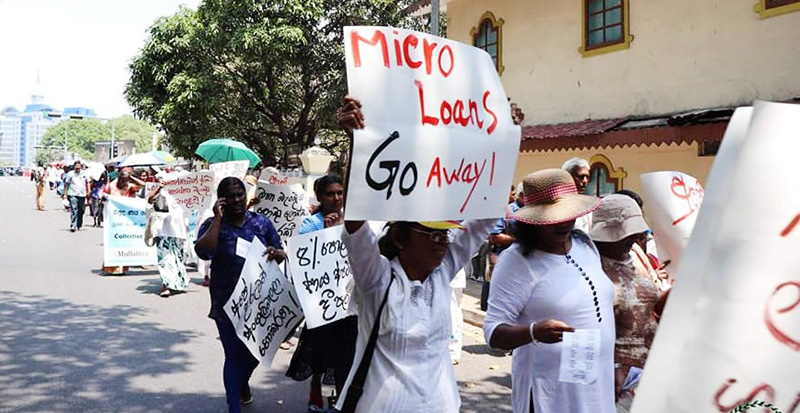
The Microfinance and Credit Regulatory Authority Bill was passed into law by the Parliament of Sri Lanka on 4 March. According to Deputy Minister of Finance and Planning Dr. Anil Jayantha, the main object of the Act is to establish an Authority to “license and supervise the under-regulated microfinance and moneylending sector, aiming to protect borrowers from exploitation and ensure financial stability”.
However, the Yukthi Collective is saddened and disappointed that a government which pledged to take “measures to alleviate the burden of predatory microfinance loans with high interest rates on women” (NPP Manifesto, 2024: Page no. 44), will now add to their unbearable weight.
The new Act, as virtually all legislation enacted by Anura Kumara Dissanayake’s government, is a legacy of the anti-working class Ranil Wickremesinghe regime. It evades the root causes of the microfinance trap, and ignores debt justice for women borrowers.
It fails in understanding the connections between household debt and public debt. The vicious cycle of national debt is sustained by lack of growth in economic activity because of poor access to affordable credit.
It fails to make equal representation of women mandatory in the new Authority. If representatives of women borrowers and their self-run organisations are not present in the regulatory body, how will its members know of their lived experiences and make decisions that value women’s unpaid and paid contributions to sustaining life?
System Change
Millions of indebted households voted for the NPP with hope and expectation of ‘system change’. But instead of honouring its manifesto promise to them, the government has let them down in the law-making process; as well as the focus and substance of the new Act.
It is appalling that NPP parliamentarians, including some of its women members, appear not to have read and understood the bill they enacted into law, nor spoke to the rural credit community providers in their electorates for their views.
Predatory lending exists in the formal and informal sectors. Within this ecosystem, the Act fails to understand, identify, and prohibit predatory lending and recovery practices. It is a cover for the Central Bank’s failure to properly regulate ‘Licensed Finance Companies’ in the interests of citizens.
The biggest offenders are the big finance companies, in which some parliamentarians are deposit-holders. Therefore, some lawmakers benefit from excess profitmaking through exploitative practices, at the expense of poor mostly rural women.
Where law reform should discipline the bullies and thugs in credit delivery, it will instead wipe out, through over-regulation, community-based and managed lenders such as death donation societies, farmer associations, and urban and rural women’s collectives, which have been a lifeline for vulnerable working-class women and a defence from harmful recovery practices.
Structural Adjustment Programmes
The motivation for this new law are the market- and capital- friendly structural reforms insisted by International Financial Institutions; not the concerns and needs of those at the mercy of predatory lenders.
From the Microfinance Act 2016, to the 2023 version of the Ranil Wickremesinghe regime, the Asian Development Bank (ADB) through its loans has been a promoter of these regressive reforms.
The 2026 Act, with some changes suggested by the Supreme Court in 2024 and hardly any of the changes demanded by affected communities, has been moved forward by the NPP government in line with ADB loan conditionalities.
The path of de-regulation for banking, finance, trade, and investment; and over-regulation of poor people’s savings and credit institutions, smacks of the bias to big capital, which the NPP in opposition once criticised.
Reforms needed
The financial and banking reforms we want to see are to make credit from state banks and public funds accessible and affordable to women producers in agriculture and micro and small business operators; with decent wages and social protection for workers; that improve household opportunity for a dignified livelihood and decent lives.
Yukthi is a forum supporting working people’s movements and people’s struggles for democracy and justice in Sri Lanka.
by Yukthi Collective

There is an unofficial bus halt at Gate Number 11 of the National Hospital at the 90-degree bend at the Prof. Nandadasa Kodagoda Mawatha (Old Norris Canal Road) which creates traffic jams at peak hours. Especially at the school opening and closing times at Carey College and hospital visiting hours.
Prospective passengers stand by the bend and then the busses stop suddenly on the middle of the road. The motorcycle in the picture is put into danger. The next bus halt is a few yards further near Carey College and Medical College Junction.
The problem is that illegal practices such as these, end up as approved procedure in our neck of the woods!
It must be nipped in the bud.
G. Fernando
Opinion
Naval hostilities close to a neutral coastal state: Legal assessment of a submarine attack on an Iranian warship near Sri Lanka

A submarine attack on an Iranian destroyer proximate to Sri Lanka represents more than a discrete naval engagement; it signals a potential horizontal escalation of conflict into the wider Indian Ocean Region (IOR). Historically, confrontations between Iran and Western powers have been largely confined to the Persian Gulf and adjacent regional waters. A strike near Sri Lanka, however, shifts the operational theatre from a semi-enclosed regional sea into the open Indian Ocean. This globally vital maritime space encompasses critical trade routes, energy supply corridors, and strategically sensitive naval zones.
This geographic expansion carries multiple strategic implications. First, it demonstrates the long-range maritime strike capabilities and blue-water operational reach of the belligerent forces. Second, it functions as a form of deterrence signalling, conveying a willingness to project force beyond traditional conflict zones. Third, it widens the theatre of operations, increasing the probability of third-party entanglement and amplifying regional instability.
Beyond its immediate military and strategic dimensions, the incident raises complex legal questions under both jus ad bellum—the body of law governing the use of force between states—and jus in bello, encompassing international humanitarian law applicable to armed conflict at sea. The central questions addressed in this paper are:
a. Lawfulness of Force:
Whether the use of force against the Iranian warship was lawful under the United Nations Charter, including considerations of self-defence and Security Council authorisation.
b. Compliance with International Humanitarian Law:
Whether the attack adhered to the principles and norms of international humanitarian law governing naval warfare, including the lawfulness of the target, proportionality, distinction, and obligations toward shipwrecked personnel.
c. Neutrality and Coastal State Rights:
Whether Sri Lanka’s rights and obligations as a neutral coastal state were violated, particularly within its territorial sea and Exclusive Economic Zone (EEZ).
d. Operational and Geostrategic Implications:
The broader implications of conducting military operations within or near neutral maritime zones, and the interplay between legal permissibility, maritime security, environmental obligations, and regional stability.
These questions form the analytical framework that will guide the discussion throughout this paper, providing a structured lens for examining the legal, humanitarian, and strategic dimensions of the incident.
Jus ad Bellum and Jus in Bello:
Legality of the Use of Force
The legality of a submarine attack against a commissioned warship during an armed conflict must be assessed within a structured framework of international law comprising the jus ad bellum regime under the United Nations Charter, the corpus of international humanitarian law (IHL), and customary principles of naval warfare as reflected in the San Remo Manual on International Law Applicable to Armed Conflicts at Sea.
At the threshold level, the UN Charter governs the lawfulness of the use of force between states. Article 2(4) establishes a general prohibition on the threat or use of force against the territorial integrity or political independence of any state, subject only to narrow exceptions. These exceptions include the inherent right of self-defence under Article 51 and actions authorised by the United Nations Security Council under Chapter VII.
Accordingly, if an Iranian warship were torpedoed by a submarine, the attacking state would be required to demonstrate that the action was undertaken either pursuant to a valid claim of self-defence, necessitated by an armed attack or imminent threat, or as part of an already existing international armed conflict. Absent such justification, the attack could constitute an unlawful use of force in violation of the Charter’s collective security framework.
Where an international armed conflict is already in existence, the analysis shifts from jus ad bellum to Jus in bello, namely the rules governing the conduct of hostilities.
Jus in bello
: Naval Warfare and Attack Against an Iranian Naval Ship
Where an international armed conflict exists between the United States and Iran, the analysis shifts to jus in Bello. Commissioned warships form part of a state’s armed forces and constitute lawful military objectives. Under customary naval warfare law, as reflected in the San Remo Manual on International Law Applicable to Armed Conflicts at Sea, enemy warships may be attacked, including by submarine-launched torpedoes, without prior warning. An Iranian destroyer operating as part of Iran’s navy would therefore constitute a legitimate military objective in principle.
However, the legality of a torpedo attack by a United States submarine remains subject to the foundational principles of international humanitarian law, including distinction, proportionality, military necessity, and precautions in attack. The principle of distinction requires that the target be military in nature; proportionality prohibits attacks expected to cause incidental harm excessive in relation to the anticipated military advantage; and military necessity demands that the force employed be directed toward achieving a legitimate military objective.
These obligations are particularly significant in maritime theatres characterised by dense commercial traffic, such as the sea lanes south of Sri Lanka. Incidental harm to neutral merchant vessels, offshore installations, or third-state interests must therefore be carefully assessed in relation to the anticipated concrete and direct military advantage.Submarine warfare, though technologically sophisticated and strategically consequential, remains subject to these enduring normative constraints, which seek to balance operational effectiveness with humanitarian considerations in the maritime domain.
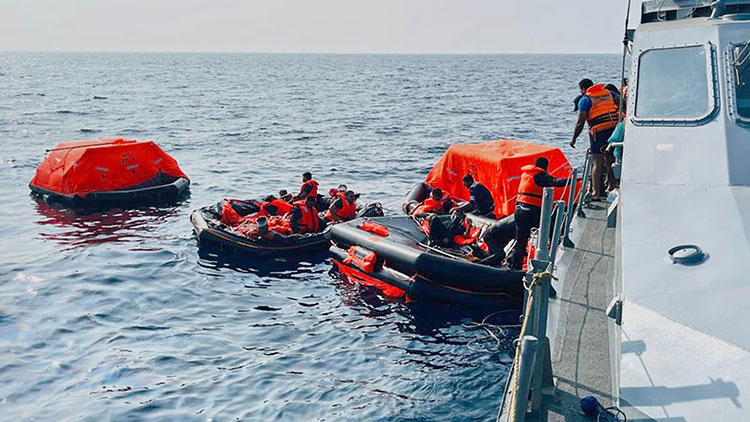
Customary humanitarian law further requires that feasible measures be taken to search for and rescue the shipwrecked, wounded, and dead following an engagement. In this respect, any action by the Sri Lanka Navy to rescue surviving sailors and recover bodies from the destroyed vessel represents a prudent and legally consonant exercise of humanitarian responsibility. Such conduct reflects long-standing maritime tradition and aligns with the duties recognised under the law of armed conflict and the broader law of the sea, without compromising Sri Lanka’s neutral status.
Sri Lanka’s Legal Position Concerning the Torpedoed Iranian Vessel
Sri Lanka’s legal position is largely determined by the maritime location in which the submarine attack occurred. Should the hostilities have taken place within Sri Lanka’s territorial sea, defined as extending up to 12 nautical miles from the baseline, such conduct would constitute a breach of Sri Lanka’s sovereignty and a violation of the law of neutrality, which forbids belligerent states from engaging in hostilities within neutral waters and imposes a duty on the coastal state to prevent such actions within its jurisdiction. In that circumstance, Sri Lanka would be entitled to issue a diplomatic protest and potentially pursue reparative claims.
By contrast, as the engagement took place within Sri Lanka’s Exclusive Economic Zone (EEZ), the analysis is more nuanced under the United Nations Convention on the Law of the Sea. The EEZ confers sovereign rights for resource exploitation rather than full sovereignty, and prevailing state practice accepts that military operations, including naval manoeuvres, are not per se unlawful in another state’s EEZ. While such an engagement would not automatically breach international law, it would nonetheless generate significant security concerns, including risks to navigational safety, potential environmental damage, and heightened regional instability. Should the sinking result in oil discharge, hazardous material release, or debris affecting shipping lanes, obligations under UNCLOS to protect and preserve the marine environment would be engaged.
Although the Rio Declaration on Environment and Development does not explicitly regulate armed conflict, its principles highlight an increasing expectation for states to protect the environment during hostilities. Similarly, UNCLOS mandates that states protect and preserve the marine environment. Consequently, should the sinking of the Iranian destroyer cause an oil spill, the release of hazardous materials, or navigational hazards, specific environmental liabilities would be triggered. Strategically, a submarine strike near Sri Lanka signals more than a discrete tactical engagement. It reflects the projection of great-power naval capabilities into a strategically sensitive maritime space through which a substantial proportion of global trade transits.
Sri Lanka occupies a pivotal geostrategic position astride the principal East–West Sea Lines of Communication linking Gulf energy supplies, East Asian manufacturing centres, and European markets via the Suez Canal. A substantial proportion of global container traffic transits south of the island, rendering these waters acutely sensitive to instability. Even a limited naval engagement can elevate war-risk insurance premiums, disrupt commercial routing, and indirectly affect port operations in Colombo and Hambantota.
From a jus ad bellum perspective, geographic expansion does not in itself render hostilities unlawful; yet it complicates assessments of necessity and proportionality and increases the risk of escalation affecting neutral states.
The torpedoing of an Iranian naval vessel in maritime zones proximate to Sri Lanka necessitates a carefully layered legal assessment situated at the confluence of jus ad bellum, jus in bello, and the law of the sea. As this paper has demonstrated, the legality of the incident ultimately turns on four interrelated determinations:
(a) whether a lawful basis for the use of force existed under Article 51 of the Charter of the United Nations, grounded in self-defence;
(b) whether the attack complied with the principles of distinction, proportionality, and military necessity under international humanitarian law;
(c) whether the engagement occurred within Sri Lanka’s territorial sea, thereby infringing its sovereignty and violating the law of neutrality; and
(d) whether the obligations owed to survivors, shipwrecked personnel, and the marine environment were respected in accordance with the law of armed conflict at sea and relevant maritime conventions.
If the attack did not occur within Sri Lanka’s territorial sea, it would not amount to a violation of sovereignty or a breach of the law of neutrality capable of engaging state responsibility on that ground.
By contrast, where the engagement occurred beyond the territorial sea whether within the Exclusive Economic Zone or on the high seas prevailing interpretations of the law of naval warfare, reinforced by consistent state practice, suggest that the operation may be regarded as legally defensible, provided that the cumulative requirements of necessity, proportionality, distinction, and humanitarian obligation were satisfied.
Nevertheless, legal permissibility does not equate to strategic prudence. The deployment of a United States submarine to conduct kinetic operations in proximity to a neutral coastal state within the Indian Ocean underscores the increasingly complex convergence of naval power projection, humanitarian norms, environmental obligations, and coastal state rights within the contemporary maritime domain.
Even where consistent with international law, the extension of submarine warfare into the wider Indian Ocean carries destabilising implications for regional security, commercial shipping, and the safety of neutral coastal states situated along critical sea lines of communication. The geographic expansion of hostilities into this maritime space heightens the risks of miscalculation, escalation, and unintended third-party involvement.
For Sri Lanka, the incident underscores the delicate equilibrium between maintaining neutrality, safeguarding maritime security, and upholding the international legal order. The actions undertaken by the Sri Lanka Navy in conducting rescue and recovery operations for surviving sailors and deceased personnel reflect the discharge of well-established humanitarian duties under international law and exemplify responsible conduct at sea.
Ultimately, this episode illustrates the increasingly complex convergence of naval power projection, international humanitarian norms, and coastal state rights within the contemporary maritime domain. In an era marked by intensifying great-power competition and expanding operational reach in the Indian Ocean, the preservation of legal clarity, strategic restraint, and respect for neutral maritime spaces remains essential to sustaining regional stability and safeguarding the integrity of the international maritime order.
by REAR ADMIRAL (RTD.) JAGATH RANASINGHE
VSV, USP, psc, MSc (DS) Mgt, MMaritimePol (Aus),
PG Dip in CPS, DIP in CR, FNI (Lond), Former Govt Fellow GCSP

Cabinet approves 14 day Visa extension
Sunil Galagama appointed as District Secretary Badulla

Anupama Mangala Wickramaarachchi appointed District Secretary Ampara
Committee on Economic Surveillance to be established
Cabinet nod to include the National Savings Bank for the Interest-Free Loan Scheme for Students

Nepal election 2026: Counting continues with rapper Balendra Shah’s party close to super-majority

‘Dates have the highest sugar content to fight Coronavirus’

Sunday Island 27 December – Headlines

#SundayIsland 17th December – Headlines

Sunday Island – 28th March

Sunday Island Headlines – 21 March

Sunday Island – 21st February – Headlines
-

 News5 days ago
University of Wolverhampton confirms Ranil was officially invited
-

 News6 days ago
Legal experts decry move to demolish STC dining hall
-

 News5 days ago
Female lawyer given 12 years RI for preparing forged deeds for Borella land
-

 News4 days ago
Peradeniya Uni issues alert over leopards in its premises
-

 News2 days ago
Repatriation of Iranian naval personnel Sri Lanka’s call: Washington
-

 Business6 days ago
Cabinet nod for the removal of Cess tax imposed on imported good
-

 News5 days ago
Library crisis hits Pera university
-

 Business7 days ago
Dialog partners with Ratmalana Audiology Centre for World Hearing Day 2026