
Sports
Protecting the Whistle: Time to End the Unfair Blame Game in Sri Lanka’s School Rugby

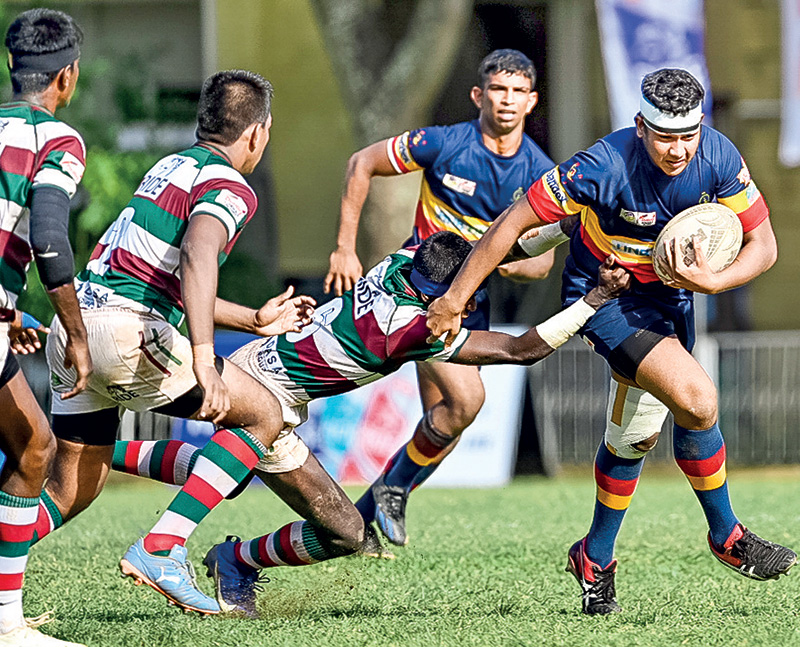
In Sri Lanka, school rugby has transcended sport—it is a social movement driven by fierce loyalty, historic rivalries, and deep-rooted pride. Old boys, parents, extended families, and loyal supporters turn up in numbers, passionately backing their alma maters. This vibrant culture is one of Sri Lankan rugby’s greatest assets—but when misdirected, it becomes one of its greatest threats.
One disturbing trend that continues to grow unchecked is the targeting of referees, especially after closely contested matches. When a team loses by a narrow margin, the first finger of blame often points—not to missed tackles or tactical errors—but to the referee. Social media explodes with criticism, conspiracy theories are floated, and reputations are unfairly tarnished.
One common accusation is that some referees have not played rugby at school or national level. But the notion that you must be an ex-player to become a good referee is both outdated and inaccurate. Across the world, many of the most respected match officials have never played elite-level rugby. What makes a referee effective is their knowledge of the laws, fitness, decision-making under pressure, and passion for the game. These qualities—not their playing history—define their competency.
The days when former players voluntarily took up the whistle are largely over. Today, the abuse referees face—from the sidelines and online—has discouraged even passionate rugby minds from joining the officiating ranks. This is not unique to Sri Lanka. It is a global issue faced by unions across the rugby world, including Tier 1 nations.
In an ironic twist, some stakeholders have even gone so far as to request foreign referees for local school matches. This raises a serious question: What makes a foreign referee automatically better? Is it their accent? Passport? Skin color?
Recent international matches hosted in Sri Lanka offer some clarity. Referees from the Asia Rugby Panel officiated several high-stakes games. Spectators had the opportunity to observe them closely—and what they saw were officials making difficult calls under pressure, not immune to error. Were they flawless? No. Were they better than local referees? That’s debatable at best. The idea that foreign referees are inherently superior is a myth, and one that insults the dedication and professionalism of our own officials.
Sri Lankan referees operate within a robust system of governance. They undergo fitness testing, receive continuous education, attend law workshops, and engage in regular match reviews. Referees’ societies in Sri Lanka maintain an internal accountability structure that interacts with coaches and administrators constructively to improve standards.
Yet in every match, human error is a possibility—by players, coaches, and referees alike. A referee may miss a knock-on; a player may miss a tackle; a coach may select the wrong strategy. But while the latter two are often excused or ignored, the referee is relentlessly singled out. Worse, coaches and officials sometimes use refereeing decisions to deflect criticism from their own failings.
Let’s also be honest about the statistics. In most close games, when you weigh the team’s own errors—missed conversions, defensive lapses, poor decision-making—against the referee’s marginal calls, it’s usually the former that cost the game. But this truth rarely makes it to social media posts or old boys’ forums.
If Sri Lanka truly wants to build a sustainable future for rugby, we must protect those who make the game possible. That starts with respecting referees—not just with words, but with action.
“Referees are not perfect. But without them, there is no game. I know—I’ve played, I’ve captained, and I’ve officiated. The pressure in the middle is immense. It’s time our rugby culture evolved to support, not scapegoat, the whistle,”
— said a former Sri Lanka player turned referee, speaking to The Island.
“We must:Educate players, coaches, and supporters on the laws of the game.
Discourage personal attacks on referees and match officials.
Create pathways for passionate rugby minds—playing or non-playing—to take up the whistle.
Celebrate referees who uphold the spirit of the game.
Without referees, there is no rugby. It’s time we stop blaming them—and start backing them.”
By Ifham Nizam



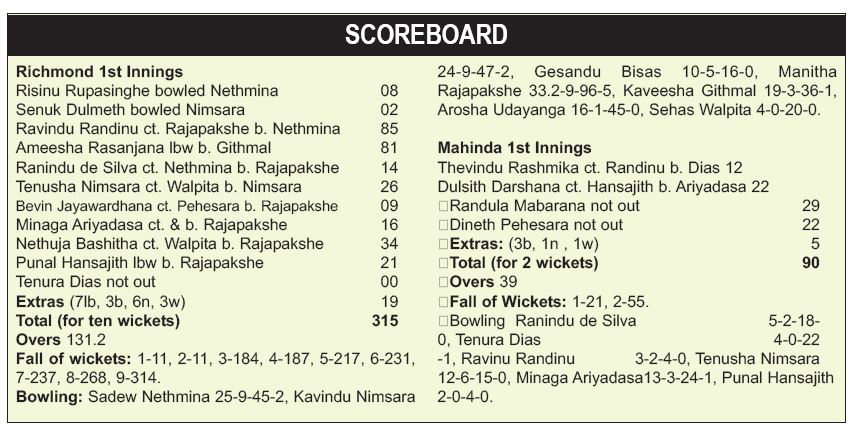
Mahinda College fought back strongly to reach 90 for two wickets at stumps in reply to Richmond College’s 315 on day two of the Lovers’ Quarrel Big Match at the Galle International Stadium on Friday.
In a similar pattern to their arch rivals’ start, Mahinda suffered an early setback, losing two quick wickets in the opening phase of their innings. However, the third-wicket pair of Randula Mabarana and Dineth Pehesara restored stability with a composed stand, ensuring the team closed the day without further damage.
Earlier in the day, spinner Manitha Rajapakshe delivered a standout performance, claiming a five-wicket haul to bring an end to Richmond’s marathon first innings, which extended from day one into the post-lunch session on the second day.
Richmond had recovered impressively from early trouble after slipping to 11 for two on the opening morning. A patient and resilient 173-run partnership for the third wicket between Ravinu Randinu and Ameesha Rasanjana laid the foundation for their competitive total. The duo batted through the bulk of day one and looked set for bigger scores before both were dismissed in the 80s by Sadew Nethmina and Kaveesha Githmal.
Further contributions from Nethusha Nimsara, Nethuja Basitha and Punal Hansajith helped Richmond consolidate, particularly as they faced a sustained and threatening spell from Rajapakshe, who bowled tirelessly to keep Mahinda in the contest.With Mahinda still trailing but having wickets in hand, the match remains finely poised heading into the third day.

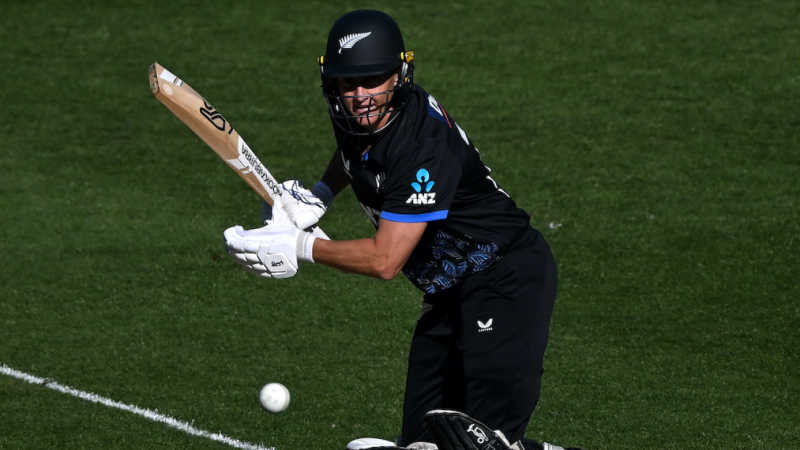
Sophie Devine made Eden Park her own little playground as she brought up her 22nd T20I half-century and carried New Zealand to a 2-1 series lead over South Africa with two games to go. She had also picked up a couple of wickets earlier in the day and backed up her words when she said South Africa’s 149 for 7 was a little bit under par.
New Zealand have never chased more than 150 at home. The small boundaries in Auckland were a friend in that regard, particularly with Annerie Dercksen and Ayanda Hlubi occasionally straying down leg. South Africa tightened up though and the wickets of Amelia Kerr and Brooke Halliday in the 10th over left the chase in a tense situation. New Zealand needed 82 off 60 with six wickets in hand. Devine was 13 off 10.
A pull shot off Chloe Tryon to start the 11th over signalled the shift in momentum. The square boundaries are bigger than the straight ones at Eden Park and yet Devine kept finding them. She collected 46 runs at a strike rate of 219 on the leg side. At the time the fifth-wicket partnership had hit 50, Maddy Green had made only 12 off 15. It was all Devine from the other end and it was all Devine till the end. Her superpowers now include winning the game without touching the ball. Dercksen missed the cut strip as she tried to hide it away from the batter’s reach.
Those five no-balls bringing an end to proceedings highlighted how wayward South Africa’s attack was compared to New Zealand’s. Jess Kerr’s early swing dominated the powerplay. Devine and Suzie Bates taking pace off kept control through the middle and barring another Kayla Reyneke onslaught, it was one-way traffic.
South Africa had to wait 23 balls for the first boundary off the bat on Friday. Dercksen made it worth the wait with a neat little flick off her legs that travelled all the way for six over deep midwicket. Dercksen arrived with the score on 9 for 2 in the third over and put the pressure back on New Zealand. While she was at the crease, she was responsible for more then half the boundaries (4 out of 7) her team scored. Thanks to that, Laura Wolvaardt could drop anchor and go at her preferred pace, though 37 off 39 wasn’t a good look for the captain, who later admitted they were well short of a competitive total.
A pitch with 10mm of grass offered enough for the seamers and even someone with their eye in was found out when Devine went into the pitch. The little legcutter – a response to being hit for six the previous ball – found Dercksen in two minds, whether to attack or defend, and took down her off stump. South Africa lost 59 for 5 between the eighth and the 18th overs, going 38 balls without a boundary.
Bates continued to find more success with the ball. She took a wicket in her first over and took responsibility in the death as well. New Zealand held their line and length really well, refusing access to the straight boundary and routinely cramping the batters up, guiding them to hit the areas – midwicket and square leg – that they had covered in the field.
Then Mair missed her length and was clubbed down the ground for six. It highlighted how a bowler had to be perfect against a batter of such power. Reyneke is immense when she can free her arms and go down the ground. She grew up playing in boys’ teams. She came into this series with a 75 off 63 for Western Province, who were 93 for 6 and still ended up winning the Pro50 game thanks to their 20-year-old phenom. She captained South Africa in the Under-19 World Cup when they went to the final last year. She’s marked for big things.
Reyneke’s presence forced Jess Kerr to go wide in the final over – too wide. The umpire penalising her made the bowler shift her line and that little bit was enough for Reyneke to smash two sixes and a four, all down the ground, and hoist South Africa to 149 for 7. She wasn’t given a lot to get under but as soon as she was given one, she smashed it out of the park. The margin for error was breathtakingly small.
Brief scores:
New Zealand Women 152 for 4 in 18.4 overs (Isabella Gaze 17, Amelia Kerr 30, Sophie Devine 59*, Maddie Green 34*; Annerie Dercksen 1-17, Ayanda Hilubi 1-31, Nonkululeko Mlaba 1-30 ) beat South Africa Women 149 for 7 in 20 overs (Laura Wolvaardt 37, Annerie Dercksen 27, Kayla Reyneke 34*; Jess Kerr 1-30, Rosemary Mair 1-32, Sophie Devine 2-21, Suzie Bates 2-10) by six wickets
(Cricinfo)

When governing body officials the Africa Cup of Nations title to Morocco, overturning Senegal’s victory two months after the chaotic final, football fans were stunned.
The impact of the decision could spread beyond sport and weaken the bond between the nations.
While Moroccan fans took to the streets to celebrate their team’s belated success, the decision by the Confederation of African Football (CAF) was met with disbelief in Senegal, with fans and authorities calling the decision “unjust”.
Senegal’s government on Wednesday said it will pursue “all appropriate legal avenues” to overturn the decision and called for an international investigation into “suspected corruption” within African football’s governing body.
The Senegal Football Federation (FSF) then announced on Thursday that it had instructed lawyers, aparently carrying through its threat to take the matter to the Court of Arbitration for Sport (CAS). Such a move could lead to a yearlong legal battle before a ruling.
CAF’s appeals board on Tuesday ruled that Senegal forfeited the final by leaving the field of play without the referee’s authorisation, and it awarded Morocco a default 3-0 win.
The game was delayed for 14 minutes as most of the Senegalese players and staff returned to their dressing room, while Senegal fans battled stewards behind one of the goals in protest against a controversial penalty call for Morocco after Senegal had a goal ruled out.
The players returned, Morocco missed the penalty, and Senegal won the match 1-0 in extra time.
Morocco and Senegal have long shared close ties built on religion, trade and culture. Tijaniyyah, a Sufi Muslim order, is widely followed in both countries. Moroccan banks and companies heavily invest in Senegal’s finance and agriculture sectors. Cultural exchanges include student programs, migration and joint festivals.
But the tensions surrounding the final and CAF’s appeals court decision to overturn Senegal’s victory have put a strain on the relationship between the two countries.
Last month, 18 Senegal fans who were arrested on charges of hooliganism at the final were given prison terms of up to a year by a Moroccan court. The Senegalese government has expressed solidarity with the Senegalese supporters.
Seydina Issa Laye Diop, president of the Senegalese national team’s fan group called “12th Gainde”, told The Associated Press on Thursday that the incidents should not damage the relationship between Senegal and Morocco.
“However, there are limits: if this continues, it could somewhat affect the pride of the Senegalese people,” Diop said. “If the goal is to preserve friendship, then it must be nurtured. Small gestures can have a big impact. These are things we can move past, especially since, during the trial, no solid argument has justified the continued detention of these supporters.”
Mariama Ndeye, a student in Senegal’s capital Dakar, said the decision has negatively affected her view of Moroccans.
“When everything goes well, they call us their brothers. But when things don’t go their way, they start being nasty,” Ndeye said.

Politics and sport are rarely separated as Senegal and Morocco find out
On Wednesday, Morocco’s embassy in Dakar called on Moroccans in Senegal to “demonstrate restraint, vigilance, and a sense of responsibility.”
“It is important to recall that, in all circumstances, it is only a match, the outcome of which should never justify any form of escalation or excessive remarks between brotherly peoples,” the embassy said.
While the dispute has remained centred around the football match, bad feelings have spread more generally.
In Casablanca, home appliances business owner Ismail Fnani said he felt like other African countries were rooting against Morocco during the final.
“Honestly, my views toward Senegalese and sub-Saharan Africans changed after this,” he said. “We used to feel sympathy and help them because they were migrants who had struggled to get here. Where there was once sympathy and compassion, now I will treat them as they have treated us.”
Mohamed el-Arabi, who works in a grocery shop in Casablanca, said he did not celebrate the decision awarding Morocco the title.
“We would have preferred it to stay with Senegal because it doesn’t feel right otherwise,” El Arabi said.
“People here have started hating Senegalese. They no longer provide them with help. We used to be like brothers, especially since they are Muslims like us, but that is no longer the case,” he added.
African football thrust into spotlight as CAF face accusations
The Senegalese government’s allegation of suspected corruption” at CAF followed anger at perceived favouritism towards Morocco, which is a 2030 World Cup co-host and has invested heavily to become a football superpower.
On Wednesday, CAF President Patrice Motsepe defended the body against perceptions of favouritism towards Morocco.
“Not a single country in Africa will be treated in a manner that is more preferential, or more advantageous, or more favourable than any other country on the African continent,” Motsepe said in a video published on the CAF website.
[Aljazeera]

Sri Lanka says it denied US request to land two aircraft at Mattala airport

Eid celebrations dimmed by war and displacement across Middle East

Showers may occur at several places in the Western, Sabaragamuwa, Northwestern and Uva provinces and in Galle, Matara, Kandy and Nuwara-Eliya districts after 1.00 pm.

Iranian strikes on bases used by US caused $800m in damage, new analysis shows

President maintains Lanka has been even-handed in dealing with Iran and US

Heat Index likely to increase up to ‘Caution level’ at some places in the Western, Sabaragamuwa, North-central, Southern and North-western provinces and in Monaragala, Mannar, Vavuniya and Mullaitivu districts

‘Dates have the highest sugar content to fight Coronavirus’

Sunday Island 27 December – Headlines

#SundayIsland 17th December – Headlines

Sunday Island – 28th March

Sunday Island Headlines – 21 March

Sunday Island – 21st February – Headlines
-

 Business5 days ago
Browns EV launches fast-charging BAW E7 Pro at Rs. 5.8 million
-

 Life style6 days ago
From culture to empowerment: Indonesia’s vision for Sri Lanka
-

 News3 days ago
CIABOC questions Ex-President GR on house for CJ’s maid
-

 Life style6 days ago
Ranjith Fernando celebrates cricketing journey with Hob Nails to Spikes
-

 News4 days ago
Sri Lankan marine scientist Asha de Vos honoured at UNGA opening
-

 Features5 days ago
Achievements of the Hunduwa!
-

 Latest News6 days ago
QR code system will be implemented for fuel with effect from 06.00 a.m. today (15th)
-

 News4 days ago
Australian HC debunks misleading travel risk claims for Sri Lanka