
News
Proprietary Planters Alliance is catalyst Lanka’s plantation sector urgently needs


In the lush hills and tropical lowlands of Sri Lanka, a quiet revolution is stirring—one that seeks not just to revive but to radically transform the plantation sector. The Proprietary Planters Alliance (PPA) has emerged as a game-changing force with a clear mission: to give voice, vision, and viability to proprietary planters—Sri Lanka’s underrepresented yet vital stakeholders in agriculture.
At a time when global markets demand traceability, value-chain efficiency, environmental stewardship, and ethical labour practices, the plantation sector remains burdened by archaic structures and fragmented representation. This is the void the PPA is built to fill. With this intention in mind, PPA inaugurated its operations on 01st June 2025 at a simple ceremony held at the Orient Club – Colombo. The Office Bearers appointed are: Founder -Dammika Kobbekaduwa, Chairperson- Dr. Janaki Kuruppu, Directors- Dr. Dilhan Sampath Jayatilleke, Upananda Karunaratne, Dr. R A D Kumarawickrama, Dr. W G Somaratne, Rehan Jayathilake, S M P Jayantha, Arjun Dharmadasa, Dr. Nadaraja Rejendran, amd Dyan Seneviratne.
The Gap: A Fragmented Sector Without a Unified Voice
For decades, proprietary planters—those who own and operate small to mid-sized tea, rubber, coconut, spice, and fruit estates—have lacked a centralized platform to lobby for policy, access finance, and leverage innovations. Unlike corporate plantations, these planters rarely benefit from R&D, climate adaptation schemes, digital agri-tools, or direct trade exposure.
Meanwhile, national goals like doubling the GDP to $160 billion and making Sri Lanka a smart agricultural hub are simply unattainable without tapping into the true potential of these grassroots actors.
PPA bridges this divide by acting as:
A policy think-tank
A technical innovation platform
A channel for climate finance and ESG compliance
A collaborative hub for agri-tourism, value addition, and sustainable exports
Vision, Mission, and Purpose
Vision:
To create a resilient, sustainable, and globally competitive proprietary plantation sector in Sri Lanka that leads in innovation, value addition, and ethical agricultural practices.
Mission:
To empower proprietary planters through unified representation, advanced agronomy, policy advocacy, climate-smart innovations, and integrated value-chain management—enabling prosperity from plot to port.
Strategic Goals:
1. Policy Reform: Influence national agricultural, trade, and labour policy to favour modern proprietary estate models.
2. Value Chain Integration: Promote vertically integrated models from cultivation to retail, including tea-based wellness products and processed spices.
3. Innovation & Digitalization: Provide members access to precision agriculture, remote sensing, and AI-driven analytics.
4. Climate Resilience & ESG: Implement globally aligned climate-smart practices and position members for green financing.
5. Market Access: Enable direct links with exporters, supermarkets, and buyers for improved farm-gate pricing.
6. Capacity Building: Facilitate continuous training, certification, and professional development.
7. Youth & Gender Equity: Encourage new generations and women to become plantation entrepreneurs.
The Colombo Declaration: A Defining Milestone
On June 1st, 2025, the PPA took a bold step forward by ratifying the Colombo Declaration at the Orient Club, Colombo 07—a formal charter of unity, purpose, and transformation for Sri Lanka’s proprietary plantation community. This Declaration is not just a ceremonial pledge; it is the institutional backbone of a national movement toward a climate-smart, value chain-driven, and people-first plantation model.
The Declaration reinforces key commitments including ESG-driven agriculture, HRM-centered workforce transformation, policy engagement, and access to global green finance. By aligning proprietary planters around these shared objectives, the Colombo Declaration directly contributes to closing the productivity and market access gaps that have historically limited the sector’s GDP contribution.
In essence, the Colombo Declaration positions PPA as a strategic national instrument to unlock the latent economic value in Sri Lanka’s plantation economy—potentially adding billions to the country’s agri-GDP through inclusive, sustainable growth.
Why Every Proprietary Planter Must Join
1. Power in Numbers:
Alone, a planter is a commodity producer. As a member of PPA, you become part of a national movement with lobbying power, donor engagement, and export linkages.
2. Tools of the Future:
Access the latest in satellite crop monitoring, regenerative soil tech, and climate insurance models.
3. Policy Access:
Be at the decision-making table—on issues ranging from subsidy allocation to land reform and smart agri-investments.
4. Climate & ESG Compliance:
Get certified, get recognized, and get financed. PPA’s alignment with global standards allows members to qualify for carbon credits, green loans, and sustainability-linked certifications.
5. Shared Prosperity:
PPA offers a space for collaboration—not competition—among fellow planters, innovators, and financiers.
A Tropical Model for the Global South
While rooted in Sri Lanka, PPA offers a scalable model for tropical countries across Asia, Africa, and Latin America—regions with similar plantation legacies and rural enterprise structures. Whether it’s nutmeg in Kerala, coffee in Ethiopia, or cacao in Ecuador, the proprietary planter model remains a potent but under-leveraged development tool.
Final Word: From Marginal to Mainstream
The time for waiting is over. Whether you’re a third-generation tea grower in Kandy, a cinnamon cultivator in Matara, or a fruit planter in Monaragala, the PPA is your passport to relevance, resilience, and returns. Don’t let another season pass by under outdated systems. Stand up, sign up, and scale up.
Because the future of plantations is proprietary.
Optional Technical Appendix
Colombo Declaration KPIs:
Net income per hectare (? by 20–30%)
Youth participation in plantation ownership (? by 50% in 3 years)
% of estates adopting traceability tools
% of members accessing green finance or ESG-linked investment
Macro Impact to GDP:
If even 30% of Sri Lanka’s 200,000+ proprietary holdings align with PPA’s Colombo Declaration framework, it could conservatively add LKR 300–500 billion annually in value-added export earnings and Agri-tourism—boosting national GDP by over 1.5 percentage points within five years.
By Dr Dilhan Sampath Jayatilleke – Director : Brand, Communications & Stakeholder Development – PPA ✍️

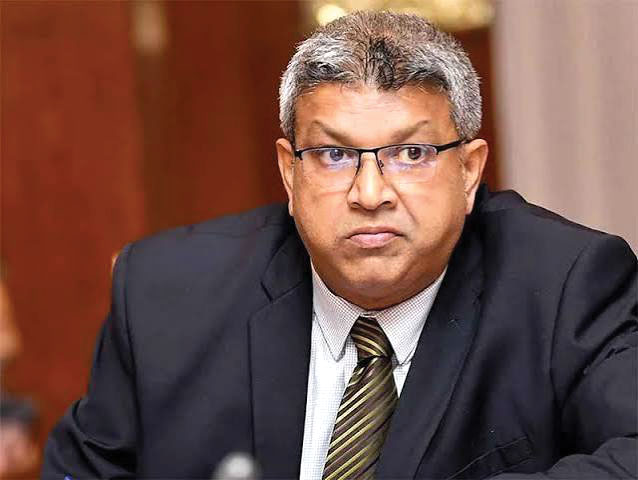
Appointment of committee eyewash, says UNP
The government is considering changes to prison regulations pertaining to the treatment of Buddhist monks serving jail terms, including their right to wear monastic robes when taken outside prison.
Justice and National Integration Minister Harshana Nanayakkara announced the proposed changes yesterday (14) following the submission of an interim report by a committee appointed to review the rules and procedures governing prisons.
The report was handed over to Secretary to the President Dr Nandika Sanath Kumanayake at the Presidential Secretariat.
One of the key recommendations is to amend Prison Standing Order 356 by introducing a new provision, 356(A). The proposed revision would require prison authorities to consult the Department of Buddhist Affairs on the removal of a monk’s robes upon admission to prison. The Commissioner of Prisons would be allowed 10 days to notify the department and take the necessary steps.
A separate amendment to Departmental Order 550 would allow Buddhist monks to wear their robes whenever they are taken outside prison, unless their respective Nikaya formally requests that the privilege be withdrawn.
The committee has also recommended extending similar arrangements, with suitable modifications, to members of other religious clergy who are imprisoned.
The proposals follow concerns raised over the treatment of Ven. Galagoda Aththe Gnanasara Thera after he was taken into custody. President Anura Kumara Dissanayake subsequently held discussions with representatives of the three main Buddhist Nikayas and appointed the committee to examine the existing legal framework.
Nanayakkara said the interim report had been forwarded to the Acting Commissioner General of Prisons, along with instructions to revise the relevant standing orders in accordance with its recommendations.
The proposed amendments have yet to be confirmed as formally implemented.
Meanwhile, the UNP yesterday criticised the government’s decision to appoint a committee to make recommendations on the attire to be worn by imprisoned Buddhist monks and other religious leaders when taken outside prison, describing the move as unnecessary.
In a statement issued yesterday (14), the UNP said the procedures governing the matter were already clearly set out in the Department of Prisons’ Standing Orders, making the appointment of a separate committee unwarranted.
The party cited remarks by Professor G.L. Peiris, Convenor of the Janathawadi Joint Opposition, who had described the committee’s appointment as a
“complete eyewash” and questioned the need for such a move.
Referring to Standing Order 550 of the Prisons Department, the UNP said convicted prisoners appearing before court for legal proceedings should not be required to wear prison uniforms.
It further stated that the regulations allowed prisoners to wear civilian clothing consistent with what they wore before imprisonment, including attire appropriate to their cultural and religious backgrounds.
The UNP accused the government of unnecessarily prolonging the issue by appointing a committee, despite the existence of regulations governing prisoners’ attire.
The party also called on the government to seek forgiveness from the Mahanayake Thera and the Sangha Council of the Kotte Sri Kalyani Samagri Dharma Maha Sangha Sabha of the Siyam Maha Nikaya over the decision concerning the religious attire of Ven. Galagoda Aththe Gnanasara Thera.
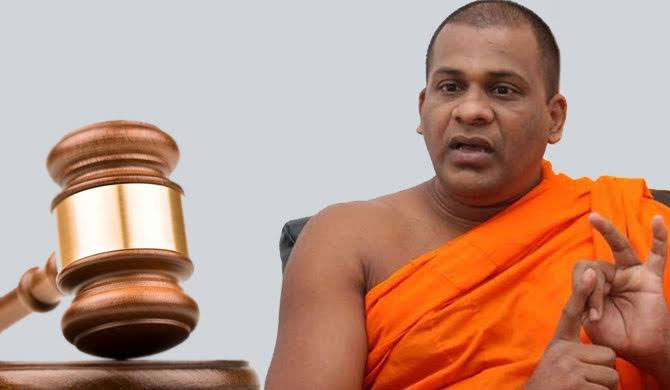
Court of Appeal President Justice Rohantha Abeysuriya yesterday withdrew from the bench hearing petitions challenging the decision by prison authorities to require Ven. Galagoda Aththe Gnanasara Thera to wear prison attire following his imprisonment.
The decision was announced when the petitions seeking to invalidate the prison authorities’ decision were taken up for consideration on October 14.
Following his withdrawal, a three-judge bench was appointed to hear the petitions.
The petitions relate to the prison authorities’ decision to require Gnanasara Thera to wear prison attire after he was taken into custody to serve the remainder of his sentence for contempt of court.
In September this year, the Supreme Court annulled the presidential pardon granted to Gnanasara Thera by former President Maithripala Sirisena in May 2019.
Following the ruling, the Court of Appeal directed the Commissioner General of Prisons to take the necessary steps to enforce the remainder of the monk’s prison sentence.
Gnanasara Thera had originally been sentenced to six years’ imprisonment for contempt of court but had served only around nine months before receiving the presidential pardon in 2019.
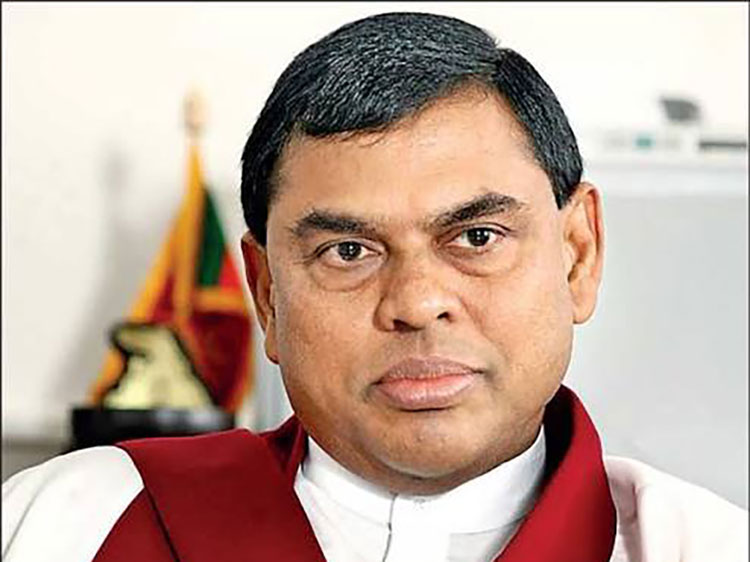
The Fort Magistrate’s Court yesterday issued an arrest warrant for former Minister Basil Rajapaksa over the alleged misuse of funds belonging to the Sri Lanka Tourism Promotion Bureau during the 2014 Uva Provincial Council election.
The Magistrate also directed the CID Illegal Assets Investigation Division to take necessary steps to obtain a Red Notice through Interpol.
The orders were issued following submissions made by the CID in connection with the alleged financial irregularities.
The CID’s Illegal Assets Investigation Unit informed the court that Rs. 7.8 million allocated to the Sri Lanka Tourism Promotion Bureau in 2014 had allegedly not been used for the Bureau’s promotional activities.
Instead, the funds had allegedly been used to provide 12,000 T-shirts during the Uva Provincial Council election, causing a financial loss to the government, the CID told court.

Showers or thundershowers will occur at most parts of the island

Prison rules to be revised over monks’ attire

AC President recuses himself from hearing prison attire case pertaining to Gnanasara Thera

Court orders steps to obtain INTERPOL Red Notice against Basil

CID informs Fort Magistrate’s Court investigation into money laundering case against Namal completed

No force used to make Gnanasara Thera wear prison garb – Prisons

‘Dates have the highest sugar content to fight Coronavirus’

Sunday Island 27 December – Headlines

#SundayIsland 17th December – Headlines

Sunday Island – 28th March

Sunday Island Headlines – 21 March

Sunday Island – 21st February – Headlines
-

 News6 days ago
NDB fraud Rs 60mn more than reported
-

 News6 days ago
Removing monk’s robes matter for Sangha to decide: Mahanayake Theras
-

 News4 days ago
Sri Lanka escalates anti-graft drive with Shiranthi’s jailing
-

 News5 days ago
NPP govt. reminded of its responsibilities as US warship leaves Colombo
-

 Latest News5 days ago
Farhan, Sadaqat help Pakistan ace 183 chase to go 1-0 up
-

 News6 days ago
BHC, Colombo: “LTTE remains a proscribed org. in the UK”
-

 Latest News3 days ago
Farhan and Sadaqat help Pakistan seal series in style
-

 News4 days ago
Iranian ships stranded, Lanka fears US sanctions